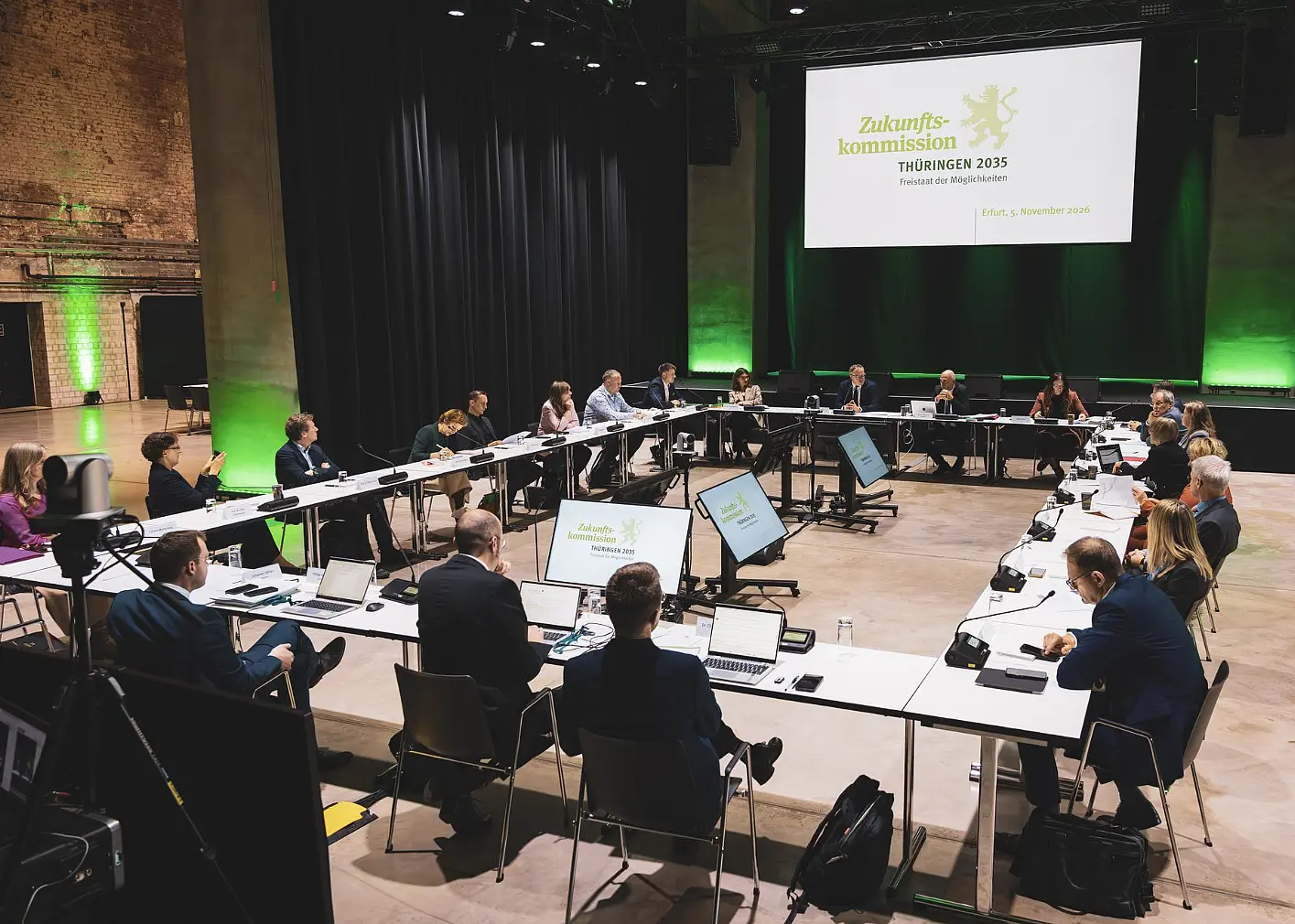
“Thuringia is a Free State of opportunities – we just need to seize them with determination. To do this, we need people who challenge the status quo and point the way forward. I would like to thank all the members of the Commission for the Future for putting their experience and commitment at the service of our Free State. I look forward to concrete proposals that will enable us to shape Thuringia’s future. Every Thuringian can also contribute their own ideas. For the best that Thuringia has to offer lies not behind us, but ahead of us,” explained Mario Voigt at the launch event.
The Future Commission brings together leading figures from academia, business, civil society and public life. Their diverse experiences and expertise are intended to provide fresh impetus for Thuringia’s development. The Commission will address key questions concerning Thuringia’s development through three working groups:
- Economy and Innovation: How can Thuringia build on its economic strength, harness new technologies and promote innovation?
- Social cohesion: How can quality of life, social cohesion and equal living conditions be secured in the long term?
- Political capacity for action and modernisation of the state: How must the state change in order to act more swiftly, in a more modern way and in a manner that is closer to the people?
The work will be carried out in three phases: Firstly, the Commission will analyse the current situation and the key challenges facing Thuringia (‘What is the situation?’). It will then examine key future trends and possible developments (“What will happen?”). Building on this, it will develop a positive vision for the future of the Free State and concrete recommendations for its implementation (“What should happen?”).
For further information, please refer to today’s press release from the Thuringian State Chancellery (in German only).