
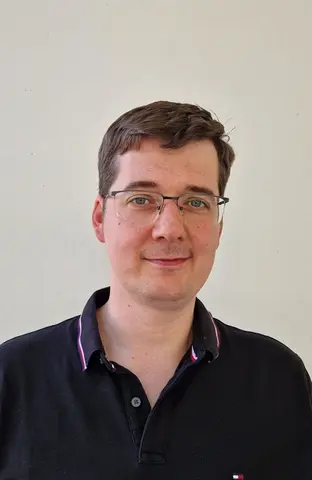
Postdoctoral Fellow (Max Weber Centre for Advanced Cultural and Social Studies)
Office hours
by appointment
Visiting address
Max Weber Centre for Advanced Cultural and Social Studies
C19 – research building "Weltbeziehungen"
Max-Weber-Allee 3
99089 Erfurt
Mailing address
Universität Erfurt
Max Weber Centre for Advanced Cultural and Social Studies
Postfach 90 02 21
99105 Erfurt
News
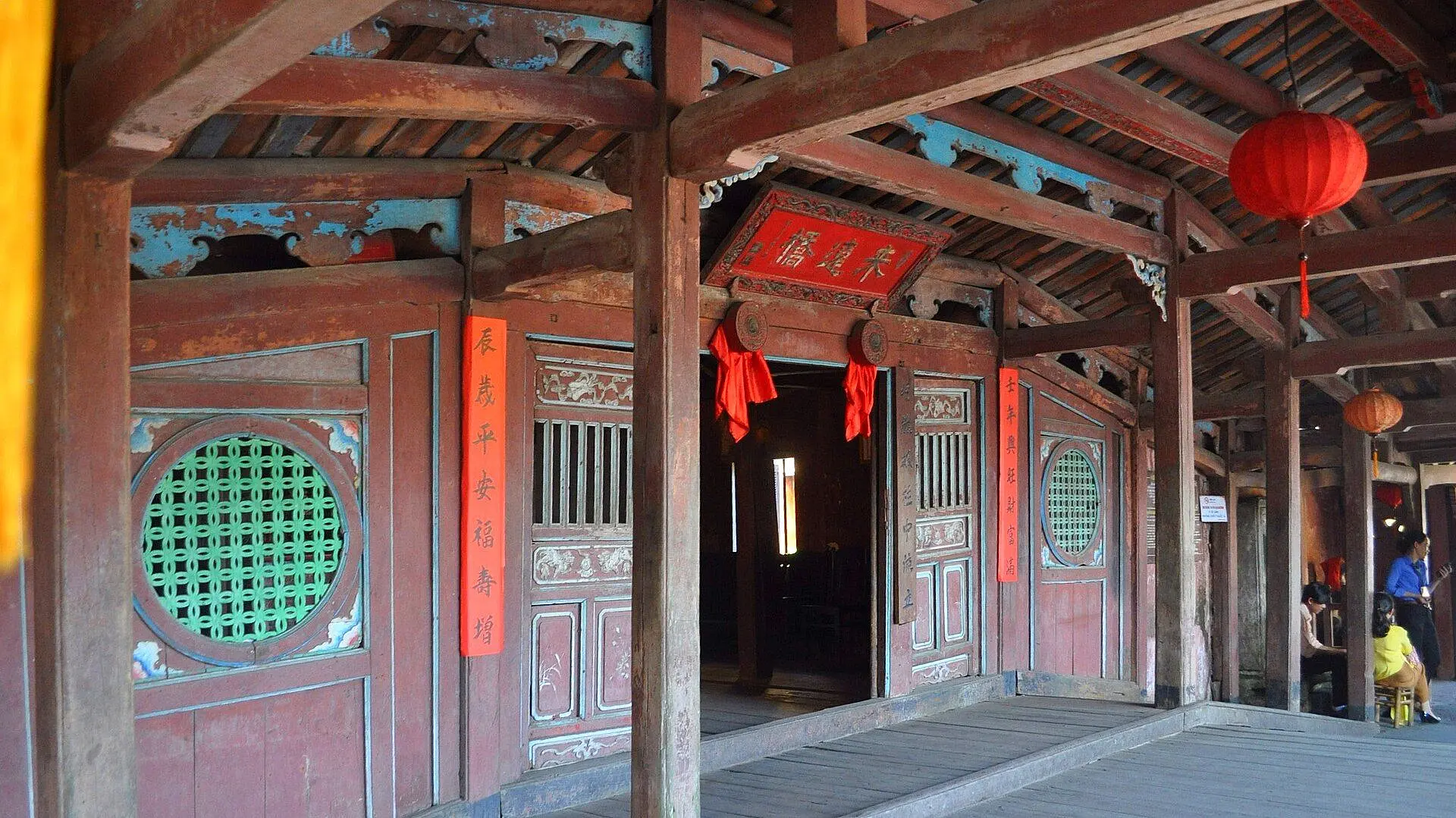
Co-organizer of the conference “Desacralization in Premodern Europe and Asia: Senses, Spaces, and Objects” and presenter of the lecture “Perceptions of the Sacred and the Non-Sacred in Early Modern Southeast Asia”
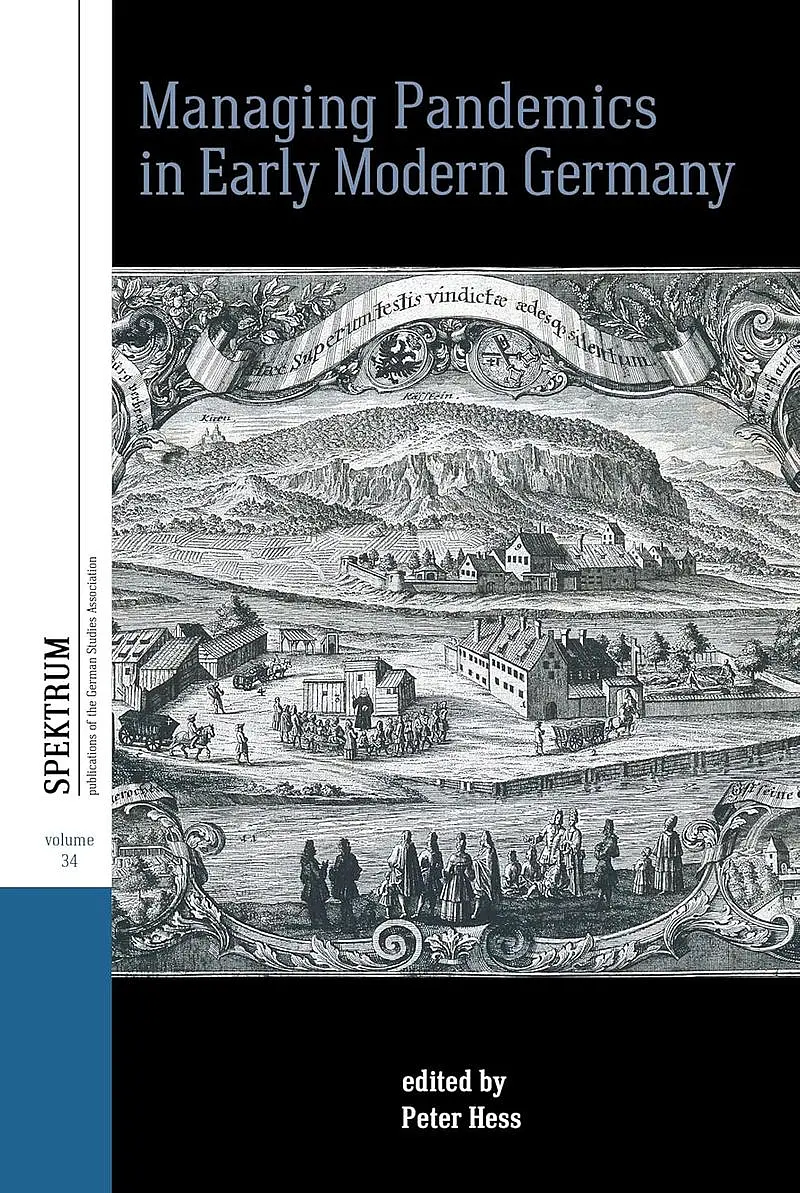
Essay on “Plague Cemeteries in Early Modern German Towns” in: Managing Pandemics in Early Modern Germany, ed. by Peter Hess
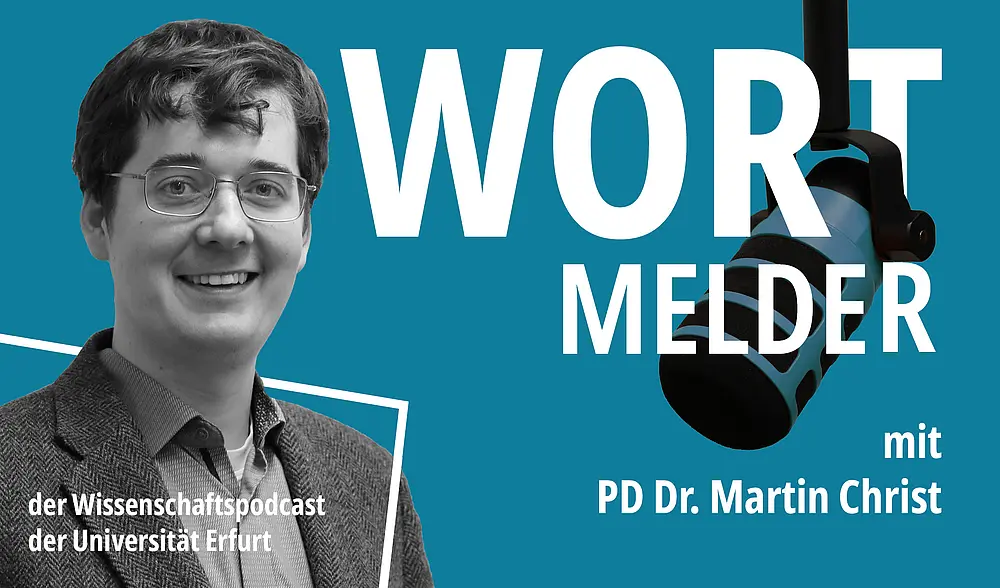
Interview on the science podcast “Wortmelder” on the topic “In der Stadt begraben: Über die Macht der Toten”
Profile
- 22.01.2025: Habilitation colloquium
- 05/06/2024: Submission of the habilitation thesis
- Since 10/2022 Head of a ‘Focus Group’ on group formation processes in historical perspective
- 10/2022-04/2023 Parental leave (50%)
- Since 10/2018 research assistant, Max-Weber-Kolleg
- 10/2017-09/2018 Teach@Tübingen Fellow, University of Tübingen
- 10/2013-09/2017 PhD (full scholarship from the Arts and Humanities Research Council), University of Oxford, supervisor: Prof. Dr Lyndal Roper, topic: Biographies of a Reformation: Religious Change and Confessional Coexistence in Upper Lusatia, c. 1520-1635
- 10/2014-09/2015 Visiting doctoral candidate at the Technical University of Dresden, supervisor: Prof. Dr Gerd Schwerhoff (funded by the Alexander von Humboldt Foundation)
- 10/2012-09/2013 Master of Letters in Reformation History (Distinction), St Andrews, Supervisor: Prof. Dr Bridget Heal
- 10/2009-09/2012 Bachelor of Arts (First Class Honours), University of Warwick
Research Foci
Current Research Project
Between conflict and contact: Hội An (Vietnam) and the “South China Sea”, c. 1500-1850
At least since Fernand Braudel's work on the Mediterranean, it has been an established method in historical studies to explore the sea as a multi-layered and multifunctional space that was of central importance both in reality and in the imagination. Research has shown that seas could function both as a contact zone and as a space of conflict and that early modern imaginations were essentially shaped by references to the seas. Historical spatial research has also discovered the sea as a space for itself and shown that, in addition to traditional understandings of shipping, trade and diplomacy via the sea, new perspectives on the spatial dynamics of bodies of water can also be opened up.
The “South China Sea”, which connected trading and port cities in Southeast Asia, has received little attention in this field of research. It was also the sea across which many European powers travelled to trade and colonize territories in Asia. The project aims to test the approaches and theories developed for other inland seas, such as the Mediterranean, on the basis of the South China Sea. In particular, the fact that there were numerous islands in the “South China Sea” and that these were connected by the water represents an important difference to the better researched Mediterranean. Furthermore, the project aims to show that an approach based on the sea opens up new perspectives on this region and its global relationships.
One of the key characteristics of port cities, such as those on the South China Sea, is their diversity. Older research explored the conflicts arising from the presence of diverse populations, but more recent research has painted a more complex picture of diversity in urban settlements, pointing to processes of negotiation and adaptation on the ground. While research on such complex urban formations and the groups that were formed there is well developed for major European cities such as London, Antwerp or Rome, work on urban diversity in non-European cities represents a research desideratum that is only slowly being remedied. The few works that deal with religious, linguistic or cultural diversity in Asia concentrate on areas that were strongly influenced by European colonialism, such as Goa or Manila. As a result, a Eurocentric perspective often persists.
Instead, this project will focus on a city that also had contact with European powers in the early modern period, but developed much more independent political structures and was in intensive exchange with other Asian countries. The trading city of Hội An, located in the center of present-day Vietnam, is an exemplary place to analyze urban heterogeneity. In addition to relations with Japan and China, the ruling Nguyen dynasty was also interested in expanding trade with Europe, which led to Hội An becoming a trade hub. Traders and missionaries from European and Asian countries settled in the city. The Vietnamese rulers allowed the traders to settle in the city and practise their religion relatively freely, which led to the construction of several Chinese temples, for example. The complex society of migrants, locals, missionaries and travelers in Hội An makes this city a perfect case study to understand how urban diversity led to peaceful coexistence, but also how it could turn into conflict. This allows research on urban diversity to be significantly expanded and nuanced.
Completed Research Projects
The power of the dead. Burials and Cemeteries in London and Munich, ca. 1550-1870 (completed)
The project focuses on two important urban centers of the early modern period, London and Munich, in order to analyze the profound changes in the treatment of dead bodies during the period under investigation. The comparison between Munich and London makes it possible to look at the dynamics of the repositioning of the dead and the associated ideas about urban space and urban society from a comparative perspective. The Anglican-influenced commercial metropolis of London and Catholic Munich make it possible to compare religious, economic and urban planning aspects. The project asks how the cities changed as a result of the reorganization of the dead during this period and how denominational and urban factors influenced each other.
One of the central theses of the work is that the significance of the dead for cities can only be correctly classified if the dead are analyzed in their entirety and the entire urban necrogeography is examined. This approach results in the reconstruction of “deathscapes”, which contain elements that were previously considered separately, e.g. urban, courtly, Jewish or dishonorable burial sites. The project sheds light on the various discourses, groups of actors, practices and spaces that played an important role in the reorganization of the dead. It also examines conflicts between different actors and disruptions in dealing with the dead, e.g. during plague epidemics or the Great Fire (1666). The project shows that the treatment of dead bodies always allows conclusions to be drawn about urban society as a whole. In order to conceptualize this change, the project works with Michel Foucault's concept of power and uses an adaptation of biopower, which shows that the dead had power over the living.
Biographies of a Reformation. Confessional coexistence and religious change in Upper Lusatia, ca. 1520-1635 (completed)
This thesis examines how religious coexistence functioned in multi-confessional Upper Lusatia in Western Bohemia. It argues that the Lutherans and Catholics managed to find a workable modus vivendi by signing written agreements and negotiating regularly. This meant that the Habsburg King of Bohemia ruled over a Lutheran territory, of which he was aware, but he was not prepared to intervene decisively to reintroduce Catholicism. Lutherans and Catholics in Upper Lusatia shared spaces, objects and rituals. The Catholics adopted elements that had previously been considered an integral part of Lutheran confessional culture. The Lutherans were also prepared to integrate Catholic elements into their religiosity. Some of these overlaps were, as the sources suggest, unconscious, while others were a decided decision by the authors. But the stalemate between Lutherans and Catholics also meant that other religious groups could not be tolerated. Later generations of historians shaped this enforced coexistence into a clearer Reformation narrative.
This project addresses three historiographical paradigms. First, the results show that the paradigm of the “urban Reformation,” in which cities are seen as centers of Lutheranism, needs to be reevaluated, especially in the cities of former East Germany, where much work remains to be done. Secondly, it shows that in a region like Upper Lusatia, which had no political center and a diverse and complex Reformation, there was only a limited process of confessionalization. As other studies have found similar tendencies in other parts of the Holy Roman Empire, the usefulness of the confessionalization paradigm is increasingly questionable. Thirdly, however, the example of the “Calvinists” reminds us that it is also not helpful to take the idea of tolerance too far in early modern Europe. In the case of Upper Lusatia, the coexistence of two denominations, Lutherans and Catholics, meant that others were excluded.

![[Translate to English:] facebook icon](/fileadmin/SocialMediaIcons/iconfinder_06-facebook_white.svg)

![[Translate to English:] instagram icon](/fileadmin/SocialMediaIcons/iconfinder_38-instagram_white.svg)
![[Translate to English:] YouTube icon](/fileadmin/SocialMediaIcons/iconfinder_18-youtube_white.svg)
![[Translate to English:] xing icon](/fileadmin/SocialMediaIcons/iconfinder_xing_white.svg)
