
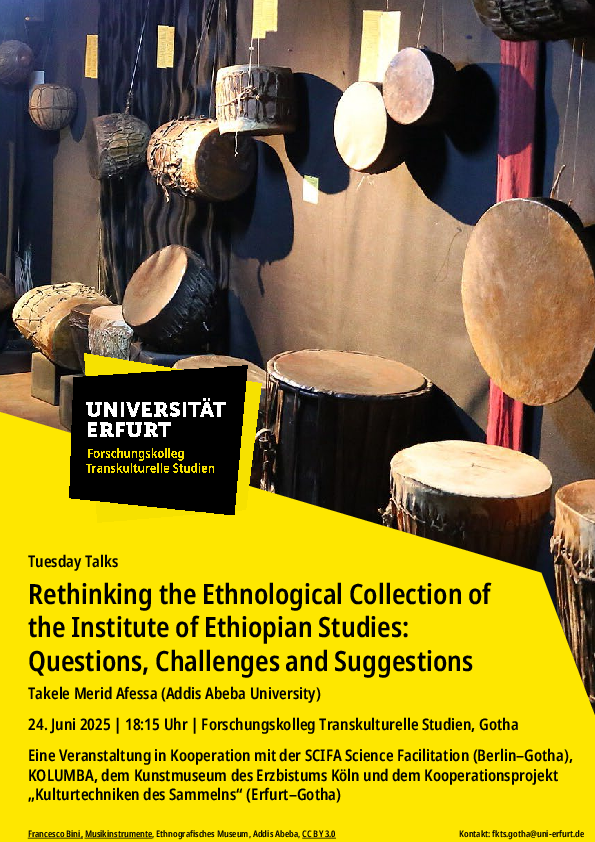
Workshop & lecture: Takele Merid Afessa (Addis Ababa University), 24.06.2025
On June 24 2025, a workshop and an evening lecture with Takele Merid Afessa, director of the Institute of Ethiopian Studies from Addis Ababa University took place at the Centre for Transcultural Studies.
The workshop, which took place in cooperation with SCIFA Science Facilitation and the collaborative project "Kulturtechniken des Sammelns", was dedicated to the topic "The Ethiopian Pillow: Towards a New Cultural Mapping of Headrests - An Interventionist Approach".
In his lecture "Rethinking the Ethnological Collection of the Institute of Ethiopian Studies: Questions, Challenges and Suggestions", Takele Merid Afessa addressed the ethnographic collections of the Institute of Ethiopian Studies in Addis Ababa. He discussed not only the historical and cultural dimensions of these collections, but also the challenges associated with their preservation and presentation. In this context, he also raised the question of possible approaches and new ways of dealing with the collections.
The event was organised in cooperation with SCIFA Science Facilitation (Berlin-Gotha), KOLUMBA, the Art Museum of the Archdiocese of Cologne and the cooperation project "Kulturtechniken des Sammelns" (Erfurt-Gotha).

13th Map History Colloquium
The 13th Colloquium on the History of Cartography took place on May 9 and 10 2025 at the Centre for Transcultural Studies in Gotha. The regularly held event offers academics, especially those in the qualification phase, a forum to present projects on cultural-historical cartography from the Middle Ages to contemporary history and to discuss methodological concepts of ongoing work. The two-day, interdisciplinary and transepochal colloquium included discussions and a visit to the Gotha Perthes Collection (Gotha Research Library). The event was organised by Ingrid Baumgärtner (Kassel), Christoph Mauntel (Osnabrück), Ute Schneider (Essen), Martina Stercken (Zurich) and Iris Schröder (Erfurt).
The event was sponsored by the Freundeskreis der Forschungsbibliothek Gotha e.V. and the Research and Graduate Services Department of the University of Erfurt.
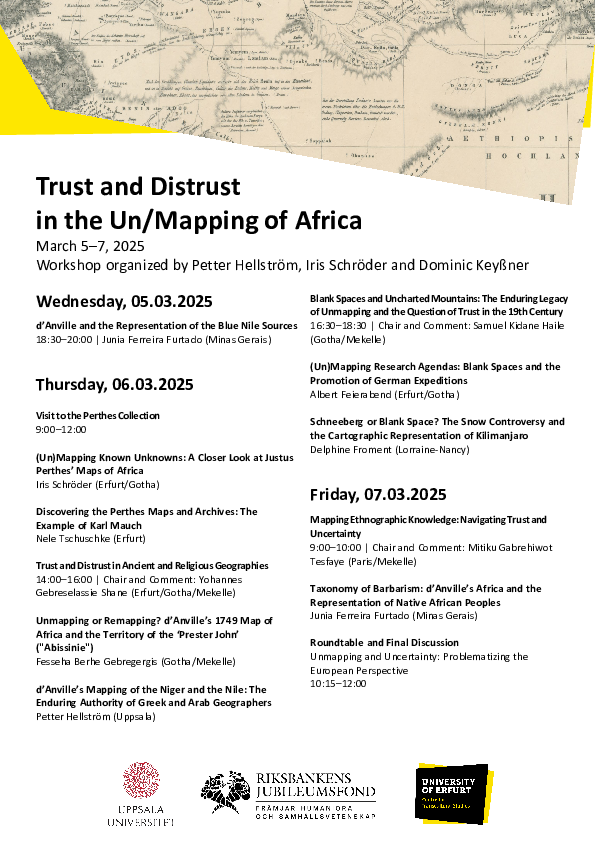
Workshop "Trust and Distrust in the Un/Mapping of Africa"
From March 5 to 7 2025, a workshop on "Trust and Distrust in the Un/Mapping of Africa" took place at the Centre for Transcultural Studies. The workshop brought together international scholars to critically scrutinise and reassess the European practice of "unmapping" the African continent. A visit to the Gotha Perthes Collection was also planned, whose valuable holdings of letters, sketches and hand-drawn maps were to be integrated into the discussion. These materials were meant to help to better define historical mapping practices and their connection to "unmapping". Scholars from various disciplines and institutions discussed the role of authentication and credibility practices in the context of the "unmapping" of Africa. The aim of the workshop was to initiate a dialogue between European and African researchers.
The workshop was organised by Iris Schröder (University of Erfurt), Dominic Keyßner (University of Erfurt) and Petter Hellström (University of Uppsala). It was supported by the Riksbankens Jubileumsfond for the promotion of the humanities and social sciences and by Professor Michael Wildt, who promotes academic exchange between African and European researchers, in particular between the University of Erfurt and the University of Mekelle.
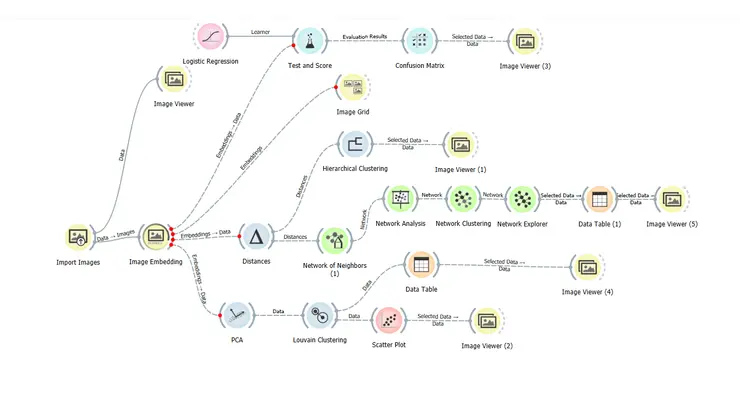
Workshop "Orange Data Mining: A New Digital Tool in the History of Cartography"
As part of the seminar "Mappings: History of Knowledge and New Cartography History," a workshop led by Zef Segal (Ra'anana, Israel) took place on June 12, 2024. The workshop aimed to explore new approaches to studying digitized maps using the "Orange Data Mining" tool, addressing both general aspects of the Digital Humanities and their specific relevance to the history of cartography. The workshop was primarily exploratory, testing various analytical methods to assess the tool's potential for the history of cartography. The workshop raised many questions about the methods and their results, as well as the epistemologies and digital ontologies of digital maps.
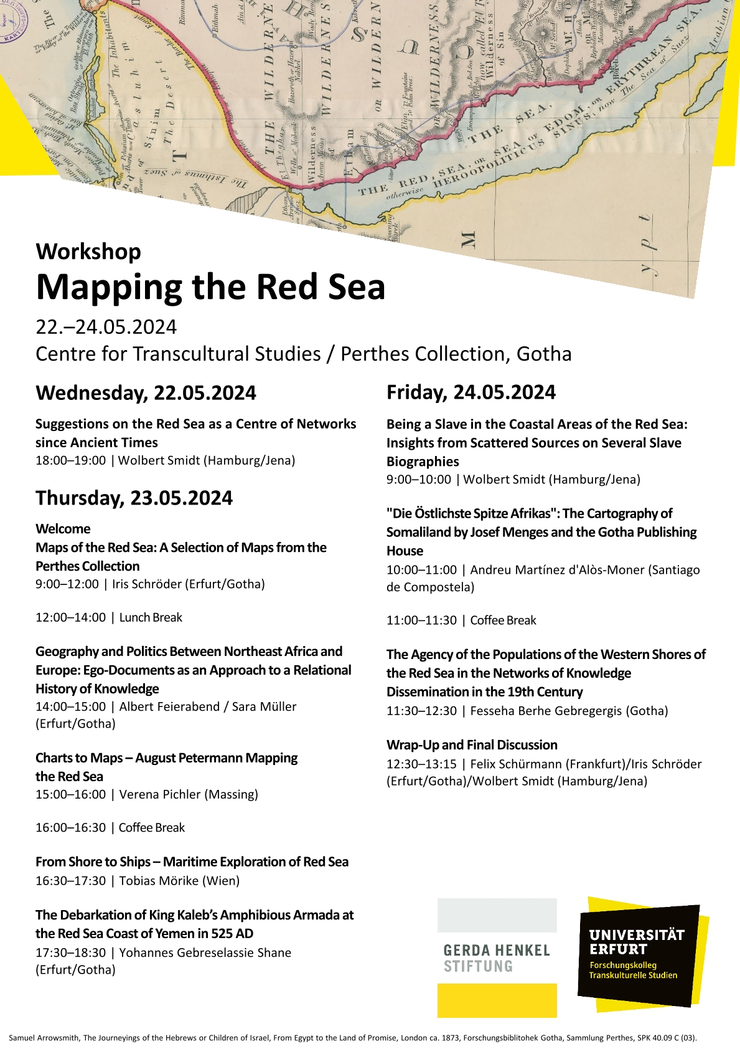
Workshop "Mapping the Red Sea"
From May 22 to 24, 2024, the workshop "Mapping the Red Sea" was held at the Centre for Transcultural Studies / Perthes Collection, with support from the Gerda Henkel Foundation.
The workshop focused on the cartographies of the Red Sea and its surrounding areas throughout the long 19th century. It commenced on May 22 with a lecture by Wolbert Smidt (Jena/Mekelle) titled "Suggestions on the Red Sea as a Centre of Networks since Ancient Times," which examined the region’s interconnected history from a longue durée perspective. The following day, the workshop continued with a visit to the Perthes Collection to discuss selected maps and materials related to the Red Sea. Subsequent presentations examined various dimensions of the Red Sea and its cartographies, addressing both the complexity of the region and the relationship between knowledge and cartography.

Annual Meeting of the TransArea Network Africa (TANA) at the Gotha Research Campus
From November 22 to 24, 2023, the TransArea Network Africa (TANA) of the Commission for Archaeology of Non-European Cultures at the German Archaeological Institute held its annual meeting in Gotha. The network met at the Centre for Transcultural Studies to discuss its ongoing projects in Africa. Drawing on Gotha’s extensive connections with Ethiopia, the entire second day was dedicated to this topic, featuring discussions by Ethiopian scholars based in Gotha and archaeologists from the DAI. Additionally, the group visited the Perthes Collection and the Gotha Research Library, where the archaeologists’ expertise provided fresh perspectives on the historical objects preserved in Gotha.
Image: Gonder. Ruinen des Gemp, heute Fasiledas Palast, Fasil Ghebbi, Photography by Josef Steinlehner 1931 (Deutsche Fotothek)
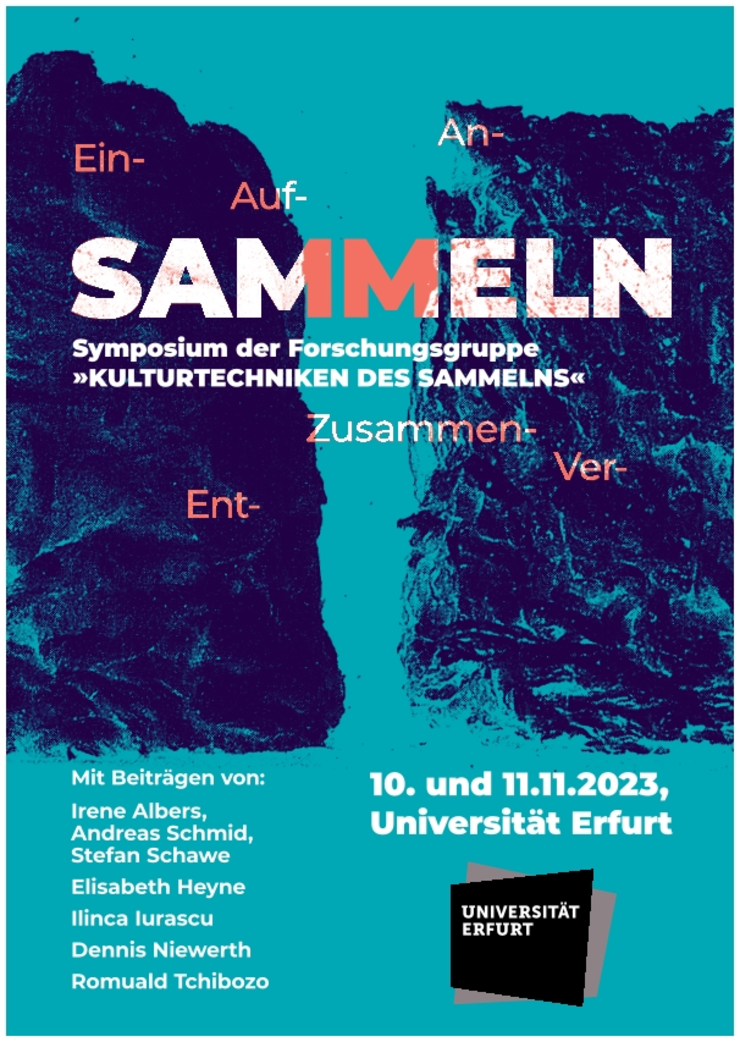
Symposium Kulturtechniken des Samelns: "Ein-/Auf-/An-//SAMMELN//Ent-/Zusammen-/Ver-"
On November 10 and 11, 2023, the research group "Kulturtechniken des Sammelns" hosted a symposium in Gotha and Erfurt. Entitled "Ein-/Auf-/An-//SAMMELN//Ent-/Zusammen-/Ver-," the symposium examined various aspects of collecting practices and their impacts. The event commenced on Friday, November 10, with a visit to the Perthes Collection, where selected materials and their methods of collection were discussed. Following this visit, the official welcome took place at the KIZ on the Erfurt campus, where the panels and discussions with international guests continued.
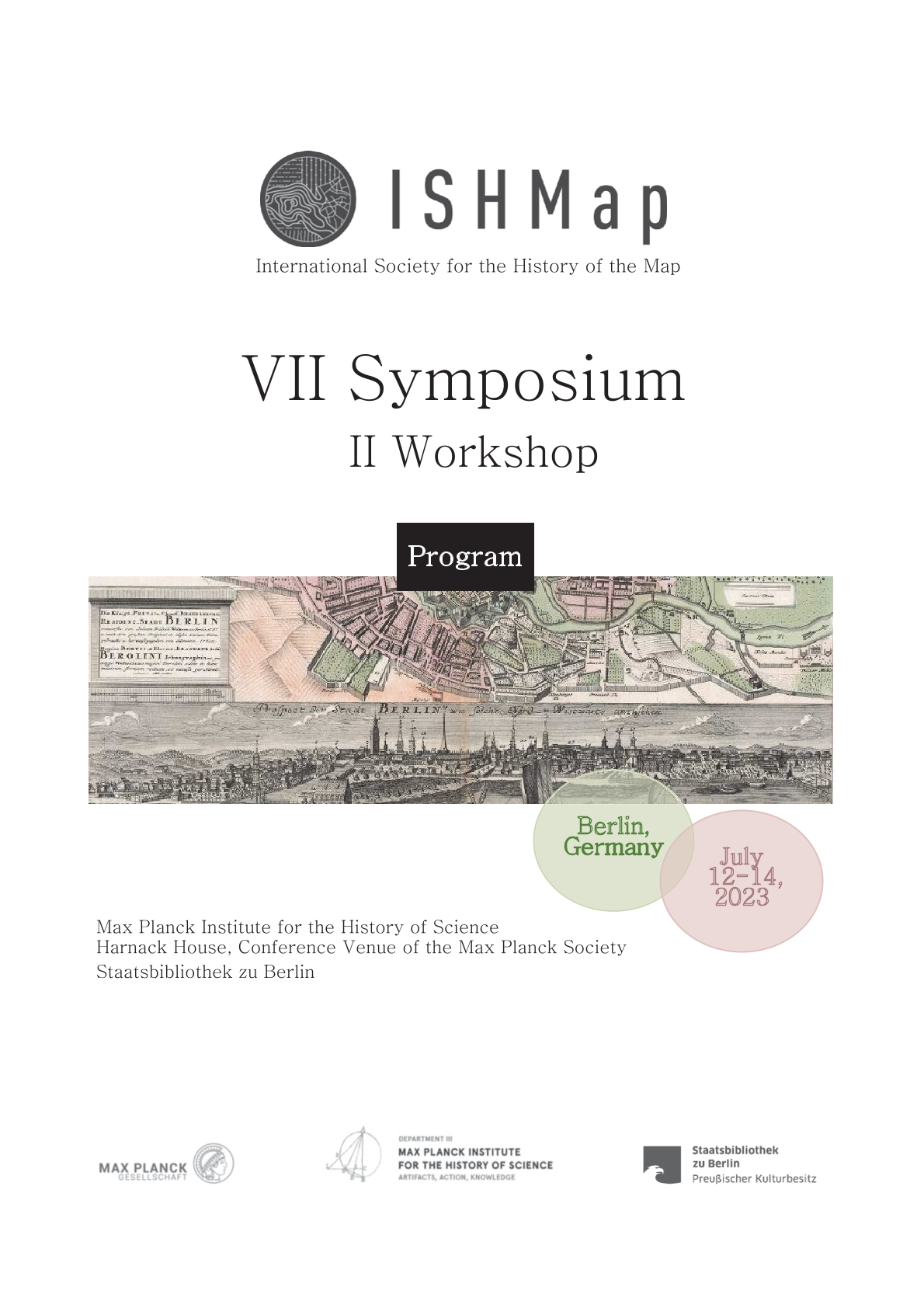
ISHMap Symposium 2023 in Berlin with Field Trip to Gotha
The VIIth Symposium of the International Society for the History of the Map (ISHMap), featuring interdisciplinary presentations on the history of cartography and a workshop for early-career professionals, was held from July 10 to 15, 2023, at the Max Planck Institute for the History of Science (MPIWG) in Berlin. After the conference, international scholars took a field trip to Gotha to visit the Centre for Transcultural Studies and the Perthes Collection.
Second Annual Meeting of the German-Ethiopian Scholarship Initiative
From May 9 to 11, 2023, the Second Annual Meeting of the German-Ethiopian Scholarship Initiative took place at the Centre for Transcultural Studies in Gotha. The Centre hosted a networking event for fellows from various European universities and research institutions, organized as part of the scholarship initiative by the Gerda Henkel Foundation.
read more
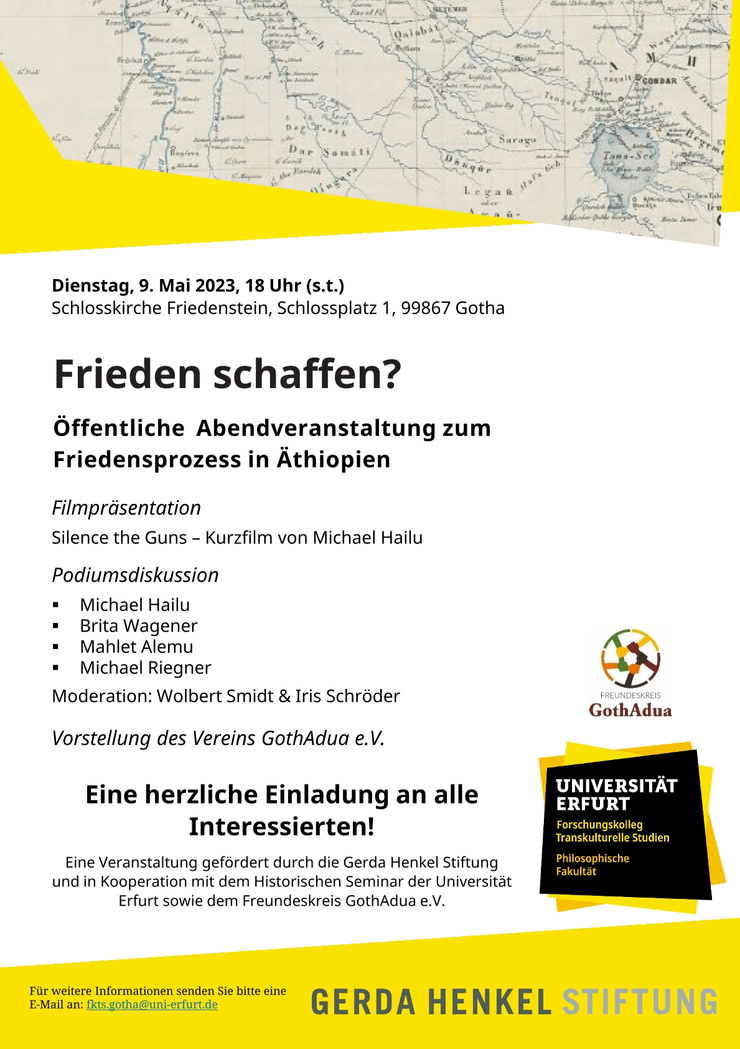
Building Peace? Public Evening Event on the Peace Process in Ethiopia
The panel discussion took place on May 9, 2023, at 6.00pm at the Palace Chapel in Friedenstein Castle, Gotha. The roundtable addressed the Ethiopian civil war and the recently initiated peace process. The panel featured Ethiopian artist Michael Hailu, former German Ambassador to Ethiopia Brita Wagener, Dr. Alula Tesfay, and Erfurt-based international law expert Michael Riegner, who discussed the question, “How to Build Peace?” The event was part of the lecture series "Building Peace" organized by the Historical Seminar of Erfurt University and the Second Annual Meeting of the German-Ethiopian Scholarship Initiative. It was supported by the Gerda Henkel Foundation and the Freundeskreis GothAdua e.V.

KarAfAs Final Conference "Territoriality and Its Other"
From January 12 to 13, 2023, the conference “Territoriality and Its Other” took place at the Centre for Transcultural Studies / Perthes Collection, marking the conclusion of the project “Cartographies of Africa and Asia (1800–1945). A Project for the Digitization of the Perthes Collection Gotha (KarAfAs)”. The KarAfAs project was funded by the Federal Ministry of Education and Research under the eheritage programme line.
The conference was opened on January 12 with a keynote by Israeli researcher Zef Segal on the Jabotinsky-Perlman Atlas (1925). It revisited key research discussions from the digitization project and explored new perspectives that went beyond its original scope. The conference placed special emphasis on the complex interplay between concepts of territoriality and cartography, which frequently challenge seemingly clear-cut definitions. The working group "Territoriality and Cartographic Knowledge" invited participants to delve into these issues.
Global History Colloquium
In the summer term of 2022 and the winter term of 2022/23, the Global History Colloquium was held as a series at the Centre for Transcultural Studies / Perthes Collection in Gotha. Ongoing research from the Chair of Global History was presented and discussed based on pre-circulated papers.
Programme Summer Term 2022 Programme Winter Term 2022/23
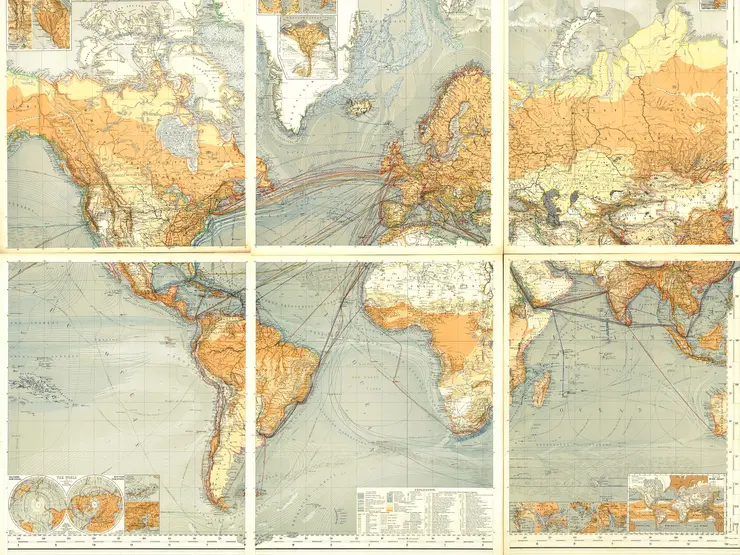
Image: Chart of the World (detail) © Gotha Perthes Collection
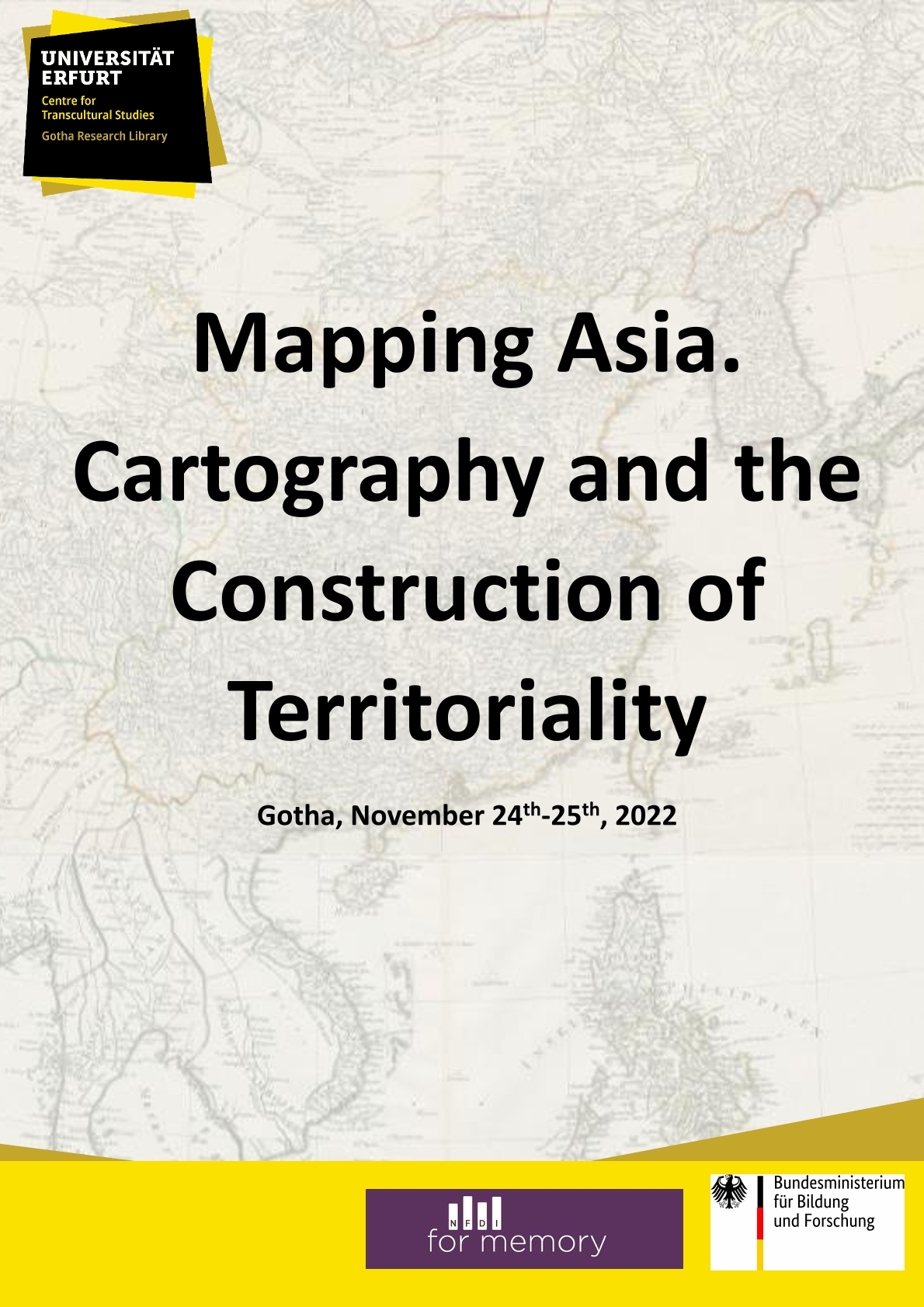
International Conference "Mapping Asia: Cartography and the Construction of Territoriality"
From November 24 to 25, 2022, the international conference "Mapping Asia: Cartography and the Construction of Territoriality" was held in Gotha. The event was organized as part of the BMBF-funded research project "Cartographies of Africa and Asia. A Project for the Digitization of Maps of the Perthes Collection Gotha (KarAfAs)" and hosted by the Centre for Transcultural Studies / Perthes Collection. International scholars examined how territoriality was constructed and challenged in Asian cartography from the late 18th to the 20th century. The conference also featured a visit to the Perthes Collection, showcasing selected highlights from the collection.
The program and further information can be found on the conference website. The event was open to the university community.
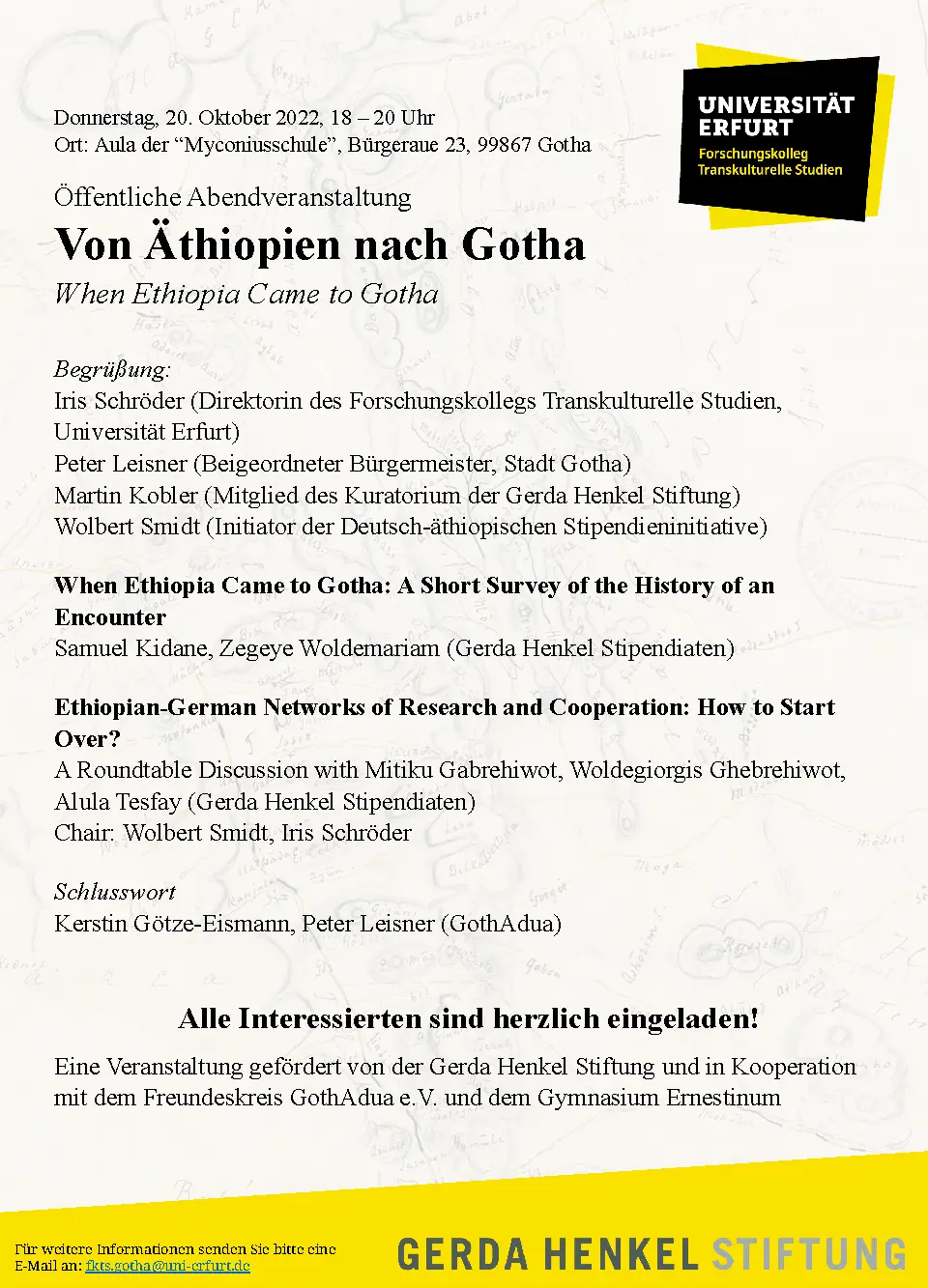
First Annual Meeting of the German-Ethiopian Scholarship Initiative
On October 20 and 21, 2022, the first annual meeting of the German-Ethiopian Scholarship Initiative, funded by the Gerda Henkel Foundation, took place at the Centre for Transcultural Studies in Gotha. Organized by scholars based in Gotha, the event featured a comprehensive program. All participants shared insights about their ongoing work in history, anthropology, geography, media studies, and their artistic projects.
read more
Public Evening Event: From Ethiopia to Gotha
Thursday, October 20, 2022, 6 to 8pm
Auditorium of the Myconiusschule, Gotha
In collaboration with the GothAdua e.V. Association and the Gymnasium Ernestinum
The conference was supported by the Gerda Henkel Foundation.
Network Meeting "Modern Expeditions"
From June 23 to 25, 2022, members of the DFG Research Network "Modern Expeditions" gathered in Gotha to present and discuss ongoing projects. The presentations covered various expeditions from the 19th to the 20th century, focusing on technical and epistemic aspects of scientific work. The meeting featured a keynote by Jeremy Vetter (Tucson, Arizona), which explored how to think about and write the history of scientific work conducted in the field.
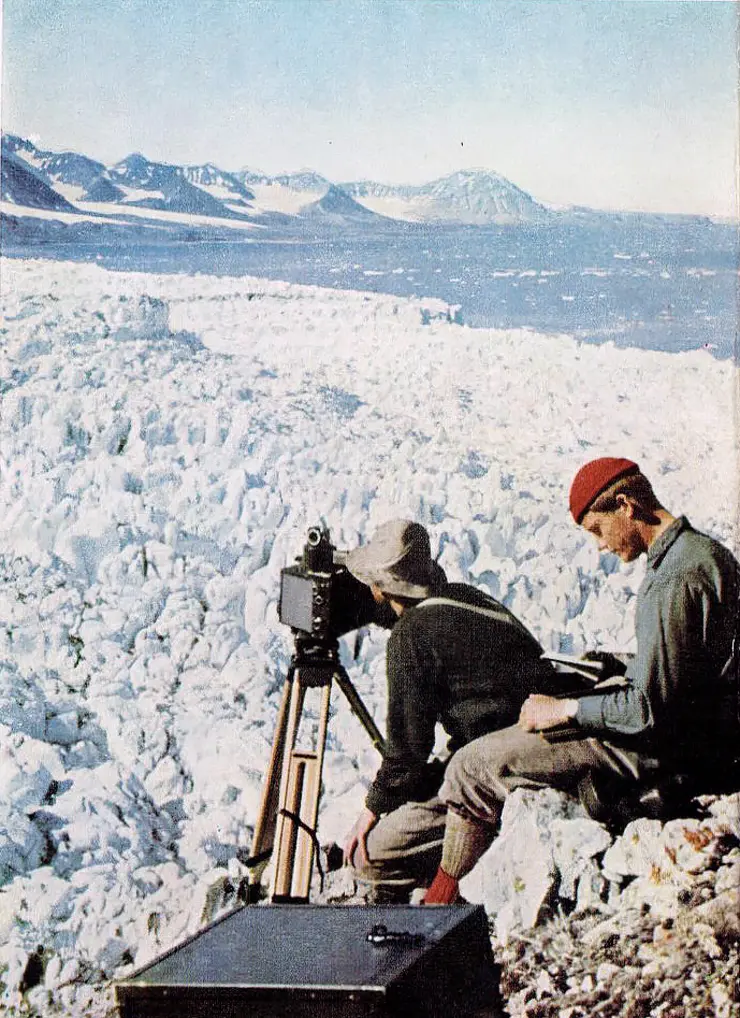
Image: Cover Image from Wolfgang Pillewizer, Gletscherland in der Arktis, Leipzig 1965.

“Nordlichter” Conference: German History in Transnational Perspective
Each year, the “Nordlichter” – professors of contemporary history from northern Germany – come together for a conference to present and discuss the latest dissertation and postdoctoral projects from their departments. After a two-year hiatus due to the pandemic, the "Nordlichter" conference was held once more from May 20 to 21, 2022, focusing on “German History in Transnational Perspective.” The event was organized by the Department of Contemporary History (Prof. Dr. Christiane Kuller) and the Global History Department (Prof. Dr. Iris Schröder) at Erfurt University, who invited colleagues from universities such as Göttingen, Bonn, Kiel, Flensburg, and Hamburg to Gotha. A notable highlight of the conference was a guided tour through the Perthes Collection, where Sven Ballenthin showcased the collection and the practices of mapmaking
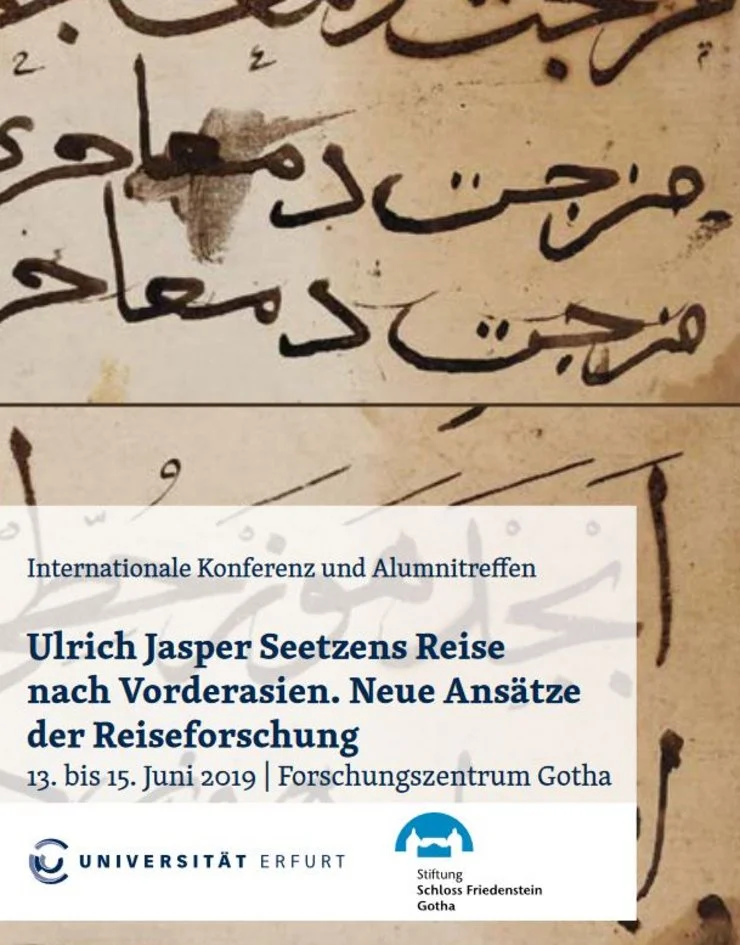
International Conference and 4th Alumni Meeting "Ulrich Jasper Seetzen's Journey to the Near East: New Approaches in Travel Research"
In June 2019, the Gotha Research Centre of Erfurt University hosted an interdisciplinary international conference on Ulrich Jasper Seetzen. The event was organized in collaboration with former Herzog-Ernst-Fellow Dr. Natalia Bachour (Zurich) and the Gotha Collection and Research Network. Held in conjunction with the 4th Alumni Meeting of the Herzog-Ernst Fellowship Programme, the conference aimed to offer new perspectives on Seetzen's travels. The goal was to gather unexplored sources, shed light on various aspects of the material Seetzen left behind, and discuss new approaches to its study.
The conference was funded by the Fritz Thyssen Foundation.
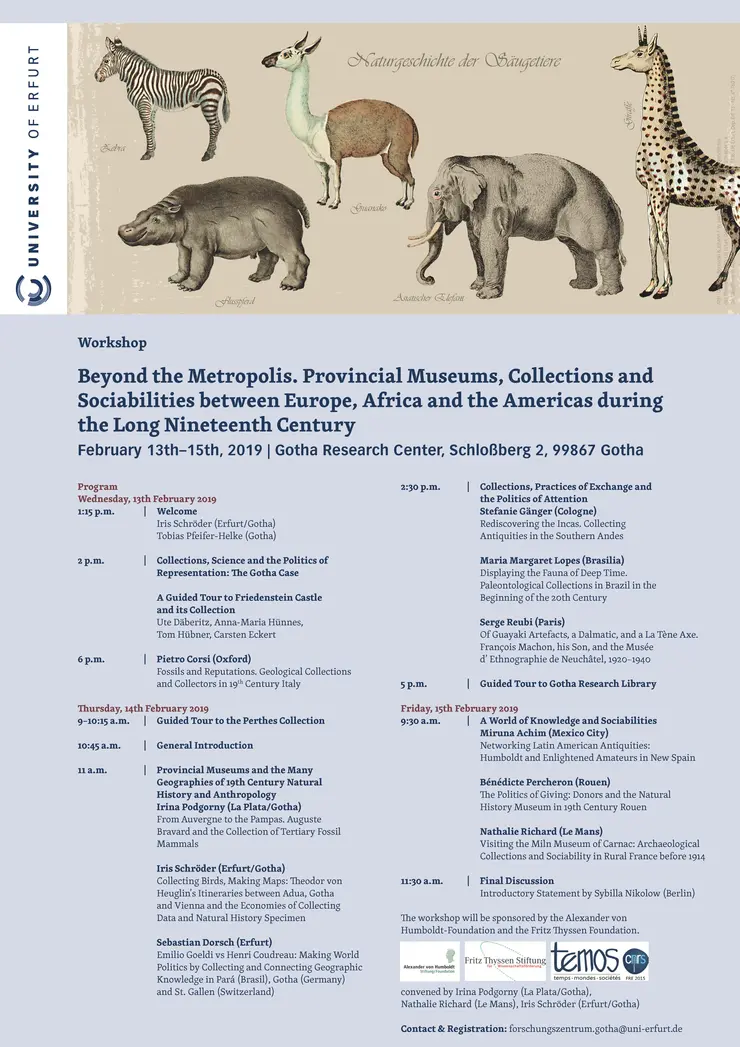
International Workshop "Beyond the Metropolis
From February 13 to 15, 2019, the international workshop "Beyond the Metropolis: Provincial Museums, Collections, and Sociabilities between Europe, Africa, and the Americas during the Long Nineteenth Century" took place in Gotha. It was organized under the direction of Irina Podgorny, Nathalie Richard, and Iris Schröder.
The event was funded by the Alexander von Humboldt Foundation and the Fritz Thyssen Foundation.
Further information:
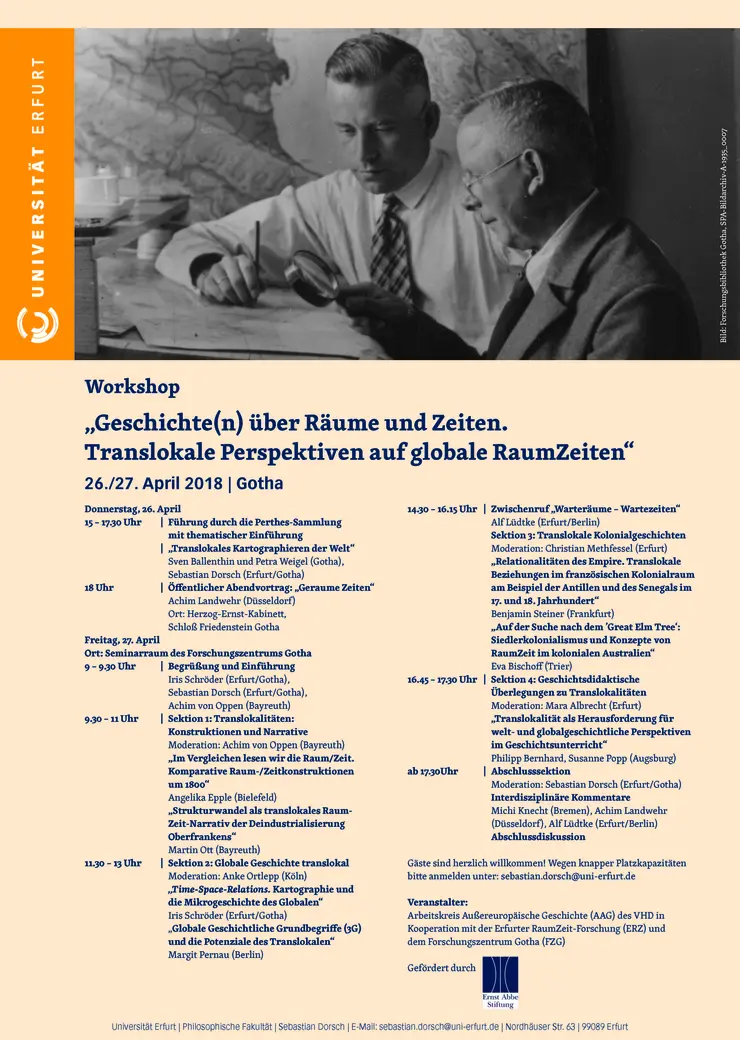
Conference "Geschichte(n) über Räume und Zeiten. Translocal Perspectives on Global Spacetimes"
On April 26 and 27, 2018, the conference "Geschichte(n) über Räume und Zeiten. Translocal Perspectives on Global SpaceTimes" was held at the Gotha Research Centre. The event was organized in collaboration with Erfurt University's SpatioTemporality Research Group and the "Arbeitskreis Außereuropäische Geschichte" (AAG) of the VHD. Its aim was to elaborate on and discuss how spatial and temporal dimensions intersect in historical research. For this occasion, the focus was particularly on the concept of translocality.
The conference was funded by the Ernst Abbe Foundation.
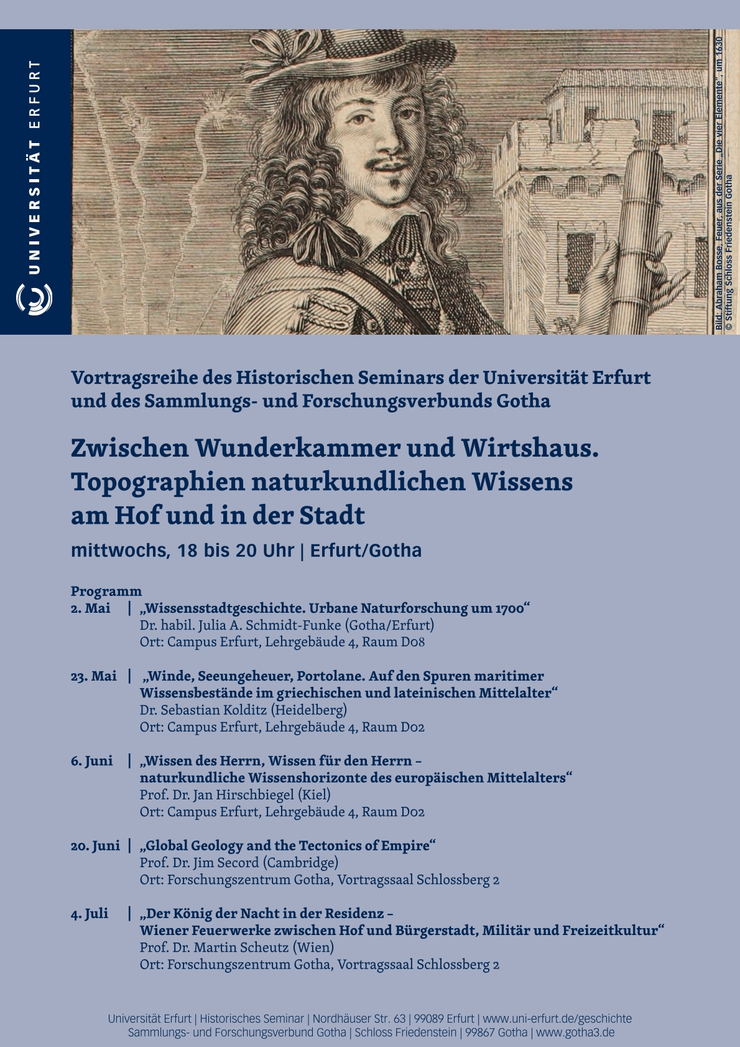
Lecture series "Zwischen Wunderkammer und Wirtshaus. Topographien naturkundlichen Wissens am Hof und in der Stadt"
Lecture series of the Department of History
Wednesdays, 18.15-19.45, usually LG4/D02
In the summer semester 2018, the Department of History cordially invited all interested parties to the lecture series "Zwischen Wunderkammer und Wirtshaus. Topographien naturkundlichen Wissens am Hof und in der Stadt" .

International Workshop "Transimperial Cooperation and Transfers in the Age of Colonial Globalization. Towards a Triangular History of Colonialism?"
Gotha Research Centre and Erfurt University, 22-24 March 2018
This workshop explores to what extent transimperial cooperation and transfers shaped colonial governmentality in the 19th and 20th centuries. Going beyond the conceptual and ideological similarities between empires, the focus is on colonizers and colonized who used cooperation and transfers to increase their agency. Referring to the concept of "triangulation" we ask whether shifting networks and solidarities among three groups led to the reinforcement of colonial domination (two colonizing powers against the colonized) or the subversion of colonial hierarchies (indigenous solidarity against the colonizer). In a long-term perspective, the workshop seeks to examine how imperial and anti-colonial forms of cooperation were institutionalized and thus impacted the development of international organizations in the 20th century.
Organizers:
Florian Wagner (Erfurt) and Christian Methfessel (Erfurt) Gotha Research Centre (22 March) and Augustinerkloster Erfurt (23-24 March)
Funded by the Forum for the Study of the Global Condition and the Ernst-Abbe-Stiftung.
For further Information:
Public Evening Lecture Corey Ross (Birmingham): The Nature of Trans-imperialism: Ecological Interconnections and Colonized Environments Conference room, Gotha Research Center, 22 March 2018, 5pm For further Information: Announcement

Workshop/Journée d'étude "Die ganze Welt in Gotha. Räumliche Konstruktionen und kartographisches Wissen im 19.-20. Jahrhundert/Le monde entier à Gotha. Constructions spatiales et savoirs cartographiques, XIXe-XXe siècle"
Tuesday, March 6, 2018, 9h45-17h, Perthes Forum, Gotha
Mardi 6 mars 2018, 9h45-17h, Perthes Forum, Gotha.
Led by Iris Schröder and Marie de Rugy, the workshop "Die ganze Welt in Gotha. Räumliche Konstruktionen und kartographisches Wissen im 19.-20. Jahrhundert / Le monde entier à Gotha. Constructions spatiales et savoirs cartographiques, XIXe-XXe siècle" took place.
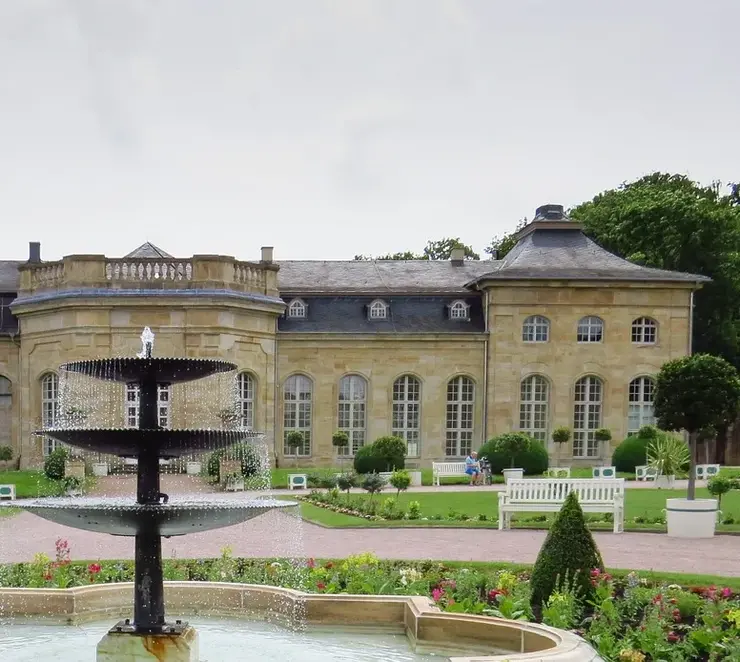
International Conference and 3rd Alumni Meeting "False Princesses, Charlatans and Self-Appointed Experts. Impostors in Modern Societies"
In July 2017, the 3rd alumni meeting of the international Duke Ernst Fellowship Program took place at the Gotha Orangery. The thematic framework was the phenomenon of imposture or fraud, which occurs in almost all historical epochs. From the perspectives of different historical epochs and different disciplines, the speakers approached the implicit norms, rules and expectations of a society that guide action and behavior.
The conference was sponsored by the Fritz Thyssen Foundation.
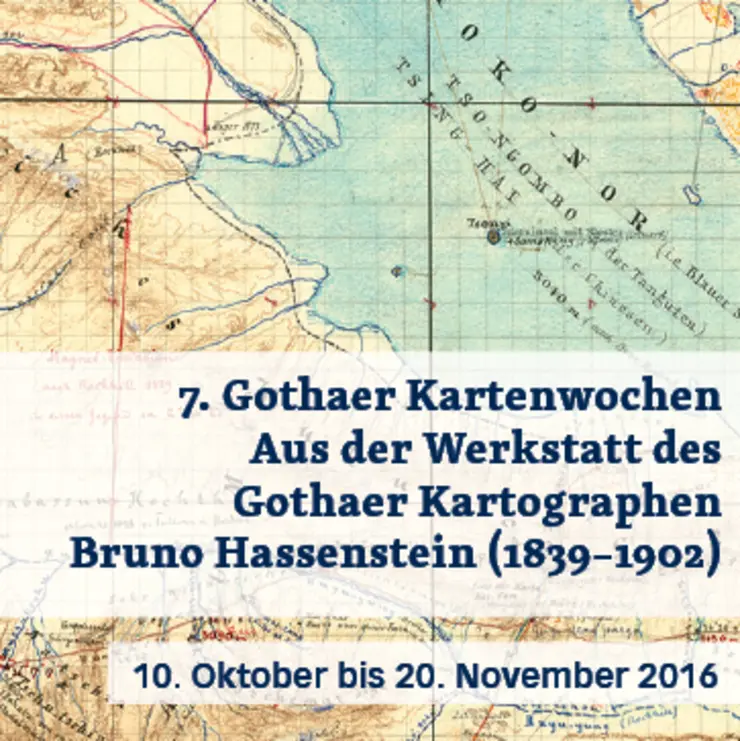
International Workshop "In the Cartographer's Head. Working methods of 19th century cartography".
From November 16-17, 2016, as part of the 7th Gotha Map Weeks, the International Workshop "In the Cartographer's Head. Working methods of 19th century cartography" took place.
Location: Ahnensaal in the Perthes Forum Gotha.
For more information, please see the programme.
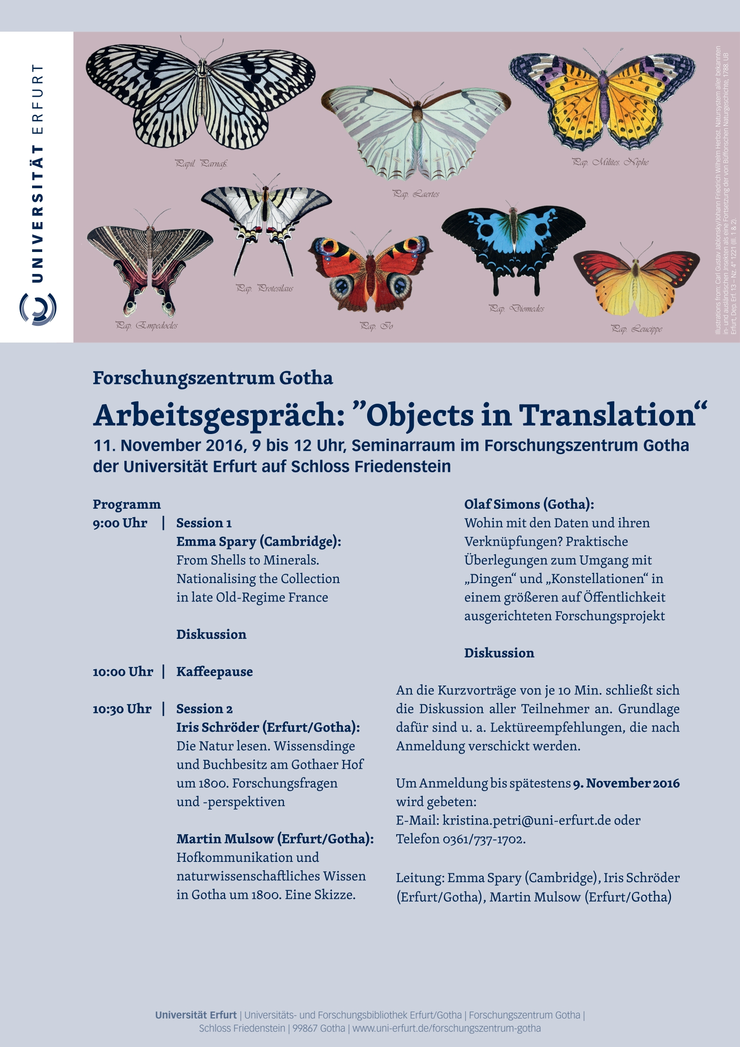
Research Discussion: "Objects in Translation"
On Friday, November 11, 2016 , the colloquium of the EPPP Knowledge History of the Modern Era included the research discussion: "Objects in Translation" with Emma Spary (Cambridge), Iris Schröder (Erfurt/Gotha) and Martin Mulsow (Erfurt/Gotha).
9-12 a.m., Seminar Room at the Gotha Research Centre
Workshop "Wissensdinge"
Under the direction of Prof. Dr. Iris Schröder (Erfurt/Gotha), the workshop "Wissensdinge" took place from June 30-July 1, 2016 in cooperation with the German Maritime Museum Bremerhaven and the Göttingen Graduate School "Materialität des Wissens" in the seminar room of the FZG.
For more information, please see the programme.
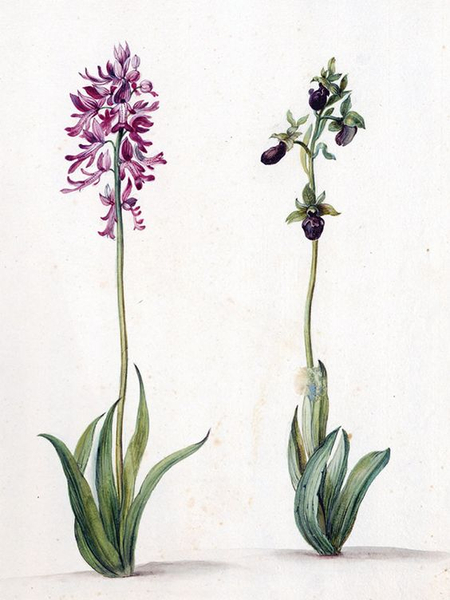
Image: Breyne Workshop. Hyacinth and lady's slipper © Gotha Research Library, Chart. A 783a, sheet 94.

Workshop "Cartographies of Temporal Dynamics" (at the same time 10th Workshop of the Erfurt SpatioTemporality Research)
From 2-3 June 2016, the workshop "Cartographies of Temporal Dynamics" took place in Gotha under the direction of Christian Holtorf (Coburg), Iris Schröder (Erfurt/Gotha) and Sebastian Dorsch (Erfurt/Gotha), kindly supported by the Ernst Abbe Foundation in Jena.
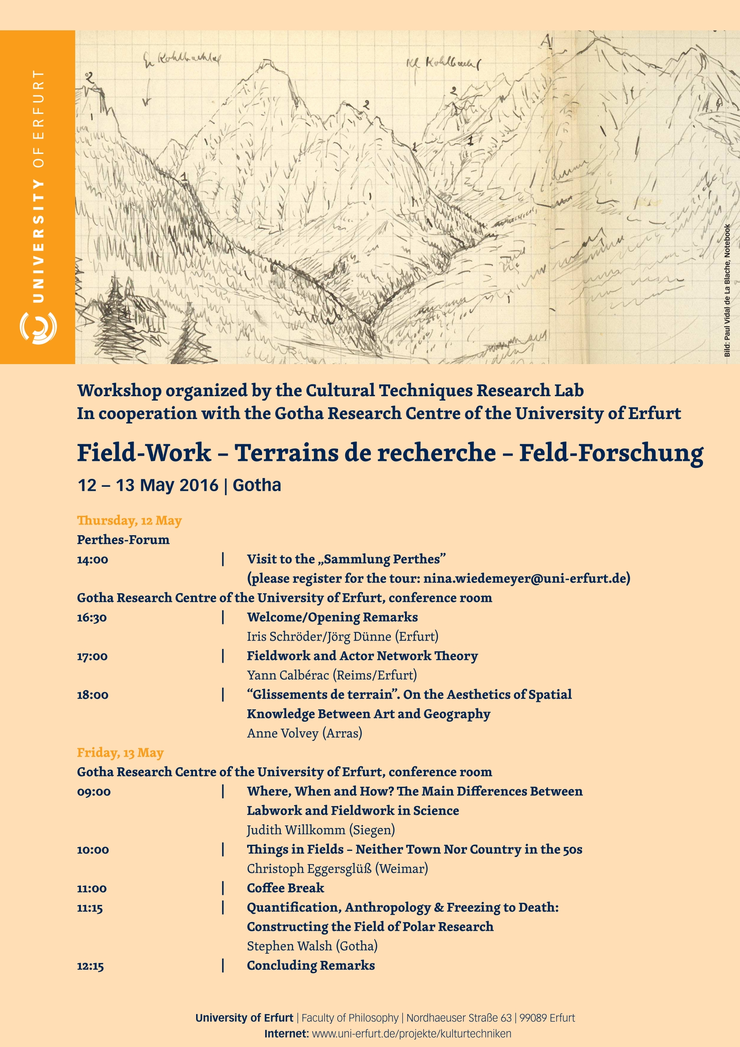
Workshop Field-Work - Terrains de recherche - Feld-Forschung
Under the direction of Yann Calbérac (Reims), Jörg Dünne (Erfurt) and Iris Schröder (Erfurt/Gotha), in cooperation with the Erfurt Lab Group Cultural Techniques, the workshop "Field-Work - Terrains de recherche - Feld-Forschung", took place in Gotha from May 12-13, 2016 .

Workshop "Military Knowledge from the 16th to the 19th Century".
On September 24/25, 2015, the workshop "Military Knowledge from the 16th to the 19th Century" took place in the seminar room of the Gotha Research Centre.
Until now, the relationship between the military and knowledge has played only a minor role in historical research. Although individual fields of knowledge, such as medicine and engineering, have repeatedly been considered, especially for warfare during both world wars, this approach is too narrow from the perspective of the history of knowledge in several respects: First, it reduces military affairs to the state of war; second, it reduces knowledge to sciences and thus neglects other learned as well as administrative, social, or experiential bodies of knowledge; and third, it sets the temporal focus solely on modernity. Recently, the conference "Military Cultures of Knowledge in the Early Modern Period" illustrated the fruitfulness of knowledge-historical approaches to the field of the military in the pre-modern period, although the focus was primarily on educational and expert knowledge and its professionalization. Following on from this, the workshop, which emerged from the doctoral program "History of Knowledge in the Modern Era" at the Gotha Research Centre of the University of Erfurt, strives for a more knowledge-praxeological approach, which also deliberately transcends the epochal boundary around 1800 and includes the 'long 19th century'.
Further information:
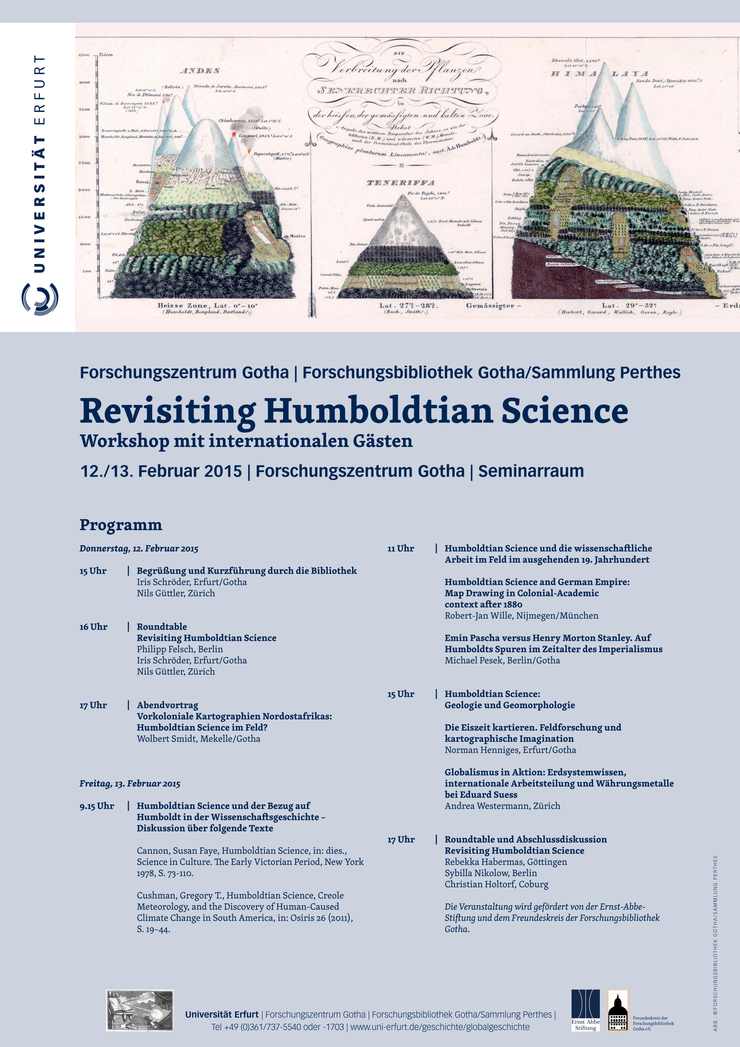
Workshop "Revisiting Humboldtian Science".
On February 12/13, 2015, the workshop "Revisiting Humboldtian Science" took place in the seminar room of the Gotha Research Centre.
The talk of "Humboldtian Science" is very familiar in the history of science of the 19th century. "Humboldtian Science," as Michael Dettelbach and Sue Faye Cannon argue, refers to a specific ethic of precision and observation that was widely shared by 19th century naturalists. By combining measurement and mapping with romantic sensibility, the boundary between academic and popular science became blurred in natural history fieldwork. Moreover, "Humboldtian Science" always remained linked to Humboldt as a person: Humboldt was not only the inventor of "Humboldtian Science", but at the same time he embodied it in an almost ideal-typical way. Those who followed him, on the other hand, stood in his shadow and were to be forgotten.
It is only recently that historians have begun to analyze more precisely the multi-layered and complex afterlife of Humboldt and his numerous undertakings. Following on from these approaches, the simple but as yet unanswered question arises: How "Humboldtian" was "Humboldtian Science"? The workshop explores this question and thus addresses the hitherto little researched interaction of professional and amateur scientists and furthermore attempts to productively link European and non-European perspectives. The aim is to define the much-cited reference to "Humboldtian Science" more precisely in order to focus on the various networks of knowledge involved, their practices, and, not least, the geography of the "scientific age" in general.
Further information:
Concept and programme
Poster Evening Lecture
Conference report

Workshop "International Organizations and Spaces of Knowledge
On July 24/25, 2014 , the workshop "International Organizations and Spaces of Knowledge" took place in the seminar room of the Gotha Research Centre.
Both international history and the history of knowledge are booming. However, the two approaches are rarely connected, although they often address similar questions and are interested in experts, networks, and the global and spatial historical references of their subject areas. The aim of the workshop has been to discuss how international history can be consistently written as knowledge history. The focus will be on questions of knowledge production and archiving, knowledge transfer, the politicization of knowledge, and the relationship between spatiality and knowledge.
Direction:
Iris Schröder (Erfurt/Gotha)
Hubertus Büschel (Gießen)
Julia Hauser (Göttingen)
Christian Methfessel (Erfurt)
Jonas Brendebach (Florence).
A collaborative project of the Gotha Research Centre at the University of Erfurt (FZG), the International Graduate Centre for the Study of Culture (GCSC) at the Justus Liebig University Giessen, the Graduate School for the Humanities Göttingen (GSGG) and the Department of History and Civilization (HEC) at the European University Institute, Florence.
Further information:
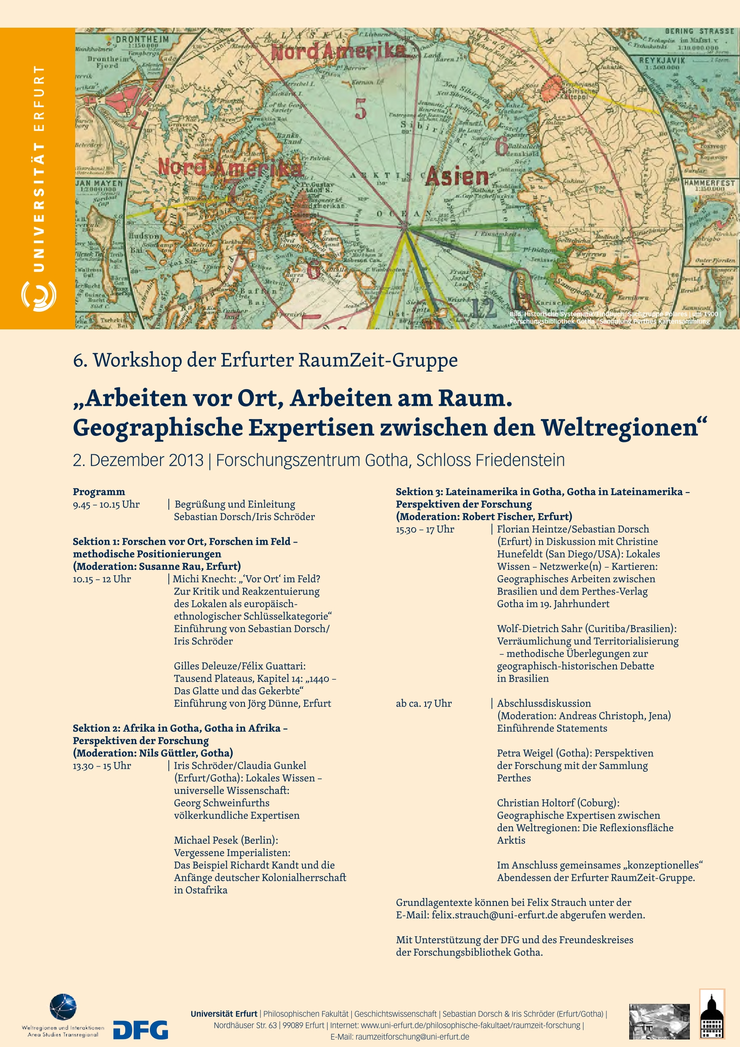
6th Workshop of the Erfurt SpatioTemporality Research
On December 2, 2013, in the seminar room of the Gotha Research Centre , the workshop "Working on Location, Working on Space. Geographical Expertise between World Regions" took place.
The 6th workshop of the Erfurt SpatioTemporality Research Group ERZ, founded in 2011, explored the question of how on-site experience "in the field" is inscribed in scientific, geo/mapping practices. The empirical starting point was the collection of the Perthes publishing house, which is kept in the Gotha Research Library. The tradition of this collection makes it possible to follow more closely both explorers in the field and the genesis of geo/cartographic knowledge and the production of the corresponding geo/cartographies.
Case studies of explorers, geographers, and cartographers of the late 19th century were discussed alongside foundational texts from Ethnology, Philosophy, and Cultural Studies. Regional points of reference were Africa and Latin America as well as the "project area Arctic".
Further information:
![[Translate to English:] facebook icon](/fileadmin/SocialMediaIcons/iconfinder_06-facebook_white.svg)

![[Translate to English:] instagram icon](/fileadmin/SocialMediaIcons/iconfinder_38-instagram_white.svg)
![[Translate to English:] YouTube icon](/fileadmin/SocialMediaIcons/iconfinder_18-youtube_white.svg)
![[Translate to English:] xing icon](/fileadmin/SocialMediaIcons/iconfinder_xing_white.svg)
