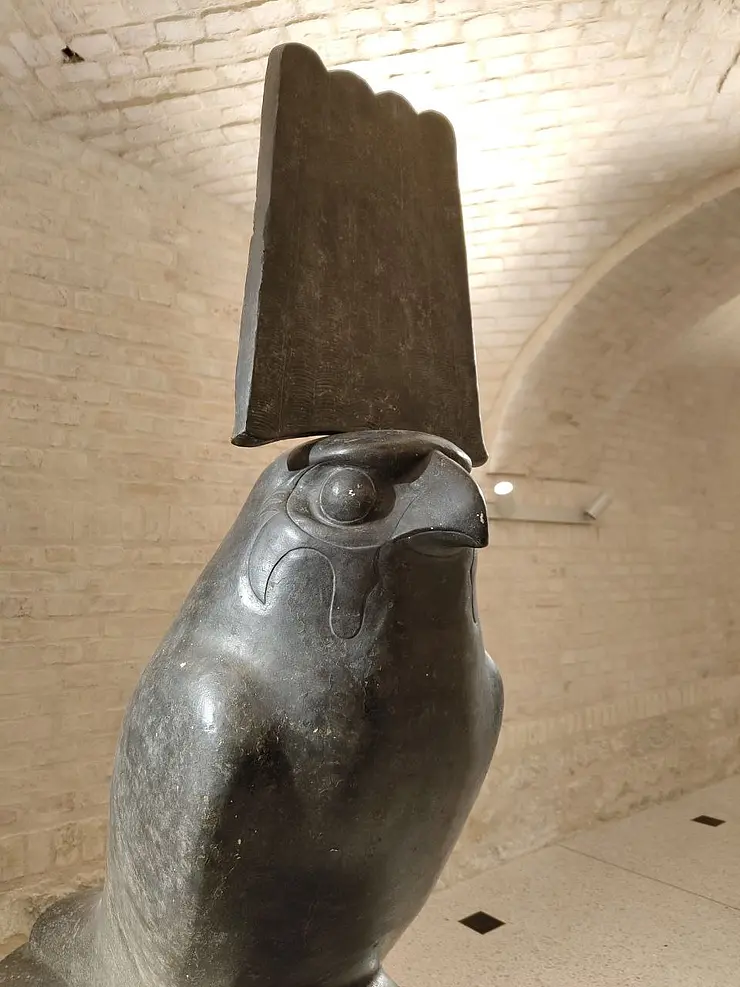
In November 2025, the graduate school “History of Knowledge” went on an excursion to Berlin to discuss issues of provenance research, using the museums of the Prussian Cultural Heritage Foundation as an example. In the morning, these issues were discussed with Dr. Christine Howald and Prof. Dr. Alexis von Poser, accompanied by a visit to the Museum of European Cultures, where Maria Looks provided insight into provenance research on the Sami collections. In the afternoon, the discussion was taken up again at the Humboldt Forum with Prof. Dr. Hartmut Dorgerloh and finally continued with Dr. Ilona Regulski and Prof. Dr. Ahmed Adam on the Sudanese collections in the Egyptian Museum. The excursion was organized by Dr. Ohiniko Mawussé Toffa and Dr. Sara Müller.
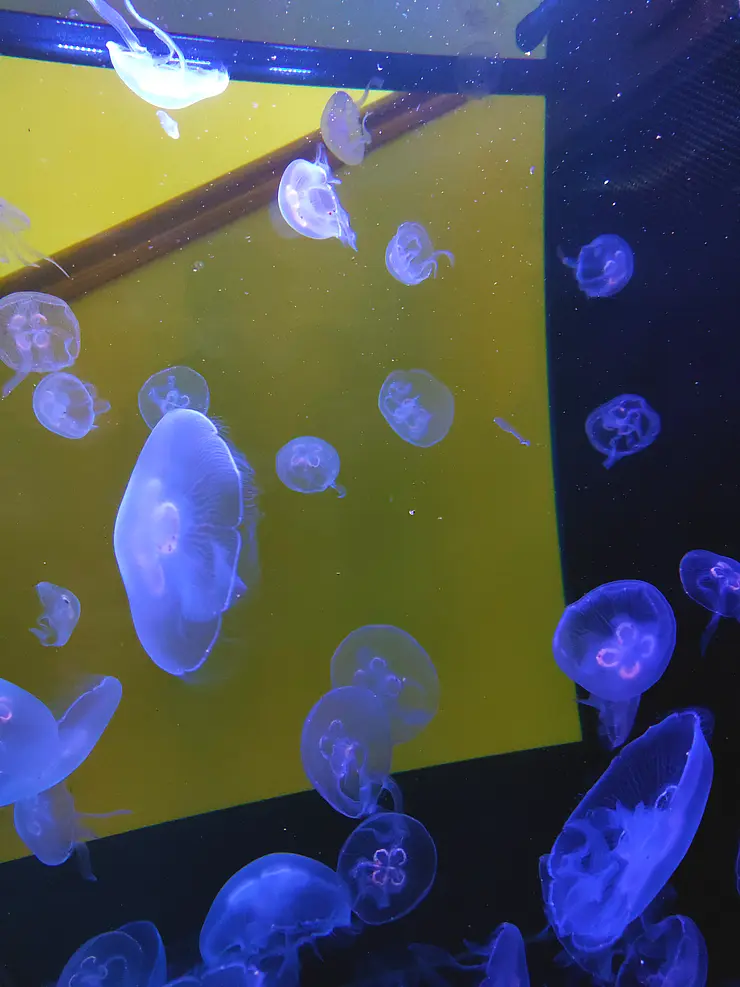
On May 16, 2025,the graduate school “History of Knowledge” went on an excursion to Jena to visit the Phyletisches Museum and the Ernst-Haeckel-Haus. The focus of the visit included questions regarding collection practices as well as the colonial and racist contexts of the museum’s collections.
At the Phyletisches Museum, Bernd Bock guided the group through the permanent exhibition, providing insights into the exhibition’s concept and the history of individual exhibits. Afterward, in the museum’s storage facility, the group was given insights into the preparation of specimens, the (dis)order of the objects, and their classifications. Dr. Ulrike Lötsch (Anatomical Collection of the University of Jena) further explored these insights using the history of Ernst Haeckel’s brain as a case study, highlighting how ideological dimensions have been intertwined with brain research since the early 20th century.
Afterward, the graduate school visited the Ernst-Haeckel-Haus, where Dr. Florence Vienne guided the group through the premises as well as the existing and planned exhibition areas. Here, the colonial and racist contexts of the objects were the focus of the discussion as well.
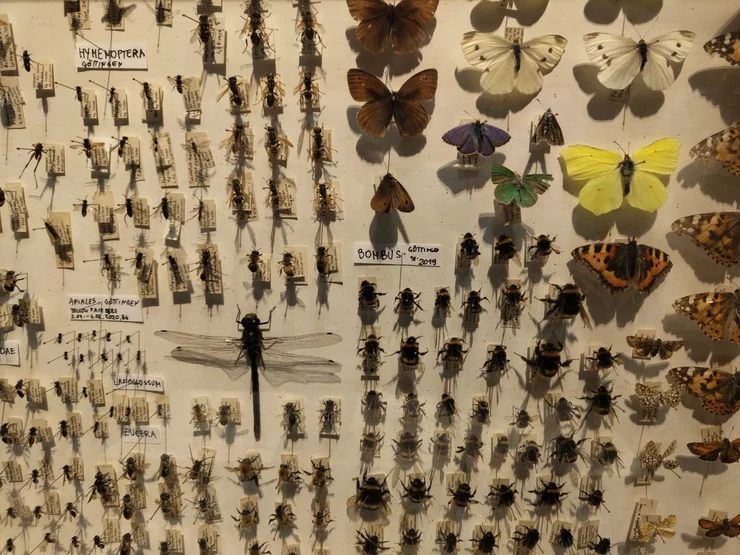
On 23 April 2020, the graduate school "History of Knowledge" went on an excursion to Göttingen. The excursion was centred around a visit to the Forum Wissen, which presents the university collections of the Georg-August-Universität Göttingen in a museum and research setting. The guided tours by Dr Christian Vogel focused on questions of knowledge: production, circulation and the (university) contexts in which knowledge is created. These questions were explored using objects, instruments and practices in order to discuss the diverse processes of knowledge production. This was followed by a visit to the memorial colloquium for the historian Rebekka Habermas, who died in December 2023. In this context, Bettina Brockmeyer (Giessen), taking up Rebekka Habermas' theses, spoke on the topic: "Indifferenz und Ignoranz statt Amnesie und Aphasie. Zum westdeutschen Umgang mit der Kolonialvergangenheit (1945-1989)".
The graduate school "History of Knowledge" presents its work within the framework of the Themenportal Europäische Geschichte with its own thematic focus: Under the heading "European History, History of Knowledge", sources and essays show how fruitful approaches to the history of knowledge are for the historiography of Europe. Based on selected source materials, Marian Hefter, Marie Nosper, Elisa Kewitsch, Erik Liebscher, Anna-Maria Hünnes, Annika Dörner and Verena Bunkus explore rather unusual places of knowledge in line with their dissertation topics. The publications can be accessed online on the Themenportal Europäische Geschichte (www.europa.clio-online.de).
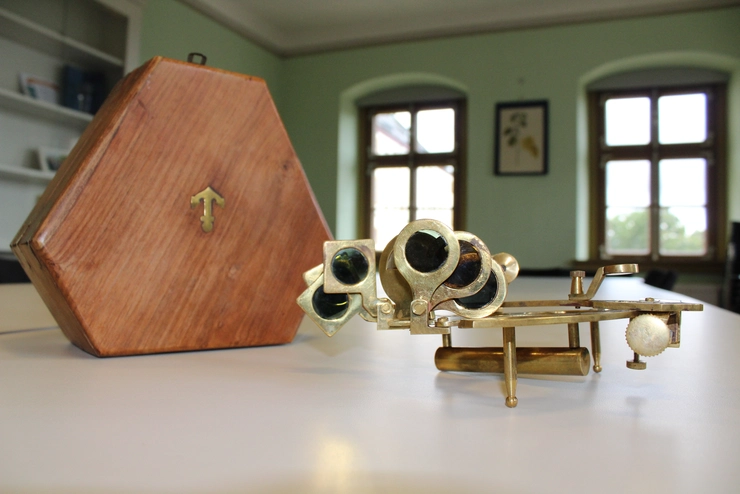
In October 2022, the graduate school "History of Knowledge" met for the second one-day workshop on research question. The doctoral candidates and senior scholars of the graduate school discussed central questions of the individual dissertation projects. The event followed the successful first workshop on the topic of "What makes a strong research question?": The central task was to outline and precisely define this question, which enabled all ongoing dissertation projects to take centre stage.
The excursion of the graduate school to Dresden in September 2021 was entitled "Collecting knowledge/presenting knowledge". For five days, the participants explored questions of collecting, presenting and imparting knowledge from the 17th to the 21st century. A report can be found here.
The graduate school "History of Knowledge", which was established as part of the Erfurt Doctoral and Postdoctoral Programme (EPPP), provides structured training for doctoral candidates. In contrast to previous practice in the humanities, doctoral students do not work individually on their respective dissertations as part of the graduate school, but pursue their topics under the umbrella of a joint research programme and take part in regular joint events such as lectures, reading seminars and workshops. But how do you organise this joint work in times of contact restrictions and isolation and working from home? Quite simply: by introducing a virtual writing time.
Verena Bunkus and Anna-Maria Hünnes, doctoral candidates of the graduate school, provide information about the beginnings and further progress of this endeavour:
Virtual writing time: Working together in times of the pandemic (2020)
Virtual writing time: Update (2021)
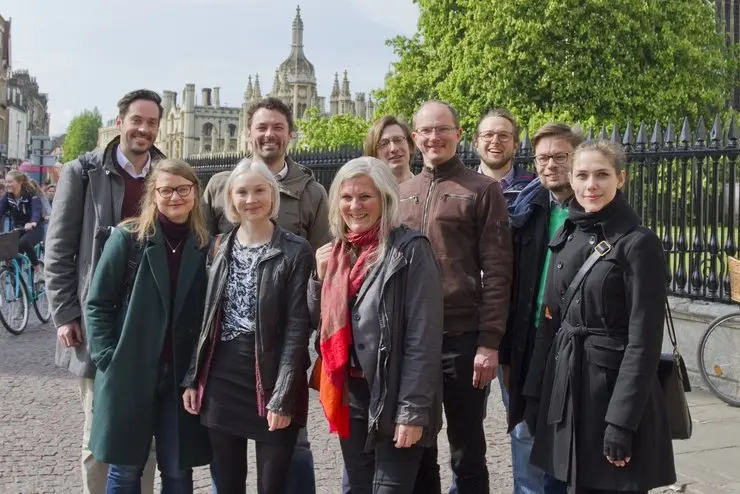
From 6 to 12 May 2019, the graduate school "History of Knowledge" went on an excursion to Cambridge. Located around 100 km north-east of London, the city is not only the seat of one of the two most famous British universities, but is also home to a large number of important museums and university collections and is one of the leading centres of the history of knowledge and science in the English-speaking world, with which the Gotha graduate school maintains a number of cooperative relationships and close personal contacts. Thanks to the local partners, the Gotha group, led by the spokesperson of the graduate school, Professor Dr Iris Schröder, gained an in-depth insight into various research and exhibition projects of interest to the history of knowledge during their week-long visit, as well as a personal impression of academic life at one of the oldest English-speaking universities in the world with its unique college system.
The excursion report written by Thomas Schader, one of the fellows, provides a detailed overview of the programme:
Picture: Group photo of the excursion participants in front of King's College Chapel, Cambridge.
![[Translate to English:] facebook icon](/fileadmin/SocialMediaIcons/iconfinder_06-facebook_white.svg)

![[Translate to English:] instagram icon](/fileadmin/SocialMediaIcons/iconfinder_38-instagram_white.svg)
![[Translate to English:] YouTube icon](/fileadmin/SocialMediaIcons/iconfinder_18-youtube_white.svg)
![[Translate to English:] xing icon](/fileadmin/SocialMediaIcons/iconfinder_xing_white.svg)

University of Erfurt (Campus)
Nordhäuser Str. 63
99089 Erfurt