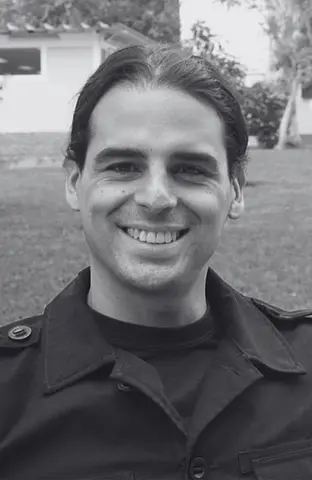
Prof. Dr. Gianfranco Casuso
gcasuso@pucp.edu.peFellow (Max Weber Centre for Advanced Cultural and Social Studies)
Office hours
by appointment
Mailing address
Universität Erfurt
Max Weber Centre for Advanced Cultural and Social Studies
Postfach 90 02 21
99105 Erfurt
Personal Information
Gianfranco Casuso is Professor of Philosophy in the Department of Humanities at the Pontifical Catholic University of Peru, where he also directs the Research Group on Critical Theory. He holds a PhD in Philosophy from the University of Frankfurt. He is an Associate Member of the Collaborative Research Centre TRR 294 “Structural Change of Property”, based at the Universities of Erfurt and Jena.
His work focuses on political and social philosophy, the philosophy of economics, theories of democracy, and modern philosophy, especially German idealism. He currently researches on property and extractivism in countries with a colonial past, as well as issues of economic informality, the popular economy, and solidarity economy. He directs the project: Property Regimes, Extractive Industry, and Autonomous Government: An Interdisciplinary Proposal for Theoretical Construction Based on the Analysis of Three Cases in Peru, funded by the Pontifical Catholic University of Peru.
Research Project
My research project examines the conflicts generated by extractive activities, particularly large-scale mining, in rural and Indigenous communities in Latin America. It seeks to develop a philosophical framework for understanding the complex relationships between property, economic appropriation, and collective self-determination, drawing primarily on G. W. F. Hegel’s account of property and John Christman’s distinction between income rights and control rights.
A widespread interpretation of extractive conflicts presents them as an opposition between market interests and communal forms of life. According to this view, communities are forced to choose between accepting the economic opportunities offered by mining and preserving their collective institutions and ways of life. The project challenges this dichotomy. It argues that such an approach overlooks the social and institutional conditions that make property relations possible in the first place, while also reducing the motivations behind community demands to either economic self-interest or resistance to market expansion.
The theoretical starting point is Hegel’s conception of property as a necessary moment in the realization of freedom. Against approaches that understand ownership as an immediate relation between an individual will and an external object, Hegel shows that appropriation is socially mediated and depends on forms of recognition and ethical relations. Property cannot therefore be reduced to the possession, use, transformation, or exchange of material things. Its realization also presupposes social conditions that enable individuals to develop and exercise their agency. From this perspective, certain dimensions of property are not simply external restrictions on individual ownership; they are constitutive conditions of its meaningful exercise.
The project complements this account with John Christman’s distinction between two dimensions of ownership: income rights, which concern the economic benefits derived from an asset, and control rights, which concern the authority to determine its use and access. Whereas the former are primarily associated with welfare, the latter are connected to autonomy. This distinction makes it possible to examine how demands for economic benefits may coexist and come into tension with claims concerning territorial control and collective self-determination. The central argument is that reducing property to its income-generating function can obscure and undermine the social conditions that make ownership a meaningful institution of freedom.
The theoretical framework is examined through three cases in Peru: the community of Michiquillay, in Cajamarca, where mining exploration and the prospect of a Social Fund have reshaped expectations concerning community membership; Ango Raju, in Áncash, where a communal enterprise provides services to the Antamina mining company and generates substantial economic benefits, while raising questions about the restricted scope of community participation; and several communities in Chumbivilcas, Cusco, where small-scale family mining operates within communal territories and remains subject to the authorization of community assemblies.
By bringing philosophical reconstruction into dialogue with empirical research, the project aims to develop a relational understanding of property and extractive conflicts. It investigates how the pursuit of economic benefits can interact with, transform, and sometimes weaken the institutions through which communities exercise control over their territories. Its broader purpose is to identify the social pathologies that arise when the visible, economic dimension of property is treated as its sole foundation, thereby obscuring the ethical and institutional conditions of autonomy and collective agency. Rather than opposing market participation to communal life, the project seeks to clarify the conditions under which economic appropriation can be reconciled with the preservation and transformation of collective forms of self-determination.
Publications
- Casuso, G. (in press). Social criticism as the foundation of democracy: Two pragmatist models and the need to generate problems. In K. Mertel, J. Serrano, & G. Casuso (Eds.), Democratizing social critique: Social and political philosophy after James Bohman. Routledge.
- Casuso, G. (Ed.). (2026). Democracia, propiedad y genealogías coloniales: La teoría crítica y las crisis del presente [Democracy, property and colonial genealogies: Critical theory and the crises of the present]. Fondo Editorial PUCP.
- Casuso, G. (2025a). Countering the pathologies of recognition: Towards an inferentialist-expressivist strategy for social critique. European Journal of Pragmatism and American Philosophy, 17(2). https://doi.org/10.4000/15d8v.
- Casuso, G. (2025b). Marxism, pragmatism and the precedents of Mariátegui’s critical thought: Reflections on the emergence of social criticism in Peru. In O. Kozlarek & G. Leyva (Eds.), Global critical theories (pp. 53–68). Springer. https://doi.org/10.1007/978-3-658-47185-9
- Casuso, G. (2024). Sufrimiento y patologías socio-epistémicas: El problema de la asintomaticidad social [Suffering and socio-epistemic pathologies: The problem of social asymptomaticity]. In H. Monarca (Ed.), Regímenes de verdad en educación (pp. 142–154). Dykinson.
- Casuso, G. (2023). Social criticism, dissonance and progress: A socio-epistemic approach. Philosophy & Social Criticism, 49(8), 975–997.
- Casuso, G. (2022). Crítica social, disonancia y progreso [Social criticism, dissonance and progress]. In G. Casuso (Ed.), Filosofía y cambio social: Contribuciones para una teoría crítica de la sociedad y la política (pp. 59–96). Fondo Editorial PUCP.
- Casuso, G. (2021). The epistemic foundations of injustice: Lessons from the Young Marx. Humanities and Social Sciences Communications, 8, Article 283. https://doi.org/10.1057/s41599-021-00964-x.