Universität Erfurt
Centre for Transcultural Studies / Perthes Collection
Postfach 90 02 21
99105 Erfurt
Since March 2026
Research Associate and Coordinator for the Project »Perthes kolonial«, University Erfurt
2025 – 2026
Senior Researcher, Deutsches Schifffahrtsmuseum, Leibniz-Institut für Maritime Geschichte
2023 – 2025
Research Associate for Colonial History, Historisches Museum Frankfurt am Main
February – May 2023
Senior Research Fellow, University of Ghana, Merian Institute for Advanced Studies in Africa
2022 – 2023
Substitute Professor for the History of Africa at the University of Hamburg
2018 – 2022
Project manager and coordinator of the BMBF research network "Karten-Meere: Für eine Geschichte der Globalisierung vom Wasser aus" at the Gotha Research Centre and, from 2021, the Centre for Transcultural Studies
2019
Visiting Lecturer at Bahir Dar University, Ethiopia
2018
Research Associate at the Leibniz Institute of European History, Mainz
2014 – 2017
Research Associate in the LOEWE priority programme "Tier - Mensch - Gesellschaft" and adjunct lecturer in the History Department at the University of Kassel
2016
Postdoctoral Visiting Fellow at the University of Canterbury, Christchurch, New Zealand
2015
Doctorate ("summa cum laude") in Medieval and Modern History, Goethe University Frankfurt (first reviewer: Professor Dr Andreas Fahrmeir)
2013 – 2015
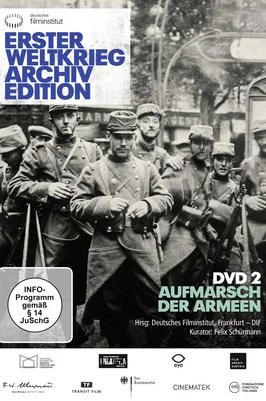
Freelance employee in the project "EFG1914: Digitising Films on World War I" and as curator of exhibition and DVD projects at the German Film Institute, Frankfurt am Main
2009 – 2013
Doctoral scholarships at the Exzellenzcluster »Die Herausbildung normativer Ordnungen« at the Goethe University Frankfurt and at the Leibniz Institute of European History, Mainz; 2009-2010 adjunct lecturer at the Institute of Anthropology and African Studies at Johannes Gutenberg University Mainz
2006 – 2009
Assistant project manager in the EU projects "Moving Image Database for Access and Re-use of European Film Collections" and "The European Film Gateway" at the German Film Institute, Frankfurt a. M.
2008
Magister Artium, Leibniz Universität Hannover (first supervisor: Professor Dr Brigitte Reinwald)
Studied History (specialising in African History) and German Studies at Leibniz Universität Hannover and the University of Massachusetts Amherst; internships at the National Archives of Namibia and the Goethe-Zentrum Windhoek
Debates about colonial history move science, society and politics. Since March 2026, researchers at the Centre for Transcultural Studies / Perthes Collection at the University of Erfurt have been investigating how the map publisher Justus Perthes Gotha processed knowledge from contexts of colonial conquests and land acquisitions in the 19th and 20th centuries. One focus of the research is on the associated business strategies: with maps of, for example, deposits of raw materials in colonies, the publisher sought to gain trading houses, shipping companies and schools as customers, among others. The Gotha Perthes Collection – the publishing house's collection in Gotha, which has been preserved by the University of Erfurt – is one of only a few collections of its kind in the world that makes it possible to trace this entrepreneurial dimension of colonial cartography.
Unlike most map collections, the Gotha Perthes Collection also documents the production, distribution and, in some cases, the reception of maps. As a result, the records in Gotha allow rare insights into the business of colonial cartography, for example into the economic success and failure of publishing products or the scope of distribution. In the "Perthes colonial" project, questions about such aspects of economic and business history are related to the overarching context of the development of a colonial knowledge of culture in Europe.
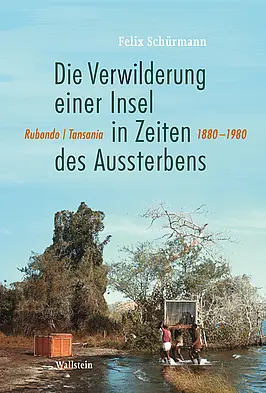
An island of unspoilt nature in an ecologically collapsed body of water: while Lake Victoria is widely regarded as a warning example of the destruction of biodiversity through the colonisation of invasive species, Rubondo has a reputation for being one of the last remnants of intact flora and fauna in Africa. However, the species structure on the Tanzanian island has also changed due to the introduction of previously alien species. Rhinos and giraffes, chimpanzees and marmosets, elephants and antelopes – in the transitional phase of decolonisation, conservationists brought around one hundred large mammals to Rubondo from 1963 onwards in order to transform the island into a modern-day Noah's Ark for the endangered fauna of East Africa. This experiment in species conservation is also a story of loss: the people living there, the Nyarubondo, had to leave the island and give up their settlements, livestock, sanctuaries and much more. From 1966, the German zoo director Bernhard Grzimek and his associated Frankfurt Zoological Society expanded the animal settlements to include other species with a high rarity, display and encounter value in order to prepare Rubondo for tourism commercialisation. After many years of funding and responsibility conflicts, this phase came to an end in 1977 when the Tanzanian parliament classified the island as a national park in order to valorise it for the post-colonial tourism industry. This step put an end to the animal settlements and also to the period in which Rubondo fulfilled the function of a bridge project for the translation of colonial natural conditions into the post-colonial era. As the first account of the history of Africa's oldest and largest nature conservation island, the study places the events in the context of current debates about the mass extinction of species and the decolonisation of nature. It shows how people intervened in the species structure of Rubondo during German rule and changed the conditions for the life of many species under colonial conditions. The island proves to be a small-scale world that invites us to reflect on the big picture: On the controllability of wildness and the naturalness of nature regulated by human intervention. About the role of tourism and non-governmental organisations in post-colonial nature conservation architectures. And about the ability of animals and plants to influence historical change and thus mould history into a more than human story.
Current list of publications (2025)
Monographies
Kalunga, oder: Ein Meer von Übergängen. Maritime Beziehungen und Orientierungen im westlichen Zentralafrika, 1483–1890, (=Einheit 3 zum Kurs »Ozeane in globalhistorischer Perspektive« der Fernuniversität Hagen), Hagen: Fernuniversität Hagen, 2024.
Frankfurt und die Kolonialgeschichte, Frankfurt a. M.: Historisches Museum, 2024.
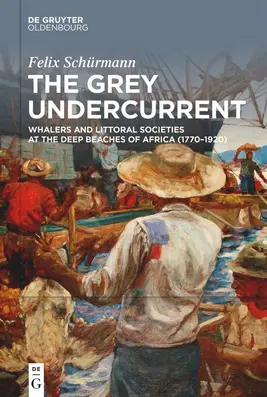
The Grey Undercurrent. Whalers and Littoral Societies at the Deep Beaches of Africa (1770–1920), München/Wien 2023.
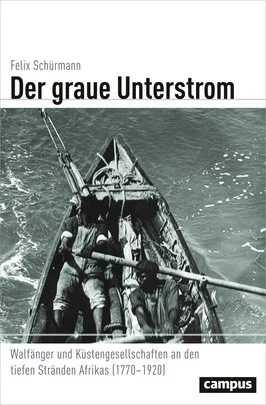
Der graue Unterstrom: Walfänger und Küstengesellschaften an den tiefen Stränden Afrikas, 1770-1920, Frankfurt a. M./New York 2017.
Edited Books
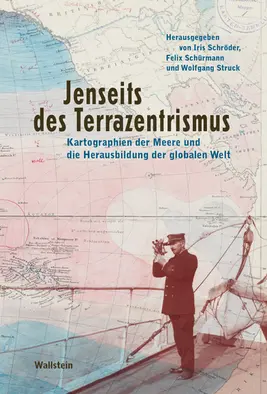
Together with Iris Schröder and Wolfgang Struck (eds.), Jenseits des Terrazentrismus. Kartographien der Meere und die Herausbildung der globalen Welt, Göttingen 2022.
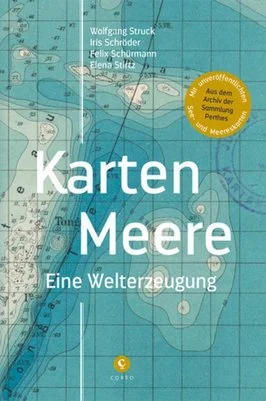
Together with Wolfgang Struck, Iris Schröder and Elena Stirtz, Karten-Meere. Eine Welterzeugung, Wiesbaden 2020.
Papers
Die Welten der Weltmeere: Perspektiven aus der Geschichtsforschung. Expedition Weltmeere. Hrsg. Bundeskunsthalle. München: Hirmer (2025), S. 18–23.
Together with Wolfgang Struck, Ruth Schilling, Frederic Theis and Florian Tüchert, Karten–Reisen. Von Meereswissen und Welterfahrung, Wiesbaden 2021.
Together with Iris Schröder, Frederic Theis and Petra Weigel, Die Welt im Meer. Globalisierung und Globalität in der europäischen Kartographie der Meere des 19. Jahrhunderts, in: WerkstattGeschichte 83 (2021), S. 69–83.
Together with Josephine N. Msindai, Christian Roos and Volker Sommer, Population History of Chimpanzees Introduced to Lake Victoria’s Rubondo Island, in: Primates 62/2 (2021), S. 253–265. Open access
Eine neue Arche für die alte Ordnung. Die Tierumsiedlungen aus dem Flutungsgebiet der Kariba-Talsperre (Zentralafrikanische Föderation) und ihre fotografische Repräsentation, 1958–1963, in: WerkstattGeschichte 82 (2020), S. 95–107. Open access
Rausch und Rebellion im Südatlantik: St. Helena und das Zeitalter der Revolutionen, in: Aus Politik und Zeitgeschichte 32–33 (2018), S. 22–28.
Die Reisenden, die Fliehenden und die Kommenden: Amerikanische Walfänger als Objekte afrikanischer Aneignung, in: WerkstattGeschichte 77 (2018), S. 7–27. Open access
Raum ohne Ort? Meere in der Geschichtsforschung, in: Aus Politik und Zeitgeschichte 51-52 (2017), S. 41–46.
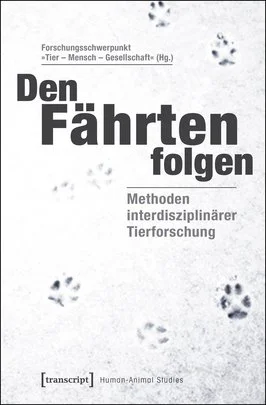
Rubondo und eine Reise dorthin: Der Feldaufenthalt in der Geschichtswissenschaft – und unter afrikanischen Wildtieren, in: Forschungsschwerpunkt »Tier - Mensch - Gesellschaft« (Hg.), Den Fährten folgen: Methoden interdisziplinärer Tierforschung, Bielefeld 2016, S. 133–153.
Ships and Beaches as Arenas of Entanglements from Below: Whalemen in Coastal Africa, in: InterDisciplines. Journal of History and Sociology 3/1 (2012), S. 25–47. Open access
Ungeahnte Wege: Mobilitätserfahrungen des befreiten Sklaven Timbo Samuel Samson im südlichen Afrika des 19. Jahrhunderts, in: Historische Anthropologie 17/1 (2009), S. 75–91. Open access
2021
Prize for the Promotion of Translation of Works in the Humanities (for "Der graue Unterstrom") from the Börsenverein des Deutschen Buchhandels: Geisteswissenschaften International
2018
Prize of the Zeitschrift für Weltgeschichte for the best first monograph on world/global history of the last three years (for "Der graue Unterstrom")
2017
Shortlist nomination "Opus Primum – Förderpreis für die beste Nachwuchspublikation des Jahres" of the Volkswagen Foundation (for "Der graue Unterstrom")
2016
Dissertation Prize "International History" of the AG Internationale Geschichte im Verband der Historiker und Historikerinnen Deutschlands (VHD)
2016
Friedrich Sperl-Prize of the Goethe University Frankfurt for outstanding work in history (for the dissertation)
2009
Graduate Prize of the History Department of Leibniz University Hannover (for the master's thesis)
2008
Young Researcher Prize of the Association for African Studies in Germany (for the master's thesis)
Verband der Historiker und Historikerinnen Deutschlands (VHD)
Vereinigung für Afrikawissenschaften in Deutschland (VAD)
Co-editor of WerkstattGeschichte and member of the review editorial board Society for Global History
since 2021: Member of the Advisory Board of the publication series »Global – Lokal. Beiträge zur Geschichte Europas in der Welt«
Summer semester 2026
(with Jürgen Martschukat) Integriertes Proseminar: »Migration« (University of Erfurt)
Winter semester 2025/2026
Seminar: »Das (post-)koloniale Afrika in der historischen Kontroverse - Klassische und neuere Forschungsdebatten« (University of Erfurt)
Summer semester 2025
Seminar: »Blut und Diamanten. Die Ausbeutung von Bodenschätzen in Deutsch-Südwestafrika« (University of Erfurt)
Winter semester 2024/2025
Seminar: »Forschen und Reisen in Westafrika im 19. Jahrhundert« (University of Erfurt)
Winter semester 2020/2021
Seminar: »Schwarze Wilderer, weiße Retter? Naturpolitik in Ostafrika seit 1800« (University of Erfurt)
Winter semester 2019/2020
Seminar (with Professor Dr Iris Schröder): "Karten-Meere: Ein Forschungsseminar zur Arbeit mit historischen See- und Meereskarten" (University of Erfurt)
Winter semester 2017/2018
Seminar: »Historische Reportagen schreiben« (University of Kassel)
Winter semester 2016/2017
Seminar: »Geschichten schreiben: Das historische Erzählen im Widerstreit« (University of Kassel)
Summer semester 2016
Seminar (with Professor Dr Mieke Roscher): »Beziehungen zwischen Menschen und Walen in umwelt- und tiergeschichtlicher Perspektive« (University of Kassel)
Winter semester 2015/2016
Seminar: »Das Afrika-Geschwader: Die Royal Navy im Kampf gegen den Sklavenhandel des 19. Jahrhunderts« (University of Kassel)
Winter semester 2015/2016
Seminar: »Film und Kino im Ersten Weltkrieg: Transnationale Perspektiven« (University of Kassel)
Summer semester 2015
Seminar: »Dekolonisation in Afrika: Befreiung und ihre Grenzen am Fall von Tansania und Mosambik« (University of Kassel)
Winter semester 2014/2015
Seminar: »Arbeit und Alltag in der neuzeitlichen Hochseeschifffahrt« (University of Kassel)
Winter semester 2009/2010
Seminar: »Das südliche Afrika im 19. Jahrhundert: Regionale Netzwerke und die Weltwirtschaft« (Johannes Gutenberg University Mainz)

![[Translate to English:] facebook icon](/fileadmin/SocialMediaIcons/iconfinder_06-facebook_white.svg)

![[Translate to English:] instagram icon](/fileadmin/SocialMediaIcons/iconfinder_38-instagram_white.svg)
![[Translate to English:] YouTube icon](/fileadmin/SocialMediaIcons/iconfinder_18-youtube_white.svg)
![[Translate to English:] xing icon](/fileadmin/SocialMediaIcons/iconfinder_xing_white.svg)

University of Erfurt (Campus)
Nordhäuser Str. 63
99089 Erfurt