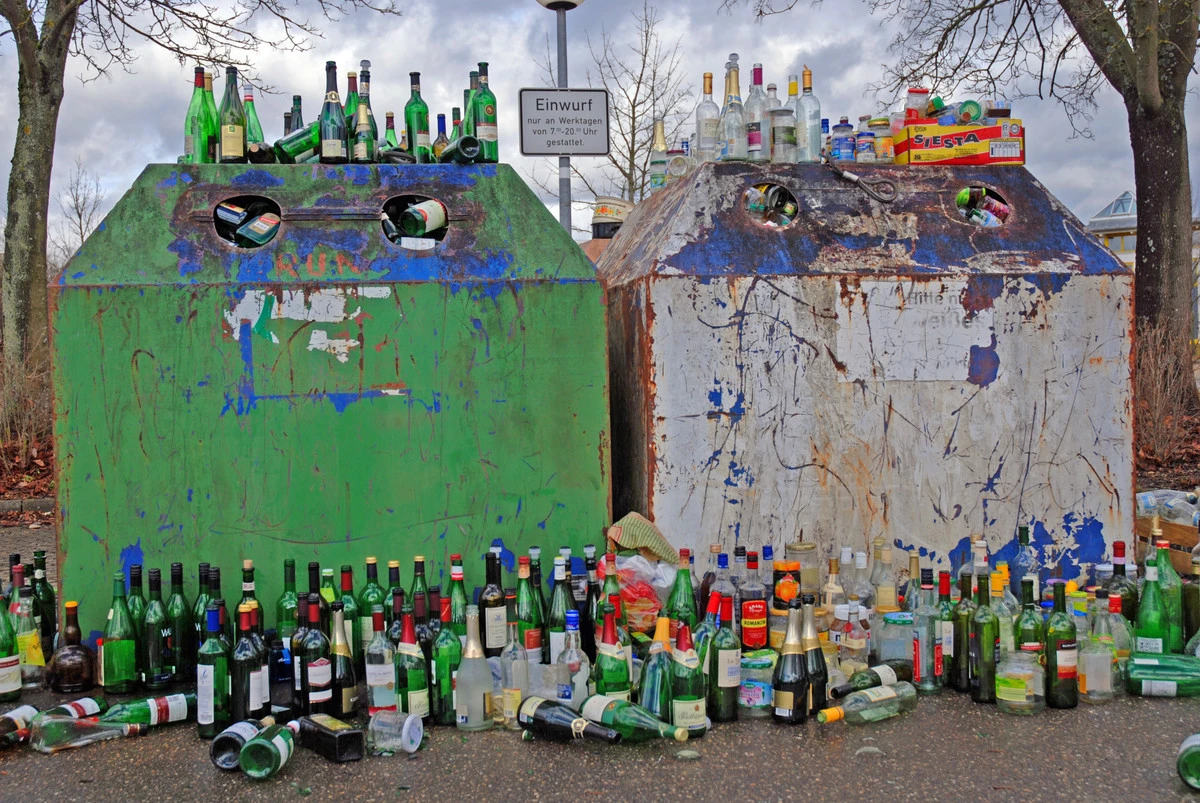
Collecting is undoubtedly one of the oldest cultural techniques, and it constitutes a fundamental practice in various forms in contemporary cultures as well. What is collected ranges between the poles of the necessary and the useless: food or firewood, bones of the deceased or empty sardine cans, collectible cards or plaster casts of ancient statues. Documents, manuscripts, quotes, information, or evidence are also collected, and, driven by digitization, data and metadata are collected as well.
Collections have given rise to technologies, media and institutions that are of importance far beyond individual collections: Technologies of preparing, preserving, classifying, comparing, commenting; media and institutions such as necropolises, cabinets of curiosities, museums, libraries, encyclopaedias, databases. Collections create constellations and open up, regulate or close off access; they serve to reaffirm collective identities, represent power and produce knowledge.
This raises questions about the connection between collecting and violence, the illegitimacy of appropriations, and the (im)possibility of 'healing' them. It also raises questions about the disorder and dispersion that collecting brings, the various entanglements between cultural and economic capital, and the interweaving of materiality and immateriality. These often unsettling questions go far beyond the provenance of individual objects or classes of objects; they concern the cultural virulence of collecting as a whole.
The Gotha collection ensemble, which includes rich, globally oriented object and art collections from the Early Modern period to the 19th and 20th centuries (Friedenstein Foundation Gotha), a library with unique historical manuscript and print holdings (Research Library Gotha of the University of Erfurt), as well as one of the world's most significant geo- and cartographic archives (Perthes Collection) spanning from the 19th century through the 'Third Reich' and the GDR to the post-unification period, forms a predestined field to reflect on these questions in a systematic and historical perspective. The collaborative project "Cultural Techniques of Collecting" (Erfurt—Gotha) aims to establish a sustainable research infrastructure that connects the Research Group "Cultural Techniques of Collecting" at the University of Erfurt and other researchers at the universities of Weimar and Jena with various collection institutions in Gotha. This is intended to make the unique collection ensemble more accessible, especially for young researchers, who have special opportunities for qualification in the practice and theory of collecting and specific collections.
Picture: © Zoonar/Walter G. Allgöwer
Team at the University of Erfurt:
Professor Wolfgang Struck (project manager)
Professor Dr Iris Schröder
Dr Jana Mangold
Nadine Fechner, M.A.
Felix Haenlein, M.A.
Further applicants:
Professor Dr Anja Laukötter (FSU Jena)
Professor Dr Jörg Paulus (BU Weimar)
ENT-SAMMELN lecture series - summer semester 2025
Tuesdays 6-8 pm, Campus of the University of Erfurt, C03-LG1 Lecture Hall 4
DATES:
5.2. Professor Dr Anja Laukötter (Friedrich Schiller University Jena): Über die (Un-)Ordnung der Dinge im kolonialen Völkerkundemuseum
6-8pm, C03-LG 1 Lecture Hall 3
8.4. Professor Wolfgang Struck/Dr Jana Mangold (University of Erfurt): Kulturtechniken des Ent-Sammelns
15.4. Dr Timo Trümper/Ronny Licht (Friedenstein Foundation Gotha): Schloss Friedenstein und Herzogliches Museum Gotha. Sammlungsentwicklung und Verluste bis 1949
22.4. Sithara Weeratunga (Museum of Fine Arts, Leipzig): Entsammeln oder Bewahren? Diskriminierungskritischer Umgang mit Sammlungsobjekten in der Praxis
29.4. Professor Dr Jörg Paulus (Bauhaus University Weimar): Kalender und Konjunkturen. Über zyklisches und antizyklisches Entsammeln am Beispiel der Archive des Vieweg-Verlags
6.5. Dr Ohiniko Mawuse Toffa (Central Archive of the National Museums, Berlin): Das “Entsammeln” als Kritik. Provenienzforschung, Restitution / Repatriierung, Institutionalisierungsprozesse als Aufgaben des postkolonialen Museums
13.5. reflection session (orientations/readings)
20.5. Professor em. Michael Fehr (aesthetischepraxis.de; UdK Berlin): Das Museum als kritischer Ort für Sammlungen und das Sammeln
27.5. Professor Christin Lahr (Academy of Visual Arts Leipzig): ENT-SORGUNGEN oder die Paradoxie des Haufens
3.6. Professor Dr. Iris Schröder/Dominic Keyßner (Centre for Transcultural Studies / Perthes Collection): “Sorting Things Out” – Praktiken des (Ent‑)Sammelns in einem Kartenproduktionsarchiv: der Fall Justus Perthes Gotha und seiner Nachfolger
10.6. (Adjunct) Professor Dietmar Schmidt (University of Erfurt): Papierkram. Wegwerfen, Ordnen, Horten
17.6. Dr Sonja Grulke (Friedenstein Foundation Gotha)/Dr Martina Lüdicke (Hessen Kassel Heritage): Von Spinnrad bis Fön. Entsammeln kulturgeschichtlicher Objekte an Beispielen aus Kassel und Gotha
24 June (6-8 p.m., Gotha Campus, CG2 - Pagenhaus) Dr Takele Merid Afessa (Addis Ababa University): Rethinking the Ethnological Collection of the Institute of Ethiopian Studies (Addis Ababa University): Some Questions, Challenges and Suggestions (in cooperation with the Centre for Transcultural Studies / Perthes Collection, the SCIFA Science Facilitation (Berlin/Gotha) and KOLUMBA, the Art Museum of the Archdiocese of Cologne)
1.7 Final discussion: De-canonisation
Seminar announcement "Die kleine Freiheit 2" - winter semester 2024/25
The cooperation project "Cultural Techniques of Collecting (Erfurt-Gotha)" offers another opportunity to participate in the project's research activities in the winter semester 2024/25. The seminar "Die kleine Freiheit 2: Feste, Fotografie, Oral History" will take place as part of the Studium Fundamentale.
The seminar will focus on a photo collection of the Friedenstein Foundation Gotha, which has hardly been catalogued to date and contains a large number of photographs of various celebrations from around 120 years of the town's history. These photographs will be analysed in conversation with the citizens of Gotha: How were these celebrations experienced? Were they moments of freedom, of overcoming routines and social constraints? Or were they perceived as a representation of power and control, especially during the SED dictatorship? How was it possible to celebrate between social occasions and state control?
Participants in the seminar will explore these questions in methodically prepared oral history interviews with Gotha citizens in order to better understand and contextualise selected photographs from the collections. The results will be incorporated into an exhibition by the foundation, which will be on display virtually and/or on site in Gotha in 2025. The students will have the opportunity to actively participate in the form of presentation. The seminar will kick off with a one-day workshop organised by the Oral History Research Centre at the University of Erfurt, which will teach basic approaches to oral history and participatory research.
A detailed article on the seminar can be found in the Student Council news section.
The seminar is the subject of the latest podcast episode from our co-operation partner, the Friedenstein Foundation Gotha.
Seminar announcement "Die kleine Freiheit" - summer semester 2024
The cooperation project "Cultural Techniques of Collecting (Erfurt-Gotha)" is offering the seminar "Die kleine Freiheit: Fest, Fotografie, Erinnerungskultur" in the Studium Fundamentale at the University of Erfurt in the summer semester 2024. The seminar explores the relationship between freedom and celebration – based on the theory that hierarchies and social constraints are temporarily dissolved in festivities and the routines of everyday life are suspended.
The festivity will not only be examined theoretically, but these theories will also be applied in practice. At the centre of this is an extensive, largely untapped collection of historical event photographs from the Friedenstein Foundation Gotha. The photographs cover a long period of around 120 years and a broad spectrum of festivities – from private and spontaneous celebrations to large public events. This makes it possible to analyse how the role and significance of festivals and the concept of freedom have changed in different political systems.
At the beginning of the seminar, the students will view and discuss selected photographs from the collection. The group will then be expanded to include senior citizens from Gotha in order to discuss different experiences of freedom at festive events across the generations. Private photographs of the senior citizens will also be included in these meetings. A joint tour of Gotha's city centre is also planned: The students will present historical photographs of the same place at various locations and the senior citizens can add their own personal memories. The aim is to bring together the city's history and family stories. The seminar will conclude with a small summer party with "photo karaoke".
![[Translate to English:] facebook icon](/fileadmin/SocialMediaIcons/iconfinder_06-facebook_white.svg)

![[Translate to English:] instagram icon](/fileadmin/SocialMediaIcons/iconfinder_38-instagram_white.svg)
![[Translate to English:] YouTube icon](/fileadmin/SocialMediaIcons/iconfinder_18-youtube_white.svg)
![[Translate to English:] xing icon](/fileadmin/SocialMediaIcons/iconfinder_xing_white.svg)

University of Erfurt (Campus)
Nordhäuser Str. 63
99089 Erfurt