

Julia Hillner
julia.hillner@uni-erfurt.deFellow (Max Weber Centre for Advanced Cultural and Social Studies)
Contact
C19 – research building "Weltbeziehungen" / C19.03.15
Office hours
by appointment
Visiting address
Campus
Max Weber Centre for Advanced Cultural and Social Studies
C19 – research building "Weltbeziehungen"
Max-Weber-Allee 3
99089 Erfurt
Mailing address
Universität Erfurt
Max Weber Centre for Advanced Cultural and Social Studies
Postfach 90 02 21
99105 Erfurt
Personal information
Julia Hillner is Professor of Dependency Studies and Ancient History at the University of Bonn. She previously held a chair in Medieval History at the University of Sheffield. She received her PhD from the University of Bonn and is an award-winning author of, among others, three monographs: Jedes Haus ist eine Stadt: Privatimmobilien im spätantiken Rom (Habelt, 2004), Prison, Punishment and Penance in Late Antiquity (Cambridge University Press, 2015), and Helena Augusta: Mother of the Empire (Oxford University Press, 2023). She is a social historian specialising in late antiquity and is working at the intersections of urban history, legal history, the history of gender, and the history of the family, women and the household. A particular focus of her work is on the transformation of the city of Rome‘s urban society between late antiquity and the early Middle Ages.
More information: https://www.dependency.uni-bonn.de/en/about-us/people/professors-1/julia-hillner
Research project
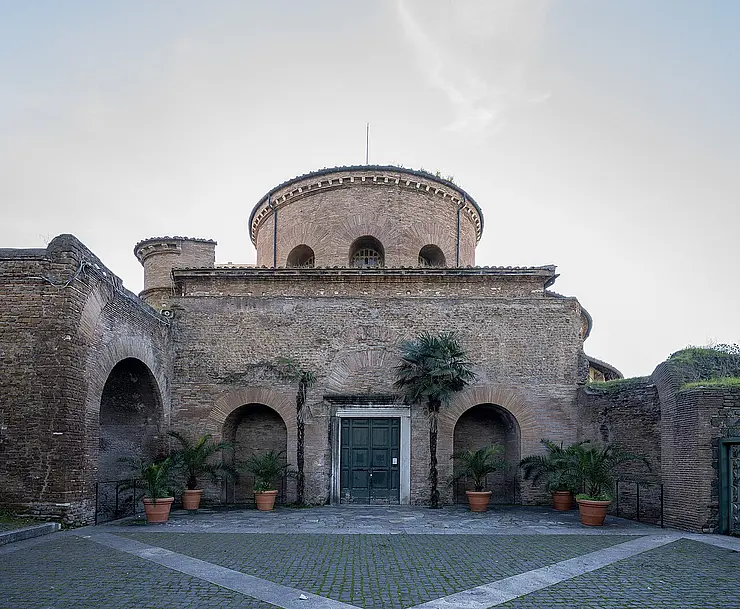
The Empress Factor: Imperial Women’s Religious Patronage and the Urban Evolution of Rome from Late Antiquity to the Middle Ages
This project investigates how the memory of imperial women‘s religious patronage in late antique Rome shaped urban life, worship and identities in the early medieval city, and how, conversely, the city shaped how late antique imperial women were remembered. It takes as its starting point the undeniable, but little researched, extent of religious engagement by late antique imperial women (mothers, wives, sisters and daughters of emperors) inRome. It ranged from church foundations and the commissioning of church decorations to interference in papal elections or the adoption of ascetic lifestyles. This engagement left conspicuous traces in the urban landscape, in urban story-telling and within urban institutions. How did this affect early medieval Rome’s inhabitants and the ways in which they remembered their urban past? Methodologically, the project will compare the commemoration of two imperial female patrons, both relatives of the first Christian emperor Constantine: his mother Helena and his daughter Constantina. While the former was quickly and surprisingly almost forgotten in the centuries following the end of the Western empire, the latter was venerated as a saint already by the seventh century. Which urban factors accounted for such varying religious success and what were its consequences for urban rituals and topographies?

![[Translate to English:] facebook icon](/fileadmin/SocialMediaIcons/iconfinder_06-facebook_white.svg)

![[Translate to English:] instagram icon](/fileadmin/SocialMediaIcons/iconfinder_38-instagram_white.svg)
![[Translate to English:] YouTube icon](/fileadmin/SocialMediaIcons/iconfinder_18-youtube_white.svg)
![[Translate to English:] xing icon](/fileadmin/SocialMediaIcons/iconfinder_xing_white.svg)
