
Fellow (Max Weber Centre for Advanced Cultural and Social Studies)
Contact
C19 – research building "Weltbeziehungen" / C19.03.12
Office hours
by appointment
Visiting address
Campus
Max Weber Centre for Advanced Cultural and Social Studies
C19 – research building "Weltbeziehungen"
Max-Weber-Allee 3
99089 Erfurt
Mailing address
Universität Erfurt
Max Weber Centre for Advanced Cultural and Social Studies
Postfach 90 02 21
99105 Erfurt
Personal Information
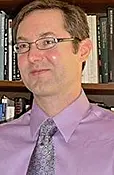
Thomas R. Blanton IV is currently a Visiting Assistant Professor in the Department of Theology and Religious Studies at John Carroll University. His interdisciplinary research focuses on Paul of Tarsus, early Christianity in Roman economic contexts, and the “religions” of the ancient Mediterranean region more broadly. His recent publications include “Paul’s Itinerant Mission: Wages, Travel, Prestige, Ideology,” in Is It Good to Be Rich? Answers from the Bible and Antiquity, ed. Peter Altmann, Nadine Ueberschaer, and Frank Ueberschaer (Mohr Siebeck, 2025); and (with Claudia D. Bergmann) Imitating Abraham: Ritual and Exemplarity in Jewish and Christian Contexts (Brill, 2025)
Research Project
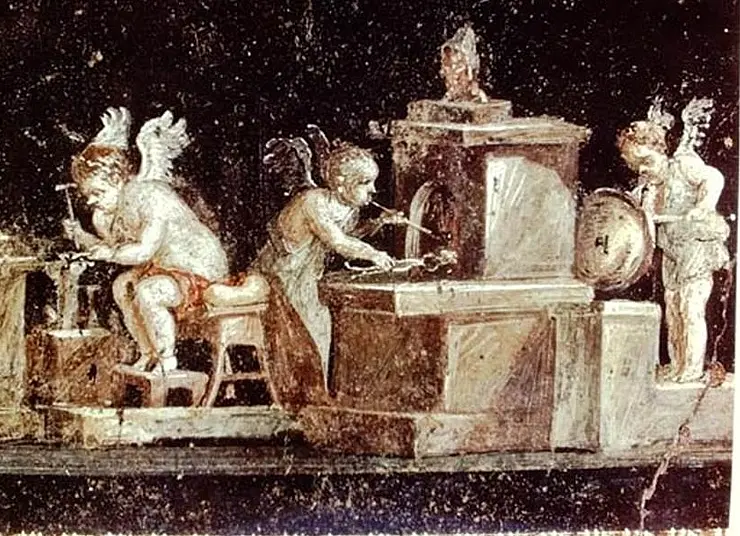
Paul of Tarsus: Labor Markets, Itinerancy, and Religious Entrepreneurship
Perhaps due to the organization of academic departments by field in the modern university, studies of religion, economic history, and urban space do not frequently intersect. This study offers a corrective to that disciplinary siloing by showing that, in the letters of the first-century-CE itinerant religious entrepreneur Paul of Tarsus, “religion” did not exist as a separate category of thought or practice, but rather was formed on the basis of ongoing interaction with “economy” and urban spaces. By the same token, neither economy nor urban space existed apart from religion, but were formed in part through religious practices, places, architecture, and movements within cities. The study argues that religion, economy, and urbanity are best conceptualized as ongoing processes of reciprocal formation rather than discrete spheres of activity. The project is significant because it shows that “religion,” “theology,” “economics,” and built environments are not adequately conceptualized as free-standing, independent subjects, but should be considered together as parts of a holistic system of human practice. Combining Classics, Jewish Studies, Religious Studies, and economic history, the project is in keeping with the MWK’s Weberian research program, with its strongly interdisciplinary and comparative social scientific emphases.

![[Translate to English:] facebook icon](/fileadmin/SocialMediaIcons/iconfinder_06-facebook_white.svg)

![[Translate to English:] instagram icon](/fileadmin/SocialMediaIcons/iconfinder_38-instagram_white.svg)
![[Translate to English:] YouTube icon](/fileadmin/SocialMediaIcons/iconfinder_18-youtube_white.svg)
![[Translate to English:] xing icon](/fileadmin/SocialMediaIcons/iconfinder_xing_white.svg)
