Mein Interesse an der Wissens- und Wissenschaftsgeschichte der frühen Neuzeit konzentriert sich insbesondere auf die Naturgeschichte des 17. und 18. Jahrhunderts. Schwerpunkte meiner Arbeit waren in letzter Zeit die kollaborative Wissenskultur der Botanik im 18. Jahrhundert (u.a. die botanische Korrespondenz als Informationssystem und die vernetzten Praktiken botanischer Nomenklatur), der Gebrauch und die Rolle von Büchern in der frühneuzeitlichen Botanik sowie die Geschichte wissenschaftlicher Autorschaft und die Rolle von Übersetzungen in der Wissenschaftsgeschichte.
My interest in the history of knowledge and science in the early modern period focusses in particular on the natural history of the 17th and 18th centuries. My recent work has focussed on the collaborative knowledge culture of botany in the 18th century (including botanical correspondence as an information system and the networked practices of botanical nomenclature), the use and role of books in early modern botany as well as the history of scientific authorship and the role of translations in the history of science.
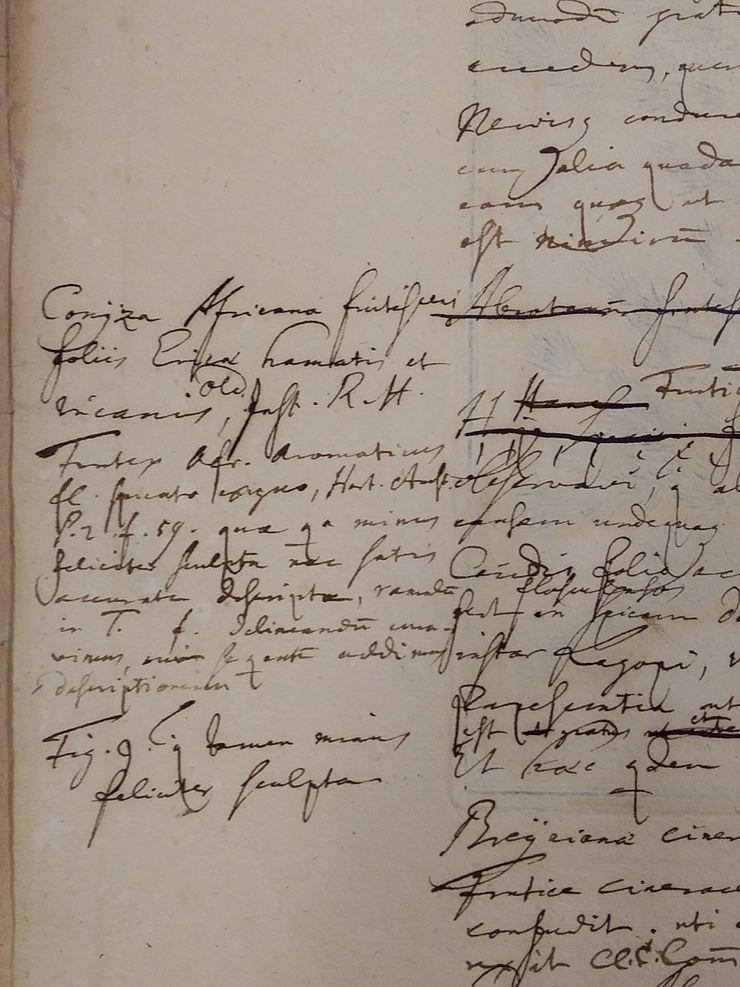
Netzwerktexte: Techniken des Schreibens, Lesens und Publizierens in der Botanik des 17. und 18. Jahrhunderts
Dieses Projekt untersucht die ineinandergreifenden Praktiken der Wissensbildung, Wissensvertextung und des Publizierens botanischer Werke, auf dem der fundamental vernetzte Arbeits- und Publikationsmodus der frühneuzeitlichen Botanik beruht. Damit stehen textbezogene wissenschaftliche Praktiken im Mittelpunkt, die bislang von einem Interesse an objektbezogenen Praktiken wie dem Sammeln oder Tauschen von Pflanzen überschattet wurden. Diese Praktiken des Verfertigens und Publizierens botanischer Texte charakterisieren nicht nur die Arbeitsweise einzelner Gelehrter sondern vielmehr das Funktionieren eines Publikationssystems, dessen sich die botanische Gemeinschaft als ganze bediente und durch das sie ihrerseits konstituiert wurde.
Für Botaniker des 17. und 18. Jahrhunderts – es handelt sich in diesem Projekt um männliche Gelehrte - war das Erarbeiten ihrer Werke ein Prozeß, in den Beiträge mehrerer, manchmal auch zahlloser Personen einflossen und der sich über Jahre hinzog. Autoren aktualisierten ihre lokalen oder regionalen Floren in Zyklen der Ergänzung und der Korrektur. Sobald neue Informationen zur Verfügung standen, wurden sie in ein Werk eingearbeitet, und eine aktualisierte Ausgabe kam auf den Markt. Die meisten botanischen Publikationen waren infolgedessen sowohl provisorisch als auch iterativ. Zu zeigen ist, wie diese Arbeitswiese der botanischen Gemeinschaft ermöglichte, mit dem immer weiter ausgreifenden Informationsbedarf ihrer Disziplin Schritt zu halten und dabei Formen des Schreibens, Lesens und Publizierens zu entwickeln, die der konstanten Korrekturbedürftigkeit der verarbeiteten Informationen Rechnung trugen.
Network Texts: Technologies of Writing, Reading and Publishing in 17th and 18th Century Botany
This project examines the interlocking practices of knowledge formation, knowledge texting and the publication of botanical works, on which the fundamentally networked mode of working and publishing in early modern botany is based. The focus is thus on text-related scientific practices, which had previously been overshadowed by an interest in object-related practices such as the collection or exchange of plants. These practices of producing and publishing botanical texts characterise not only the working methods of individual scholars, but rather the functioning of a publication system that was used by the botanical community as a whole and through which it was constituted.
For botanists of the 17th and 18th centuries - in this project we are dealing with male scholars - the preparation of their works was a process that involved contributions from several, sometimes countless, individuals and lasted for years. Authors updated their local or regional floras in cycles of additions and corrections. As soon as new information became available, it was incorporated into a work and an updated edition was published. As a result, most botanical publications were both provisional and iterative. It will be shown how this way of working enabled the botanical community to keep pace with the ever-expanding information needs of their discipline and to develop forms of writing, reading and publishing that took into account the constant need for correction of the information processed.
https://www.researchgate.net/profile/Bettina-Dietz
erfurt.academia.edu/BettinaDietz
Monographien
Das System der Natur. Die kollaborative Wissenskultur der Botanik im 18. Jahrhundert, Köln/Wien 2017.
Utopien als mögliche Welten. Voyages imaginaires der französischen Frühaufklärung, 1650-1715, Mainz 2002 (= Veröffentlichungen des Instituts für Europäische Geschichte, 188).
Herausgegebene Sonderhefte und Sammelbände
Sonderheft “Cultures of Scientific Publishing” (Gastherausgeberin), History of Science 60/2, (2022).
Sonderheft “Translating and Translations in the History of Science” (Gastherausgeberin), Annals of Science 73/2 (2016).
(zusammen mit Paul Hempel und Hans-Peter Bayerdörfer) Bilder des Fremden. Mediale Inszenierung von Alterität, 1780-1920, Münster 2007.
Zeitschriftenaufsätze (peer reviewed*)
Herbaria as manuscripts. Philology, ethnobotany, and the textual-visual mesh of early modern botany, in: History of Science (online verfügbar auf der Homepage der Zeitschrift; erscheint 2024 im Druck).*
Introduction: Towards a History of Scientific Publishing, in: Cultures of Scientific Publishing (Sonderheft), in: History of Science 60/2 (2022), 155-165.*
Iterative Books. Posthumous Publishing in Eighteenth-Century Botany, in: History of Science 60/2 (2022), 166-182.*
Networked Names: Synonyms in Eighteenth-Century Botany, in: History and Philosophy of the Life Sciences 40 (2019), article 4.*
Linnaeus’ Restless System: Translation as Textual Engineering in Eighteenth-Century Natural History, in: Annals of Science 73/2 (2016), 143-156.*
Introduction: Translating and Translations in the History of Science, in: Annals of Science 73/2 (2016), 117-121.*
Contribution and Co-production: The Collaborative Culture of Linnaean Botany, in: Annals of Science 69/4 (2012), 551-569.*
Making Natural History: Doing the Enlightenment, in: Central European History, 43/1 (2010), 25-46.*
Aufklärung als Praxis: Naturgeschichte im 18. Jahrhundert, in: Zeitschrift für Historische Forschung 36/2 (2009), 235-257. (reviewed)
Mobile Objects: The Space of Shells in Eighteenth-Century France, in: The British Journal for the History of Science 39/3 (2006), 363-382.*
(zusammen mit Thomas Nutz) Collections Curieuses: The Aesthetics of Curiosity and Elite Lifestyle in Eighteenth-Century Paris, in: Eighteenth-Century Life 29/3 (2005), 24-75 .*
(zusammen mit Thomas Nutz) Naturgeschichte des Menschen als Wissensformation des späten 18. Jahrhunderts: Orte, Objekte, Verfahren, in: Zeitschrift für Historische Forschung 32 (2005), 45-70 . (reviewed)
Utopie und Policey: Frühneuzeitliche Konzeptionen eines idealen Ordnungsstaates, in: Zeitschrift für Historische Forschung 30 (2003), 591- 617. (reviewed)
Vom Giganten zum Elefanten: Kontroversen über Fossilien, 1610-1820, in: Archiv für Kulturgeschichte 85 (2003), 277-302. (reviewed)
Beiträge in Sammelbänden
Knots in a Web. Botany, Materia Medica, and South Asian Languages in the Publication of Paul Hermann’s Ceylon-Herbaria (ca. 1690-1770), in:
Fabrizio Baldassarri (Hg.): Plants in the 16th and 17th centuries, Berlin 2023 (Walter de Gruyter), 197-210.
What is a Botanical Author? Pehr Osbeck’s Travelogue and the Culture of Collaborative Publishing in Linnaean Botany, in: Stéphane van Damme / Hanna Hodacs / Kenneth Nyberg (Hrsg.): Linnaeus, Natural History, and the Circulation of Knowledge (= Oxford University Studies in the Enlightenment), Oxford 2018, 57-79.
Kollaboration in der Botanik des 18. Jahrhunderts. Die partizipative Architektur von Linnés System der Natur, in: Anne Mariss / Silke Förschler (Hrsg.), Verfahrensweisen der Naturgeschichte, Köln / Wien (Böhlau) 2017, 95-108.
Natural History as Compilation: Travel Accounts in the Epistemic Process of an Empirical Discipline, in: A. Holenstein / H. Steinke / M. Stuber (Hrsg.), The Practice of Knowledge and the Figure of the Savant in the Eighteenth Century, 2 Bde., Leiden / Boston 2013, vol. 1., 703-719.
Die Naturgeschichte und ihre prekären Objekte, in: Ulrich Schneider (Hrsg.), Kulturen des Wissens, Berlin 2008, 615-621.
Phrenologie des Fremden. Das Bild(nis) der Ozeanier, 1780-1840, in: Hans-Peter Bayerdörfer / Bettina Dietz / Frank Heidemann (Hrsg.), Bilder des Fremden. Mediale Inszenierung von Alterität im 19. Jahrhundert, Münster 2007, 157-176.
Exotische Naturalien als Statussymbol. Die Inszenierung von Prestige und Wissen in Pariser Sammlungen des 18. Jahrhunderts, in: Hans-Peter Bayerdörfer / Eckhart Hellmuth (eds.): Exotica. Konsum und Inszenierung des Fremden, Münster 2003, 25-43.
https://www.researchgate.net/profile/Bettina-Dietz
erfurt.academia.edu/BettinaDietz
Monographs
The system of nature. The collaborative knowledge culture of botany in the 18th century, Cologne/Vienna 2017.
Utopias as possible worlds. Voyages imaginaires of the French Early Enlightenment, 1650-1715, Mainz 2002 (= Publications of the Institute of European History, 188).
Published special issues and anthologies
Special issue "Cultures of Scientific Publishing" (guest editor), History of Science 60/2, (2022).
Special issue "Translating and Translations in the History of Science" (guest editor), Annals of Science 73/2 (2016).
(together with Paul Hempel and Hans-Peter Bayerdörfer) Bilder des Fremden. Medial Staging of Alterity, 1780-1920, Münster 2007.
Journal articles (peer reviewed*)
Herbaria as manuscripts. Philology, ethnobotany, and the textual-visual mesh of early modern botany, in: History of Science(available online on the journal's homepage; to be published in 2024).
Introduction: Towards a History of Scientific Publishing, in: Cultures of Scientific Publishing (special issue), in: History of Science 60/2 (2022), 155-165.*
Iterative Books. Posthumous Publishing in Eighteenth-Century Botany, in: History of Science 60/2 (2022), 166-182.
Networked Names: Synonyms in Eighteenth-Century Botany, in: History and Philosophy of the Life Sciences 40 (2019), article 4.
Linnaeus' Restless System: Translation as Textual Engineering in Eighteenth-Century Natural History, in: Annals of Science 73/2 (2016), 143-156.
Introduction: Translating and Translations in the History of Science, in: Annals of Science 73/2 (2016), 117-121.
Contribution and Co-production: The Collaborative Culture of Linnaean Botany, in: Annals of Science 69/4 (2012), 551-569.
Making Natural History: Doing the Enlightenment, in: Central European History, 43/1 (2010), 25-46.
Enlightenment as Practice: Natural History in the 18th Century, in: Zeitschrift für Historische Forschung 36/2 (2009), 235-257 (reviewed).
Mobile Objects: The Space of Shells in Eighteenth-Century France, in: The British Journal for the History of Science 39/3 (2006), 363-382.
(together with Thomas Nutz) Collections Curieuses: The Aesthetics of Curiosity and Elite Lifestyle in Eighteenth-Century Paris, in: Eighteenth-Century Life 29/3 (2005), 24-75 .*
(together with Thomas Nutz) Naturgeschichte des Menschen als Wissensformation des späten 18. Jahrhunderts: Orte, Objekte, Verfahren, in: Zeitschrift für Historische Forschung 32 (2005), 45-70 . (reviewed)
Utopia and Policey: Early Modern Conceptions of an Ideal State of Order, in: Journal of Historical Research 30 (2003), 591- 617. (reviewed)
From giant to elephant: Controversies over fossils, 1610-1820, in: Archiv für Kulturgeschichte 85 (2003), 277-302. (reviewed)
Contributions to edited volumes
Knots in a Web. Botany, Materia Medica, and South Asian Languages in the Publication of Paul Hermann's Ceylon-Herbaria (ca. 1690-1770), in:
Fabrizio Baldassarri (ed.): Plants in the 16th and 17th centuries, Berlin 2023 (Walter de Gruyter), 197-210.
What is a Botanical Author? Pehr Osbeck's Travelogue and the Culture of Collaborative Publishing in Linnaean Botany, in: Stéphane van Damme / Hanna Hodacs / Kenneth Nyberg (eds.): Linnaeus, Natural History, and the Circulation of Knowledge (= Oxford University Studies in the Enlightenment), Oxford 2018, 57-79.
Collaboration in 18th century botany. Die partizipative Architektur von Linnés System der Natur, in: Anne Mariss / Silke Förschler (eds.), Verfahrensweisen der Naturgeschichte, Cologne / Vienna (Böhlau) 2017, 95-108.
Natural History as Compilation: Travel Accounts in the Epistemic Process of an Empirical Discipline, in: A. Holenstein / H. Steinke / M. Stuber (eds.), The Practice of Knowledge and the Figure of the Savant in the Eighteenth Century, 2 vols., Leiden / Boston 2013, vol. 1, 703-719.
Natural History and its Precarious Objects, in: Ulrich Schneider (ed.), Kulturen des Wissens, Berlin 2008, 615-621.
Phrenology of the foreign. Das Bild(nis) der Ozeanier, 1780-1840, in: Hans-Peter Bayerdörfer / Bettina Dietz / Frank Heidemann (eds.), Bilder des Fremden. Mediale Inszenierung von Alterität im 19. Jahrhundert, Münster 2007, 157-176.
Exotic naturalia as a status symbol. The staging of prestige and knowledge in 18th century Parisian collections, in: Hans-Peter Bayerdörfer / Eckhart Hellmuth (eds.): Exotica. Konsum und Inszenierung des Fremden, Münster 2003, 25-43.



University of Erfurt (Campus)
Nordhäuser Str. 63
99089 Erfurt