

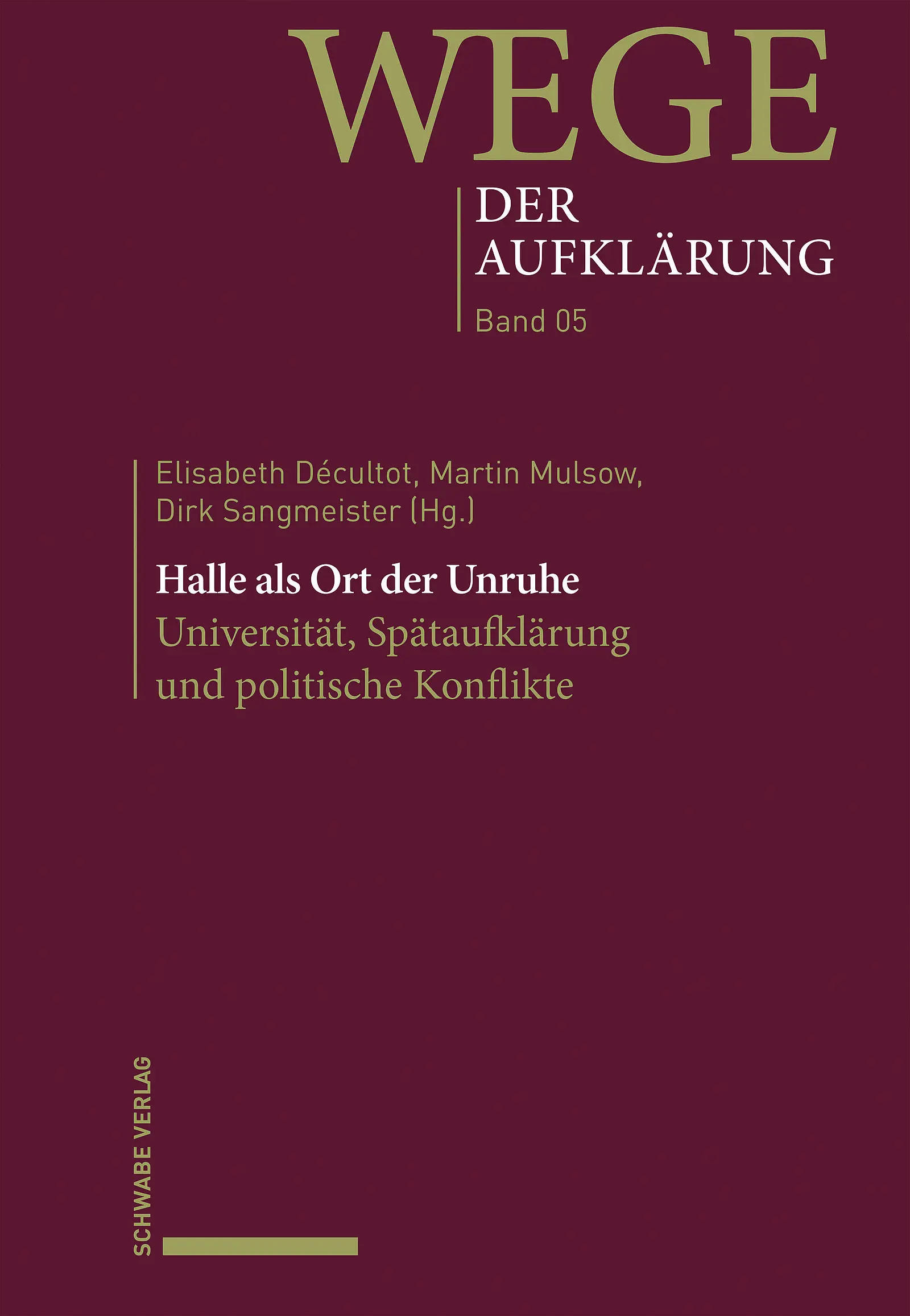
How was the balance between the university, politics and the state redefined in the wake of the French Revolution? This volume explores this question using Halle as a case study. Amidst the late Enlightenment, secret societies, censorship and repression, previously overlooked figures come to the fore: free-thinkers, marginalised scholars and rebellious students, whose biographies and writings reveal the university as a laboratory of social and intellectual upheaval. The contributions examine the scope for action and the limits of academic freedom, the media strategies employed by thought critical of religion and authority, and the local contexts in which European dynamics of crisis and revolution played out. The result is a panorama of the Late Enlightenment in Halle, in which conflicts over knowledge, authority and public opinion are exemplarily concentrated.
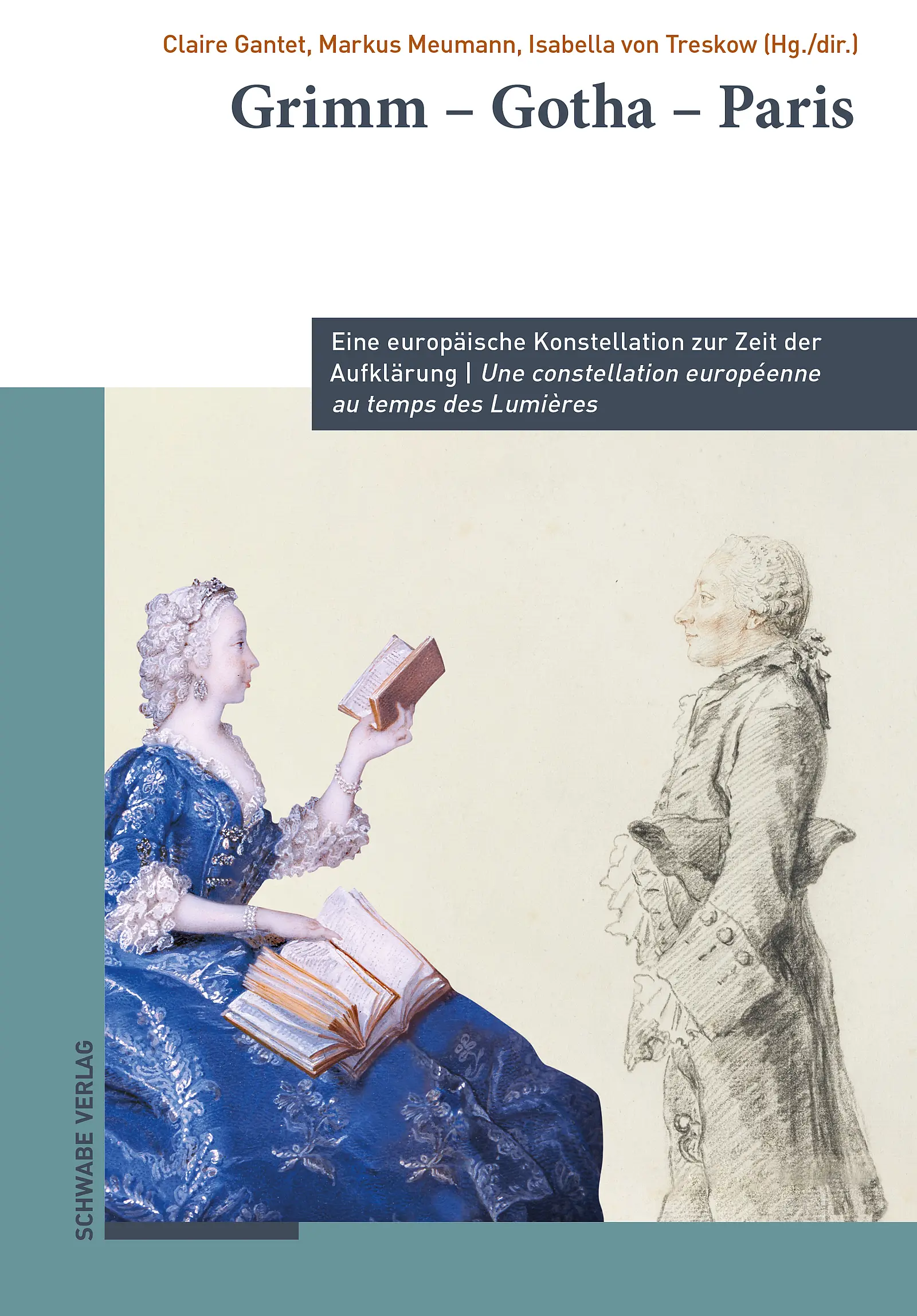
This volume offers new research perspectives on the significance of Friedrich Melchior Grimm (1723–1807) for the dissemination of the Parisian Enlightenment in the German-speaking world. For the first time, it systematically examines the role of the Court of Gotha, which made Grimm’s existence as a ‘cultural influencer’ possible in the first place and continued to support him financially even after his flight from Paris in 1792.
Cet ouvrage ouvre de nouvelles pistes de recherche sur l’importance de Friedrich Melchior Grimm (1723–1807) dans la diffusion des Lumières parisiennes vers l’espace germanophone. Le rôle de la cour de Gotha y est examiné pour la première fois de manière systématique. C’est elle qui a en effet permis à Grimm de devenir un « influenceur culturel » et qui a continué à le soutenir financièrement après sa fuite de Paris en 1792.
During the first four decades of the 18th century, the territory of the Reformed Counts of Sayn-Wittgenstein-Berleburg served as a refuge for radical religious migrants from a variety of social, professional and denominational backgrounds. The tolerant Count Casimir not only granted them religious freedom and tax concessions, but also allowed them to publish their writings without censorship. However, disputes inevitably arose amongst the local religious individualists; some of them also attempted to influence the sovereign in their favour.
Drawing on numerous previously unpublished documents and personal accounts, this volume traces the diverse religious positions, intellectual and commercial activities, as well as the social interactions and conflicts amongst the spiritualists in the vicinity of the Berleburg court. Furthermore, it offers an annotated edition of J. Chr. Senckenberg’s accounts of two journeys to Berleburg in 1732.
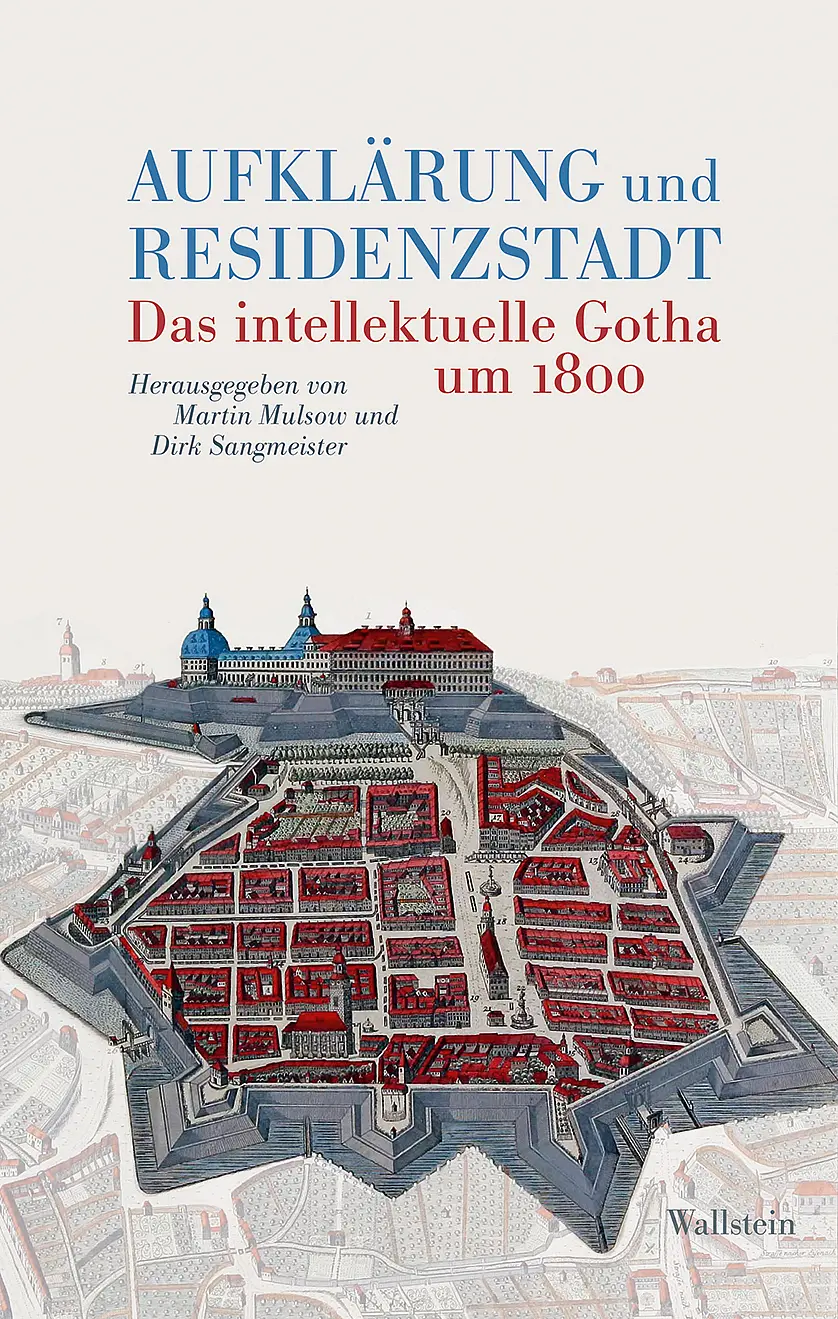
In the decades around 1800, Gotha was a royal seat of great prestige and a centre of the late Enlightenment. Under a prince who promoted the sciences, astronomy and geology flourished, as did philology and history.
Against a backdrop of numerous collections, a vast library, a well-functioning state apparatus and efficient postal services, distinguished writers and scholars worked from here to influence the entire empire: Rudolph Zacharias Becker distributed the biggest bestseller of Goethe’s era, his ‘Noth- und Hülfsbüchlein für Bauersleute’ (A Handbook of Necessity and Assistance for Farmers), intended to enlighten the people, as well as his ‘Reichs-Anzeiger’, which was read throughout the country. Georg Anton Benda composed influential melodramas; Friedrich Wilhelm Gotter wrote frequently staged plays; Heinrich August Ottokar Reichard distributed his almanacs; the publisher Carl Wilhelm Ettinger printed the first complete works of Voltaire and prestigious scholarly journals; Conrad Ekhof made theatre history with his permanent theatre; and the banned Order of the Illuminati found its centre here during its later phase.
Until now, Gotha has been overshadowed by Weimar in the eyes of scholars. This volume sheds light on the city’s significance for the first time and explores the diversity of its intellectual landscape.
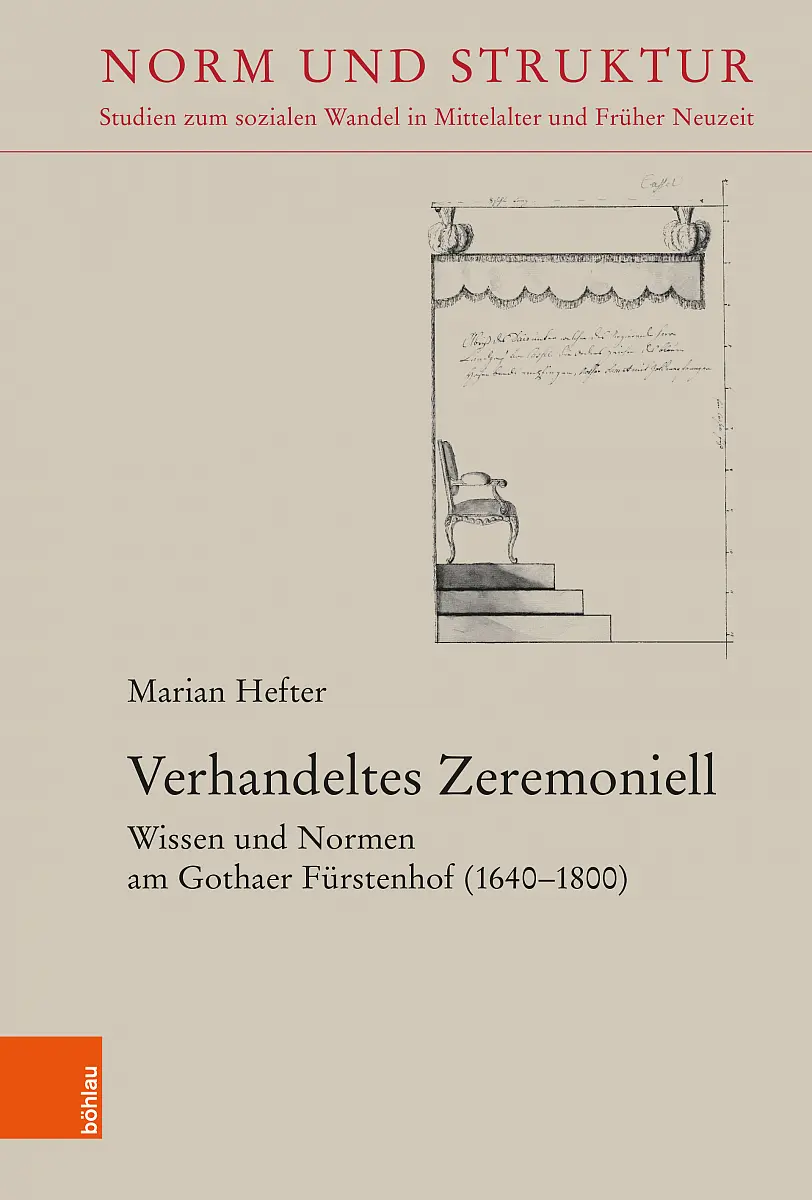
Receptions for envoys, titles, orders of precedence, the conferral of orders – at first glance, the ceremonial acts at early modern courts give the impression of having been characterised by rigid rules and strict formalities. Drawing on archival sources relating to the ducal court of Gotha, Marian Hefter examines the significance of ceremonial norms at imperial princely courts during the second half of the early modern period. The necessity and the possibilities of formulating ceremonial requirements are examined from a history of knowledge perspective. It becomes clear that, in courtly practice, ceremonial communication rarely sought systematic unambiguity, but was instead employed flexibly and often deliberately kept open-ended.

In *Natural Law and Emotion*, published by Wallstein Verlag as part of the ‘Historical Humanities’ series, Martin Mulsow has produced a history of emotions in the 18th century.
What happens when people are left entirely at the mercy of their emotions and instincts, and the voice of reason falls silent? As early as 1700, the power of emotions was the subject of debate: can natural law and social peace be based solely on the fear of punishment and the hope of reward? Or are there alternative ways for human beings to find constructive ways of living? The historian of ideas Martin Mulsow explores this question across several disciplines – philosophy and theology as well as medicine, embryology and criminal law, music and economics, philology and church history – to investigate what the early 18th century knew about emotions. In doing so, he reveals a wide range of parallels with the present day.

![[Translate to English:] facebook icon](/fileadmin/SocialMediaIcons/iconfinder_06-facebook_white.svg)

![[Translate to English:] instagram icon](/fileadmin/SocialMediaIcons/iconfinder_38-instagram_white.svg)
![[Translate to English:] YouTube icon](/fileadmin/SocialMediaIcons/iconfinder_18-youtube_white.svg)
![[Translate to English:] xing icon](/fileadmin/SocialMediaIcons/iconfinder_xing_white.svg)
