by appointment
Universität Erfurt
Gotha Research Centre
Postfach 90 02 21
99105 Erfurt
since June 2026
Friedenstein Fellow at the Gotha Research Centre for the Early Modern Period
2023/2024
CRoSS Fellow of the Stifterverband with the project ‘Competitiveness as an Argument’
January–October 2023
Fellow of the Foundation for Innovation in Higher Education and the State of Baden-Württemberg with the teaching project ‘Hands-on cultural heritage – immersive learning in three-dimensional spaces’
June 2021
Hiob-Ludolf Fellow at the Gotha Research Centre of the University of Erfurt
October 2020
Museum Fellow at the German Museum of Caricature and Drawing, Hanover
January 2020
Voltaire Senior Fellow of the Van Runset Foundation at the Herzog August Library, Wolfenbüttel
since September 2013
Professor of Late Medieval and Early Modern History at the University of Mannheim (W3)
December 2012 to February 2013
‘Marbach-Weimar-Wolfenbüttel Fellow’ at the Herzog August Library, Wolfenbüttel
2012/13
Editorial fellowship from the State Graduate College ‘Protestant Educational Traditions in Central Germany’ at the University of Jena
December 2011
Hardenberg Fellow at the Johannes a Lasco Library (Emden)
September and October 2010
Fellow at the International Centre for Gender Studies at the University of Tübingen
February–July 2010
Acting Professor of Medieval History at the University of Mannheim
February 2010
Karl Ferdinand Werner Fellow at the DHI Paris
2009 to 2013
Visiting Fellow (non-resident) at the Max-Weber-Kolleg, Erfurt
October 2009 to September 2014
Junior Fellow at the Centre for Interdisciplinary Research, Bielefeld
April to June 2008
Scholarship holder of the Gerda Henkel programme ‘History of Ideas’ (awarded by the Zeitschrift für Ideengeschichte)
2009–2013
Academic Councillor in History, specialising in the Middle Ages and the Early Modern Period, at Bielefeld University
October 2008
Postdoctoral scholar at the DHI London
2008–2009
Research Assistant at the Chair of Pre-Modern History at Vechta University of Applied Sciences
2007
Doctorate in Medieval and Modern History at the University of Mannheim
October to December 2006
Scholarship holder of the Dr Günther Findel Foundation at the Herzog August Library in Wolfenbüttel
2001–2006
Studied History, Philosophy and German Studies at Ruhr University Bochum (BA 2004, MA 2006)
Public history, material culture, museology, citizen science and knowledge transfer
Court Culture and Bourgeoisification as Linked Open Data: German Court Theatres, their Staff and Repertoire, 1770–1830
This project examines the transformation of German court theatres in the decades around 1800. It focuses on the career paths of theatre staff, the circulation of repertoires and artistic practices, and the institutional opening up of court stages to a broader, increasingly paying audience. The core period of 1770–1830 is supplemented by a prosopographical scope extending from 1750 to 1850. This allows for the analysis of professionalisation, social mobility and the transformation of the theatre—often referred to as ‘bourgeoisification’—on a broader empirical basis.
Two interlinked datasets are being compiled: a biographical dataset on actresses and actors, singers, musicians, artistic directors, court officials and technical staff; and an event dataset on plays and performances. The data will be processed in accordance with the FAIR principles, linked to standardised data sources such as GND, VIAF, GeoNames and Wikidata, and modelled in line with CIDOC-CRM and FRBRoo. The project thus combines traditional source-based research with methods from the digital humanities, creating a reusable foundation for research into theatre, social, economic and cultural history.
During the stay in Gotha, the initial focus will be on a comparative analysis of the theatres in Gotha, Mannheim, Weimar and Berlin, which were closely linked in terms of personnel. The Ekhof Theatre, the collections of the Gotha Research Library and the Thuringian State Archives form a central starting point for this. Particular attention will be paid to staff mobility and networking, to fees, pensions and additional income, to the transfer of repertoire, and to the consequences of institutional changes for employment relationships and artistic freedom. Plans include the publication of the datasets as Linked Open Data, a comparative study and a workshop aimed at expanding the scope of the research to include further court theatres.
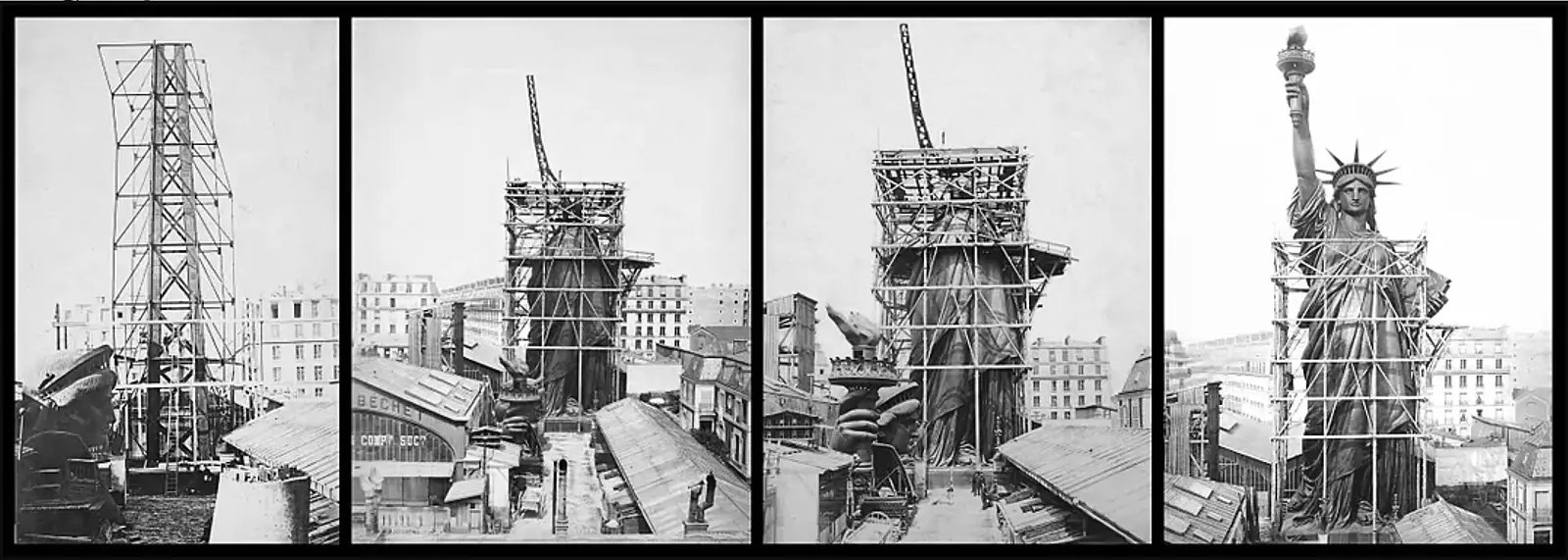
Interview about the book “1776 – The Dream and Awakening of the American Nation”. On the NDR’s ‘Rotes Sofa’, 4 July 2026 (in German).
Is Donald Trump just a blip? Hiram Kümper in conversation with Alexander Armbruster and Patrick Schlereth, Frankfurter Allgemeine Zeitung, 30 June 2026 (in German).
Please note: As soon as you start the podcast, personal data is transmitted to Spotify. For more information, please see the privacy policy of Spotify.
![[Translate to English:] facebook icon](/fileadmin/SocialMediaIcons/iconfinder_06-facebook_white.svg)

![[Translate to English:] instagram icon](/fileadmin/SocialMediaIcons/iconfinder_38-instagram_white.svg)
![[Translate to English:] YouTube icon](/fileadmin/SocialMediaIcons/iconfinder_18-youtube_white.svg)
![[Translate to English:] xing icon](/fileadmin/SocialMediaIcons/iconfinder_xing_white.svg)

University of Erfurt (Campus)
Nordhäuser Str. 63
99089 Erfurt