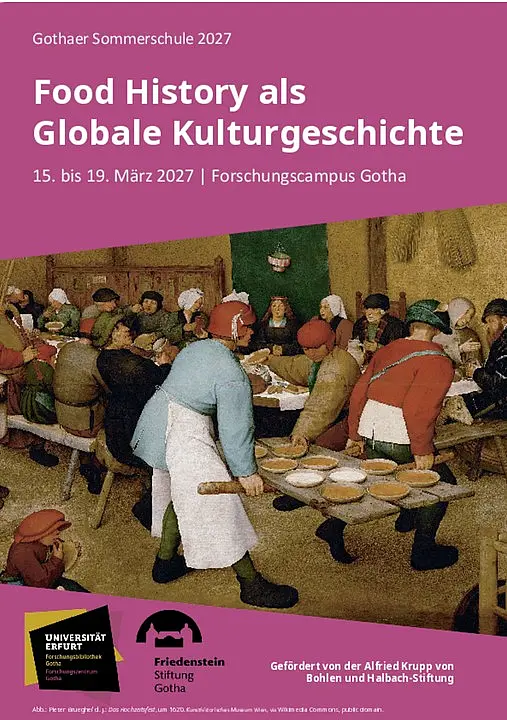
The field of “food history”, which has been flourishing for more than two decades, is a branch of historical studies in which many disciplines converge: the history of diet, the history of botany, global history, human geography, economic history and the study of material culture. The culture of human eating habits, foodstuffs and spices over the centuries; the interplay of food, infrastructure and culture in specific regions (so-called “foodscapes”); the global transfer of crops, spices and recipes (so-called “foodways”), the history of the production and dissemination of key consumer goods (salt, sugar, tea, coffee, chocolate), the socio-political and emotional-cultural contexts of diets and dietary practices (such as vegetarianism, ritual laws), the cultural and symbolic representations of food (proverbs, metaphors, imagery, novels), right through to the preservation and transmission of knowledge through recipes – all these mark research aspects that are pursued in this field and often overlap. Today, there are countless publications on the global history of individual foodstuffs and luxury goods, but also comprehensive overviews of the history of food culture and related phenomena of cultural transfer and interconnection (from the “Columbian Exchange” to the “spice routes”, from the translation of herbals to the spread of American fast food).
The summer course will introduce students to the various issues and focus on the global aspects of food history in the pre-modern era (from the earliest civilisations to around 1800). As Gotha is home to numerous collections, the course will draw on examples such as artefacts (at Friedenstein Castle), old prints, manuscripts and maps (at the Gotha Research Library and the Gotha Perthes Collection). It will also include a practical component: the group preparation of historical recipes (ranging from Mesopotamian lentil stew to 18th-century court cuisine).
Thematically, the course will explore what food history contributes to global history and to what extent it can be extended into the global history of culture and knowledge: from coffee houses and drug-induced religious experiences to ways of thinking specific to food culture and the challenges of transmitting implicit knowledge through recipes.
This one-week course is aimed at advanced undergraduates working on their master's thesis, PhD students and doctoral candidates working in the broader field of this topic and wishing to deepen their understanding, as well as employees at museums and similar institutions engaged with food history.

![[Translate to English:] facebook icon](/fileadmin/SocialMediaIcons/iconfinder_06-facebook_white.svg)

![[Translate to English:] instagram icon](/fileadmin/SocialMediaIcons/iconfinder_38-instagram_white.svg)
![[Translate to English:] YouTube icon](/fileadmin/SocialMediaIcons/iconfinder_18-youtube_white.svg)
![[Translate to English:] xing icon](/fileadmin/SocialMediaIcons/iconfinder_xing_white.svg)

University of Erfurt (Campus)
Nordhäuser Str. 63
99089 Erfurt