In the graduate centre "History of Knowledge in the Modern Era", doctoral students, postdocs and senior scholars conduct joint research on questions of knowledge. The aim is to redefine the programme of a transdisciplinary history of knowledge. The focus is on practices that produce knowledge as well as different forms of knowledge: everyday knowledge, administrative, taught or scientific knowledge, implicit or explicit knowledge, knowledge-saturated self-reflections or even things of knowledge.
Knowledge must therefore be researched in its diversity, with a close look at the respective processes of formation, negotiation and claims to validity. The spectrum of methodological approaches ranges from actor-centred approaches to the more recent history of ideas and intellectual history, from media, space and cultural technology research to material culture research, from historical epistemology and praxeology to explicitly postcolonial-inspired research approaches. The focus is on studies of knowledge at the Gotha court and the global history of the Gotha Perthes Collection.
Furthermore, Gotha as a research location makes it possible to establish a wealth of international academic contacts via the Herzog-Ernst scholarship programme and guest lectures.
Graduate Centre
The graduate centre consists of doctoral students and postdocs who are supervised by a body comprising members of the research institutes in Gotha and the Faculty of Philosophy at the University of Erfurt. The internationally networked research location of Gotha/Erfurt makes it possible to establish numerous academic contacts. The current spokesperson of the programme is Prof. Dr Iris Schröder (Global History), the deputy spokesperson is Prof. Dr Bernhard Kleeberg (History of Science).
The graduate centre is supported by the Faculty of Philosophy at the University of Erfurt, the Centre for Transcultural Studies / Perthes Collection (FKTS) and the Gotha Research Centre (FZG). The workplaces are located in the Gotha institutes.
Curriculum
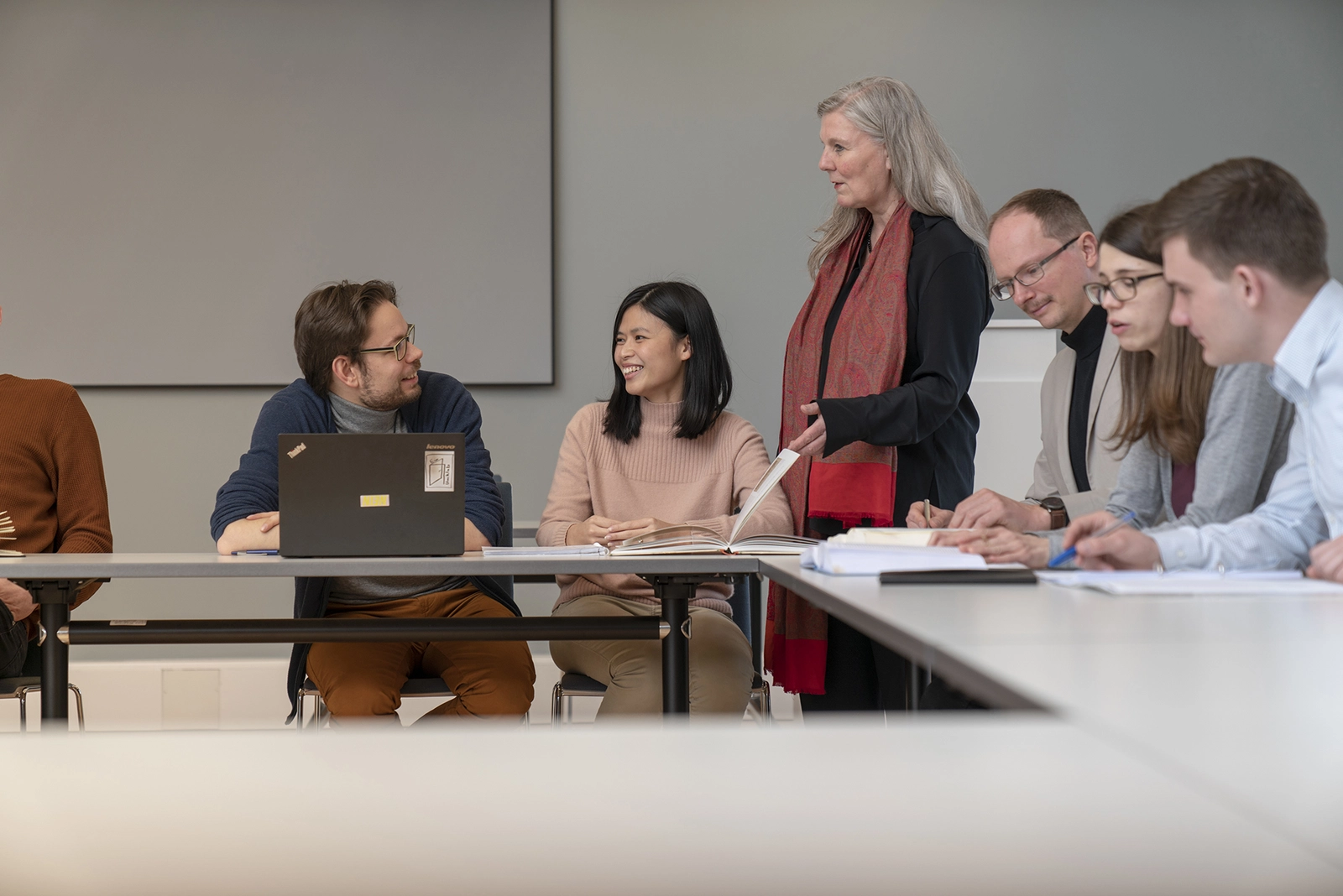
The programme is based on an obligatory curriculum, whose core components contain mandatory as well as elective elements. It broadens the structural qualifications of doctoral candidates by not only teaching them how to conduct independent academic research but also equipping them with a set of additional qualifications, which are of use in regard to potential academic careers as well as subsequent occupations in institutions working with historical collections (archives, libraries, museums) or scientific management.
Besides the weekly ‘Gotha Colloquium’ during the semesters, the mandatory elements of the curriculum include a 2.5 day basics seminary and a workshop on source-related research in the first year together with a 2 day writing and publication workshop in the second year. Beyond the obligatory components postgraduates can participate in training courses aimed at acquiring and deepening interdisciplinary key competences, conduct their own courses and organise workshops. The research group also assists graduate researchers in organising traineeships and stays abroad.
![[Translate to English:] facebook icon](/fileadmin/SocialMediaIcons/iconfinder_06-facebook_white.svg)

![[Translate to English:] instagram icon](/fileadmin/SocialMediaIcons/iconfinder_38-instagram_white.svg)
![[Translate to English:] YouTube icon](/fileadmin/SocialMediaIcons/iconfinder_18-youtube_white.svg)
![[Translate to English:] xing icon](/fileadmin/SocialMediaIcons/iconfinder_xing_white.svg)
