
Junior Fellow (Max Weber Centre for Advanced Cultural and Social Studies)
Contact
C19 – research building "Weltbeziehungen" / C19.01.38
Office hours
nach Vereinbarung
Visiting address
Max Weber Centre for Advanced Cultural and Social Studies
C19 – research building "Weltbeziehungen"
Max-Weber-Allee 3
99089 Erfurt
Mailing address
Universität Erfurt
Max Weber Centre for Advanced Cultural and Social Studies
Postfach 90 02 21
99105 Erfurt
Personal Information
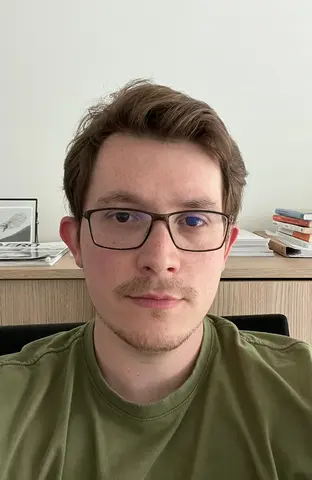
I am a postdoctoral researcher at the Max-Weber-Kolleg, University of Erfurt, where I work on topics related to culture and technology at the intersection of sociology, philosophy of technology, and critical theory. I am currently developing a project on the phenomenology of aircraft piloting and have finished a PhD dissertation on representations of human mortality in biotechnological conceptions of radical prolongevity (see below).
I earned my BA and MA in social sciences at the State University of São Paulo, Brazil. I have since worked as a doctoral and postdoctoral researcher at the University of Erfurt. In addition to research, I have worked on third-mission projects on education for sustainable development (University of Erfurt) and sharing practices and alternative forms of ownership (University of Jena).
Research Projects
2025 - Present
Phenomenology of Flying: A Study on Technologically Mediated Self-World Relations
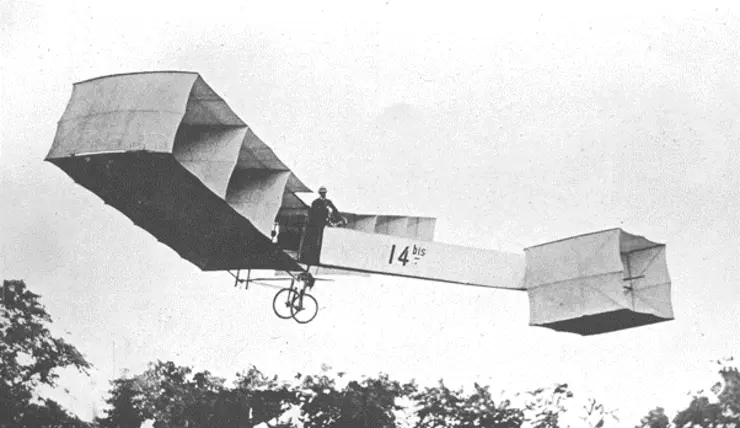
With this project, I want to investigate the flying experience from the perspective of piloting as a technologically mediated practice. Expressed in myth, literature, and dreams, the experience of flying is rooted in many cultural representations of transcendence from bodily limits and more-than-human forms of being. In pursuing a phenomenology of flying, I intend to reconstruct the meaning of flight for those who actively engage with the embodied experience of winged movement.
I conceive the project around two guiding questions: How do different human-technology arrangements in flight affect pilots’ sense of self, and how is this related to experiences of connection or detachment from the world?
Since the early 20th century, this experience has been materialized through the intimate cooperation of humans and machines, taking different forms from gliding to transcontinental flights and space exploration. Human flight has been composed of different synergistic arrangements of humans, wings, airframes, engines, ground infrastructure, automated systems, and many other layers of technological mediation. Nevertheless, discontinuities mark these relationships, and humans who fly must care for them. Piloting is a form of being engaged.
In the project, I frame discontinuities as friction. Firstly, between the human-technology arrangements and the environment of flight, there is (aero)dynamic friction. If flight is a form of technological transcendence of human limits, it is only in the sense of a vulnerable orchestration that can always fail. Secondly, between the pilots and the machine in the form of embodied friction: flight dynamics are outlandish to the human body and senses, which requires adaptive processes both on the human and technology side. Thirdly, between the pilots and the machine in the form of interactive friction: automation increasingly assumes active roles in the conduct of flight, making technology an interactive other that pilots must engage with.
As such, instead of viewing human flight as a pure expression of technical control, I start by assuming that piloting is a form of embodied and skillful engagement with friction. Through the prism of engagement with discontinuities and vulnerabilities, I pursue the meaning of human flight in the age of its technical realization.
2019 - 2024
Affluent Survivalism - Prolongevity and the Reconfiguration of Mortality in the Era of Biotechnology
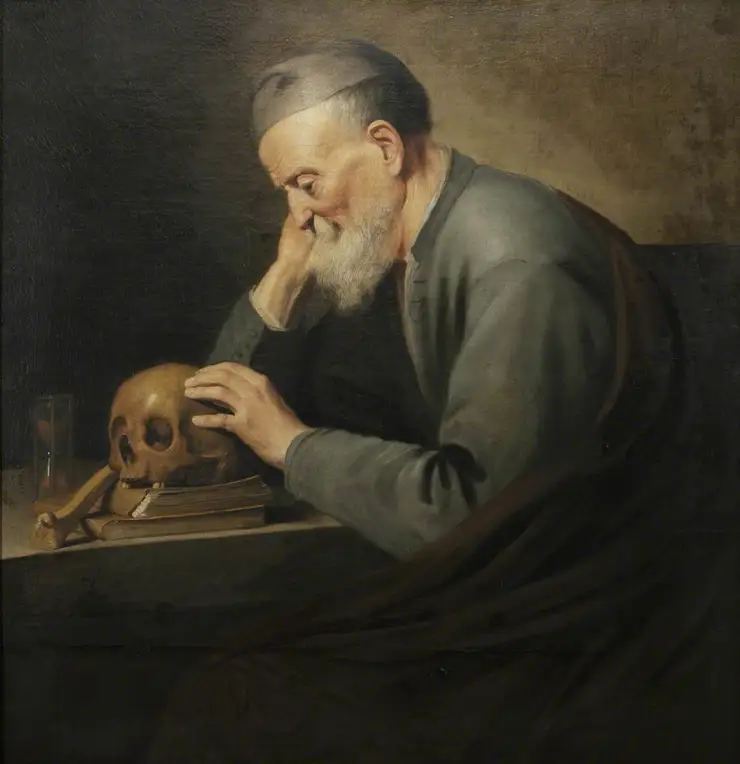
In this project, I discussed the phenomenon of biotechnological prolongevity. This definition comprehends what transhumanist philosophers frequently debate as a type of human enhancement technology. I proposed that, more than a philosophical speculation, this phenomenon mobilizes practices, knowledge, and representations of the future that give centrality to human biological survival.
Historian Gerald J. Gruman coined the concept of prolongevity to describe beliefs in the feasibility and desirability of significant human life extension, such as the pursuit of earthly immortality in ancient myths or the desire for eternal youth that has led explorers after fountains of youth. In modernity, from the Renaissance to the early 20th century, one sees prolongevity connected with biopolitical categories such as hygiene, health, sexuality, and race. But also, with techno-utopias. The idea of overcoming the limits of the human body through cyborgization, mind-uploading, or regeneration has found fertile ground in science fiction and technophile social and political movements. From Russian cosmists to English eugenicists and American singularists, Transhumanism stands out as the intellectual current that frames prolongevity in the 20th century as a technological transcendence of biological limits.
During the investigation, I engaged with the flipside of biotechnological prolonvevity to explore a dialectics between the culturalization of biology and the biologization of culture. While transhumanists view biotechnology as a way to reshape human biology according to a cultural blueprint of perfection, I investigated the survivalist momentum that drives the cultural transhumanist project. In its framing of polongevity, I have argued that Transhumanism juxtaposes a horizon of material affluence (technological transcendence) and (biological) survival.
Reconstructing the cultural logic of Transhumanism through the lens of survivalism, I pointed out three connotations of survival in biotechnological prolongevitism. Firstly, by exploring the connotation of survivalism as instinctual behavior and animality, I argued that prolongevitist practices transform survival from a drive into a value. Secondly, I explored survival in the sense of living under struggle, which shows in prolongevitism through redefining the aging process as a hidden disease. Finally, I explored survival as a continuation despite death. Here, I argued that prolongevitism conflates futurism with presentism as its utopian horizon breaks with intergenerational solidarity.

![[Translate to English:] facebook icon](/fileadmin/SocialMediaIcons/iconfinder_06-facebook_white.svg)

![[Translate to English:] instagram icon](/fileadmin/SocialMediaIcons/iconfinder_38-instagram_white.svg)
![[Translate to English:] YouTube icon](/fileadmin/SocialMediaIcons/iconfinder_18-youtube_white.svg)
![[Translate to English:] xing icon](/fileadmin/SocialMediaIcons/iconfinder_xing_white.svg)
