This talk examines the modern history of Papyrus Hamburgensis bilinguis 1, a fourth-century Christian papyrus codex acquired by the Hamburg State and University Library in 1927. While the manuscript soon attracted considerable scholarly attention, its acquisition and transfer from Egypt to Germany remained largely unaddressed in published research.
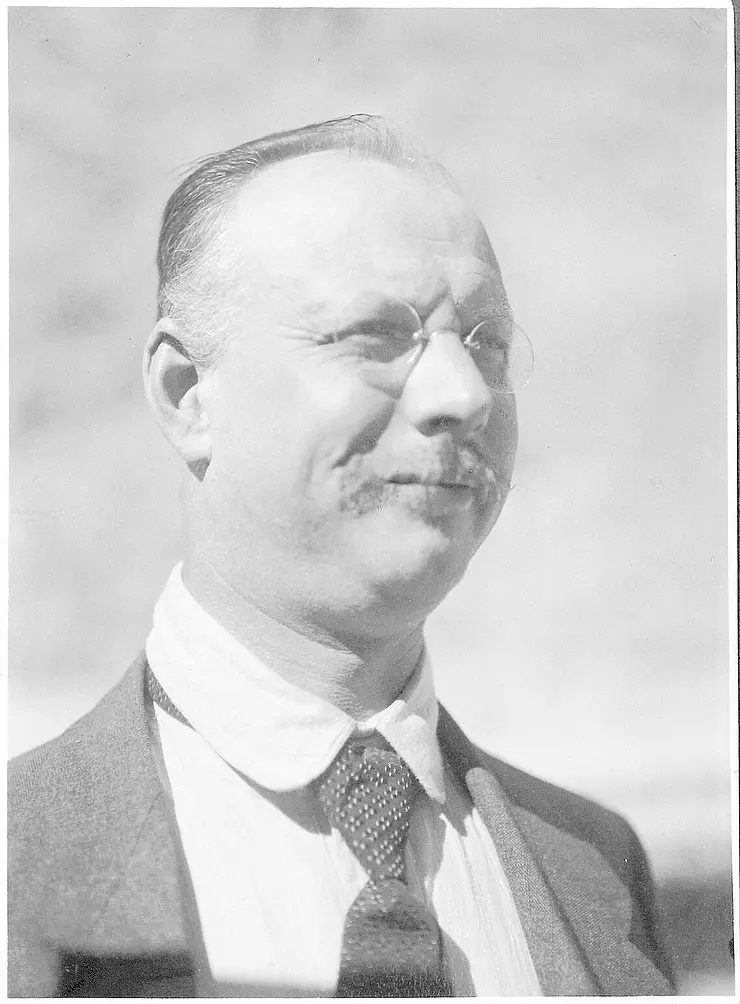
Drawing on scholarly correspondence, institutional records, and contemporary debates on antiquities legislation, the paper reconstructs the circumstances under which the papyrus was purchased on the Egyptian antiquities market and exported in violation of Egyptian law. Particular attention is paid to the role of the papyrologist Carl Schmidt, who emerges from the archival record as having been repeatedly involved in the illegal export of papyri from Egypt.
By situating this case within the broader context of papyrus collecting in the early twentieth century, the talk highlights the close entanglement of papyrological scholarship, antiquities legislation, and collecting practices that frequently operated in tension with existing legal provisions. The case of Papyrus Hamburgensis bilinguis 1 thus contributes to a better understanding of European scholarly and institutional involvement in the Egyptian antiquities market and the formation of European manuscript collections.
Jakob Wigand is a historian and provenance researcher. From 2020 to 2024, he worked as a research associate in the DFG-funded project Colonized Manuscripts: The Provenance of Hamburg’s Papyrus Collection at the Cluster of Excellence Understanding Written Artefacts and at the Research Centre Hamburg’s (Post-)Colonial Heritage. Since 2025, he has been working as a provenance researcher at the Linden Museum Stuttgart, where his research focuses on collections from Cameroon held across multiple German ethnological museums.
The online series "Gotha Manuscript Talks" provides impulses for an increased exchange on manuscript cultures across disciplinary boundaries based on the Oriental manuscript collection of the Gotha Research Library and brings researchers and interested parties into dialogue with each other.
Format: Lecture 45 min + discussion 45 min
![[Translate to English:] facebook icon](/fileadmin/SocialMediaIcons/iconfinder_06-facebook_white.svg)

![[Translate to English:] instagram icon](/fileadmin/SocialMediaIcons/iconfinder_38-instagram_white.svg)
![[Translate to English:] YouTube icon](/fileadmin/SocialMediaIcons/iconfinder_18-youtube_white.svg)
![[Translate to English:] xing icon](/fileadmin/SocialMediaIcons/iconfinder_xing_white.svg)

University of Erfurt (Campus)
Nordhäuser Str. 63
99089 Erfurt