

Prof. Dr. Marion Spengler

marion.spengler@uni-erfurt.de

Inhaberin der Professur für Pädagogisch-psychologische Diagnostik und Differentielle Psychologie (Erziehungswissenschaftliche Fakultät)

Kontakt

C23 – Mitarbeitergebäude 1 / 808

Besucheranschrift


Erziehungswissenschaftliche Fakultät
C23 – Mitarbeitergebäude 1
Alfred-Weber-Platz 6
99089 Erfurt

Postanschrift

Universität Erfurt
Erziehungswissenschaftliche Fakultät
Postfach 90 02 21
99105 Erfurt
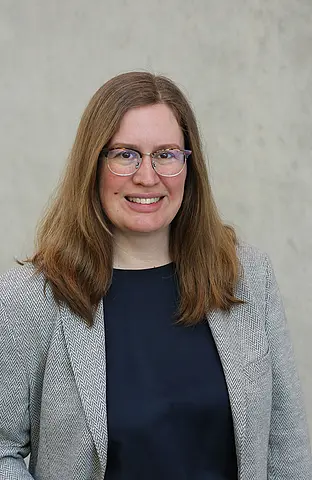
Prof. Dr. Marion Spengler

Wissenschaftsnetzwerke und Forschungsprofile

Vita

seit 04/2026 Professur für Pädagogisch-Psychologische Diagnostik und Differentielle Psychologie, Universität Erfurt
06/2021-03/2026 Professur für Differentielle Psychologie, Medical School Berlin
11/2020 Habilitation an der Wirtschafts- und Sozialwissenschaftlichen Fakultät der Universität Tübingen
04/2017-09/2017 Vertretungsprofessur pädagogisch-psychologische Bildungsforschung, Fachbereich Psychologie, Universität Koblenz-Landau, Campus Landau
10/2016-05/2021 Nachwuchsgruppenleiterin „Rolle von Persönlichkeit und Persönlichkeitsentwicklung in institutionellen Kontexten“, Hector-Institut für Empirische Bildungsforschung, Eberhard Karls Universität Tübingen
06/2015-09/2016 Post Doc am Hector-Institut für Empirische Bildungsforschung, Eberhard Karls Universität Tübingen
10/2013-02/2014 11/2014-12/2014 Forschungsaufenthalt am Department of Psychology (Prof. Roberts), University of Illinois at Urbana-Champaign, Champaign
05/2012-04/2015 Post Doc in der Forschungsgruppe “Education, Culture, Cognition and Society”, Universität Luxemburg
06/2010-04/2012 Wissenschaftliche Mitarbeiterin am Lehrstuhl Differentielle Psychologie und psychologische Diagnostik (Prof. Spinath), Universität des Saarlandes
12/2009-05/2010 Forschungsaufenthalt am Minnesota Center for Twin and Family Research, Psychology Department, University of Minnesota
12/2009 Promotion in der Fachrichtung Psychologie, Universität des Saarlandes
10/2006-11/2009 Wissenschaftliche Mitarbeiterin am Lehrstuhl Differentielle Psychologie und psychologische Diagnostik (Prof. Spinath) Universität des Saarlandes

Funktionen und Mitgliedschaften

  • Mitglied des Nachwuchskollegs Bildungsqualität
  • Mitglied in Fachgesellschaften: Association for Research in Personality (APR),
  • European Association of Personality Psychology (EAPP), Deutsche Gesellschaft für Psychologie e.V., Fachgruppe Differentielle Psychologie und Persönlichkeitspsychologie
  • Assoziiertes Mitglied im LEAD Graduate School & Research Network, Eberhard Karls Universität Tübingen

Forschungsschwerpunkte

  • Entwicklung von Persönlichkeit und sozio-emotionalen Kompetenzen im Jugendalter
  • Prädiktive Validität sozio-emotionaler Faktoren über die Lebensspanne
  • Messung von Persönlichkeit im Bildungskontext

Weitere Informationen finden Sie auf unseren Seiten zur Forschung.

Publikationen

ausgewählte Publikationen

  1. Israel, A., Brandt, N. D., Spengler, M., Göllner, R., Lüdtke, O., Trautwein, U., & Wagner, J. (2022). The longitudinal interplay of personality and school experiences in adolescence. European Journal of Personality, 37(2), 131-153. https://doi.org/10.1177/08902070211062326
  2. Lechner, C. M., Knopf, T., Napolitano, C. M., Rammstedt, B., Roberts, B. W., Soto, C. J., & Spengler, M. (2022). The Behavioral, Emotional, and Social Skills Inventory (BESSI): Psychometric Properties of a German-Language Adaptation, Temporal Stabilities of the Skills, and Associations with Personality and Intelligence. Journal of Intelligence, 10(3), 63. Doi: 10.3390/jintelligence10030063 
  3. Braun, L., Göllner, R., Rieger, S., Trautwein, U., & Spengler, M. (2021). How State and Trait Versions of Self-Esteem and Depressive Symptoms Affect Their Interplay: A Longitudinal Experimental Investigation. Journal of Personality and Social Psychology, 120(1), 206-225http://dx.doi.org/10.1037/pspp0000295
  4. Spengler, M., Damian, R.I., & Roberts, B.W. (2018). How you Behave in School Predicts Life Success above and beyond Family Background, Broad Traits, and Cognitive Ability. Journal of Personality and Social Psychology, 114, 620-636. http://dx.doi.org/10.1037/pspp0000185      
  5. Spengler, M., Brunner, M., Martin, R., & Lüdtke, O. (2016). The role of personality (for stability and change) in academic success across four years. European Journal of Psychological Assessment, 32(1), 95-103. Doi:10.1027/1015-5759/a000330     
  6. Spengler, M., Roberts, B.W., Lüdtke, O., Martin, R., & Brunner, M. (2016a). Student characteristics and behaviors in childhood predict self‐reported health in middle adulthood. European Journal of Personality, 30(5), 456-466. Doi:10.1002/per.2049
  7. Spengler, M., Roberts, B.W., Lüdtke, O., Martin, R., & Brunner, M. (2016b). The kind of student you were in elementary school predicts mortality. Journal of Personality, 84(4), 547–553. Doi:10.1111/jopy.12180.

vollständige Publikationsliste

  1. Beatty, J. F., Hill, P. L., & Spengler, M. (2025). Sense of purpose and social-emotional-behavioral skills during university. Personality and Individual Differences, 233, 112870, https://doi.org/10.1016/j.paid.2024.112870
  2. Brandt, N.D., Spengler, M., Lechner, C.M., Göllner, R., & Wagner, J. (2024). Associations between a multifaceted personality and academic performance in secondary school. European Journal of Personality, doi: 10.1177/08902070241272202
  3. Bareis, A.,  Spengler, M., Rieger, S., Gladstone, J., Yang, J.S., Nagengast, B., Trautwein, U., & Wigfield, A. (2024). Examining the Conscientiousness× Interest Compensation (CONIC) Model With Similar Constructs in High School and College Students, Journal of Research in Personality, 104462, https://doi.org/10.1016/j.jrp.2024.104462
  4. Israel, A., Brandt, N. D., Spengler, M., Göllner, R., Lüdtke, O., Trautwein, U., & Wagner, J. (2022). The longitudinal interplay of personality and school experiences in adolescence. European Journal of Personality, 37(2), 131-153. https://doi.org/10.1177/08902070211062326
  5. Lechner, C. M., Knopf, T., Napolitano, C. M., Rammstedt, B., Roberts, B. W., Soto, C. J., & Spengler, M. (2022). The Behavioral, Emotional, and Social Skills Inventory (BESSI): Psychometric Properties of a German-Language Adaptation, Temporal Stabilities of the Skills, and Associations with Personality and Intelligence. Journal of Intelligence, 10(3), 63. Doi: 10.3390/jintelligence10030063 
  6. Rieger, S., Göllner, R., Spengler, M., Trautwein, U., Nagengast, B., & Roberts, B. W. (2022). The persistence of students’ academic effort: The unique and combined effects of conscientiousness and individual interest. Learning and Instruction, 80, 101613. https://doi.org/10.1016/j.learninstruc.2022.101613
  7. Hübner, N., Spengler, M., Nagengast, B., Borghans, L., Schils, T., & Trautwein, U. (2022). When academic achievement (also) reflects personality: Using the personality-achievement saturation hypothesis (PASH) to explain differential associations between achievement measures and personality traits. Journal of Educational Psychology. Advance online publication. https://doi.org/10.1037/edu0000571
  8. Moeller, J., von Keyserlingk, L., Spengler, M., Gaspard, H., Lee, H. R., Yamaguchi-Pedroza, K., ... & Arum, R. (2021). Risk and protective factors of college students’ psychological well-being during the COVID-19 pandemic: emotional stability, mental health, and household resources. AERA Open, in press.
  9. Danner, D., Lechner, C. M., & Spengler, M. (2021). Do We Need Socio-Emotional Skills? Frontiers in Psychology, 12: 723470. Doi: 10.3389/fpsyg.2021.723470
  10. Braun, L., Göllner, R., Rieger, S., Trautwein, U., & Spengler, M. (2021). How State and Trait Versions of Self-Esteem and Depressive Symptoms Affect Their Interplay: A Longitudinal Experimental Investigation. Journal of Personality and Social Psychology, 120(1), 206-225http://dx.doi.org/10.1037/pspp0000295
  11. Damian, R.I., & Spengler, M. (2021). Negligible effects of birth order on selection into scientific and artistic careers, creativity, and status attainment. European Journal of Personality, 35(6), 775–796. DOI: 10.1177/0890207020969010
  12. Usslepp, N., Hübner, N., Stoll, G., Spengler, M., Trautwein, U., & Nagengast, B. (2020). RIASEC interests and the Big Five personality traits matter for life success—But do they already matter for educational track choices?. Journal of Personality, 88, 1007–1024. https://doi.org/10.1111/jopy.12547
  13. Nießen, D., Danner, D., Spengler, M., & Lechner, C. M. (2020). Big Five Personality Traits Predict Successful Transitions From School to Vocational Education and Training: A Large-Scale Study. Frontiers in Psychology, 11, 1827. https://doi.org/10.3389/fpsyg.2020.01827
  14. Golle, J., Rose, N., Göllner, R., Spengler, M., Stoll, G., Hübner, N., … Nagengast, B.  (2019). School or Work? The Choice May Change Your Personality. Psychological Science, 30(1), 32–42. https://doi.org/10.1177/0956797618806298
  15. Damian, R.I., Spengler, M., Sutu, A., & Roberts, B. (2019). Sixteen Going on Sixty-Six: A Longitudinal Study of Personality Stability and Change across 50 Years, Journal of Personality and Social Psychology, 117(3), 674-695. http://dx.doi.org/10.1037/pspp0000210
  16. Rieger, S., Göllner, R., Spengler, M., Trautwein, U., Nagengast, B., Harring, J.R., & Roberts, B.W. (2019). The Effects of Getting a New Teacher on the Consistency of Personality. Journal of Personality, 87, 485-500. https://dx.doi.org/10.1111/jopy.12410
  17. Spengler, M., Damian, R.I., & Roberts, B.W. (2018). How you Behave in School Predicts Life Success above and beyond Family Background, Broad Traits, and Cognitive Ability. Journal of Personality and Social Psychology, 114, 620-636. http://dx.doi.org/10.1037/pspp0000185      
  18. Spengler, M., Gottschling, J.*, Hahn, E., Tucker-Drob, E. M., Harzer, C., & Spinath, F. M. (2018). Does the heritability of cognitive abilities vary as a function of parental education? Evidence from a German twin sample. PloS one, 13(5), e0196597. *The authors contributed equally to this publication.
  19. Kretzschmar, A., Spengler, M., Schubert, A.-L., Steinmayr, R., & Ziegler, M. (2018). The Relation of Personality and Intelligence - What can the Brunswik Symmetry Principle tell us? Journal of Intelligence, 6, 30-68. doi:10.3390/jintelligence6030030
  20. Karbach, J., Konen, T., & Spengler, M. (2017). Individual differences in the transfer of task-switching training in younger and older adults, Journal of Cognitive Enhancement, 1(4), 394-405. https://doi.org/10.1007/s41465-017-0054-z
  21. Grosz, M., Göllner, R., Rose, N., Spengler, M., Trautwein, U., Rauthmann, J.F., Wetzel, E., & Roberts, B.W. (2017). The development of narcissistic admiration and Machiavellianism in early adulthood. Journal of Personality and Social Psychology, 116(3), 467-482. http://dx.doi.org/10.1037/pspp0000174
  22. Damian, R.I., Spengler, M., & Roberts, B.W. (2017). Whose job will be taken over by a computer? The role of personality in predicting job computerizability over the lifespan, European Journal of Personality, 31(3), 291-310. Doi:10.1002/per.2103
  23. Göllner, R., Damian, R.I., Rose, N., Spengler, M., Trautwein, U., & Roberts, B. (2017). Is doing your homework associated with becoming more conscientious? Journal of Research in Personality, 71, 1-12. https://doi.org/10.1016/j.jrp.2017.08.007
  24. Rieger, S., Göllner, R., Spengler, M., Trautwein, U., Nagengast, B., & Roberts, B.W. (2017). Social cognitive constructs are just as stable as the Big Five Between Grades 5 and 8. AERA Open, 3(3), 1-9. Doi:10.1177/2332858417717691
  25. Spengler, M., Brunner, M., Martin, R., & Lüdtke, O. (2016). The role of personality (for stability and change) in academic success across four years. European Journal of Psychological Assessment, 32(1), 95-103. Doi:10.1027/1015-5759/a000330 
  26. Spengler, M., Roberts, B.W., Lüdtke, O., Martin, R., & Brunner, M. (2016a). Student characteristics and behaviors in childhood predict self‐reported health in middle adulthood. European Journal of Personality, 30(5), 456-466. Doi:10.1002/per.2049
  27. Spengler, M., Roberts, B.W., Lüdtke, O., Martin, R., & Brunner, M. (2016b). The kind of student you were in elementary school predicts mortality. Journal of Personality, 84(4), 547–553. Doi:10.1111/jopy.12180
  28. Hahn, E., Gottschling, J., Bleidorn, W., Kandler, C., Spengler, M., Kornadt, A. E., ... & Lang, V. (2016). What drives the development of social inequality over the life course? The German TwinLife study. Twin Research and Human Genetics, 1-14. https://doi.org/10.1017/thg.2016.76
  29. Spengler, M., Brunner, M., Damian, R.I., Lüdtke, O. Martin, R., & Roberts, B.W. (2015). Student characteristics and behaviors at age 12 predict occupational success 40 years later over and above childhood IQ and parental SES. Developmental Psychology, 51 (9), 1329-1340. http://dx.doi.org/10.1037/dev0000025
  30. Wach, F.S., Spengler, M., Gottschling, J., & Spinath, F.M. (2015). Sex differences in secondary school achievement – The contribution of self-perceived abilities and fear of failure Learning and Instruction, 36, 104-112DOI:10.1016/j.learninstruc.2015.01.005
  31. Spengler, M., Lüdtke, O., Martin, R., & Brunner, M. (2013). Personality is related to educational outcomes in late adolescence: Evidence from two large-scale achievement studies. Journal of Research in Personality, 47, 613-625. Doi:10.1016/j.jrp.2013.05.008
  32. Karbach, J., Gottschling, J., Spengler, M., Hegewald, K., & Spinath, F.M. (2013). Parental involvement and general cognitive ability as predictors for domain-specific academic achievement in early adolescence. Learning & Instruction, 23, 43-51. https://doi.org/10.1016/j.learninstruc.2012.09.004
  33. Schalke, D., Brunner, M., Geiser, C., Preckel, F., Keller, U., Spengler, M., & Martin, R. (2013). Stability and change in intelligence from age 12 to age 52: Results from the Luxembourg MAGRIP study. Developmental Psychology, 49, 1529-1543. Doi:10.1037/a0030623
  34. Spengler, M., Gottschling, J., & Spinath, F.M. (2012). Personality in childhood – A longitudinal behavior genetic approach. Personality and Individual Differences, 53, 411–416. https://doi.org/10.1016/j.paid.2012.01.019
  35. Gottschling, J., Spengler, M., Spinath, B., & Spinath, F.M. (2012). The prediction of school achievement from a behavior genetic perspective: Results from the German twin study on Cognitive Ability, Self-Reported Motivation, and School Achievement (CoSMoS). Personality and Individual Differences, 53, 381-386. https://doi.org/10.1016/j.paid.2012.01.020
  36. Spinath, F.M., Toussaint, A., Spengler, M., & Spinath, B. (2008). Motivation als Element schulbezogener Selbstregulation: Die Rolle genetischer Einflüsse. Unterrichtswissenschaft, 36, 3-16. www.digizeitschriften.de/dms/resolveppn/

Buchkapitel (peer-reviewed)

  1. Spengler, M. & Danner, D. (2019). Gewissenhaftigkeit: Definition, Erfassung und Relevanz im Schulkontext. In H. Gaspard, U. Trautwein., & M. Hasselhorn (Eds.). Diagnostik und Förderung von Motivation und Volition. Tests und Trends in der pädagogisch-psychologischen Diagnostik (pp. 117-128). Göttingen: Hogrefe.

  2. Spengler, M. (2017). Life outcome assessment of personality and individual differences. In V. Zeigler-Hill, T.K. Shackelford (Eds.), Encyclopedia of Personality and Individual Differences, in press. DOI 10.1007/978-3-319-28099-8_1322-1

  3. Spengler, M., Fischbach, A., & Brunner, M. (2013). Gewissenhaftigkeit und schulische Leistung. In SCRIPT & EMACS (Eds.), PISA 2012. Nationaler Bericht Luxemburg (pp. 114-120). Luxembourg: MENFP.

  4. Spinath, F.M., & Spengler, M. (2011). EAS: Emotionalitäts-Aktivitäts-Soziabilitäts-Temperamentinventar. In C. Barkmann, M. Schulte-Markwort, & E. Brähler (Eds.), Ratingskalen zur Diagnostik klinisch-psychiatrischer Syndrome des Kindes- und Jugendalters in Forschung und Praxis (pp.190-195). Göttingen: Hogrefe. 

  5. Spinath, F.M., & Spengler, M. (2010). Genetics and general intelligence, In W.E. Craighead, & C. Nemeroff (Eds). The Corsini Encyclopedia of Psychology and Behavioral Science (4th Edition, Volume 2; pp. 706-709). Hoboken: John Wiley & Sons.
