

Teacher education is based on a profession-theoretical perspective that connects the acquisition of subject-specific and pedagogical content knowledge with the critical reflection on structural conditions of schooling and biographical influences. Accordingly, research and teaching focus on the analysis and critical reflection of pedagogical practice.
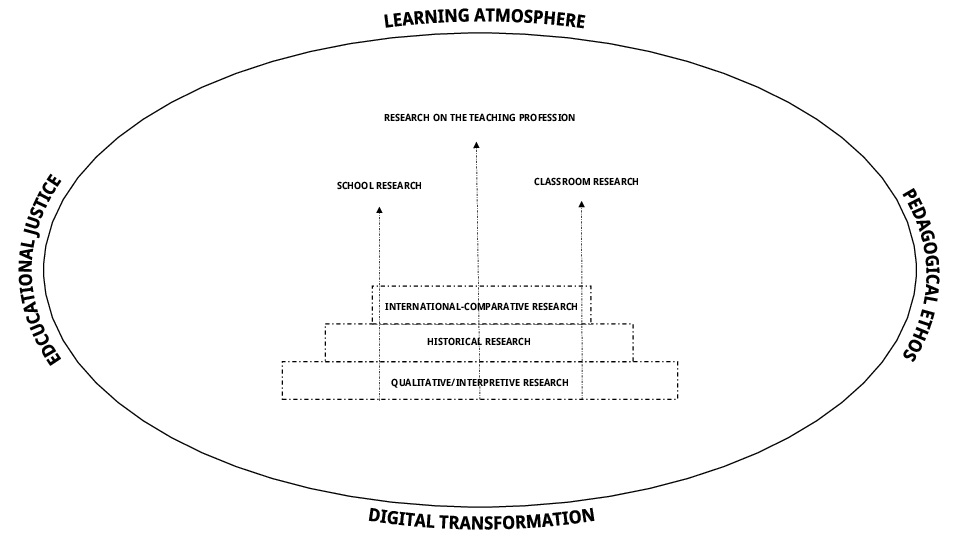
Primary education and primary teacher education at the University of Erfurt are specifically characterized by the integration of qualitative and interpretative research, historical analysis, and international comparative perspectives. It addresses key research areas such as classroom studies on interaction, artefacts, and the subjective perspectives and dispositions of teachers and pupils; research on the teaching profession, including processes of professional development, orientations, and the methodological and didactic design of teacher education; and school research focusing on school development and institutional change within societal contexts.
The profile is further shaped by four focal areas: learning atmospheres as a phenomenological and affect-related field of study; educational justice, particularly inclusion, participation, and inequality (also in international comparison); pedagogical ethos as a framework for reflecting on professional practice; and digital transformation, including digital teaching and learning formats and the use of artificial intelligence in primary education.



Universität Erfurt (Campus)
Nordhäuser Str. 63
99089 Erfurt