

apl. Prof. Dr. Ulrich Franke
ulrich.franke@uni-erfurt.deProfessor by special appointment (Faculty of Economics, Law and Social Sciences)
Office hours
Thursdays 12-2 pm
(Registration via website)
Visiting address
Faculty of Economics, Law and Social Sciences
C03 – teaching building 1
Hieranaplatz 1
99089 Erfurt
Mailing address
Universität Erfurt
Faculty of Economics, Law and Social Sciences
Postfach 90 02 21
99105 Erfurt
Studienfachberater Internationale Beziehungen (Faculty of Economics, Law and Social Sciences)
Mailing address
Universität Erfurt
Faculty of Economics, Law and Social Sciences
Postfach 90 02 21
99105 Erfurt
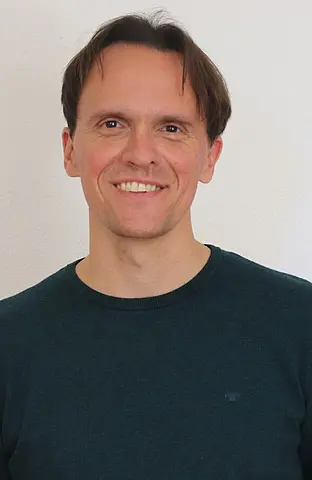
Contact
Postal address
apl. Prof. Dr. Ulrich Franke
University of Erfurt
Faculty of Economics, Law, and Social Sciences
International Politics
P.O. Box 90 02 21
99105 Erfurt
Phone: +49 (0)361 737-4508
Email: ulrich.franke@uni-erfurt.de
Visitor address
University of Erfurt
Hieranaplatz 1
C03.00.36 (ground floor)
99089 Erfurt
Consultation hours
General and specific counselling
The purpose of the consultation hours is to discuss specific seminar and thesis projects. They also offer opportunities to get general student advice and counselling in the International Relations programme.
Please register here
Mentoring
If I have been assigned to you as mentor, please use the consultation hours to discuss any questions you may have about your studies.
If you are interested in writing your final thesis in the Bachelor's programme in International Relations, please read on here
If you are interested in how I would like your seminar paper, bachelor's or master's thesis to be structured, please check the tab "Academic Writing".
Academic writing
Instructions for writing term papers and theses
Format
Use a common font and size such as Times New Roman 12 pt, 1.5 line spacing, full justification and hyphenation. Quote uniformly – in Harvard style (in continuous text: name year: page number) or in Chicago style (footnote with all bibliographic information). Beware of the use of "cf." – it is only appropriate when you find your own thought elsewhere (usually it is the other way around).
Presentation
Each presentation includes a 4-page handout consisting of precise and comprehensible keywords (bullet points) and a bibliography. Please also document the origin of your keywords (in the form: name year: page number or range). Each presentation should be based on (at least) 5 academic sources of the size of an article in an academic journal.
Essay
The purpose of your essay(s) is to practice arguing in a pointed manner. Begin by briefly introducing your topic or underlying problem and the direction into which you want to argue. In the remainder of the first third of your essay, reconstruct that central argument (of the reading) upon which you will draw. Develop your own argument in the subsequent (almost) two thirds of your essay, while making use of other readings that you independently looked up. Do not forget to end with a brief conclusion that completes your essay. Each essay should be based on (at least) 5 academic sources of the size of an article in an academic journal.
Term paper and thesis proposals
Explicate your research interest (What is the topic that concerns you?). Translate your interest into a research question as precise as possible. Discuss the (social and academic) relevance of this question. Identify a strand of literature to which your work should refer (Who are your academic interlocutors?). Finally, answer the two aspects of the question about how you want to answer your question, namely based on which theoretical assumptions and guided by which method(s) you want to do this. In addition, draft an annotated outline in which you reflect on each major item with one or two sentences (see “On the structure of term papers”).
On the structure of term papers
A term paper should be based on at least 10 academic sources of the size of an article in an academic journal. Two of the many possibilities for structuring a seminar paper are outlined below:
A. Empirical investigation
1 Introduction
- What is your research interest/topic/question? Why is it relevant?
- How is your work structured?
2 State of research
- Which parts of the discipline is your work aimed at? Whom are you talking to?
- Present what you have read in a coherent, meaningful way.
3 Theoretical framework/presumptions
- Based on which theory or theoretical presumptions do you address your topic?
4 Methodology
- What is your subject matter/case? Give reasons for your choice.
- Explicate the (methodological) presumptions upon which your methods are based.
- Describe the methods you will be using.
5 Investigation/Findings
- Apply both your theoretical presumptions and your methods to your subject matter.
6 Answering the research question/Discussion
- Answer your research question and tie your answer back to the state of research.
7 Conclusion and outlook
- Briefly summarize your findings and give an idea of avenues for further research in light of your findings.
Bibliography
B. Literature report
1 Introduction
- What is your topic/question? Why is it relevant?
- How is your paper structured?
2 State of the art
- Present what you have read on your topic/question and connect the results of your reading in a meaningful way.
3 Critical appraisal
- Present an independent argument on what you have read.
4 Conclusion and outlook
Bibliography
On the structure of theses
The following is a tried and tested suggestion for the structure of your thesis:
1 Introduction
2 State of research
3 Theoretical framework/presumptions
4 Methodology
5 Investigation
6 Answering the research question/Discussion of findings
7 Conclusion and outlook
Bibliography
Describe your topic in the introduction and outline the research question, its relevance and the structure of the thesis (1). Then embed your work in existing academic literature on the topic and set out the answers already given by other researchers. Do not proceed additively in this description of the state of the art, but relate the literature you have processed to each other and work out existing lines of conflict (2). Furthermore, your work should contain a conceptualization of the subject of your research, i.e. a section in which you explain the theoretical perspective you take on this subject at the beginning of the research process. Give an answer to the question of what theoretically informed assumptions you make in order to be able to work on your subject at all (3). After this step, it is useful to present your methodology. Make it clear how – in which steps – you want to arrive at well-informed statements about your subject and to answer your research question. The (socio-theoretical) premises on which this procedure is based also have their place in this section (4). What follows is the investigation itself, the analysis of the case or its summary. This can be done, for example, by first briefly presenting the specifics of the case(s) you are investigating and then explaining how you applied your analytical tools to your subject and what observations you made (5). Towards the end of the paper, you summarize your findings, answer the research question, and connect this answer to the state of the art (6). You then condense your answer into a conclusion. You critically reflect on your own approach and outline new research questions that arise from your findings (7). Whatever structure you decide on, always remember that you are constantly making decisions in the course of elaborating on your question, i.e. during the research process – be it the choice of question, method or case(s) – and that you must justify these decisions in the course of your thesis.
Publications
Monographs
Die NATO nach 1989. Das Rätsel ihres Fortbestandes, Wiesbaden: Verlag für Sozialwissenschaften, 2010.
Edited Volumes (peer-reviewed)
Inter-Organisational Relations and World Order: Re-Pluralising the Debate, Bristol: Bristol University Press, 2023 (with Martin Koch).
Book series "Rekonstruktive Weltpolitikforschung" (since 2016, Baden-Baden: Nomos, with Ulrich Roos).
Rekonstruktive Methoden der Weltpolitik. Anwendungsbeispiele und Entwicklungstendenzen, Baden-Baden: Nomos, 2013 (with Ulrich Roos).
Peer-reviewed journal articles
Socio-Political Fantasies in the Floor Plans of “Big Tech” Headquarters, Global Studies Quarterly, 6: 4 (October 2026), ksag009 (with Madeleine Böhm).
Still lacking self-reflection after all these years? (De)stabilising factors of transatlantic relations according to German and US foreign policy experts between 2011 and 2017, Journal of Transatlantic Studies, 21: 1-2, pp. 1-29 (2023, with Hermann Kurthen).
Proclaiming a prophecy empty of substance? A pragmatist reconsideration of global governance, Journal of International Political Theory, 18: 3 (October 2022), pp. 312-335 (with Matthias Hofferberth).
Leader of the 'free world'? Studying German foreign policy by means of external attributions, German Politics, 30: 1 (March 2021), pp. 72-86.
Eine pragmatistische Perspektive auf interorganisationale Beziehungen: Der Ständige interinstitutionelle Ausschuss (IASC) zur Koordination humanitärer Hilfe, Politische Vierteljahresschrift, Sonderheft 49/2014, pp. 266-293.
Inter-Organisational Relations as Structures of Corporate Practice, Journal of International Organisations Studies, 4: Special Issue (2013), pp. 85-103 (with Martin Koch).
'They don't really care about us'! On Political Worldviews in Popular Music, International Studies Perspectives, 14: 1 (February 2013), pp. 39-55 (with Kaspar Schiltz).
At the Papini Hotel. On Pragmatism in the Study of International Relations, European Journal of International Relations, 18: 4 (December 2012), pp. 669-691 (with Ralph Weber).
Über unerwünschte Handlungsfolgen in den Internationalen Beziehungen, Zeitschrift für Internationale Beziehungen, 19: 1 (June 2012), pp. 65-84 (with Ulrich Roos).
Actor, structure, process: Transcending the state personhood debate by means of a pragmatist ontological model for international relations theory, Review of International Studies, 36: 4 (October 2010), pp. 1057-77 (with Ulrich Roos).
Beyond the Deadlock: How Europe Can Contribute to UN Reform, The International Spectator, 43: 1 (March 2008), pp. 43-55 (with Ulrich Roos and Gunther Hellmann).
Non-peer-reviewed journal articles
Inter-Organizational Relations, Academic Foresights, No. 14 (July-December 2015).
Globale Solidarität als nationales Interesse, WeltTrends: Zeitschrift für internationale Politik, 18: 4 (July/August 2010), pp. 105-108 (with Ulrich Roos).
Peer-reviewed contributions to edited volumes
Reconstructive Methods in Public Policy, in: Minna van Gerven, Christine Rothmayr Allison, and Klaus Schubert (eds.) 2025: Encyclopedia of Public Policy, Cham: Springer (online publication, with Ulrich Roos).
Abduction in Public Policy, in: Minna van Gerven, Christine Rothmayr Allison, and Klaus Schubert (eds.) 2025: Encyclopedia of Public Policy, Cham: Springer (online publication, with Ulrich Roos).
Deduction in Public Policy, in: Minna van Gerven, Christine Rothmayr Allison, and Klaus Schubert (eds.) 2025: Encyclopedia of Public Policy, Cham: Springer (online publication, with Ulrich Roos).
Induction in Public Policy, in: Minna van Gerven, Christine Rothmayr Allison, and Klaus Schubert (eds.) 2025: Encyclopedia of Public Policy, Cham: Springer (online publication, with Ulrich Roos).
Actor-Structure Problem in Public Policy, in: Minna van Gerven, Christine Rothmayr Allison, and Klaus Schubert (eds.) 2024: Encyclopedia of Public Policy, Cham: Springer (online publication, with Ulrich Roos).
Conclusion: A Pragmatist View of Inter-organizational Relations and World Order, in: Ulrich Franke and Martin Koch (eds.) 2023: Inter-Organizational Relations and World Order: Re-Pluralising the Debate, Bristol: Bristol University Press, pp. 194-209.
World Sports and Russia's War Against Ukraine, in: Ulrich Franke and Martin Koch (eds.) 2023: Inter-Organizational Relations and World Order: Re-Pluralising the Debate, Bristol: Bristol University Press, pp. 171-193 (with Martin Koch).
Introduction: Examining Inter-organizational Relations, in: Ulrich Franke and Martin Koch (eds.) 2023: Inter-Organizational Relations and World Order: Re-Pluralising the Debate, Bristol: Bristol University Press, pp. 1-32 (with Martin Koch).
American Pragmatism in Foreign Policy Analysis, in: Cameron Thies (ed.) 2018: The Oxford Encyclopedia of Foreign Policy Analysis, Vol. 1: A-H, New York: Oxford University Press, pp. 14-32 (with Gunther Hellmann).
Inter-Organisational Relations, in: Renée Marlin-Bennett (ed.) 2017: Oxford Research Encyclopedia of International Studies, New York: International Studies Association and Oxford University Press (online publication).
Zur Erforschung der NATO mit den Methoden der objektiven Hermeneutik, in: Ulrich Franke and Ulrich Roos (eds.) 2013: Rekonstruktive Methoden der Weltpolitikforschung. Anwendungsbeispiele und Entwicklungstendenzen, Baden-Baden: Nomos, pp. 271-307.
Non-peer-reviewed contributions to edited volumes
Germany, in: Brian C. H. Fong (ed.) 2026: The Palgrave Geopolitical Atlas: State and Quasi-State Actors in Great Power CompetitionSingapore: Palgrave Macmillan, pp. 103-120 (with Florian Hubert).
Rekonstruktiv-interpretative Ansätze in den Internationalen Beziehungen und der Weltpolitikforschung: Objektive Hermeneutik und Grounded Theory, in: Frank Sauer, Lubo von Hauff, and Carlo Masala (eds.) 2024: Handbuch Internationale Beziehungen, Wiesbaden: VS Verlag für Sozialwissenschaften, 3rd ed., pp. 729-755 (with Ulrich Roos).
Interpretive approaches, in: Sebastian Mayer (ed.) 2023: Research Handbook on NATO, Cheltenham: Edward Elgar, pp. 84-97.
Rekonstruktiv-interpretative Designs, in: Claudius Wagemann, Achim Goerres and Markus B. Siewert (eds.) 2020: Handbuch Methoden der Politikwissenschaft, Wiesbaden: Springer VS, pp. 169-191 (with Ulrich Roos).
Eine pragmatistische Analyse und Kritik der pragmatischen Globalstrategie der Europäischen Union. Zugleich der Versuch einer Weiterentwicklung der Ethik von Charles Sanders Peirce und John Dewey, in: Alexander Merkl and Bernhard Koch (eds.) 2018: Die EU als ethisches Projekt im Spiegel ihrer Außen- und Sicherheitspolitik, Baden-Baden: Nomos, pp. 147-179 (with Ulrich Roos).
The United Nations and Regional Security Organisations in Africa, Europe and the North-Atlantic Region, in: Stephen Aris, Aglaya Snetkov, and Andreas Wenger (eds.) 2018: Inter-Organisational Relations in International Security: Cooperation and Competition, London and New York: Routledge, pp. 21-37.
Sociological Approaches, in: Rafael Biermann and Joachim Koops (eds.) 2017: The Palgrave Handbook of Inter-Organisational Relations in World Politics, London: Palgrave Macmillan, pp. 169-187 (with Martin Koch).
Rekonstruktive Ansätze in den Internationalen Beziehungen und der Weltpolitikforschung: Objektive Hermeneutik und Grounded Theory, in: Frank Sauer and Carlo Masala (eds.) 2017: Handbuch Internationale Beziehungen, Wiesbaden: Verlag für Sozialwissenschaften, 2nd ed., pp. 619-640 (with Ulrich Roos).
Einleitung: Zu den Begriffen ‚Weltpolitik‘ und ‚Rekonstruktion‘, in: Ulrich Franke and Ulrich Roos (eds.) 2013: Rekonstruktive Methoden der Weltpolitikforschung. Anwendungsbeispiele und Entwicklungstendenzen, Baden-Baden: Nomos, pp. 7-29 (with Ulrich Roos).
Rekonstruktionslogische Forschungsansätze, in: Carlo Masala, Frank Sauer, and Andreas Wilhelm (eds.) 2010: Handbuch der Internationalen Politik, Wiesbaden: Verlag für Sozialwissenschaften, pp. 285-303 (with Ulrich Roos).
Working Papers
A Pragmatist Perspective on Normative Orders in International Relations, working paper for the Cluster of Excellence 243, The Formation of Normative Orders, Goethe-University, Frankfurt/M., 2009 (with Ulrich Roos).
The United Nations' oldest challenger: NATO's persistence after the bloc confrontation. A reconstructive approach, working paper for the Cluster of Excellence 243, The Formation of Normative Orders, Goethe-Universität, Frankfurt/M., 2008.
From "collective actor" to "structure of collective acting". The meaning of "human beings" for the study of international relations, 2005 (with Ulrich Roos).
Works of Academic Qualification
Pragmatistische Weltpolitikforschung, Kumulative Habilitationsschrift, Universität Bremen, Bremen, 2016.
Eine Art Vereinte Nationen mit größerer Wirksamkeit? Zum 'Rätsel' des Fortbestands der NATO nach dem Ende der Blockkonfrontation, Dissertation, University of St. Gallen, St. Gallen, 2008.
Vom konträren Umgang mit einem Tabu. Warum sich Deutschland 1991 nicht am Golfkrieg beteiligt hat, aber im Jahr 2001 den „Krieg gegen den Terror“ aufnahm. Eine Analyse von vier Bundestagsreden mithilfe der objektiven Hermeneutik, Magisterarbeit, Goethe University, Frankfurt/M., 2002.
Other Contributions and Miscellanies
Wichtig oder veraltet? Trumps Nato: Seit 1949 konkurriert das Militärbündnis mit den Vereinten Nationen. Damit ruiniert der Westen weltweit sein Ansehen – Zeit für Selbstaufklärung, published as: Hüterin der Charta: Das von Trump als veraltet kritisierte Militärbündnis wird wieder wichtiger werden – als Instrument eines aufgeklärten Westens, taz. die tageszeitung, 9 February 2017, p. 12.
"Rechtsstaatlichkeit muss wehtun" oder: 20 Jahre "InIIS": Symposium an der Universität Bremen, 10-11 December 2015, soziopolis.de, 2015 (with Roy Karadag, Sebastian Möller, and Marcus Wolf).
Research areas
Teaching areas
Curriculum vitae
Academic education
March 2025
Professor by special appointment, awarded by the President of the University of Erfurt
October 2024
Venia legendi in political science, awarded by the University of Erfurt in a habilitation transfer
June 2017
Venia legendi in political science, awarded by the University of Bremen
September 2008
Doctorate (Dr. rer. publ.), awarded by the University of St. Gallen
May 2003
Final degree (Magister Artium) in Political Science (major), Sociology, and Economics (minors), awarded by Goethe University, Frankfurt/M.
October 1997 - May 2003
Study of Political Science (major), Sociology, and Economics (minors) at Goethe University, Frankfurt/M.
Professional experience
since October 2019
Senior Lecturer in the Faculty of Economics, Law, and Social Sciences, University of Erfurt
October 2018 - September 2019
Substitute Professor at the Institute for Intercultural and International Studies (InIIS), University of Bremen
June 2018 - September 2018
Associated Researcher at the Institute for Intercultural and International Studies (InIIS), University of Bremen
February 2018 - April 2018
Visiting Research Scholar at the New School, New York (Schools of Public Engagement)
October 2015 - March 2016
Substitute Professor at the Institute of Political Science, Goethe University, Frankfurt/M.
June 2011 - May 2018
Research and Teaching Assistant at the Institute for Intercultural and International Studies (InIIS), University of Bremen
October 2008 - May 2011
Research and Teaching Assistant (per pro.) in the Faculty of Sociology, Bielefeld University (Unit: Politics and Society)
August 2008 - December 2008
Postdoctoral Research Fellow at the Cluster of Excellence 243 Formation of Normative Orders, Goethe University, Frankfurt/M.
July 2006 - August 2006
Research stay at the University of Sheffield
July 2005 - September 2008
Research and Teaching Assistant at the Institute of Political Science (IPW-HSG), University of St. Gallen
Memberships
Association for Objective Hermeneutics
German Political Science Association
European International Studies Association
International Studies Association
Activity as reviewer
Cambridge Review of International Affairs
European Journal of International Relations
Foreign Policy Analysis
German Politics
International Political Sociology
International Relations
International Theory
Journal of International Organisations Studies
Millennium: Journal of International Studies
Perspectives: The Central European Review of International Affairs
Politische Vierteljahresschrift
Review of International Studies
Sozialer Sinn: Zeitschrift für hermeneutische Sozialforschung
Zeitschrift für Friedens- und Konfliktforschung
Zeitschrift für Internationale Beziehungen


![[Translate to English:] facebook icon](/fileadmin/SocialMediaIcons/iconfinder_06-facebook_white.svg)

![[Translate to English:] instagram icon](/fileadmin/SocialMediaIcons/iconfinder_38-instagram_white.svg)
![[Translate to English:] YouTube icon](/fileadmin/SocialMediaIcons/iconfinder_18-youtube_white.svg)
![[Translate to English:] xing icon](/fileadmin/SocialMediaIcons/iconfinder_xing_white.svg)
