Team members: Prof. Dr. Gila Schauer & research assistants M. Albrecht, S. Müller, D. Böhm
Description:
This project developed as a result of conversation that I had with Dr. Grit Bergnerabout pragmatics and young language learners when she was still based at Erfurt. This initial conversation that mainly focused on the content of instructional materials used in German EFL primary classes lead to further discussions with MEd students and primary school teachers, as well as other researchers in other fields of primary EFL and the over time the different aims and parts of the project took shape.
The aim of the project was to write a book for students, PhD students, pre-service teachers, in-service teachers and researchers that provided an overview of key pragmatic issues relevant for primary EFL instruction. It was hoped that this first research monograph on young EFL learners and pragmatics would help increase practitioners and researchers interest in and awareness of this topic and help to make pragmatics more visible in the field of young L2 learners.
Since not all foreign language or teacher training programmes feature pragmatics, the monograph includes a very detailed review of the literature that introduces all concepts and terminology referred to and does not presume an any previous knowledge of pragmatics. It also introduces my concept of "Survival English" that is intended to provide beginner level learners with key speech acts that they may need in an emergency situation.
The project consists of 4 parts:
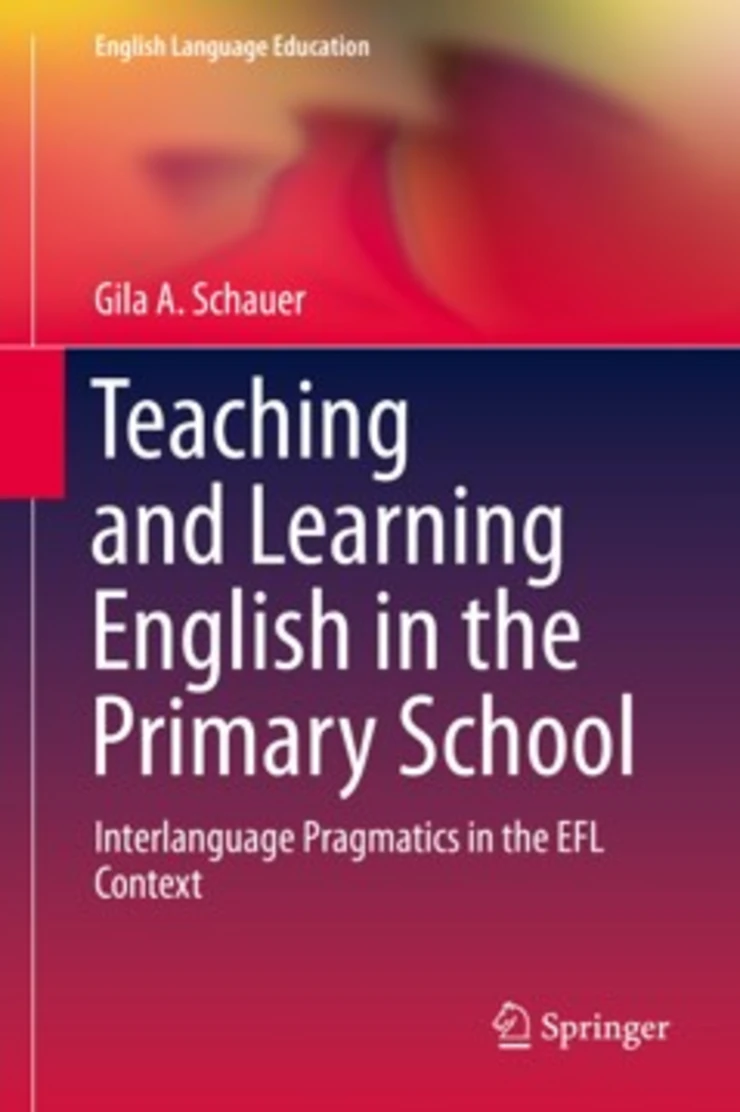
The results of this project were published in 2019 in the monographTeaching and Learning English in the Primary School: Interlanguage Pragmatics in the EFL context
Team: Prof. Dr. Gila Schauer & research assistant D. Böhm
This project focuses on pragmatics and young learners in secondary school EFL contexts. To date the focus has been on materials analysis and the analysis of EFL learners' productive pragmatic competence in special needs and secondary general education.
Publications:
Schauer, G.A. (2022). Interlanguage pragmatic development in an instructed secondary school context - investigating input and output focusing on the speech acts of agreement and disagreement. In Halenko, N. & Wang, J. (Eds.), Pragmatics and English Language Learning (pp. 143-172). Cambridge University Press.
Schauer, G.A. (2020). Lehrmaterialien für Sekundarschulschüler*innen mit speziellem Förderbedarf: eine kontrastive pragmatische Studie von Sprechakten in zwei Lehrwerken. In Glaser, K. & Limberg, H. (Eds.), Pragmatische Kompetenzen im schulischen Fremdsprachenunterricht (pp. 259-285). Peter Lang Verlag.
![[Translate to English:] Dieses Bild zeigt englischsprachige Kinderbücher.](/fileadmin/_processed_/7/8/csm_Childrens-books_1cc6675f76.webp "Childrens' books")
Team: Prof. Dr. Gila Schauer, NN
Description
The results of the PEP project revealed that the 22 children's books analysed in the first project tended to only contain a very limited number of speech acts that are necessary for everyday communication.
This research project aims to explore the potential of more recently published children's literature for the instruction of young L2 learners. It focuses on children's literature suitable for primary or secondary school EFL learners and concentrates on
Publications:
Schauer, G.A. & Beecroft, R. (2025). An Arts-based Approach to Pragmatic Instruction: Using Graphic Novels, Drama and Drawing to Teach Basic Speech Acts in Young EFL Learners. In Schauer, G.A., Economidou-Kogetsidis, M., Savic, M. & Myrset, A. (Eds.) Second Language Pragmatics and Young Language Learners: EFL Primary School Contexts in Europe. Multilingual Matters.
Schauer, G.A. (2024). L2 Pragmatics and CLIL in Primary EFL Education: Investigating the potential of graphic novels and picturebooks. In Falkenhagen, C. & Bergner, G. (Eds.), Storytelling in Primary CLIL (pp. 58-88). Gabriele Schäfer Verlag.
Schauer, G.A. (2022). Exploring the potential of graphic novels for L2 pragmatic teaching and learning – focus on young learners. The Language Learning Journal.
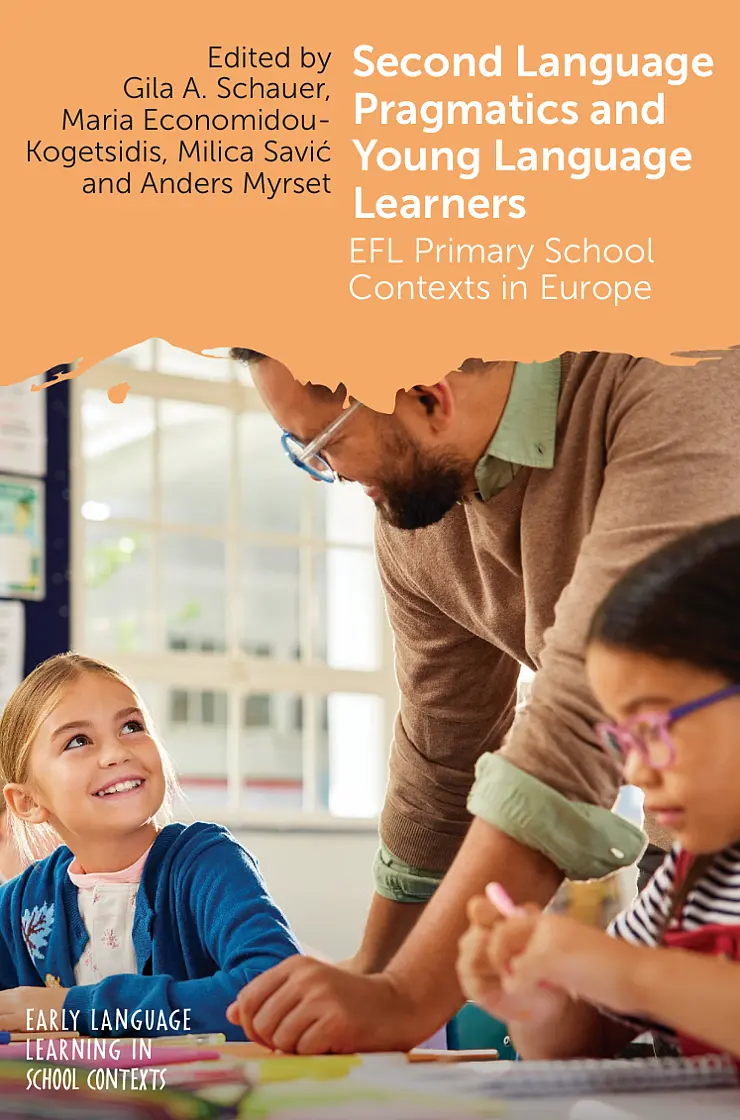
Editors: Profs. Gila Schauer, Maria Economidou-Kogetsidis, Milica Savic, Anders Myrset
Content: This edited volume published in 2025 contains 9 studies addressing different aspects regarding the teaching and learning of pragmatics in European primary schools context in Croatia, Cyprus, Germany, Norway, Spain and the Netherlands.
Gila Schauer, Anders Myrset, Milica Savić and Maria Economidou-Kogetsidis: Introduction
Chapter 1. Eva Jakupčević and Jelena O'Reilly: Young EFL Learners' Development of Discourse Marker Use
Chapter 2. Maria Economidou-Kogetsidis, Anders Myrset and Milica Savić: 'If we are Talking to the Minister of Education...': L2 Request Appraisals and Metapragmatic Awareness in Young Learners of English
Chapter 3. Anders Myrset: Giving Young Language Learners a Voice: Learner Feedback on Pragmatics Instruction
Chapter 4. Alicia Martínez-Flor: Exploring In-Service Primary School EFL Teachers' Views on Pragmatics
Chapter 5. Veronika Timpe-Laughlin, Tetyana Sydorenko and Judit Dombi: Pragmatics in Primary School: A Look into an English-as-a-Foreign-Language Classroom
Chapter 6. Esther Usó-Juan: The Use of Animated Films as a Resource to Teach Oral Requests and Responses to Young Language Learners: An Evaluative Analysis
Chapter 7. Holger Limberg: Teaching Greetings in Young Learner EFL Classrooms: A Methodological Approach for Primary Pragmatics
Chapter 8. Karen Glaser: Teaching Pragmatics from the Start: Implementing Teaching Units on Greetings in the Primary EFL Classroom
Chapter 9. Gila A. Schauer and Raphaëlle Beecroft: An Arts-Based Approach to Pragmatic Instruction: Using Graphic Novels, Drama and Drawing to Teach Basic Speech Acts in Young EFL Learners

In addition to publications that are part of research projects, I have also written articles on pragmatics and young language learners that are reviews or public commentaries:
Schauer, G.A. (2022). Teaching L2 Pragmatics to Young Learners: A Review Study. Applied Pragmatics, 4(2), 137-158. .[Open Access Teaching L2 pragmatics to young learners | John Benjamins (jbe-platform.com)]
Beitrag im Wortmelder (Forschungsblog der Universität Erfurt) vom 23.03.2022:Nachgefragt: "Wie wichtig ist es für Kinder, sich in Krisensituationen in einer Fremdsprache ausdrücken zu können, Frau Prof. Schauer?"

![[Translate to English:] facebook icon](/fileadmin/SocialMediaIcons/iconfinder_06-facebook_white.svg)

![[Translate to English:] instagram icon](/fileadmin/SocialMediaIcons/iconfinder_38-instagram_white.svg)
![[Translate to English:] YouTube icon](/fileadmin/SocialMediaIcons/iconfinder_18-youtube_white.svg)
![[Translate to English:] xing icon](/fileadmin/SocialMediaIcons/iconfinder_xing_white.svg)

University of Erfurt (Campus)
Nordhäuser Str. 63
99089 Erfurt