
What Is in a Scribe’s Mind and Inkwell. Archaeology of the Gotha Collection of Early Qur’anic Manuscripts as a Case Study at the Intersection of Philology and Natural Sciences
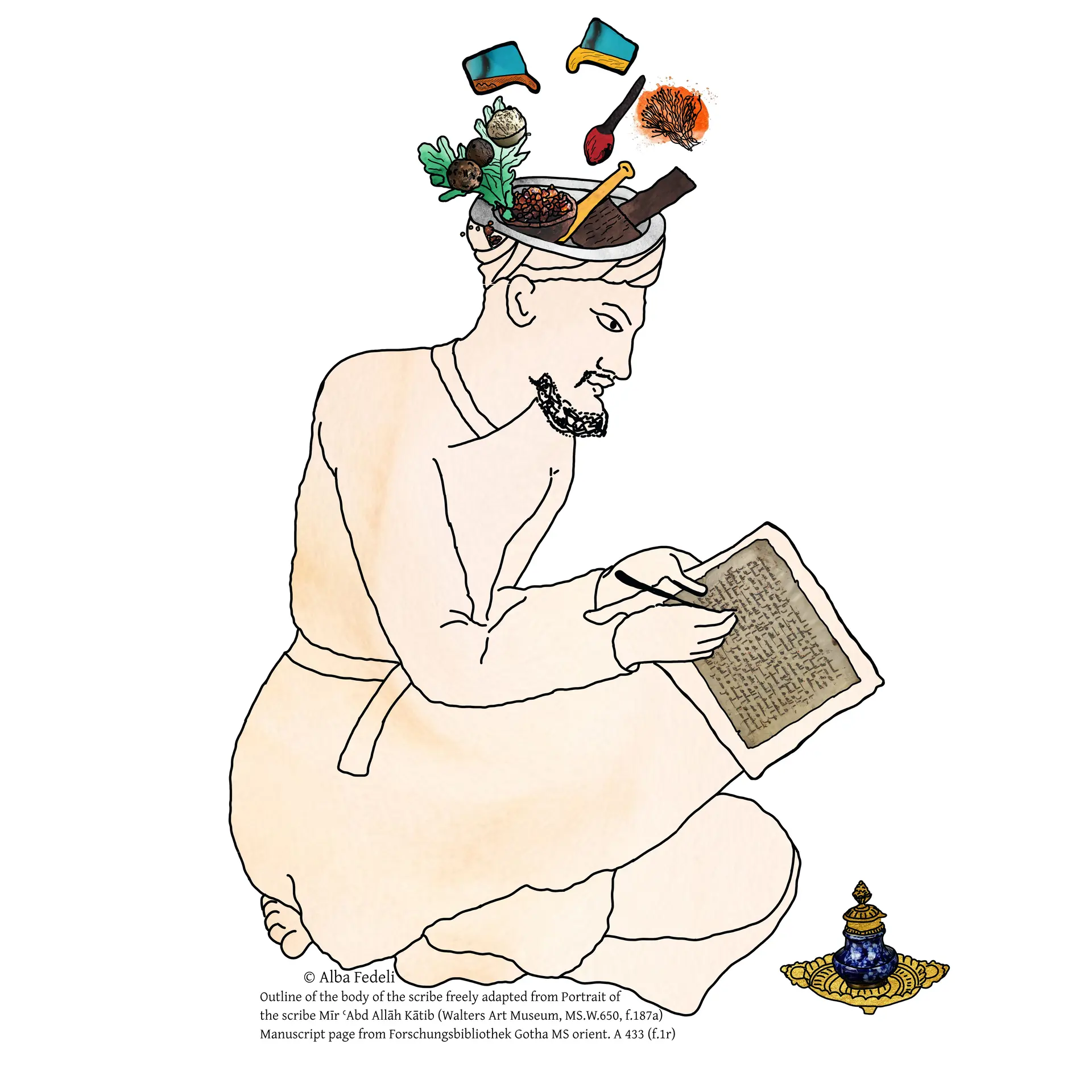
“What Is in a Scribe’s Mind and Inkwell” is a project conducted at the Cluster of Excellence “Understanding Written Artefacts” of the University of Hamburg in close cooperation with the Gotha Research Library. The corpus of early Qur’anic fragments collected by Ulrich Jasper Seetzen (1767–1811) at the beginning of the 19th century is the object of investigation of the project. These Qur’an fragments were part of the deposit of manuscripts once stored in the Mosque of ʿAmr b. al-ʿĀṣ (d. 664) in the cosmopolitan city of Fusṭāṭ (old Cairo). They date from the 8th to the 10th/11th century.
Since the 19th century, studies on Gotha’s early Qur’ans – as, for example, in Theodor Nöldeke’s Geschichte des Qorâns – have shaped the scholarly understanding of the written transmission of the Qur’anic text. Previous studies have accessed these ancient manuscripts through visual examination as flat objects, since layers are often invisible to the naked eye. The stratigraphic analysis of the materiality of Gotha’s early Qur’anic manuscripts sheds light on the archaeology of the manuscript page and connects it to the socio-cultural background, the scribes’ education, technological knowledge, linguistic competence, and economic resources, etc. This stratigraphy yields a relative chronology of the layers that is of utmost importance in view of the fragmentary nature of the undated manuscripts.
The project investigates the history of the manuscripts by tracing the process from their first production to the creation of later layers in their lifecycle. The biography of each artefact can be understood by studying its stratigraphy. This is explored through non-destructive material analyses, notably digital microscopy, X-ray fluorescence spectroscopy, Raman spectroscopy, FT-IR spectroscopy, and Visible and Near IR spectroscopy, in combination with a philological and palaeographic approach.
During her first visit in June/July 2024, Dr. Alba Fedeli, the PI of the project, assessed the possible stratigraphy of each manuscript and selected areas of interest to be later analysed with digital microscopy and the above mentioned methods. The analytical campaign by Dr. Fedeli, and members of the Mobile Laboratory of the Centre for the Study of Manuscript Cultures Prof. Claudia Colini and Giuseppe Marotta, took place at the Gotha Research Library in February 2025. Data obtained from the measurements taken at the time is currently processed at the University of Hamburg and uploaded in the University’s repository. Research results will be published in a monograph with the title Stratigraphic Analysis of Early Qur’anic Manuscripts: A Biography of the Collection in Gotha.
Blog: Provenance History of the Collection of Early Qur’ans (englisch) (deutsch)
Duration: 09/2023 – 12/2025
Funding organisation: German Research Foundation
Project Partners: Cluster of Excellence “Understanding Written Artefacts” (University of Hamburg) and Gotha Research Library
Project Group
PI: Dr. Alba Fedeli (Universität Hamburg)
Mobile Laboratory UWA, University of Hamburg: M.A. Giuseppe Marotta and Prof. Claudia Colini
Gotha Research Library: Dr. Feras Krimsti
Cataloguing and partial digitisation of the historical collection of the library of the Protestant Ministry of Erfurt
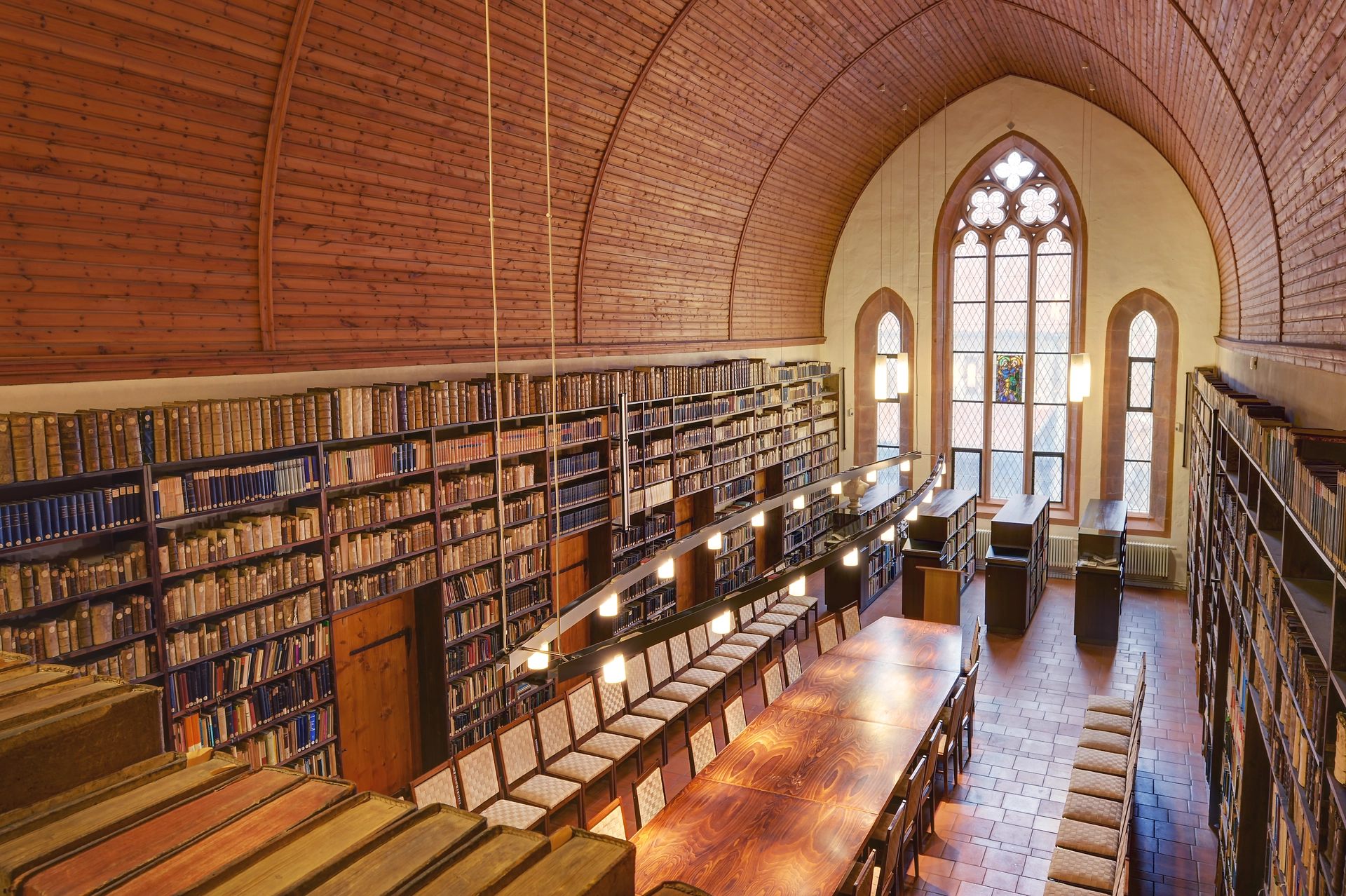
In 1646, Erfurt's Lutheran pastors, with the active assistance of the city's Protestant councillors and wealthy Protestant residents, founded a book collection which was named the "Library of the Protestant Ministry" after the ecclesiastical college and was set up in the Augustinian monastery. Due to a lack of financial resources, it was not only dependent on the book donations that pastors had to pay when they took up their duties, but also on the support of charitable benefactors and donors. After a modest beginning with just 40 books, the ministerial library grew over the centuries to become one of the most important ecclesiastical libraries in Germany. Today it contains around 60,000 volumes from eight centuries, including a collection of 14,000 manuscripts and prints from before 1850. The library's historical book collection is invaluable for research and as a cultural asset. It is listed in a card catalogue.
A co-operation project between the Gotha Research Library and the Eisenach Regional Church Archives of the Protestant Church in Central Germany aims to improve the visibility of the historical book collection. Around 8,500 printed books from the 15th to 18th centuries are listed in the union catalogue K10plus and in the national bibliographic indexes of printed books published in German-speaking countries (VD16, VD17 and VD18). Special attention is paid to the previous owners of the books from five centuries and the provenance cataloguing. 97 medieval and early modern manuscripts will be included in the union catalogue for archive and archive-like holdings "Kalliope" or in the new manuscript portal. In a further step, the manuscripts will be digitised together with around 400 unique prints and made accessible to the public in Collections@UrMEL, the ThULB Jena portal for historical collections.
The cooperation project aims to contribute to raising awareness among researchers and the public of the historical book collections preserved in church libraries in Germany. The project is being carried out in close co-operation with the Thuringian University and State Library in Jena and the church district of Erfurt and is funded by the German Research Foundation.
Information on the library of the Protestant Ministry in the Handbook of Historical Book Collections in Germany, Austria and Europe: fabian.sub.uni-goettingen.de/fabian
Duration: 05/2024 - 04/2027
Funded by: German Research Foundation
Project partner: Protestant Church in Central Germany, Gotha Research Library, Thuringian University and State Library Jena
Funding amount: approx. 380,000 euros
Project group
Management: Dr Dietrich Hakelberg (Gotha Research Library) and Dr Michael Ludscheidt (Library of the Erfurt Protestant Ministry)
Gotha Research Library: Eva-Maria Ansorg, Dr Daniel Gehrt, Linda Maack, PD Dr Monika Müller, Dr Kathrin Paasch (Director of Gotha Research Library), Evelyn Pätzold
State Church Archive Eisenach: Maike Bolduan, Christina Neuß (Director of the Eisenach Regional Church Archive), Dr Christoph Nonnast, Matthias Piontek



„The Gotha – A study of the most important genealogical reference work in modern Europe“
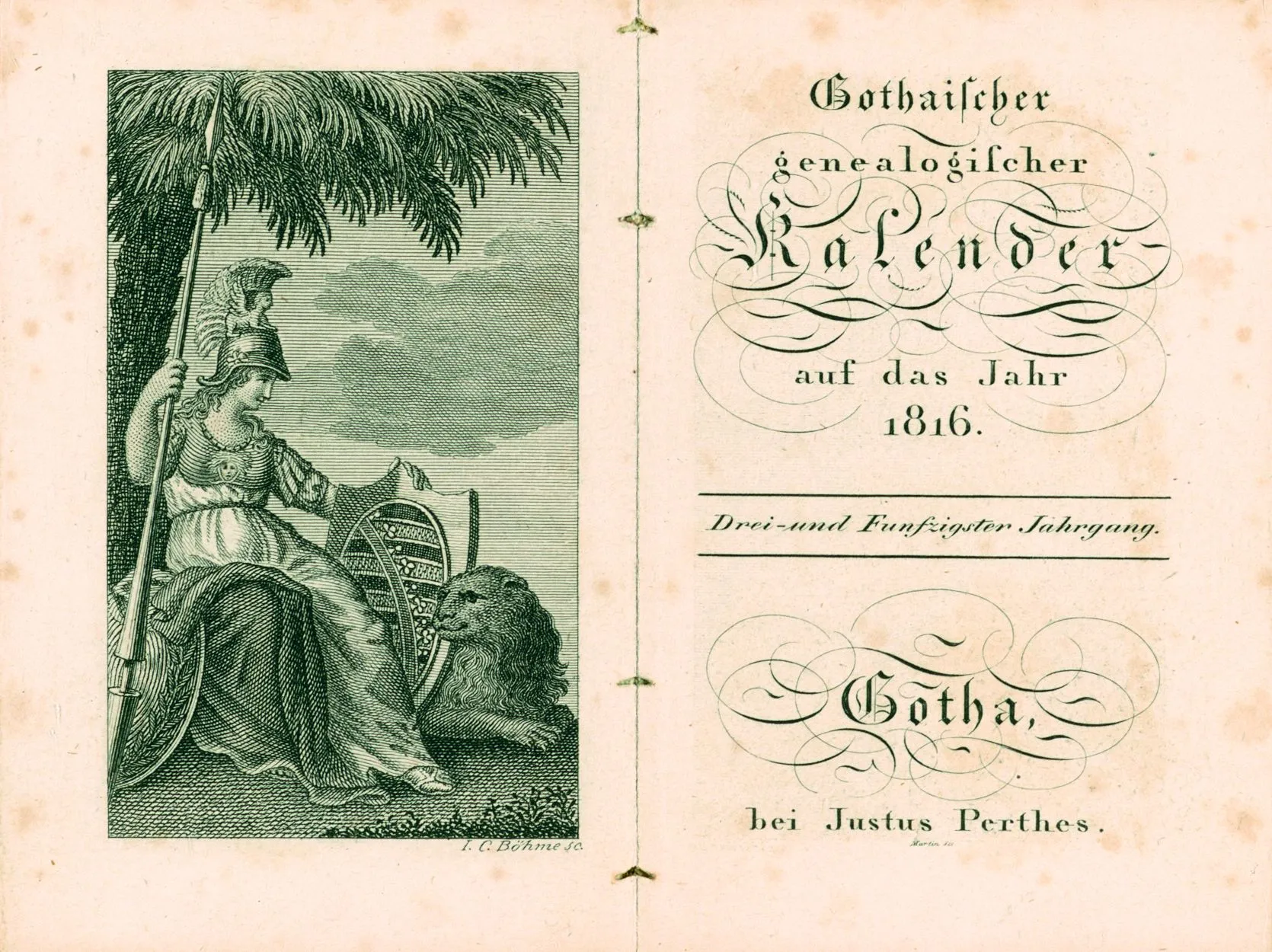
The German Research Foundation project "The Gotha - A study of the most important genealogical reference work in modern Europe" at the University of Hamburg and in close cooperation with the Gotha Research Library began in August of 2023. It is dedicated to researching the Gotha Court Calendar/Almanac of Gotha (Gothaischer Hofkalender/Almanach de Gotha) and its sub-series, the genealogical pocketbooks. Published from 1764 to 1944, the Gotha was the most important genealogical directory of European noble families and, as a diplomatic and statistical yearbook, a standard work of the 19th and 20th centuries. In view of its significance, it is surprising that the Gotha is now, for the first time, the focus of a research project analysing the rich holdings of the Gotha Research Library. As a product of the Justus Perthes Publishing House in Gotha, a large part of the relevant material relating to the Gotha is preserved in the Perthes Collection of the Gotha Research Library, in particular the archive and the editorial library. There is also an almost complete edition of the Gotha in the research library.
The complex history of the Gotha goes back to the 1740s and continues a long tradition of preceding publications. The Gotha provided concise but highly reliable information about the current generations of noble houses in Europe. The project will analyse the conditions and production of this publication, its strategies for organising knowledge, and its broader ideological implications and epistemic foundations. The project thus examines a key source for the history of the nobility and genealogy in the modern era, which researchers have often used as a reference work but which they have hardly analysed historically.
The project is part of the interdisciplinary German Research Foundation joint project "World Genealogy: Presenting, Documenting, and Instrumentalising Lineages in Early Modern Asia, Europe, and the Middle East", which examines the significance and function of genealogies from an intercultural perspective. Three other complementary projects from the Universities of Hamburg and Bonn in the fields of Sinology, Japanese Studies and Islamic Studies are therefore running alongside the Gotha project. A conference on the Gotha is planned for 2024 at the Gotha Research Centre and an annual exhibition at the Gotha Research Library in 2025 to mark the 1250th anniversary of the founding of the city of Gotha.
Further information on the project
Duration: 08/2023 - 07/2026
Funding organisation: German Research Foundation
Total volume of the joint project: 1,25 Millionen Euro
Project group
Head: Prof Dr Markus Friedrich (University of Hamburg),
Research assistant: Hannah Boeddeker (University of Hamburg)
Co-operation partner: Gotha Research Library


La Belle Anglaise: The Book Collector Luise Dorothea of Saxe-Gotha-Altenburg as a Mediator of English Culture
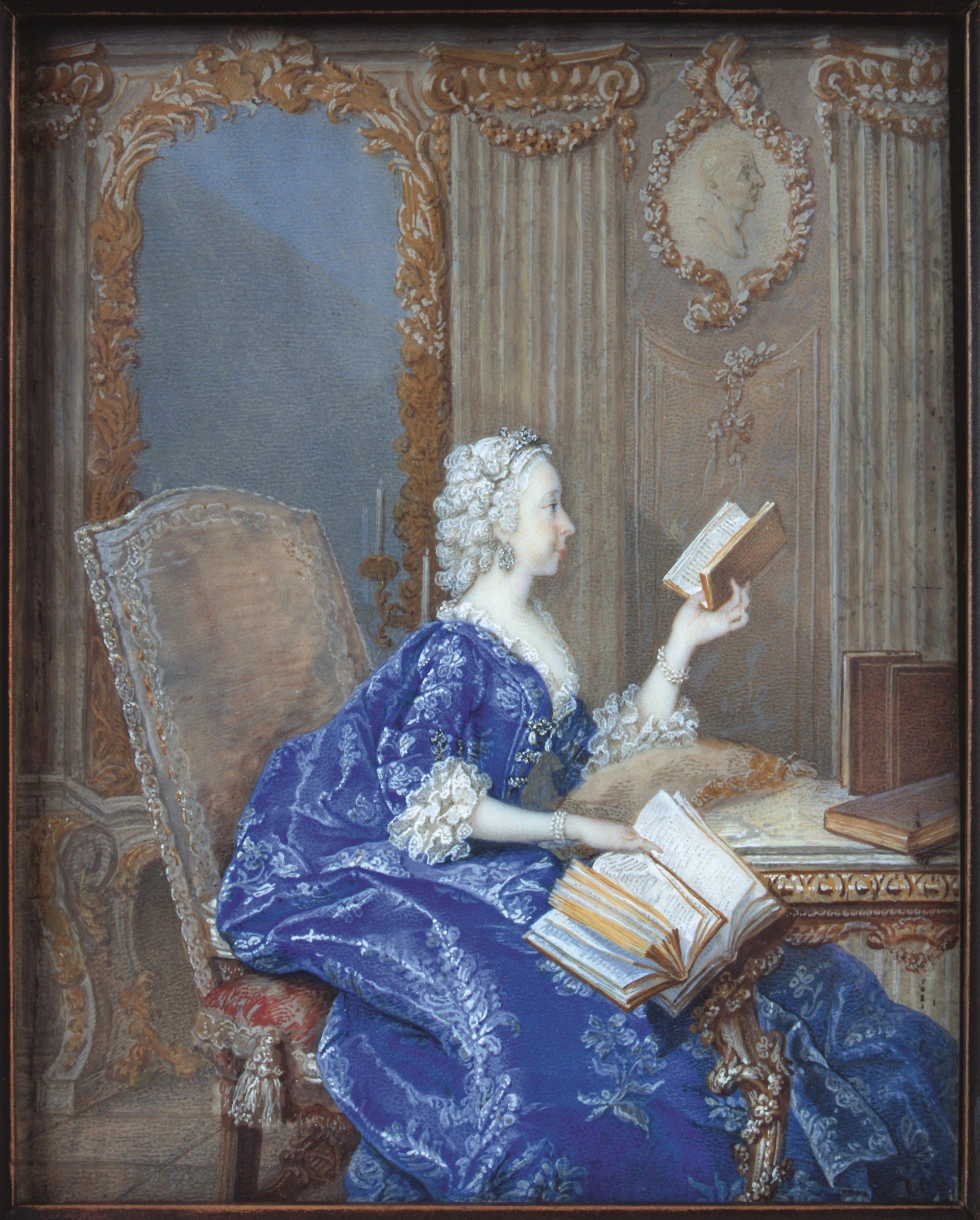
The Lutheran Duchess Luise Dorothea, born Saxe-Meiningen (1710–1767), played a significant role in shaping the political and cultural life of the Gotha court during the 18th century. As a female author of educational texts, a member of societies and a theologically, philosophically, and aesthetically interested networker, she is counted among those female rulers who helped shape the Early Modern era on cultural and political levels. The influence of these princesses on contemporary politics and society is evident in their book collections. This is particularly true for Luise Dorothea, whose private library of approximately 3,500 works represents one of the most extensive private collections at the Gotha Court. Given her love of all things French and intense (correspondence) contacts, including with Voltaire, her collection was perceived as "French." Remarkably, among the almost entirely French-language prints, there are about 100 'English' male authors and a few female authors, as well as a multitude of books with English, Scottish, Irish, and American references. These publications cover not only works of moral philosophy but also encompass publications from all fields of the so-called fine sciences and liberal arts. Besides the Duchess's preferred works of literary fiction, the collection also includes periodicals, dictionaries, religious literature, political treatises, historical accounts, scientific writings, and travelogues.
The aim of this research project is to systematically reconstruct, analyse, and contextualize the "Bibliotheca Anglicana" within the entire collection, with particular emphasis on the materiality of English books. The results will be published in a monograph and presented in a digital reconstruction.
Duration: 01.11.2023-31.10.2026
Funding: German Research Foundation
Project Partners
Faculty of Theology, University of Göttingen; Gotha Research Library; Gotha Research Centre; Herzog August Bibliothek; Thuringian University and State Library Jena
Project Group
Management: Dr. Gabriele Ball (University of Göttingen)
Gotha Research Library: Dr. Kathrin Paasch, Dr. Hendrikje Carius, Dr. Dietrich Hakelberg
Gotha Research Centre: Prof. Dr. Martin Mulsow, Dr. Markus Meumann
Herzog August Bibliothek Wolfenbüttel: Prof. Dr. Peter Burschel, Prof. Dr. Ulrike Gleixner, Dr. Hartmut Beyer
Thuringian University and State Library Jena: Dr. Andreas Christoph
Initial Cataloguing of the Perthes Publishing House Archive (1785-1945/53)
In its efforts to catalogue the Perthes Publishing House Archive, the Gotha Research Library is currently concentrating on the historical archive of the Justus Perthes Publishing House up to 1945/53. The aims of the project are the reconstruction of the tectonics of the historical archive of the publishing house Justus Perthes 1785-1953, the re-sorting of the sections "Editorial Team of Petermann’s Geographische Mitteilungen" and "Workers and Friends of the Publishing House", the indexing and utilisation of the "Company and Family Archive" and the "Image Archive", the revision and expansion of existing research aids, the preparation of research aids for individual estates and the indexing of the holdings in the national Kalliope Union Catalogue KALLIOPE.
Duration: since 2010
Funding organisation: 2010-2013 Thuringian Ministry of Education, Science and Culture, Stephan Justus Perthes
Project group
Head: Dr. Petra Weigel
Collaboration: Sven Ballenthin M.A.
Cataloguing the Music Manuscripts of the Gotha Research Library
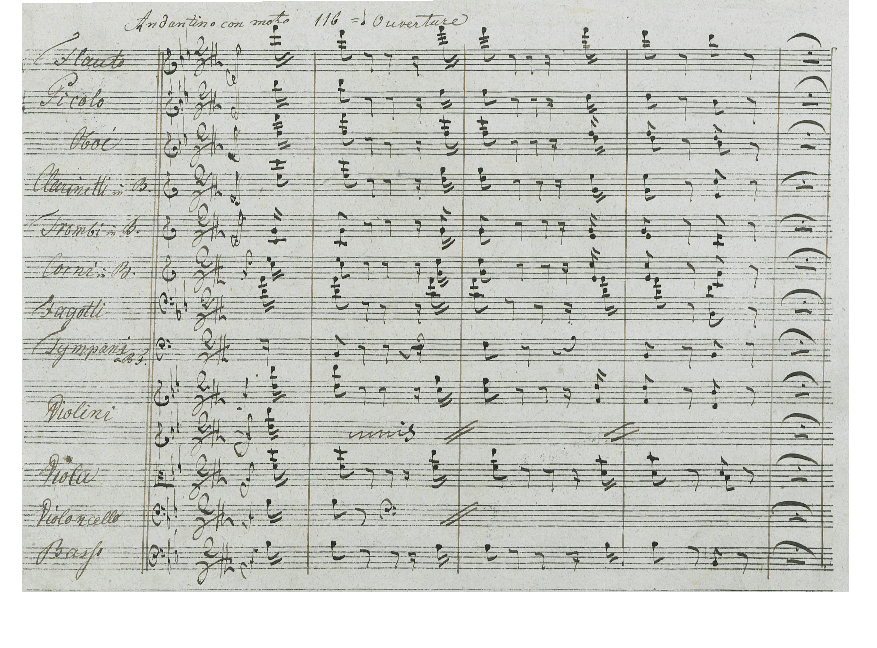
The historically grown music collection of the Research Library focusses on the history of music in Thuringia. The collection contains music theory writings (8,000 pieces of music, including 1,400 manuscripts) and compositions written by the conductors of the Gotha court orchestra in the 17th and 18th centuries. It also includes 130 manuscripts by Johann Christoph Friedrich Bach from Bückeburg from the widely branched Bach family of musicians.
They are catalogued in RISM under the siglum D-GOI.
Publications
Undine Wagner: Von der Musikerfamilie Bach bis zu Böhners Dreiherrnstein. Ein Streifzug durch die Notenhandschriften im Gothaer Schloss Friedenstein. In: Forum Musikbibliothek. Beiträge und Informationen aus der musikbibliothekarischen Praxis, 33 (2012) 2, pp. 23-29.
Duration: since 2005
Funding organisation: Répertoire International des Sources Musicales (RISM)
Project partners: Répertoire International des Sources Musicales (RISM) via the Dresden office at the Staatsbibliothek zu Berlin - Preußischer Kulturbesitz and at the Franz Liszt School of Music / Thuringian State Music Archive Weimar
Project group
Head: Dr Andrea Hartmann (Dresden), Dr Kathrin Paasch (Gotha), Cornelia Hopf (Gotha, until 10/2019), PD Dr Monika E. Müller (Gotha, from 11/2019)
Research assistants: Marina Schieke-Gordienko (Berlin), Dr Undine Wagner (Jena, Weimar)



![[Translate to English:] facebook icon](/fileadmin/SocialMediaIcons/iconfinder_06-facebook_white.svg)

![[Translate to English:] instagram icon](/fileadmin/SocialMediaIcons/iconfinder_38-instagram_white.svg)
![[Translate to English:] YouTube icon](/fileadmin/SocialMediaIcons/iconfinder_18-youtube_white.svg)
![[Translate to English:] xing icon](/fileadmin/SocialMediaIcons/iconfinder_xing_white.svg)
