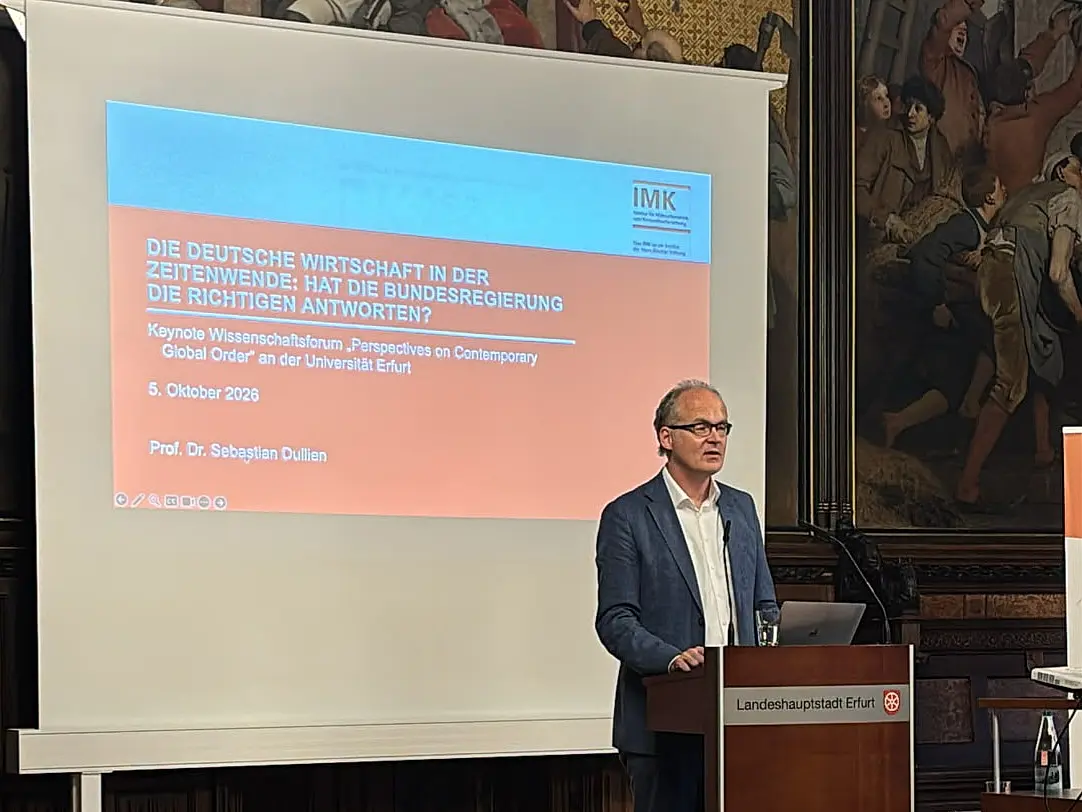
Instead, it is geopolitical and geoeconomic pressures that caused the economy to slip into stagnation—or, at best, very slow economic growth—since the onset of the pandemic. In light of that, the current reforms—which are intended to increase labor productivity and reduce costs—miss the point. They primarily risk further curbing crucial private consumption. He therefore strongly advocates avoiding measures that deliberately undermine the welfare state. Instead, he calls for a change in economic policy that actively shapes industrial policies and uses the opportunities created by the federal government’s investment programme.
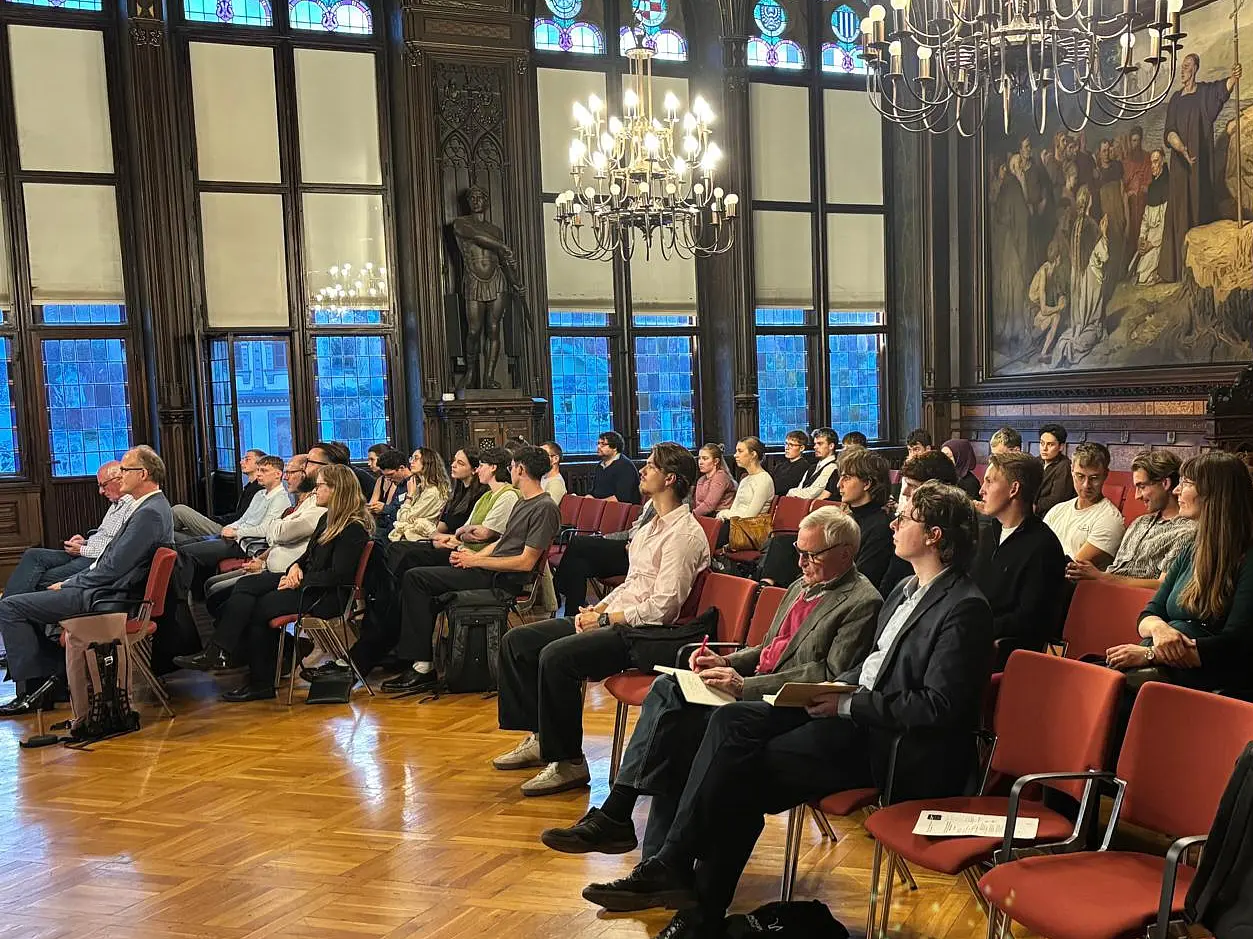
Held in Erfurt’s historic City Hall Ballroom, the keynote sparked a vivid discussion on the policy strategies Germany and Europe need to ensure their long-term economic viability. Once again, these conversations made the importance of bridging scientific analysis and public debate on crucial challenges of our time, and to facilitate the conversation between academia and society through platforms such as Professor Dullien’s keynote lecture to this year’s Science Forum.
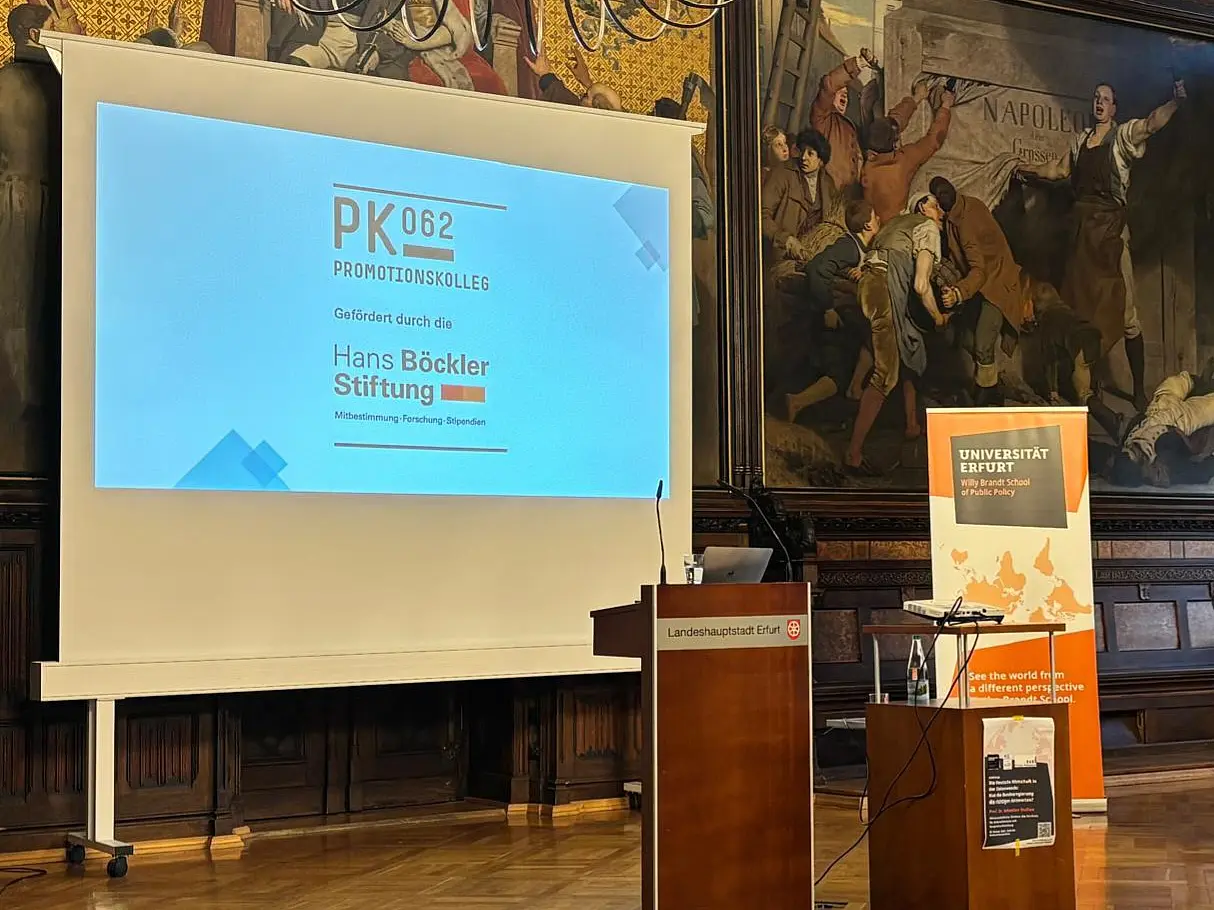
The event was supported by the Hans Böckler Foundation and the Thüringer Aufbaubank.