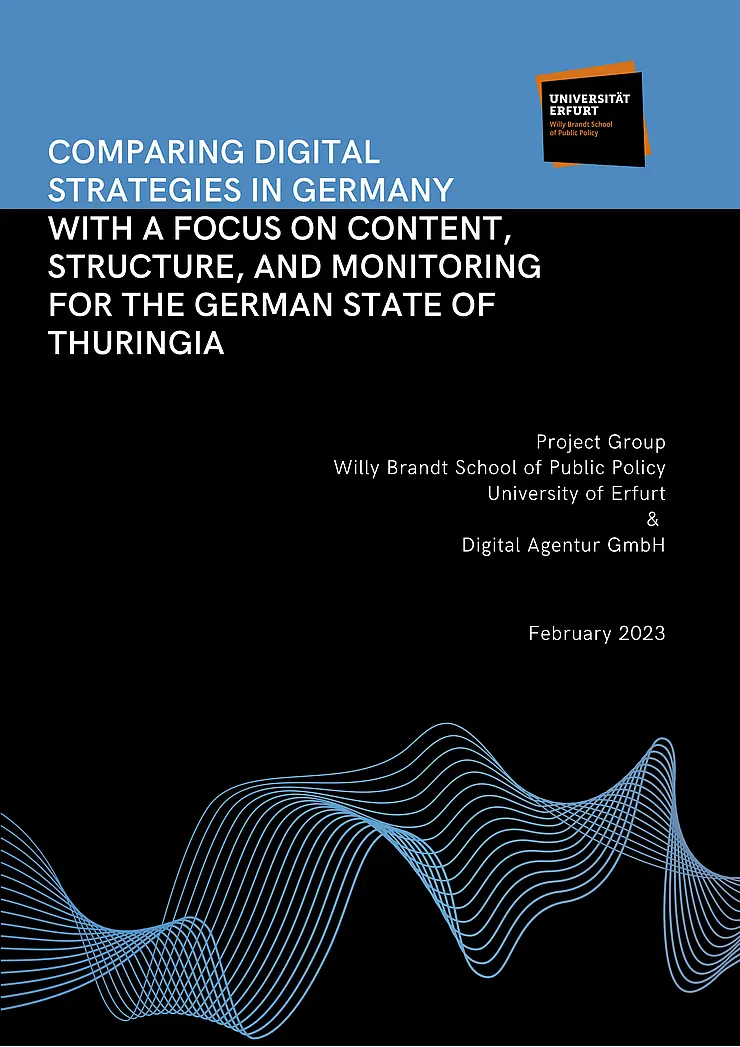
Digitalisation Strategy for the State of Thuringia
Project Period: October 2022 - February 2023
Project Rationale:
Digitalisation has become one of the defining challenges of modern governance, and Thuringia is no exception. The COVID‑19 pandemic accelerated the integration of digital tools across everyday life, giving Thuringia a solid foundation to build on as it develops its next digitalisation strategy. At the same time, comparative rankings reveal that Thuringia shows variable results compared with other German states in several areas, particularly education, industry, infrastructure, and urban–rural connectivity.
Project Task:
This project was conceived in collaboration with Digitalagentur Thüringen GmbH. The project group was commissioned to assess Thuringia’s current digitalisation strategy and develop recommendations for its next iteration. Drawing on a comparative analysis of EU-level digitalisation frameworks, the German federal strategy, and the digital strategies of all 16 German states, the group examined four key sectors: education, industry, urban and rural development, and digital infrastructure. The analysis paid particular attention to monitoring and evaluation mechanisms, inclusion, and alignment between state-level ambitions and the broader federal and European frameworks within which Thuringia operates.
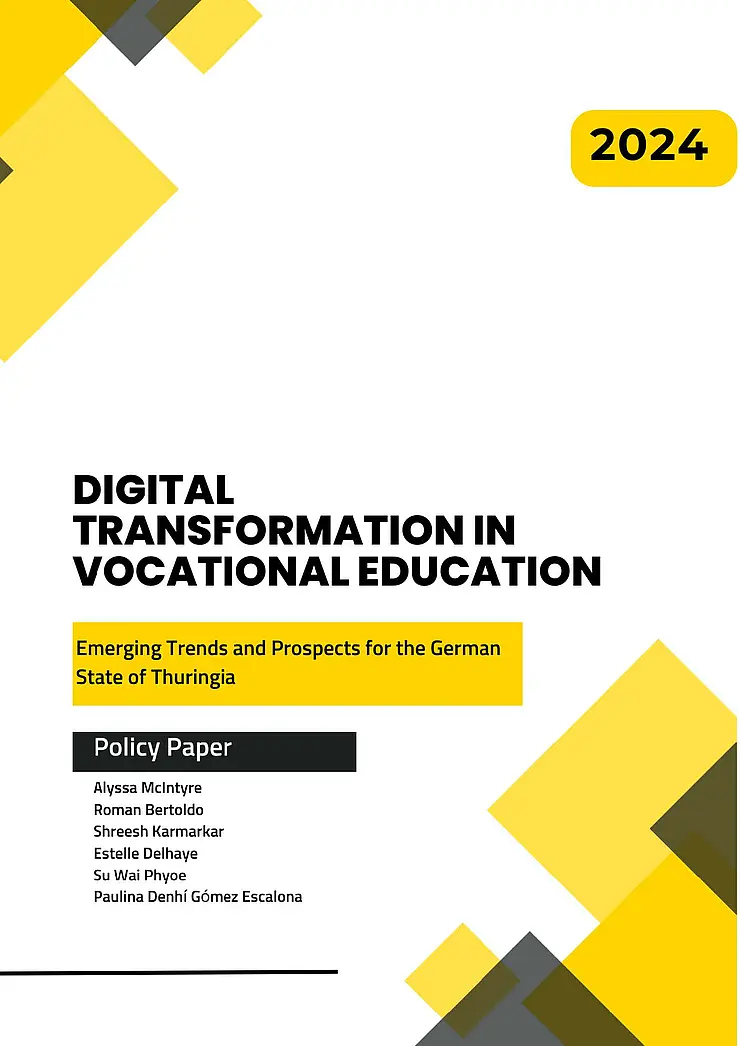
Digital Transformation in Vocational Education in Thuringia
Project Period: October 2023 - February 2024
Project Rationale:
Thuringia, like many German states, has made significant investments in its vocational education and training system, recognizing it as a cornerstone of economic resilience and workforce development. As technologies such as AI, automation, and Industry 4.0 continue to reshape labour markets, the pressure to modernize that system digitally has grown considerably. The question is no longer whether to transform, but how to do so effectively and inclusively.
Project Task:
This project was conceived in collaboration with Digitalagentur Thüringen GmbH. The project group was commissioned to assess the state of digital transformation in Thuringia’s public vocational education institutions and to produce policy recommendations to support that process. The analysis examined the system across several dimensions, including digital infrastructure, teaching methods and tools, staff support, and the availability of relevant courses. It also compared Thuringia’s approach with that of a peer state and drew on direct engagement with practitioners, students, and teachers. The goal was to move beyond a surface‑level audit and produce findings that are practically grounded and actionable.
Strengthening Digital Competence in Thuringian State Administration
Project Period: October 2024- February 2025
Project Rationale:
Modernising public administration is as much about people as it is about technology. While Thuringia has made meaningful progress in developing a vision for a modern, digitally enabled public administration, delivering that vision depends on civil servants at all levels having the right skills and mindset. As public‑sector roles evolve alongside new technologies and ways of working, strengthening digital competencies within the state administration has become an increasingly pressing priority that requires a structured, evidence‑based response.
Project Task:
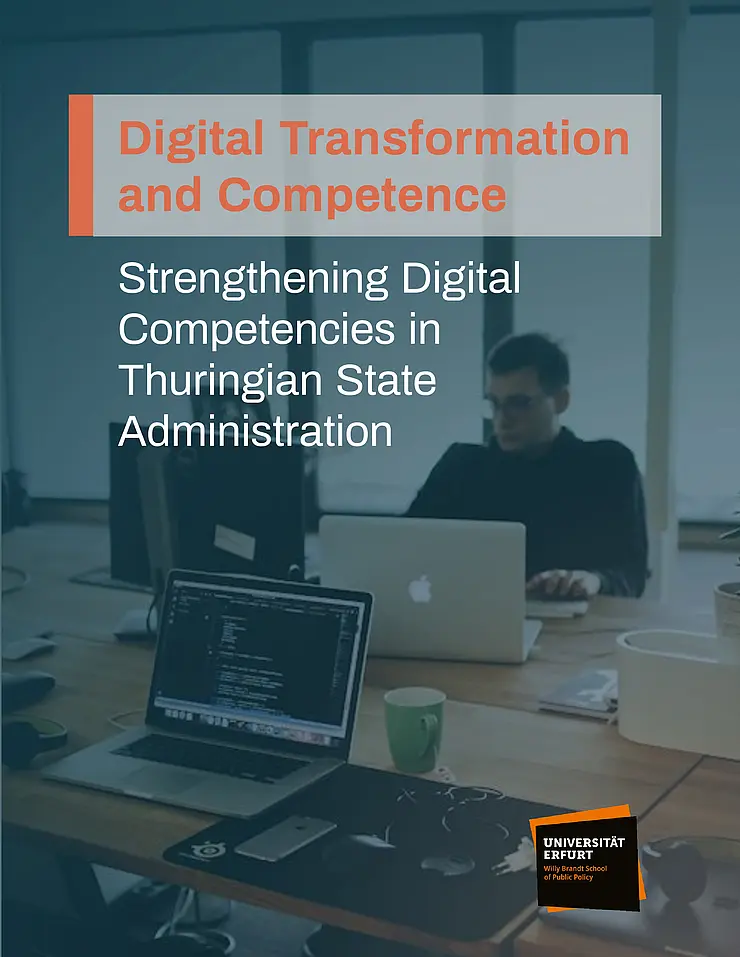
This project was conceived in collaboration with Digitalagentur Thüringen GmbH. The project group was commissioned to develop a policy recommendation paper on how Thuringia could build digital competencies across its state administration in a targeted, sustainable way. The analysis drew on a review of relevant academic and policy literature, a benchmarking exercise of how comparable administrations in other German states and internationally have tackled the same challenge, and a mapping of the specific digital skills required across different administrative roles in Thuringia. The goal was to produce recommendations tailored to the Thuringian context rather than a generic framework, ensuring they are practically grounded and aligned with established European standards.
Open Data Strategy for Thuringia
Project Period: October 2025 - February 2026
Project Rationale:
Thuringia has built a strong foundation for digital governance, with forward‑looking initiatives such as the Smart State strategy reflecting a clear commitment to data‑driven public administration. As EU directives and federal frameworks evolve and peer states raise the bar on open data, even well‑positioned states benefit from structured, comparative analysis to sharpen priorities and accelerate delivery.
Project Task:
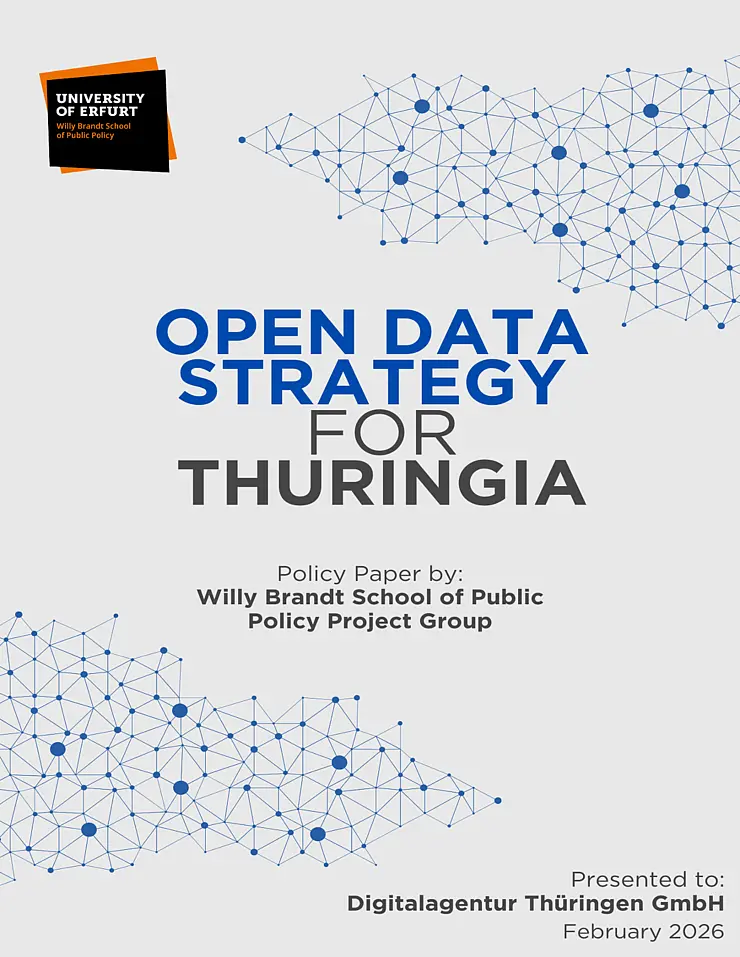
This project was conceived in collaboration with Digitalagentur Thüringen GmbH. The project group was commissioned to map Thuringia’s open‑data ecosystem against EU, federal, and peer‑state benchmarks and to formulate recommendations that build on existing foundations. The analysis used three lenses: a strategic review of how open data fits within Thuringia’s digitalisation agenda; a regulatory assessment of applicable legal frameworks at EU, federal, and state levels; and a technical evaluation of infrastructure, standards, and platform capabilities. Throughout the process, the project group engaged expert stakeholders in the open‑data landscape to ensure the analysis and findings remained grounded in operational realities.
![[Translate to English:] Facebook Icon](/fileadmin/SocialMediaIcons/iconfinder_06-facebook_104498.svg "Fakebookseite der Staatswissenschaftlichen Fakultät")
![[Translate to English:] Youtube Icon](/fileadmin/SocialMediaIcons/iconfinder_18-youtube_104482.svg)


![[Translate to English:] facebook icon](/fileadmin/SocialMediaIcons/iconfinder_06-facebook_white.svg)

![[Translate to English:] instagram icon](/fileadmin/SocialMediaIcons/iconfinder_38-instagram_white.svg)
![[Translate to English:] YouTube icon](/fileadmin/SocialMediaIcons/iconfinder_18-youtube_white.svg)
![[Translate to English:] xing icon](/fileadmin/SocialMediaIcons/iconfinder_xing_white.svg)
