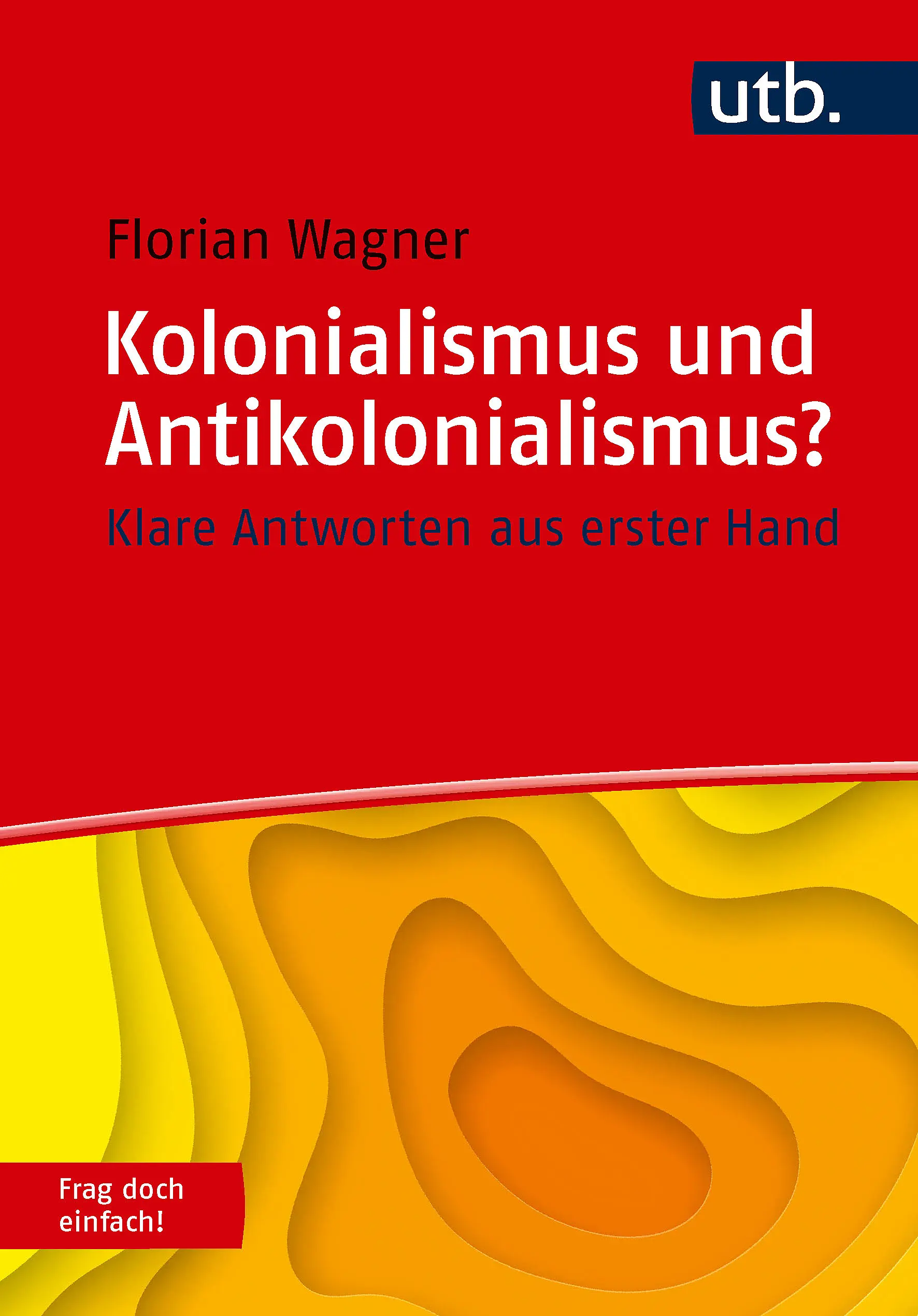
Florian Wagner
Kolonialismus und Antikolonialismus? Frag doch einfach!
Klare Antworten aus erster Hand
(series: Frag doch einfach!)
publisher: utb, 2026
ISBN: 9783825261054
eISBN: 9783838561059
150 pages
24,90 EUR (print)
From the foreword:
The answers in this book are less clear than the series title promises. They are also somewhat longer than usual. The reason for this is not necessarily that the topic is too complex or currently highly controversial. Rather, ideas about colonialism have become entrenched in European society that originate from its own ranks and have served to justify it rather than explain it. This book is therefore initially about uncovering the coloniality of our own ways of thinking, seeing and representing (including those of the author and the reader) and, building on this, examining the resilience of apparent truths about colonialism. One way to do this - and probably the only way - is to listen to those people who have experienced colonialism themselves or suffer from its consequences. The perspective of the colonised should therefore be particularly emphasised in this book. Only when they have their say – directly or indirectly – will the contents of this book be "first-hand", as the title of the series promises. In order to overcome the one-sidedness of the sources, this book also looks at the history of anti-colonialism and addresses post-colonial debates. Postcolonial approaches are based on the thoroughly (historically) scientific realisation that colonialism is not extinct like the dinosaurs once were. Colonialism cannot be limited to the fact that someone hoisted a foreign flag and ended their activities by taking it down again. Rather, colonialism became entrenched in culture and society, which must be "decolonised" in order to arrive at adequate statements about world history. This is what makes this book so relevant and topical."
The author
Florian Wagner teaches and researches the history of colonialism and migration. After six years as an employee at the professorship for Modern and Contemporary History and History Didactics at the University of Erfurt, he now heads a project on the history of migration in the DFG Research Group on Voluntarism. He is also a textbook author and editor of the academic blog transimperialhistory.com .
You are in the news section of the Faculty of Philosophy.
Further news, press releases and current topics can be found on the "News" pages of the University of Erfurt.

![[Translate to English:] facebook icon](/fileadmin/SocialMediaIcons/iconfinder_06-facebook_white.svg)

![[Translate to English:] instagram icon](/fileadmin/SocialMediaIcons/iconfinder_38-instagram_white.svg)
![[Translate to English:] YouTube icon](/fileadmin/SocialMediaIcons/iconfinder_18-youtube_white.svg)
![[Translate to English:] xing icon](/fileadmin/SocialMediaIcons/iconfinder_xing_white.svg)

University of Erfurt (Campus)
Nordhäuser Str. 63
99089 Erfurt