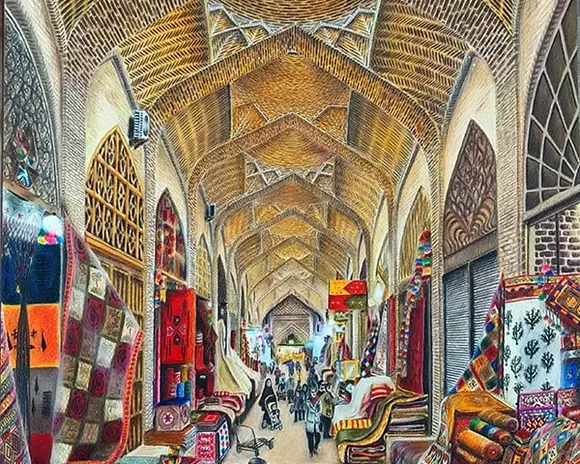
The Global South Studies Center Erfurt aims to bundle, facilitate and internationalize research on the Global South at the University of Erfurt. The disciplines involved are Cultural, Social and Religious Studies, History, Theology, as well as Political and Communication Science. The geographical focus is on West Asia, South Asia, Africa and Latin America. In addition to the Near and Middle East, it also includes the (Global) East, i.e. the post-Soviet and postsocialist world, where the Center is also situated. These perspectives make it unique in Gemany.

Global South Studies are a rather recent, vibrant and interdisciplinary research field. Global South is understood here in its relation to the Global North and Global East, as a relational concept. The term first appeared officially in world politics in 1980 with the report of Willy Brandt’s North-South Commission (1977-79), entitled North-South: A Programme for Survival, but "Global South" was used since the 1960s.
The concept of the Global East has recently been introduced into the discussion in order to include the post-Soviet and postsocialist spaces, the former “Second World”, liminally positioned between Global South and Global North. Global South, North and East are not to be understood as geographical descriptions, but rather as deterritorialized concepts used to describe and analyze transregional, transnational and translocal relationships, spaces and movements within the global economic and political order. Thus, there is “South” to be found in the “North” and "East" (and vice-versa). Through related experiences of subaltern positions of marginalization (and often alienation), the concepts Global South and East are also used to both express and analyze powerful social and political Imaginaries that have been able to transcend the contradictions and disjunctions of the societies and politics involved.
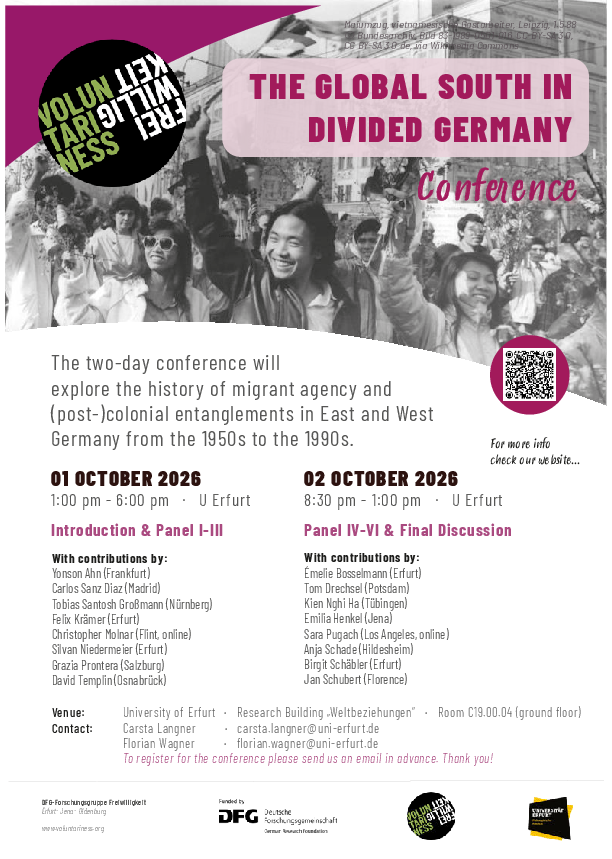
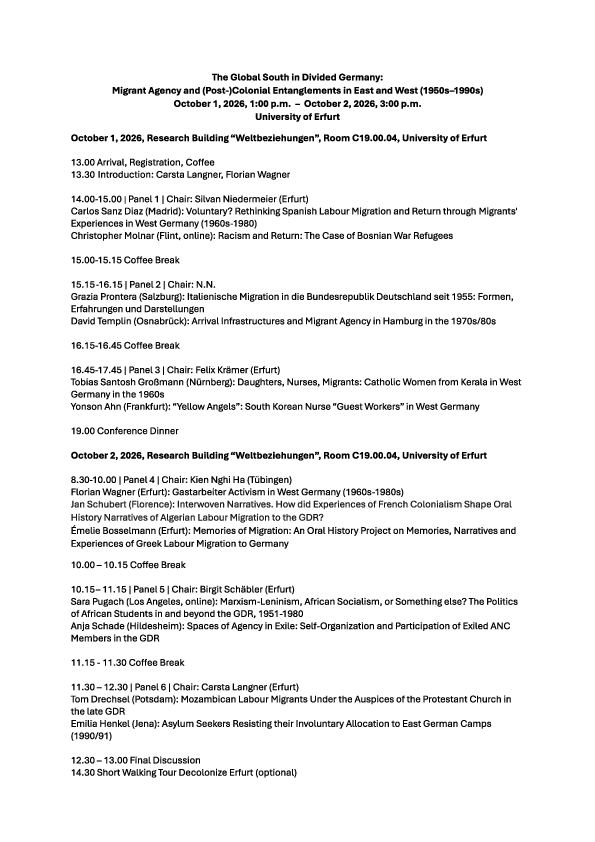
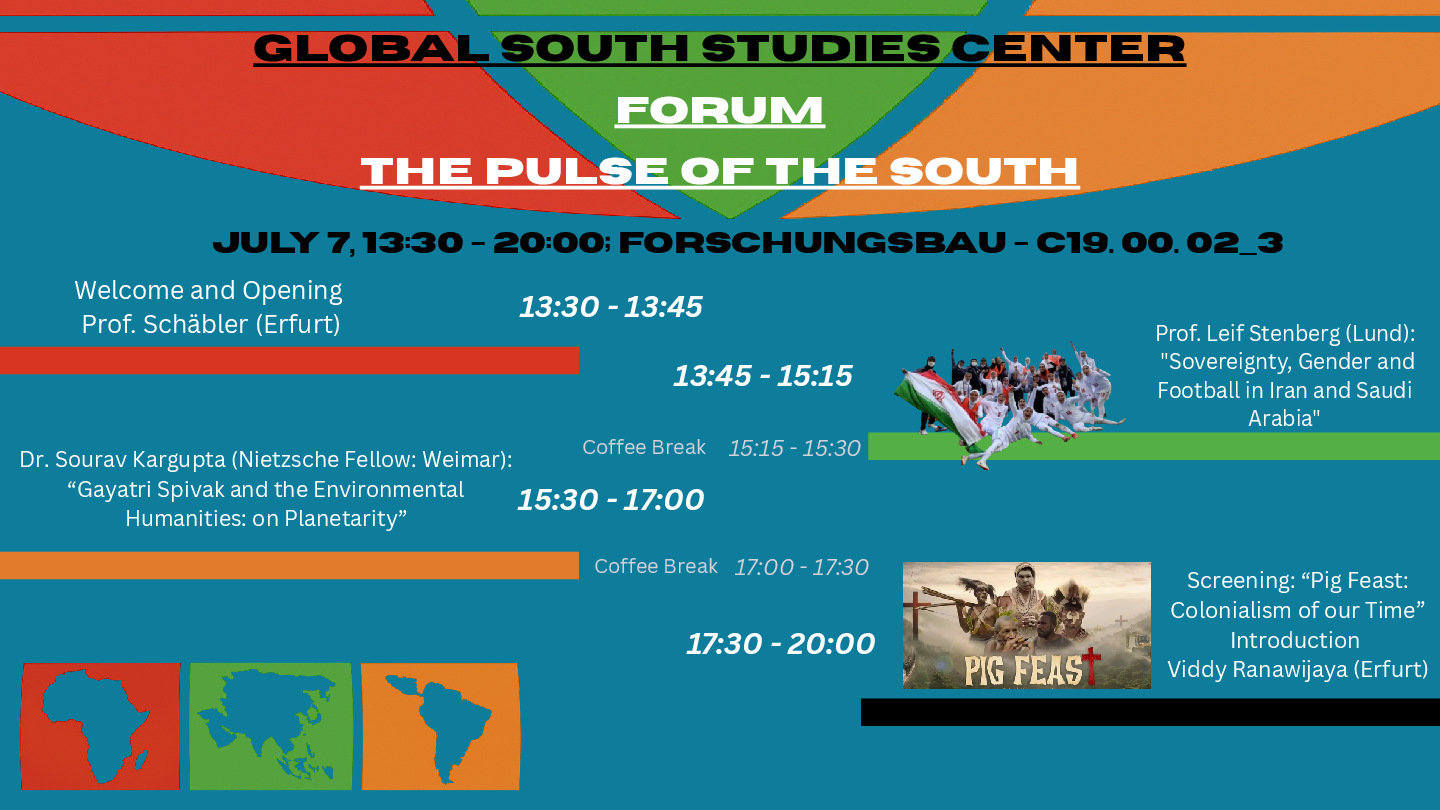
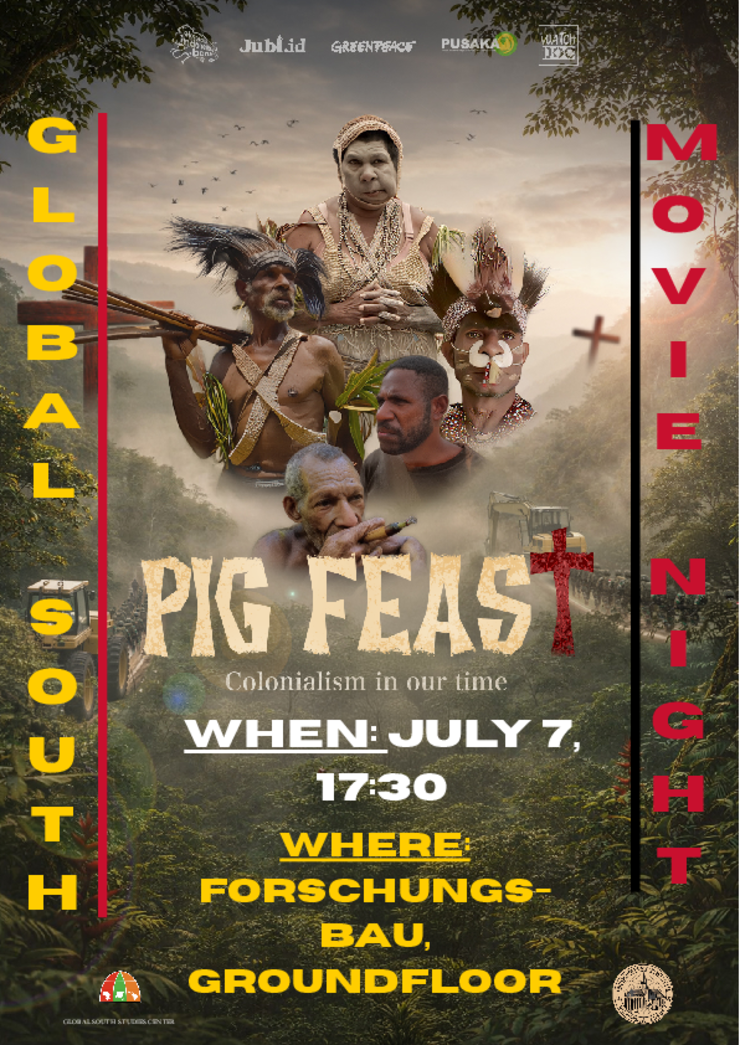
“Palm oil bio-diesel and sugarcane bioethanol are green energy and a substitute for mineral vehicle fuel. But what if multinational bioenergy industry and government, under the guise of "food barns" and "energy transition", pursue political and "developmental" projects which appropriate the natural resources of indigeous peoples? The film documents the struggle of the Marind, Yei, Awyu and Muyu people of Southern Papua against the Indonesian government, chronicling stories of separatism and 60 years of Indonesian military operations linked to territorial control.
Pig Feast reveals how networks of politicians, investors, the military, and churches confront social movements and indigenous communities. Directed by Dandhy Laksono and Cypri Dale, it is a record of the contradictions of our time and colonial practices occurring today, without waiting to become history.”


Navigating China: A Tri-Regional Conversation on Power, Policy, and Partnership.
21.04.2026.
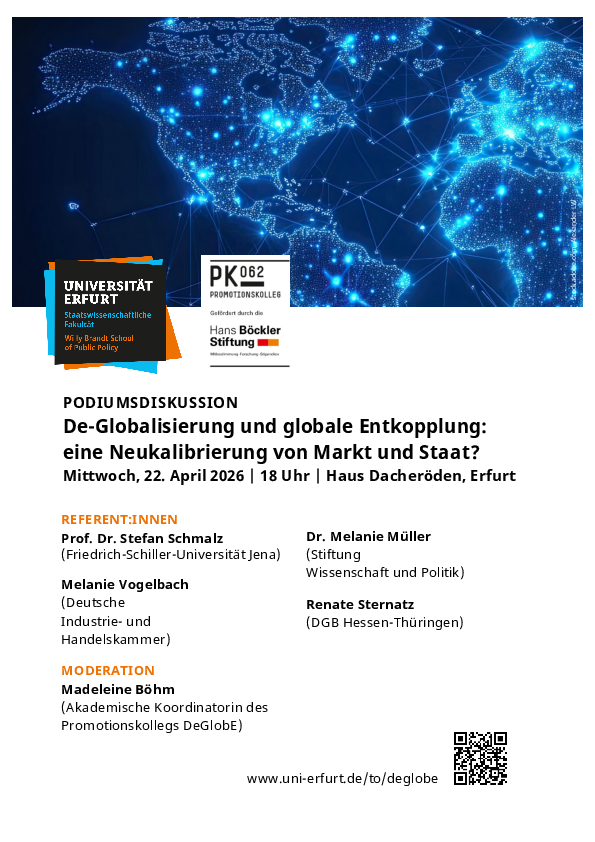
Haus Dacheröden: Anger 37, 99084 Erfurt.
Panel:

When: Thursday July 2, 18:00
Where: LG1 HS3
Running Time: 90 min
Organizers: FSR Geschichte
Global South Movie Night Presents:
We Are Still Here (2022)
When the Union Jack was raised over the Pacific Ocean a world went under. The story of indigenous people in Australia and New Zealand is one of violence, dispossession and genocide. It is however also a story of resistance. Continuing resistance. Withstanding all the attempts to make them disappear, to push them into the Outback or the Bush, the Māori and Aboriginal peoples have remained and have shaped the history of the Pacific. In “We Are Still Here” we see this history from their eyes. From the original wars of conquest, forced conscription in WWI to New Zealand’s Springbock Riots and the continued economic disenfranchisement of today.
The movie was produced on the occasion of the 250th anniversary of Captain Cook’s second Pacific journey. It is a collage of ten short films, all made by indigenous filmmakers of the region. The stories depicted vary widely in time and place, yet always being connected by their insistence on indigenous resistance and agency. Even though the film is grounded in the experiences of Māori and Aboriginal communities, it nonetheless has much wider implications. It is a attempt to give a voice to the voiceless, to use cinematic expression to talk back to the oppressor as if to say: you can’t erase us from the history of our land; we are still here and here we will remain.
We warmly invite you to join us for this movie. It is a good opportunity to hear a voice that is seldomly heard and which we would love to discuss with you!
Past Events: see here.

![[Translate to English:] facebook icon](/fileadmin/SocialMediaIcons/iconfinder_06-facebook_white.svg)

![[Translate to English:] instagram icon](/fileadmin/SocialMediaIcons/iconfinder_38-instagram_white.svg)
![[Translate to English:] YouTube icon](/fileadmin/SocialMediaIcons/iconfinder_18-youtube_white.svg)
![[Translate to English:] xing icon](/fileadmin/SocialMediaIcons/iconfinder_xing_white.svg)

University of Erfurt (Campus)
Nordhäuser Str. 63
99089 Erfurt