

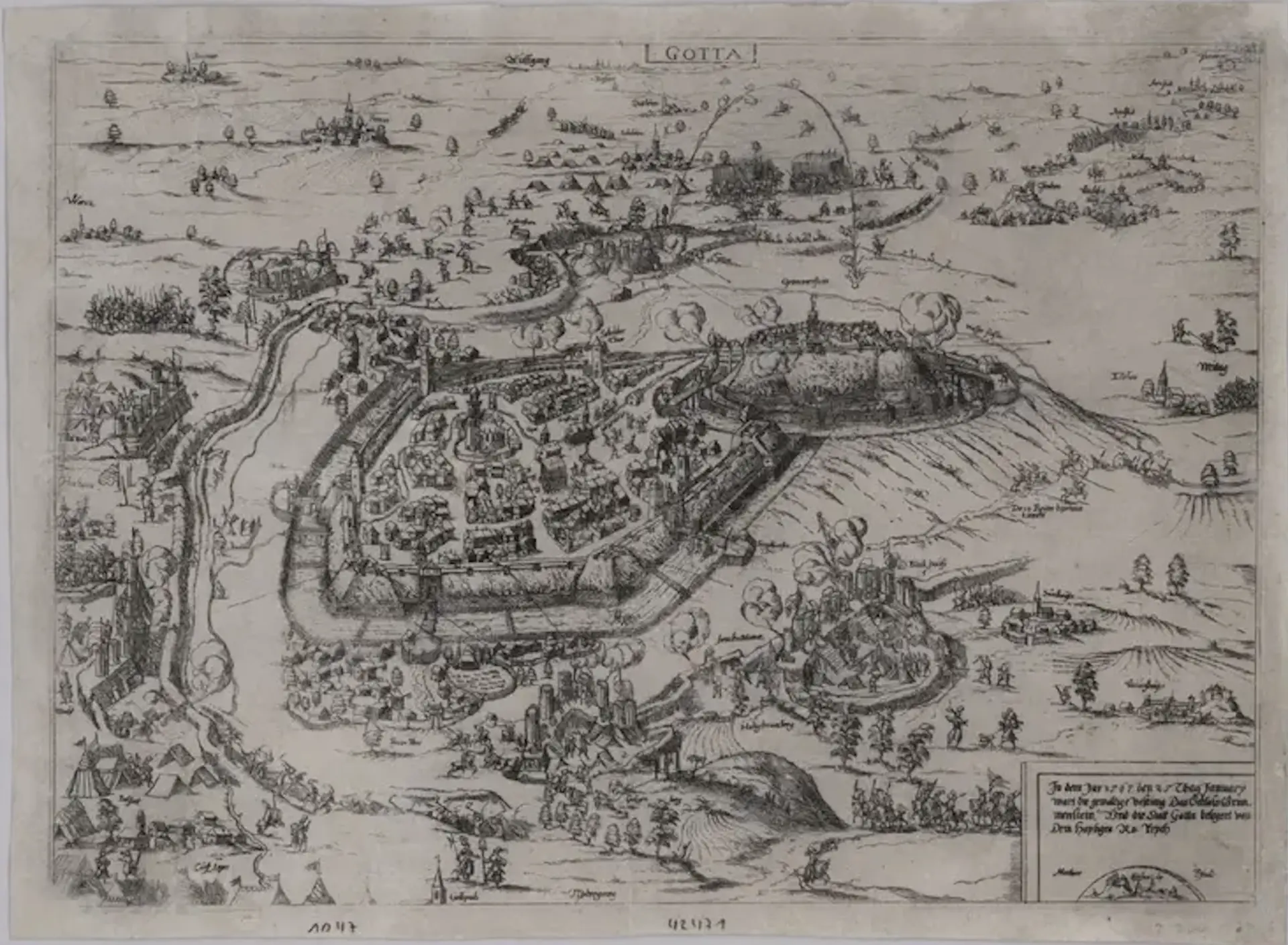
Between 1680 and 1720 – more precisely, from the reign of Duke Frederick I and during the reign of Duke Frederick II of Saxe-Gotha-Altenburg – a continuous commissioning policy of the dukes of Gotha can be established, who evidently wanted to ensure that the works of the deceased court historiographers were published and continued by their successors and that nothing was financed in vain. The works of Caspar Sagittarius, Friedrich Rudolphi, Wilhelm Ernst Tentzel, Christian Schlegel and Ernst Salomon Cyprian were written in this environment. The Gotha Research Library not only preserves their printed historical works, but also their extensive corpora of letters - a promising collection of sources for reconstructing this heyday of "Gotha historiography".
The conference will now ask how historiography depicted certain cultural and political medieval conditions (also in comparison with the early modern authors' own time period) and how pictorial sources and material relics such as seals and coins were used. Archaeological efforts and the use of manuscripts will also be examined. Blind spots or specific accentuations in the respective works appear to be of particular interest. The initial hypothesis of the conference is that a more precise understanding of the practices involved will make it possible to better categorise the works on Gotha's city history, which fell into oblivion soon after they were written.



![[Translate to English:] facebook icon](/fileadmin/SocialMediaIcons/iconfinder_06-facebook_white.svg)

![[Translate to English:] instagram icon](/fileadmin/SocialMediaIcons/iconfinder_38-instagram_white.svg)
![[Translate to English:] YouTube icon](/fileadmin/SocialMediaIcons/iconfinder_18-youtube_white.svg)
![[Translate to English:] xing icon](/fileadmin/SocialMediaIcons/iconfinder_xing_white.svg)
