
Gotha Manuscript Talks, Fall 2026
The online series "Gotha Manuscript Talks" is organised by the Gotha Research Library in cooperation with Prof. Dr. Konrad Hirschler (Centre for the Study of Manuscript Cultures, University of Hamburg).
Chair: Dr Feras Krimsti (Gotha Research Library)
14 October 2026: Crafting Ottoman Flowery Letters: Practices, Drafts, and Fair Copies with Ercan Akyol (University of Vienna)
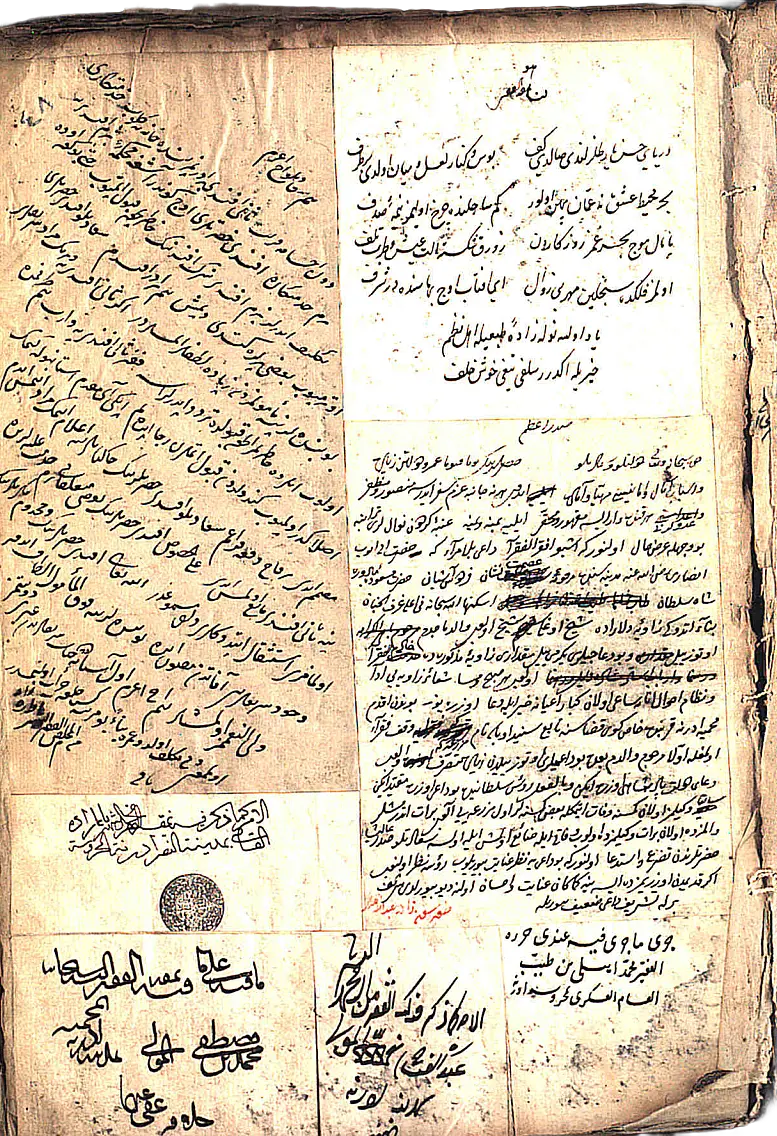
Wednesday, 14 October 2026, 6:15 CET
Crafting Ottoman Flowery Letters: Practices, Drafts, and Fair Copies
Ercan Akyol (University of Vienna)
Münşeats (Ottoman Flowery Letters) constituted one of the principal forms of written communication in early modern Ottoman society. These highly ornate epistolary compositions drew extensively on the lexical resources of Arabic, Persian, and Ottoman Turkish and demanded considerable literary skill. Composing such letters required not only linguistic competence but also familiarity with contemporary literary conventions, the ability to incorporate references to Islamic textual traditions, and mastery of an elevated prose style. Consequently, producing a münşeat letter ready for dispatch was the outcome of a lengthy process of preparation and revision. Drawing on primary sources, this paper reconstructs the successive stages in the composition of Ottoman münşeat letters. It examines the drafting process, editorial revisions, scribal writing practices, and the preparation of fair copies before the letters were finally dispatched. By reconstructing these stages, the paper sheds light on the material and intellectual practices that underpinned Ottoman epistolary production.
Ercan Akyol (PhD) is a Senior Lecturer and Faculty Member in Turkish Studies at the University of Vienna. He also serves as the Principal Investigator (PI) of the project Early Modern Ottoman Letter-Writing. As part of this four-year project, he will be based at the Institute of Iranian Studies of the Austrian Academy of Sciences from August 1, 2026, to 2030. His research focuses on early modern Ottoman cultural history, particularly manuscript studies, literary history, and epistolary culture. He has published various articles and encyclopedic entries on Ottoman history, literature, and culture in journals such as Der Islam, Middle Eastern Literatures (Taylor & Francis), and the Journal of Near Eastern Studies (University of Chicago Press), as well as in the Encyclopaedia of Islam.
28 October 2026: Marginal Commentaries on Vernacular Texts: Beyond the Learned-Vernacular Dichotomy in Ottoman Manuscripts with Aslıhan Gürbüzel (McGill University)
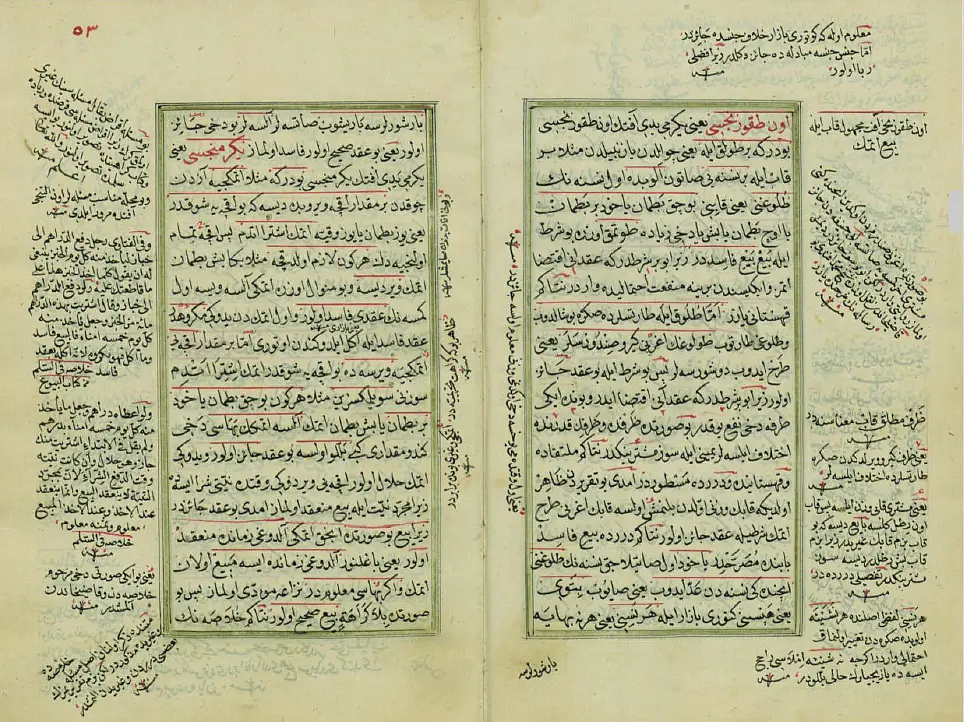
Wednesday, 28 October 2026, 6:15 CET
Marginal Commentaries on Vernacular Texts: Beyond the Learned-Vernacular Dichotomy in Ottoman Manuscripts
Aslıhan Gürbüzel (McGill University)
This talk examines the development of a marginal commentary tradition on Turkish vernacular texts in the early modern Ottoman Empire. While commentaries are associated with texts in Arabic, Persian, or ornate Ottoman Turkish, similar critical paratexts were employed in the teaching of simple Turkish texts in the form of marginal commentaries. In this talk, I focus on marginal commentaries on cathechistic works, particularly works in the tradition of Mehmed Birgivi (d. 1573). I argue that these marginal commentaries are crucial to understanding the authority of vernacular works among scholarly reading communities, thus rethinking the “learned-vernacular” dichotomy in Ottoman written culture.
Dr. Aslıhan Gürbüzel is Associate Professor of Ottoman History at the Institute of Islamic Studies, McGill University. She is the author of Taming the Messiah: The Formation of an Ottoman Political Public Sphere, 1600–1700 (UC Press, 2023). She specializes in early modern cultural history and Ottoman Sufism, and is currently working on Arabic to Turkish translations in the early modern Ottoman period.
11 November 2026: Marginal Voices? Commentary Glosses in Arabic Manuscripts mit Stefanie Brinkmann (Sächsische Akademie der Wissenschaften zu Leipzig)
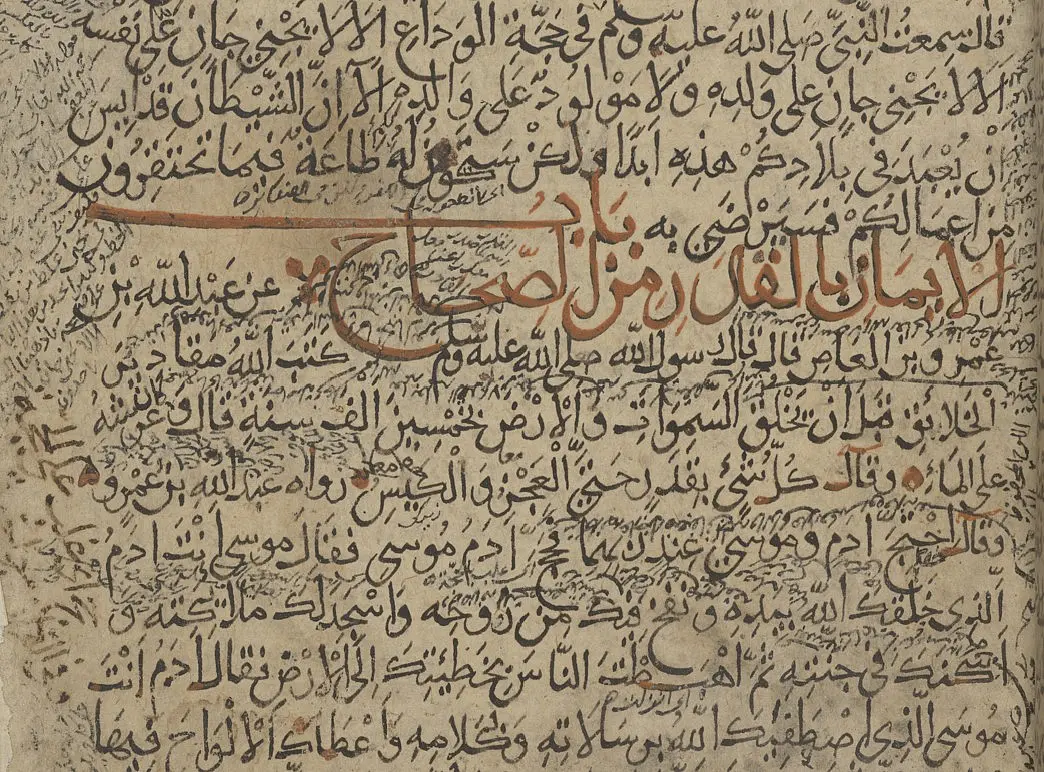
Wednesday, 11 November 2026, 6:15 CET
Marginal Voices? Commentary Glosses in Arabic Manuscripts
Stefanie Brinkmann (Saxon Academy of Sciences and Humanities)
For centuries, readers have left notes in the margins and interlinear spaces of manuscripts—translating, paraphrasing, explaining, criticising, or supplementing the information contained in the main text. This talk examines such commentary glosses in Arabic manuscripts, with a particular though not exclusive focus on hadith. The manuscripts examined in this talk originate predominantly from the Middle East.
Although such glosses have often been dismissed as secondary accretions, they in fact constitute a valuable source for cultural and intellectual history by reflecting the circulation of texts and paths by which knowledge was transmitted and constructed in the Islamicate world. On the manuscript page, glosses embody a dynamic engagement between reader and text. In some cases, they preserve traces of classroom teaching or private study; in others they register critical engagement, editorial intervention, or the gradual transformation of annotations into stand-alone commentaries. The manuscript page thus emerges as a site in which knowledge was not only transmitted but also negotiated, and at times contested.
By attending closely to layout, script, markers of reference, and the social contexts of annotation, this talk calls for a reconsideration of the margin as a productive space of interpretation rather than a mere periphery. Ultimately, marginal glosses offer a distinctive route into the history of Arabic manuscript culture and into the practices by which texts were read, taught, and rendered authoritative.
Stefanie Brinkmann is Senior Research Fellow at the Bibliotheca Arabica project at the Saxon Academy of Sciences and Humanities in Leipzig, Germany, having previously held substitute professorships in Freiburg im Breisgau and Hamburg. With a PhD in Arabic and Islamic Studies she has a thematic focus on hadith and material culture, and has engaged in research, project leadership, and international scholarly governance in the field of manuscript studies.
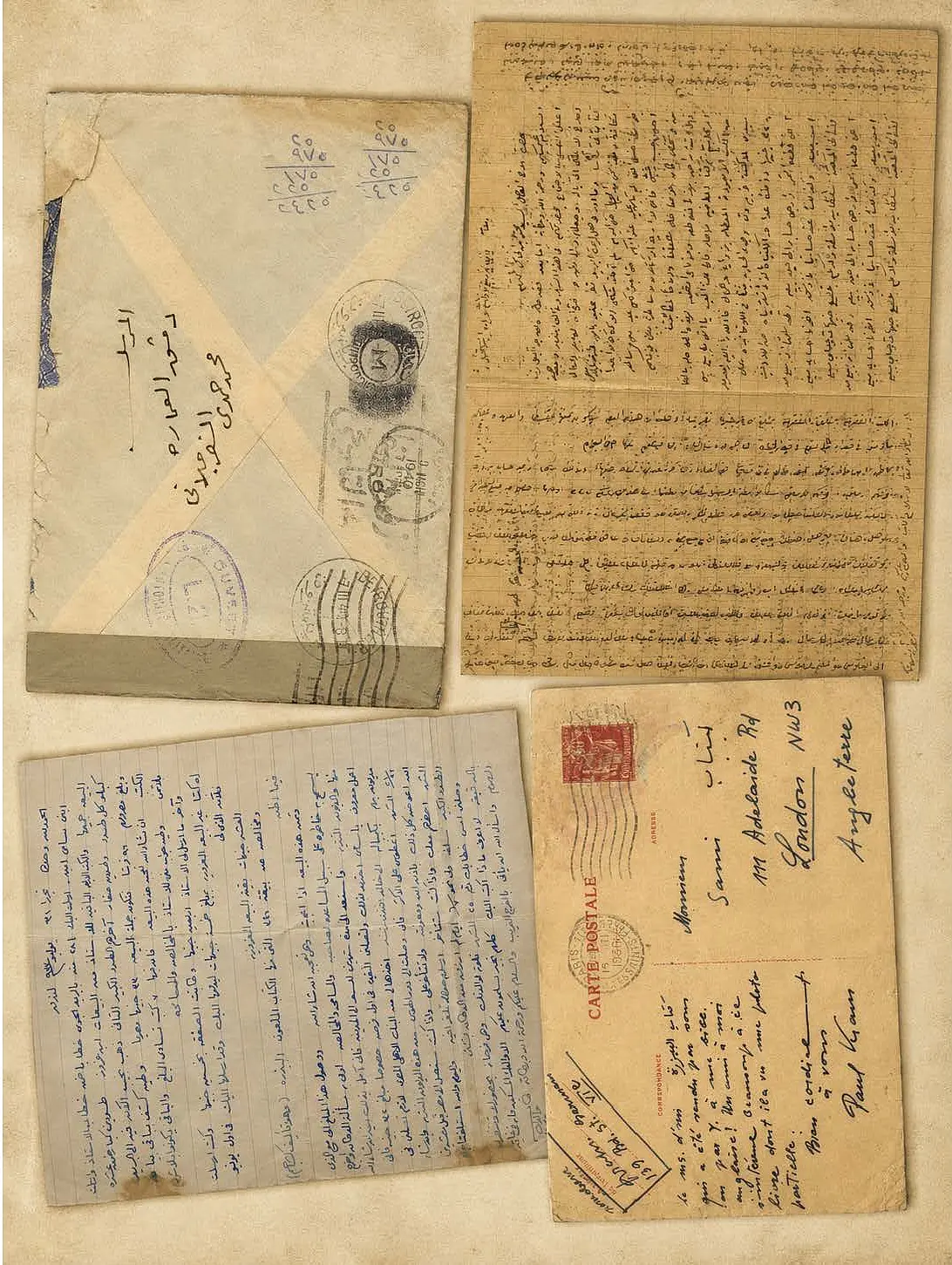
25 November 2026: “This Cursed Book of Falconry!”: The al-Khānjī Archive, a Manuscript, and the Layered Networks of the Arabic Manuscript Trade mit Rana Mikati (College of Charleston)
Wednesday, 25 November 2026, 6:15 CET
“This Cursed Book of Falconry!”: The al-Khānjī Archive, a Manuscript, and the Layered Networks of the Arabic Manuscript Trade
Rana Mikati (College of Charleston)
Taking as its point of departure Muḥammad Amīn al-Khānjī’s frustrated reference to “this cursed Kitāb al-Bayzara” (Book of Falconry, CBL Ar 3831), this paper reconstructs the journey of a rare Damascene manuscript of falconry through the hands of the dealer Ḥamdī al-Safarjalānī (d. 1962), al-Khānjī (d. 1939), A. S. Yahuda (d. 1951), and ultimately the American collector Alfred Chester Beatty (d. 1968). The al-Khānjī archive provides the initial threads, including names, negotiations, prices, complaints, and partial references that make this otherwise obscured journey visible. Following these threads through correspondence, periodicals, published editions, and surviving collections reveals the multiple actors involved in the sale of a manuscript or collection, as well as their agency in identifying manuscripts, negotiating their movement, controlling access to them, and shaping their eventual destinations.
Using the Kitāb al-Bayzara as a springboard, the paper broadens its focus to Syrian, and especially Damascene, manuscript dealers, including Ḥamdī al-Safarjalānī, Aḥmad ʿUbayd (d. 1989) and lesser-known dealers. It considers their varied motivations, the tension between commerce and the loss of manuscripts from local collections, and the mythos of the dealer as savior, set against the counter-image of the dealer as looter. It also examines the competing approaches to access that emerged within these networks: the secrecy surrounding manuscripts in Yahuda’s hands, on the one hand, and the attempts of al-Safarjalānī and al-Khānjī to circulate photographic surrogates or facilitate publication, on the other. Together, these cases illuminate the local agency and layered networks that shaped the Arabic manuscript trade and the formation of modern collections.
Rana Mikati is Associate Professor of Islamic History at the College of Charleston. Her research focuses on the social, religious, and military history of early Islam, as well as Arabic manuscript cultures and the history of the book trade. She is the author of Creating an Islamic City: Beirut, Jihad, and the Sacred and is currently co-authoring a study of the Egyptian publisher and manuscript dealer Muḥammad Amīn al-Khānjī and his archive.
![[Translate to English:] Logo Universität Hamburg](/fileadmin/_processed_/6/3/csm_up-uhh-logo-u-2010-u-png_7dff6f3c5e.webp)
![[Translate to English:] Logo CSMC](/fileadmin/_processed_/e/2/csm_CSMC-Logo-4c_neu_2020_verkleinert_ed4869aa06.webp)



![[Translate to English:] facebook icon](/fileadmin/SocialMediaIcons/iconfinder_06-facebook_white.svg)

![[Translate to English:] instagram icon](/fileadmin/SocialMediaIcons/iconfinder_38-instagram_white.svg)
![[Translate to English:] YouTube icon](/fileadmin/SocialMediaIcons/iconfinder_18-youtube_white.svg)
![[Translate to English:] xing icon](/fileadmin/SocialMediaIcons/iconfinder_xing_white.svg)
