

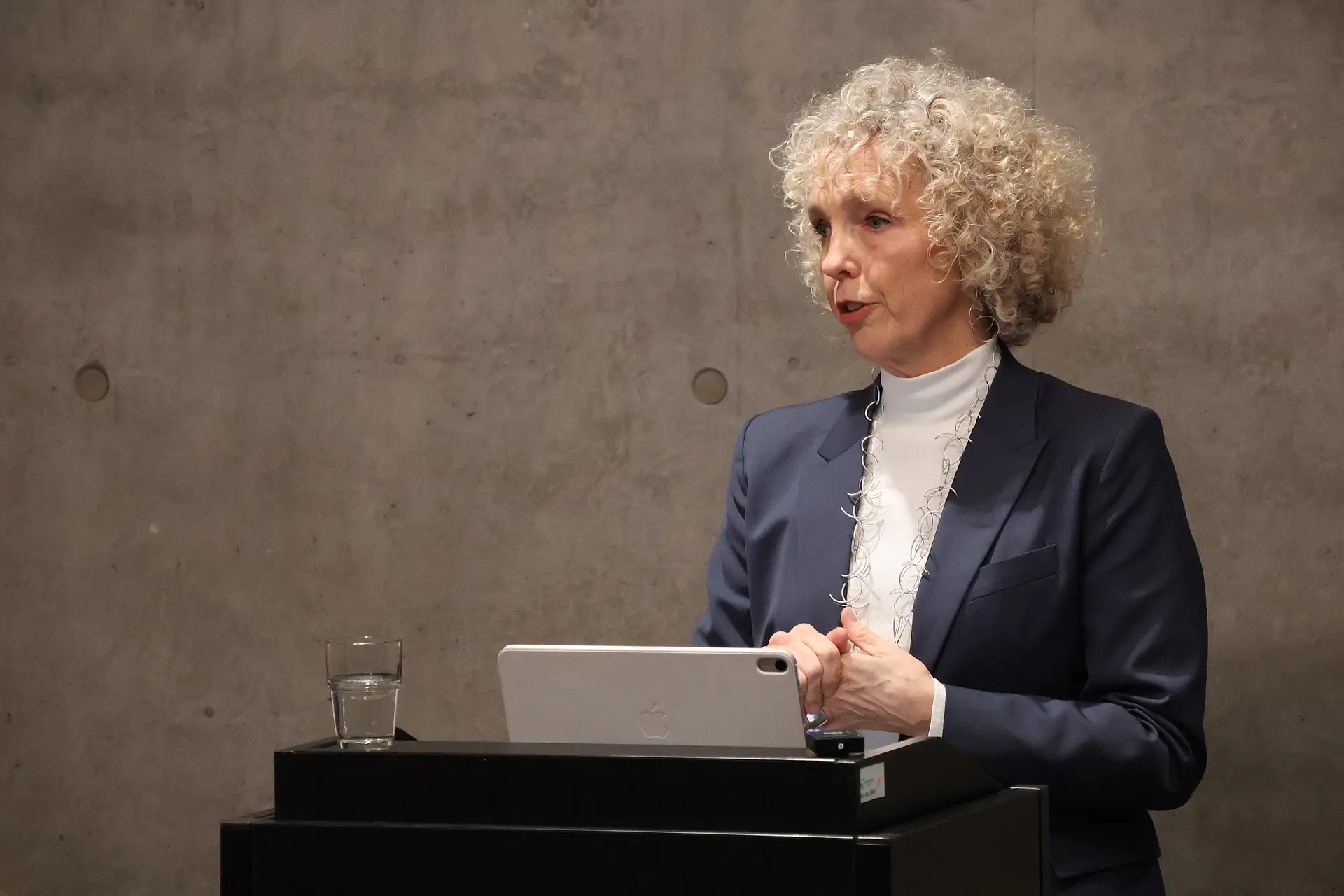
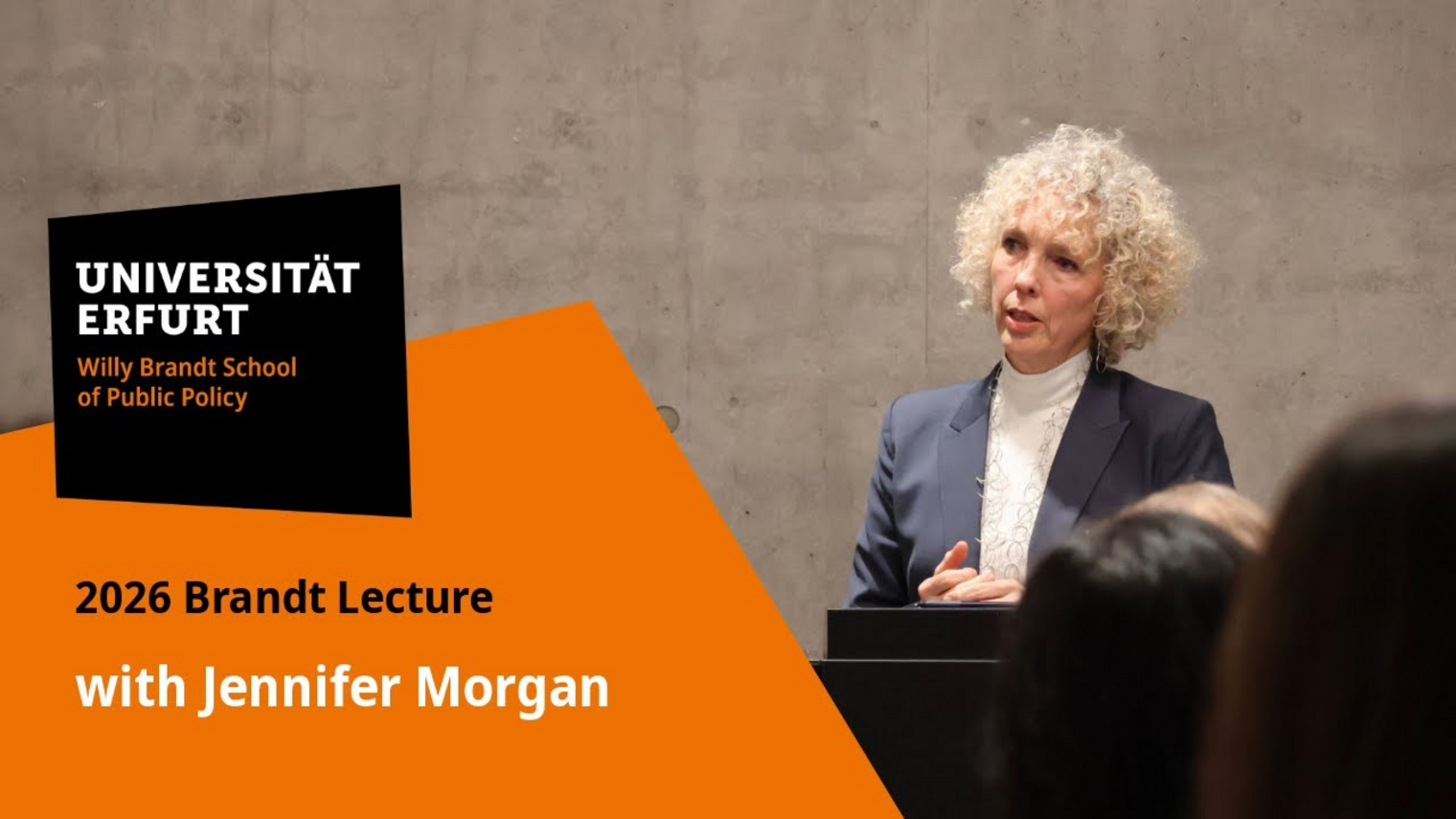
Jennifer Morgan most recently served as the State Secretary and Special Envoy for International Climate Action for the Federal Foreign Office of Germany, a position where she spearheaded the development of Germany’s Climate Foreign Policy. Prior to her diplomatic role, she served as the Executive Director of Greenpeace International, overseeing global strategy, operations, and campaigns for one of the world's most renowned environmental organizations.
In her lecture, Morgan emphasized that climate change is one of the top risks facing Germany, but with the United States backing out of major climate deals and creating broader geopolitical disruption, she outlined four recommendations for Germany to derisk and continue to push pro-climate global policy.
Her first recommendation is to derisk from the United States federal government by working with sub-national actors. She pointed to successful deals with California and South Carolina, as well as city governments, as proof that this strategy can be an effective path forward.
She also recommends that Germany look to Asia, Africa, and South America for climate partners. She said that China will be a key actor for reducing emissions over the coming years and advocated for a pragmatic, ambitious deal with China that brings energy security, economic security, and climate security together.
Morgan also states that the EU should embrace reforms to ensure it becomes a global shaper rather than a global taker. For example, she recommends the EU should restructure to make roles and hierarchies clearer and to prevent siloed thinking among different EU entities.
Finally, she calls for a new form of multilateralism. "The G7 and the G20 are no longer the sites where we can expect impactful climate deals to be made. Other settings where leaders from many countries come together, like the Conference of the Parties, will become increasingly important", she affirmed.
Morgan concluded by saying that a better, greener future is possible and calling on students to bring about that change. “We will need people. People with passion and the stamina to stay with it through the ups and downs,” she said. “People who have a deep commitment to creating a climate-just world and a belief that we can create change, even in these darkest moments."
![[Translate to English:] Facebook Icon](/fileadmin/SocialMediaIcons/iconfinder_06-facebook_104498.svg "Fakebookseite der Staatswissenschaftlichen Fakultät")
![[Translate to English:] Youtube Icon](/fileadmin/SocialMediaIcons/iconfinder_18-youtube_104482.svg)



![[Translate to English:] facebook icon](/fileadmin/SocialMediaIcons/iconfinder_06-facebook_white.svg)

![[Translate to English:] instagram icon](/fileadmin/SocialMediaIcons/iconfinder_38-instagram_white.svg)
![[Translate to English:] YouTube icon](/fileadmin/SocialMediaIcons/iconfinder_18-youtube_white.svg)
![[Translate to English:] xing icon](/fileadmin/SocialMediaIcons/iconfinder_xing_white.svg)
