The workshop approached corruption not as isolated misconduct, but as a systemic governance challenge that shapes development outcomes, public trust, and institutional performance. Early sessions explored the links between corruption and the SGDs, highlighting how corruption weakens public services, distorts the use of resources, and undermines effective policy implementation.
A strong practical focus ran throughout the program. Sessions on integrity and compliance in public and business sectors examined concrete risks related to the misuse of public and private funds. Participants discussed how integrity failures, risk assessment, compliance tools, and institutional safeguards can reduce opportunities for abuse before they become systemic.
Another key pillar of the workshop was the role of free press, open data, and civil society in fighting corruption. Presentations highlighted investigative journalism and transparency mechanisms as essential accountability tools, particularly in contexts where formal oversight institutions are weak or politicized. The sessions also introduced practical methods for researchers and advocates to use data and evidence strategically in policy and advocacy work.
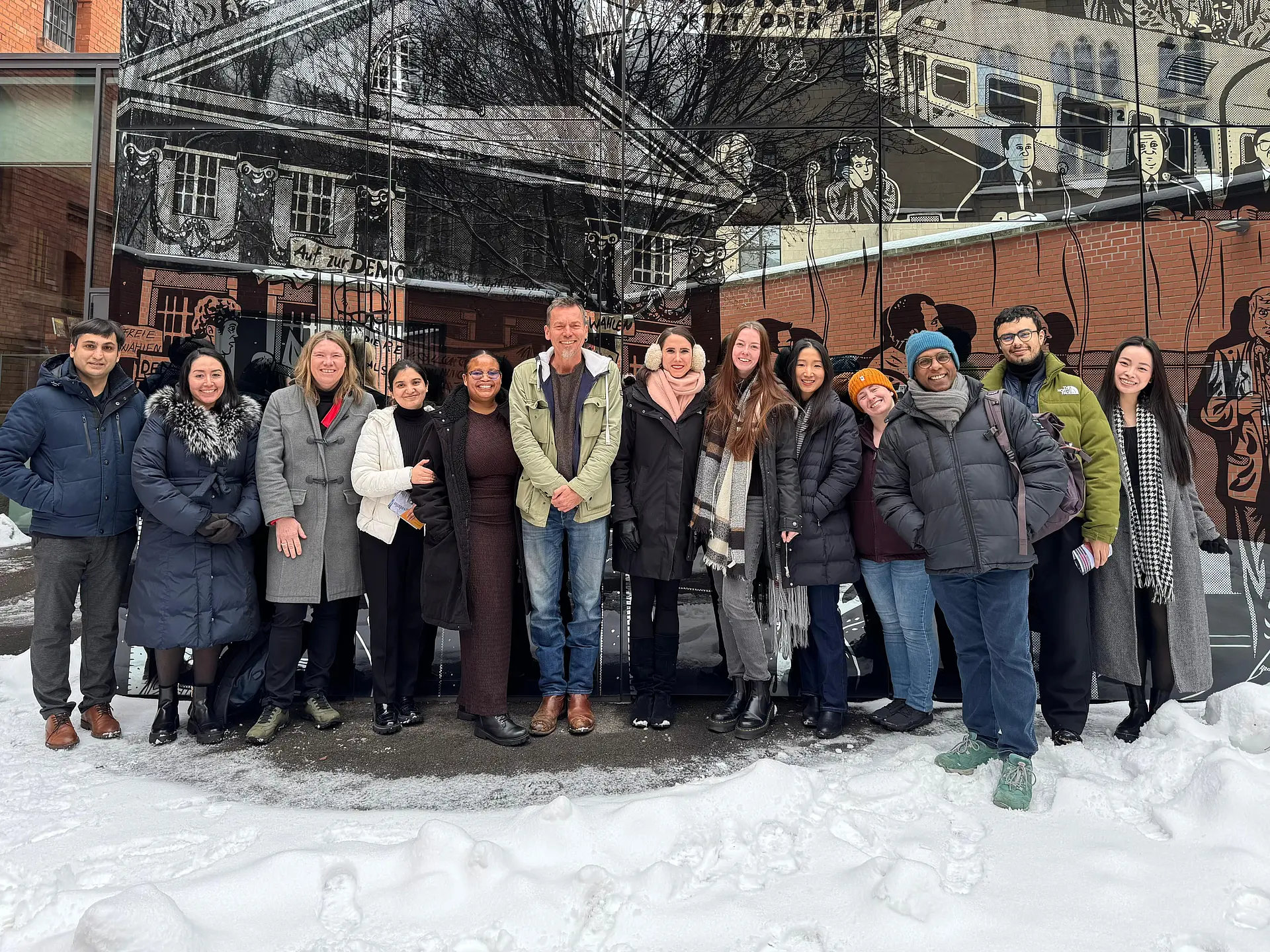
An especially powerful moment of the workshop was the visit to the Stasi Prison Memorial in Erfurt. Experiencing this site offered a stark reminder of how secrecy, fear, and unchecked authority enable long-term abuse of power. The visit connected Germany’s memory culture with contemporary debates on corruption, showing how remembering past injustices can serve as a form of prevention and democratic vigilance today.
The workshop concluded with a panel discussion on building integrity through memory and lesson learning, followed by student case presentations examining anti-corruption struggles in Pakistan, the Philippines, and the United States (Chicago and West Virginia) and the role of investigative journalists in El Salvador and their regional impact. Across these diverse contexts, common patterns emerged: power asymmetries, resistance to accountability, and the central role of non-state actors in pushing for change.
The Brandt School thanks Professor Heike Grimm, Christoph Kowalewski (Integrity & Compliance Consultant), Matthew Jenkins and Katja Bechtel (Transparency International), and Rukshana Nanayakkara (Sustainable Procurement Pledge, Global Outreach and Community) for contributing their expertise and grounding the workshop in real-world policy experience.
![[Translate to English:] Facebook Icon](/fileadmin/SocialMediaIcons/iconfinder_06-facebook_104498.svg "Fakebookseite der Staatswissenschaftlichen Fakultät")
![[Translate to English:] Youtube Icon](/fileadmin/SocialMediaIcons/iconfinder_18-youtube_104482.svg)


![[Translate to English:] facebook icon](/fileadmin/SocialMediaIcons/iconfinder_06-facebook_white.svg)

![[Translate to English:] instagram icon](/fileadmin/SocialMediaIcons/iconfinder_38-instagram_white.svg)
![[Translate to English:] YouTube icon](/fileadmin/SocialMediaIcons/iconfinder_18-youtube_white.svg)
![[Translate to English:] xing icon](/fileadmin/SocialMediaIcons/iconfinder_xing_white.svg)
