
Economic dependencies between the EU, U.S., and China
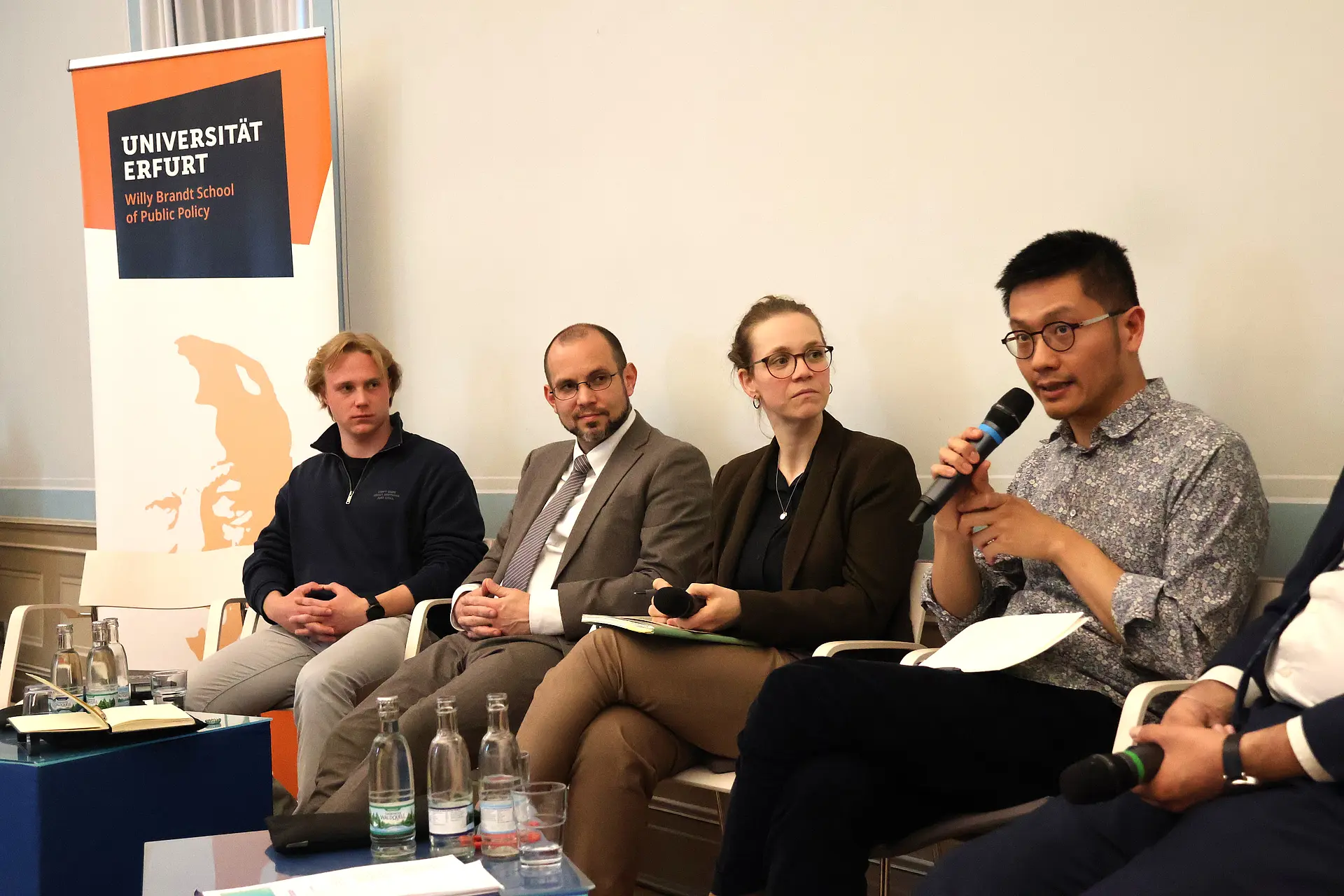
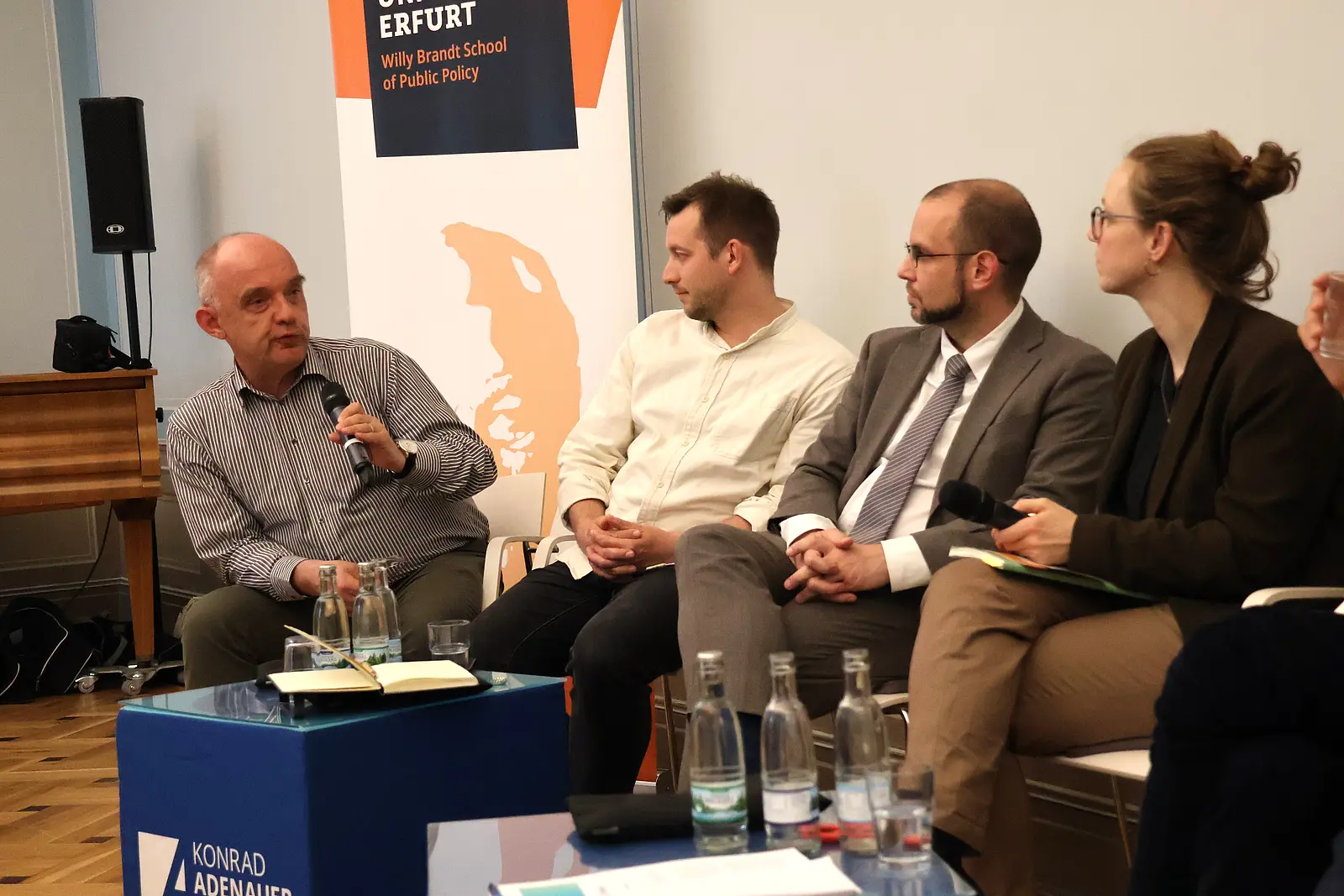
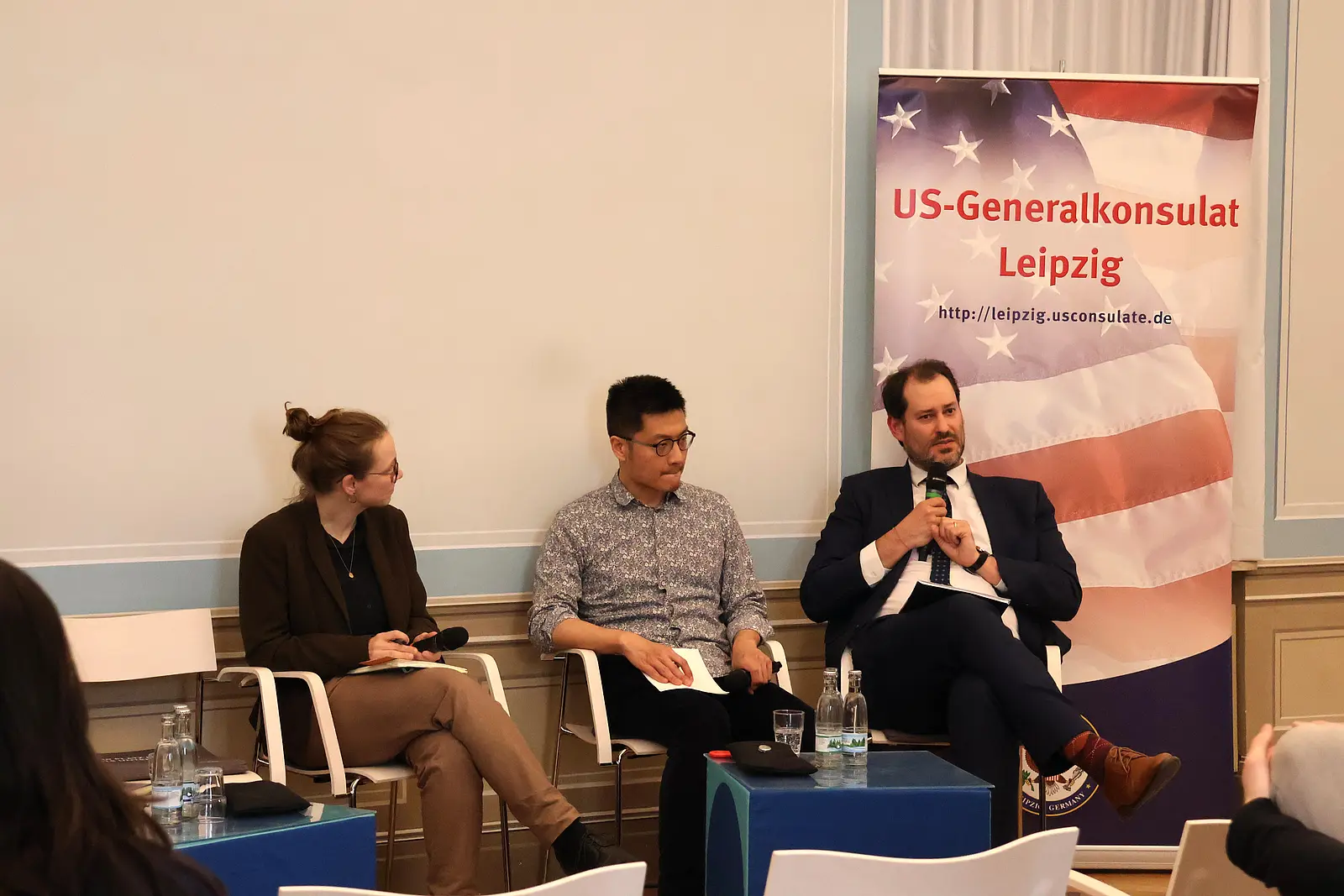
Panelists Michael Laha, Senior Fellow at the German Council on Foreign Relations; Thomas Yoshimura, Policy Advisor China at Konrad-Adenauer-Stiftung; and George Yin, Senior Fellow at the Mercator Institute for China Studies joined moderator Madeline Bohm, Academic Coordinator of the doctoral program on De-Globalization at the Brandt School for this interactive discussion.
A central focus was the economic interdependence between China, the EU, and the United States. The experts highlighted Europe’s reliance on Chinese raw materials and technologies and China’s leading role in digitalization. They addressed the EU’s “de-risking” strategy, which seeks to reduce strategic vulnerabilities without fully severing economic ties. Speakers also noted that U.S. allies in Asia, including Japan and South Korea, are facing pressure to balance economic dependence on China with growing geopolitical concerns.
Communist ideology and the Taiwan issue
The dialogue also explored the ideology behind China’s foreign policy, particularly regarding Taiwan. Panelists discussed the extent to which China’s position on Taiwan is driven by economic motivations versus the Communist Party’s ideological interests. The discussion also examined China’s broader efforts to shape international institutions and norms in ways that align with its political system and strategic interests.
Rising U.S-China tensions and effects in the Indo-Pacific
Another major theme was the rivalry between the United States and China in the Indo-Pacific region. Panelists discussed the growing perception that a renewed “Cold War mentality” is disrupting regional stability. They mentioned that countries in the region are increasingly employing balancing strategies by maintaining economic relations with China while relying on the United States and its allies for security.
Iran, rivalry, and knowledge deficits
The discussion additionally touched on China’s relationships with states such as Iran and the broader geopolitical implications of these partnerships. Participants considered how technological competition, military cooperation, and economic dependencies are increasingly intertwined within global power rivalries.
An audience member raised concerns about Europe’s limited expertise and understanding of China compared to the extensive resources China dedicates to analyzing Western societies and political developments. The conversation underscored the importance of strengthening knowledge and strategic awareness within Germany and Europe.
Strategic tasks for the West
The dialogue underscored that the relationship with China is a complex web of economic dependency, geopolitical rivalry, and ideological opposition. Democratic nations, particularly the U.S. and the EU, must develop joint strategies to meet these challenges, recognizing that China remains a central global actor.
![[Translate to English:] Facebook Icon](/fileadmin/SocialMediaIcons/iconfinder_06-facebook_104498.svg "Fakebookseite der Staatswissenschaftlichen Fakultät")
![[Translate to English:] Youtube Icon](/fileadmin/SocialMediaIcons/iconfinder_18-youtube_104482.svg)



![[Translate to English:] facebook icon](/fileadmin/SocialMediaIcons/iconfinder_06-facebook_white.svg)

![[Translate to English:] instagram icon](/fileadmin/SocialMediaIcons/iconfinder_38-instagram_white.svg)
![[Translate to English:] YouTube icon](/fileadmin/SocialMediaIcons/iconfinder_18-youtube_white.svg)
![[Translate to English:] xing icon](/fileadmin/SocialMediaIcons/iconfinder_xing_white.svg)
