

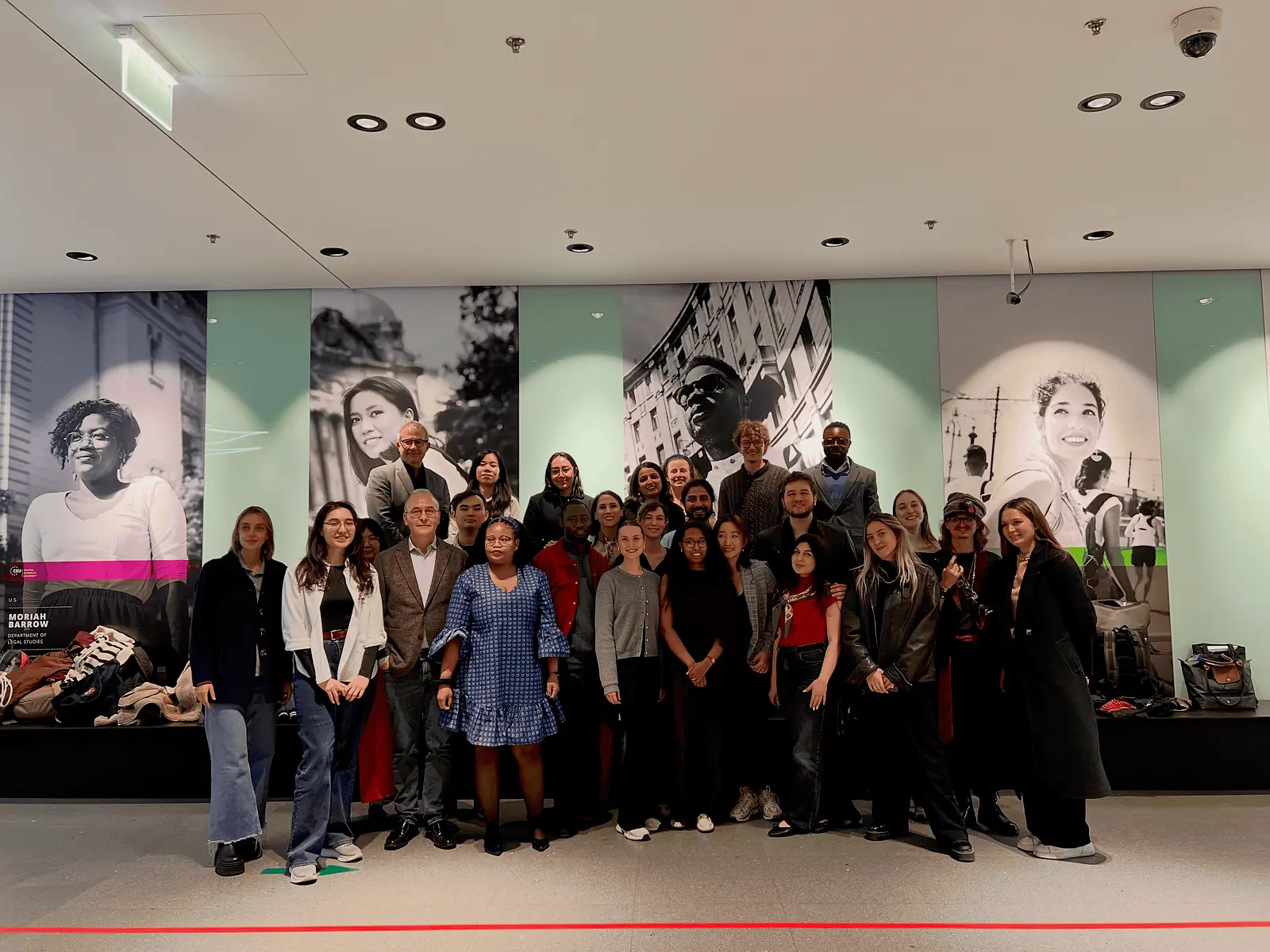
From 9 to 17 April 2026, students explored these issues in the joint CEU–Willy Brandt School course “The Politics and Policies of Aid”, organised in collaboration with Central European University (CEU) in Vienna. Taught by Dr. Evans Awuni and Prof. Thilo Bodenstein, with contributions from Prof. Achim Kemmerling, Sören Schmidt, and guest speaker Prof. Stephan Klingebiel of IDOS Bonn, the course combined online sessions with an intensive block seminar in Vienna.
The international development aid system is undergoing profound change. The rise of ‘new’ donors such as China, tensions within the Western donor system, the growing importance of South-South cooperation, and broader political and theoretical shifts have increasingly challenged traditional understandings of aid and development. Against this backdrop, the course introduced students to the history, structure, and contemporary challenges of the international aid system, while encouraging them to assess development aid as both a policy instrument and a contested field of power.
Over the course period, students engaged with some of the most important debates in contemporary development policy. The course began with the “great aid debate” and the question of whether aid should be seen as a solution, a failure, or something in between. From there, the course moved to foundational questions about what development and aid actually mean, before turning to the political economy of aid, critical and post-colonial critiques, and the changing roles of traditional donors, China, multilateral institutions, NGOs, and philanthropic actors.
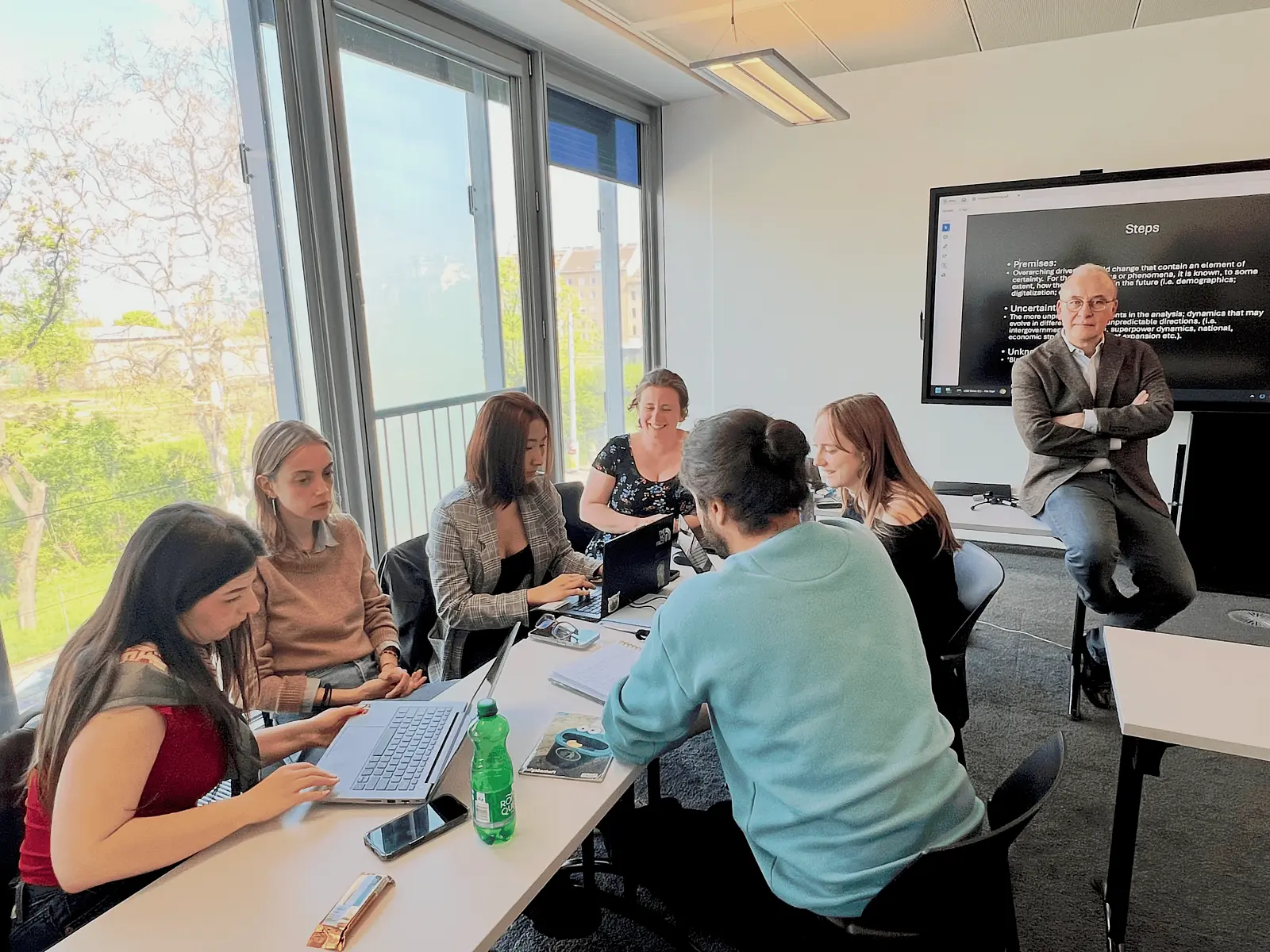
The Vienna block seminar created space to bring these themes together through concentrated sessions on a global aid system in disarray, aid within an unequal global economic order, aid effectiveness and evaluation, and scenario-building exercises on the future of development cooperation. The intensive format also encouraged lively discussion and exchange between students from different academic and national backgrounds.
In the guest lecture “Development Policy in the New World Disorder”, Prof. Stephan Klingebiel engaged students in a timely reflection on whether the current dynamics of the global aid system should be understood primarily as a challenge or also as an opportunity Discussions focused on the growing fragmentation of development cooperation, shifting geopolitical alignments, and increasing pressure on multilateral institutions. At the same time, the lecture encouraged students to think beyond narratives of simple decline and to consider how moments of disruption may also create space for institutional reform, new partnerships, and alternative development trajectories. The lecture encouraged critical engagement with contemporary policy debates and careful reflection on the future of development aid in a changing international order.
The collaboration with CEU also made it possible to create an intellectually rich transnational classroom. Bringing students together across institutions and locations added a comparative dimension to the course and created space for lively discussion on the future of aid at a moment when development cooperation is being fundamentally rethought.
As debates about development aid increasingly revolve around questions of power, purpose, and global inequality, questions of who gives aid, on what terms, in whose interest, and with what effects will remain central to both development policy and global governance in the years ahead.
![[Translate to English:] Facebook Icon](/fileadmin/SocialMediaIcons/iconfinder_06-facebook_104498.svg "Fakebookseite der Staatswissenschaftlichen Fakultät")
![[Translate to English:] Youtube Icon](/fileadmin/SocialMediaIcons/iconfinder_18-youtube_104482.svg)



![[Translate to English:] facebook icon](/fileadmin/SocialMediaIcons/iconfinder_06-facebook_white.svg)

![[Translate to English:] instagram icon](/fileadmin/SocialMediaIcons/iconfinder_38-instagram_white.svg)
![[Translate to English:] YouTube icon](/fileadmin/SocialMediaIcons/iconfinder_18-youtube_white.svg)
![[Translate to English:] xing icon](/fileadmin/SocialMediaIcons/iconfinder_xing_white.svg)
