"Madness is curable!" This was the credo of the still young psychiatric sciences at the beginning of the 19th century in Europe. This healing maxim was also pursued in the Kingdom of Saxony when the first state sanatorium in the German-speaking world was opened there in 1811. But what exactly was the healing of mental illness all about? In which discursive structure did the idea of a possible cure emerge? Which actors were involved? What behaviours were associated with the predicate "cured"?
The aim of the project is to analyse the concept of healing in order to make statements about the constitution of bourgeois self-images and social ideals in a time of economic and social upheaval. In addition to contemporary scientific publications, the administrative and patient files of the Sonnenstein asylum will also be analysed using discourse analysis. Healing is not only considered within a scientific discourse, but is also understood as a social formation of knowledge. This knowledge was both the product of a specific discursive setting and the producer of new socially relevant norms, values and categories.
With the "endeavour to heal the fools", Sonnenstein became a micro-space of a powerful knowledge system, so that discourse history, knowledge history and micro-history are combined in this work. According to one thesis of the study, healing had a stabilising, regulative function within a society whose structure was undergoing change as a result of the Enlightenment and industrialisation.
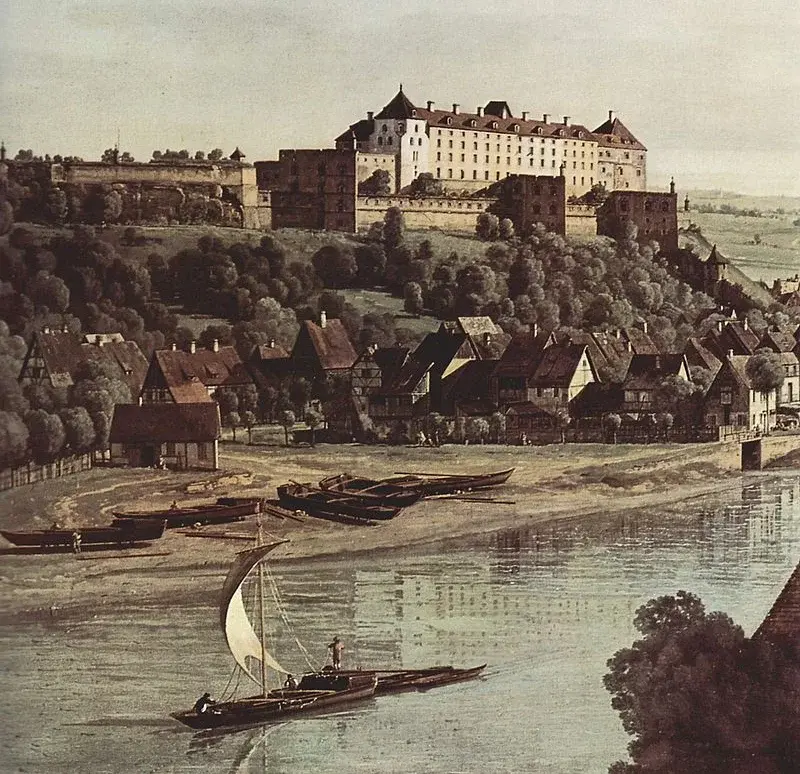
Image: View of Pirna with Sonnenstein Fortress around 1757 © Wikimedia Commons.

![[Translate to English:] facebook icon](/fileadmin/SocialMediaIcons/iconfinder_06-facebook_white.svg)

![[Translate to English:] instagram icon](/fileadmin/SocialMediaIcons/iconfinder_38-instagram_white.svg)
![[Translate to English:] YouTube icon](/fileadmin/SocialMediaIcons/iconfinder_18-youtube_white.svg)
![[Translate to English:] xing icon](/fileadmin/SocialMediaIcons/iconfinder_xing_white.svg)

University of Erfurt (Campus)
Nordhäuser Str. 63
99089 Erfurt