
Generative AI in Public Policy
Project Description
Generative AI in Public Policy (GAIPP) is an innovative project that harnesses Generative AI in the teaching of quantitative methods, making learning more accessible, interactive, and directly tied to real-world policy challenges.
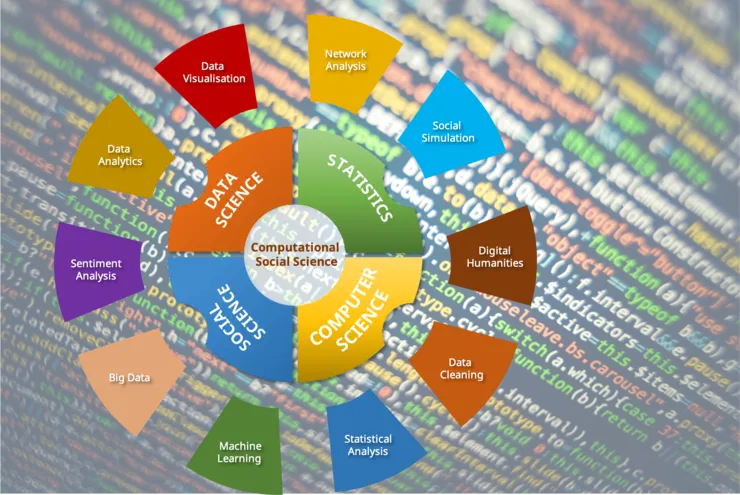
In an increasingly data-driven world, we recognize that quantitative skills are essential for analyzing policy outcomes, forecasting the effects of political decisions, identifying future trends, and conducting comparative policy research. At the same time, we acknowledge the challenges that non-technical and social science students face when engaging with the full range of quantitative research tools. Our main focus is to enable students to develop a solid understanding of key statistical methods, data visualization techniques, and applied policy analysis.
Project Goals
Through Generative AI in Public Policy, we aim to introduce students to the meaningful and responsible use of Generative AI in public policy analysis while strengthening their quantitative research skills. We seek to improve learning outcomes by offering personalized and AI-supported learning experiences, encouraging self-directed learning, and fostering collaborative and problem-based approaches. At the same time, we place strong emphasis on critical reflection, enabling students to assess the reliability, limitations, and ethical implications of AI-generated outputs.
Project Funding
In 2025, Dr. Hasnain Bokhari, Head of Digital Policy and AI at the Brandt School, was awarded a state grant by the Thuringian Ministry of Education, Youth and Sport through the program "Fellowships for Innovation in Digital Higher Education in Thuringia." This program aims to incentivize the development and testing of digitally supported teaching and examination formats, such as MOOCs, blended learning, games, simulations, e-exams, and the use of AI. It also encourages the redesign of modules and study sections with the integration of digital technologies to facilitate cross-university exchange on innovative university teaching practices.
Activities
The project combines digital teaching formats with hands-on learning experiences. These include:
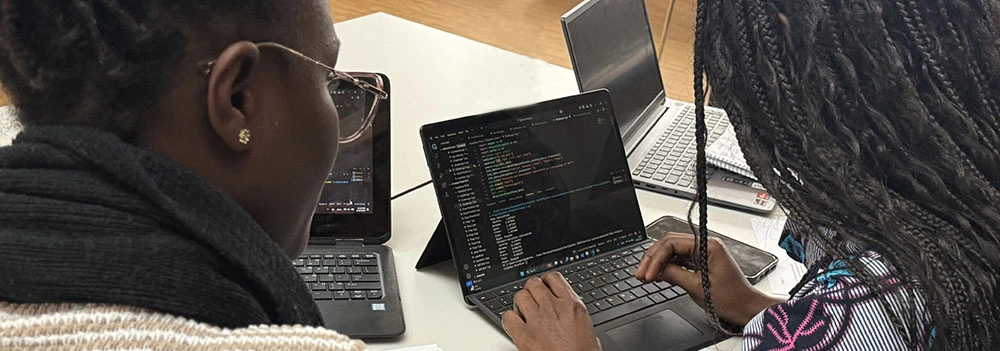
interactive workshops on Generative AI, large language models, and prompt engineering
developing Moodle-based self-study courses supported by instructional video tutorials for R programming.
Datathons
In project-based learning settings, students critically evaluate AI-supported analyses and actively contribute by producing their own digital learning materials. These activities are complemented by exchanges with external partners working in the field of generative AI, connecting academic learning with practical applications.
Team Members
-
Head of digital policy and artificial intelligence (Willy Brandt School of Public Policy)
-
Vaaniya Iftikhar

-
Juan Socadagui


Output
Publications
- Bokhari, H., & Awuni, E. T. (2023). Digital inequalities in North Africa: Examining employment and socioeconomic well-being in Morocco and Tunisia. Convergence, 13548565231209673.
- Bokhari, H. (2023). Contemporary Debates on Electoral Technologies in Pakistan Challenges and Opportunities of Electronic Voting Machines (EVMs). Islamabad: Friedrich Ebert Foundation
- Ittefaq, M., Zain, A., & Bokhari, H. (2023). Opioids in Satirical News Shows: Exploring Topics, Sentiments, and Engagement in Last Week Tonight on YouTube. Journal of Health Communication, 28(1), 53-63.
- Ramdey, K., & Bokhari, H. (2022). Digital Storytelling and ICTs for Education to Foster Sustainable Development. In ICT Systems and Sustainability: Proceedings of ICT4SD 2021, Volume 1 (pp. 459-466). Springer Singapore.

![[Translate to English:] Facebook Icon](/fileadmin/SocialMediaIcons/iconfinder_06-facebook_104498.svg "Fakebookseite der Staatswissenschaftlichen Fakultät")
![[Translate to English:] Youtube Icon](/fileadmin/SocialMediaIcons/iconfinder_18-youtube_104482.svg)


![[Translate to English:] facebook icon](/fileadmin/SocialMediaIcons/iconfinder_06-facebook_white.svg)

![[Translate to English:] instagram icon](/fileadmin/SocialMediaIcons/iconfinder_38-instagram_white.svg)
![[Translate to English:] YouTube icon](/fileadmin/SocialMediaIcons/iconfinder_18-youtube_white.svg)
![[Translate to English:] xing icon](/fileadmin/SocialMediaIcons/iconfinder_xing_white.svg)
