Habilitation project | Johanna Hügel
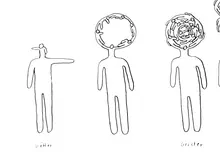
The aim of the project is to analyze these deeper narratives and strategies that underlie the profound restructuring of reality and social belonging in the Russian Federation. Methodologically, the project draws in particular on approaches from political epistemology and praxeology. Such an analysis of the epistemological level of current Russian politics is not only indispensable for understanding the processes within the Russian Federation, but also for deciphering the appropriation of postcolonial theory by the global New Right. It can also provide approaches for analyzing why parts of the global left and the decolonial school do not clearly distance themselves from Putin's regime. The appeal of this rhetoric points to the legacy of Europe’s colonial past ... More
Habilitation project | Sandra Janßen
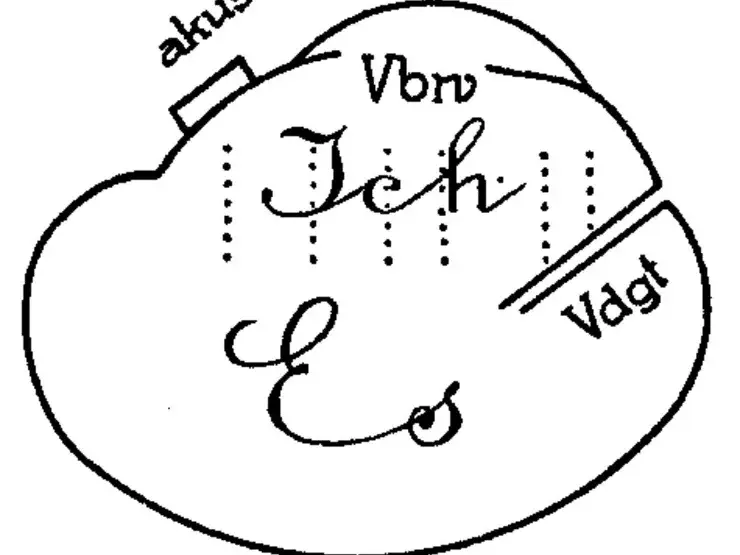
The study aims to show that one of the central elements of totalitarian discourses in the 1930s and 1940s was a conception of the subject whose epistemological foundation can be inferred from contemporary psychological knowledge. According to the thesis, the fact that this subject can be addressed as a 'totalitarian' one implies a constitution that can by no means be defined solely in political terms. It is assumed that models of subjectivity that can be described in terms of the history of knowledge are relevant for the political theory of this period, as they also permeate imaginative forms of political and social participation. This epistemic connection is particularly evident in the literature of the period under investigation: in it, psychological and political understandings of the subject come together and corresponding forms of 'subjectivation' are staged.

PhD project | Meike Katzek
The PhD project is dedicated to the historicisation of discursive configurations in which scientific ideals and epistemological concepts, such as truth and objectivity, as well as their scientific theorisation, were linked to political positions of the New Right in academic and political discourses of post-democratic states – the USA and the Federal Republic of Germany – at the end of the 20th and beginning of the 21st century. The discursive starting point for this is the American and German debates on ‘postmodern scepticism’ and criticism of ‘left-wing intellectuals’ or ‘multiculturalism,’ which are usually accompanied by diverse cultural criticism and are directed in particular against fields of science that have produced alternative epistemologies from their criticism … More
PhD project | Erik Kaiser
The aim of the research project is to produce a history of knowledge and media of the knowledge culture of pre-astronautics from the late 1960s to the end of the 1980s. Pre-astronautics was and is a parascientific branch of research, predominantly carried out by amateur researchers, which supports the hypothesis that the earth was visited in the past by extraterrestrial space travellers who had a significant influence on the biological, cultural and technical development of mankind. It can be described as an esoteric-technical system of knowledge based on speculative assumptions with a claim to explain the world, which can be seen in the context of the counter culture at the beginning of the 1960s and united political, religious and scientific counter-models to the prevailing thought structures of the time... More

Habilitation project | Alexei Lochmatov
My project, funded by the German Research Foundation (DFG), deals with the question of how ‘intelligence’ has become one of the central research objects in both the natural and social sciences. Within this project, I intend to investigate the political and social factors that catalysed the rapid development of the discourse of intelligence in the 20th century. My idea is to explore this phenomenon in relation to central ‘sociological’ categories such as social grouping, morality, stability, and normality. I will also examine how the scientific authority of intelligence ... More
PhD project | Sebastian Ripl
With my research project on Manès Sperber, I will analyse the life and work of Manès Sperber historically and contextually. Born in 1905 to a Jewish family in the eastern Galician town of Zablotow, Sperber's family fled to Austria during the First World War. In Vienna, the young Sperber joined the Hashomer Hazair and met Alfred Adler, the founder of individual psychology. After moving to Berlin, where he lived until Hitler came to power, Manès Sperber rose to become Adler's "master pupil" within the individual psychology movement. Sperber also became an active member of the Communist Party in Berlin. In exile in France, he left both individual psychology and communism behind him and developed ... More

Research project | Serhii Zhabin
This project examines research on Artificial Intelligence conducted by the fellows of the Kiyv Institute of Cybernetics in the 1950s - 1980s. The focus of this project lies on the aspiration to reach a "digital immortality" and the cultural background of this undertaking. Based on the unique sources from the private archives of the key figures of Ukrainian cybernetics as well as a considerable number of the interviews with their relatives, colleagues, and students, this project explores the practical application of the concepts of intelligence, creativity, and personality in the field of computer sciences. The project contains two parts: The first one deals with the technical aspects of this topic. The second one explores the organisation of public outreach for the ideas of Kiyv cyberneticians. Building on the existing historiography and, at the same time, contrasting it, this project makes the quest for immortality the framework for exploring the history of Ukrainian computer sciences and thus opens a new perspective on both the history of cybernetics and on that of the intersections between scientific and popular discourses in Ukraine during the second half of the 20th century.
PhD project| Anna Domdey
This doctoral project deals with the psychiatrisation of lesbian women in the GDR. The work reconstructs the medical discourse on female homosexuality and treatment practices in psychiatric institutions. For the first time, files from psychiatric clinics created between 1949 and 1975 are being systematically reviewed for lesbian desire. By comparing these files with contemporary specialist literature produced in the GDR and other socialist countries, the project aims to identify possible discrepancies between theory … More

![[Translate to English:] facebook icon](/fileadmin/SocialMediaIcons/iconfinder_06-facebook_white.svg)

![[Translate to English:] instagram icon](/fileadmin/SocialMediaIcons/iconfinder_38-instagram_white.svg)
![[Translate to English:] YouTube icon](/fileadmin/SocialMediaIcons/iconfinder_18-youtube_white.svg)
![[Translate to English:] xing icon](/fileadmin/SocialMediaIcons/iconfinder_xing_white.svg)

University of Erfurt (Campus)
Nordhäuser Str. 63
99089 Erfurt