
Dr. des. Elena Marie Elisabeth Kiesel
elena.kiesel@uni-erfurt.deResearch associate (History Department)
Office hours
by appointment
Visiting address
History Department
C18 – teaching building 4
Alfred-Weber-Platz 4
99089 Erfurt
Mailing address
Universität Erfurt
History Department
Postfach 90 02 21
99105 Erfurt
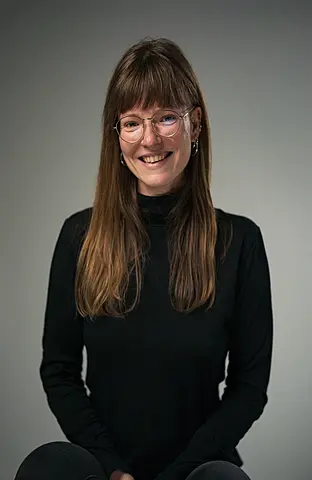
Elena M.E. Kiesel is a historian at the University of Erfurt at the department of modern and contemporary history. Since July 2026, she is a research associate on the project “Differenz – Transformation – Zusammenhalt” (DiTZu), working on a subproject examining dimensions of social discrimination in the late GDR and during the transition period in the 1990s.
In November 2020, she came to Erfurt as a research associate for the DFG research group “Voluntariness,” specifically the subproject “Voluntariness in Dictatorships.” She wrote her dissertation on voluntariness as a strategy of self and external conduct in authoritarian systems, using the GDR “Neuererbewegung” as a case study. In doing so, she collaborated closely with the Oral History Research Center at the University of Erfurt and the research network “Diktaturerfahrung und Transformation.” In addition, she worked from March through December 2024 at the Academic Coordination Office for Thuringia’s “Colonial Legacy.”
Even while studying cultural studies and European cultural history at the Otto von Guericke University Magdeburg, she had already supported research projects and gained experience in provenance research. After graduating, she was involved in preparing a provenance research project for the Saxony-Anhalt Regional Association within the German Library Association (Deutscher Bibliotheksverband e.V.). From 2018 to 2020, thanks to generous funding from the Stiftung Kulturgutverluste, she conducted research into volumes confiscated as a result of Nazi persecution in libraries in Saxony-Anhalt. To date, she has published primarily on the findings of provenance research, social welfare work under National Socialism, and volunteerism in dictatorships.
She is also actively involved in the civil society association “Blinde Flecken Erfurt,” which works to address right-wing violence, amplify the perspectives of those affected, and engage critically with German culture of remembrance.
Research Interests
- Everyday history of the GDR and the transition period
- Protestantism and denominational welfare under National Socialism
- Provenance research
- Women’s and gender history in the 20th century
- Oral history
- Coloniality and colonialism
CV (German)
Projects
Dissertation: The Utopia of Voluntariness. Performance and Participation in the Neuererbewegung of the GDR
My study focuses on the question of the significance of “voluntariness” as a strategy of external and self-conduct within the system of rule in the German Democratic Republic (GDR). The primary goal of the project is to differentiate and update a simplified understanding of dictatorial concepts of rule, which had primarily focused aspects of systemic coercion. By framing rule as governmentality (Michel Foucault), the mobilization of voluntariness as a practice of governance can be examined without calling into question the dictatorial character of the GDR.
The subject of this study is the so-called Neuerer- und Rationalisatorenbewegung (abbreviated as “Neuererbewegung” or “Neuererwesen”). This political mass organization was intended to provide a platform for those who wished to contribute voluntarily and on their own initiative to the construction of a “better” Germany. By submitting suggestions for improvement in their workplaces and participating in so-called “innovator tasks,” people were expected to contribute to “scientific and technical progress.” Furthermore, the “movement” aimed to foster the development of a “socialist personality.” In doing so, GDR propagandists portrayed the Neuererbewegung as an opportunity for participation within “socialist democracy.” In the late 1940s and 1950s, the submission of proposals for building a socialist society was spurred primarily by the prospect of a better and more peaceful life following the catastrophe of World War II. Through voluntary contributions and participation, the promises of a society living in peace and prosperity were to become a reality: at its core, the goal was to realize the socialist utopia. However, the impact of these appeals apparently waned over the course of the GDR’s forty-year existence. Beginning in the 1960s, pressure on factory workforces to participate voluntarily increased. Although submitting innovation proposals remained formally voluntary, it was gradually less a matter of individual initiative, and individual motivations, and subjective scope for action shifted. After the Socialist Unity Party of Germany (SED) proclaimed the “developed socialist society” in the 1970s, its goal was to complete the communist transformation: It sought to create a society in which external rule would become obsolete, as people would govern themselves. In the name of ensuring the predictability of social and economic progress, the SED increasingly regulated performance and participation in the Neuererbewegung—it institutionalized voluntariness.
So what did “voluntariness” mean under the GDR dictatorship? In answering this question, this dissertation looks beyond the historical turning point of 1989–1990, extending into the period of transformation, and highlights both continuities and breaks in the meaning of voluntariness.
This dissertation emerged from the subproject “Voluntariness in Dictatorships” within the context of the interdisciplinary DFG Research Group “Voluntariness.”
Dimensions of Social Discrimination in the Socialist Meritocracy and its Aftermath During the Transition Period
The project focuses on the socioeconomic living conditions and everyday experiences of people with disabilities—and specifically women with disabilities—in the 1980s and 1990s. As part of a joint cultural event with self-advocacy organizations of people with disabilities, initial discussions about experiences and memories will take place. As the project progresses, the key topics discussed at the joint event will be addressed and explored in greater depth through life-history interviews. I will supplement the experiential knowledge gained from these interviews—regarding interactions with municipal authorities and everyday experiences of discrimination—with an analysis of administrative records from the period under study. The aim is, first, to trace the historical development of administrative practices that directly affect people with disabilities. Second, it is to reconstruct the discourse surrounding the concept of “performance” in order to analytically elucidate historical continuities in the demarcation of the category of difference known as “ability.”
The project is part of the “Difference – Transformation – Cohesion” research group.
![[Translate to English:] facebook icon](/fileadmin/SocialMediaIcons/iconfinder_06-facebook_white.svg)

![[Translate to English:] instagram icon](/fileadmin/SocialMediaIcons/iconfinder_38-instagram_white.svg)
![[Translate to English:] YouTube icon](/fileadmin/SocialMediaIcons/iconfinder_18-youtube_white.svg)
![[Translate to English:] xing icon](/fileadmin/SocialMediaIcons/iconfinder_xing_white.svg)
