As diverse and colourful as German queer history of the 20th century is, it is also difficult and contradictory. Germany was often a place of refuge for queer people from abroad, such as poet W.H. Auden and writer Christopher Isherwood in Berlin in the 1920s, or Queen frontman Freddie Mercury in Munich in the 1980s. At the same time, however, this history is also characterised by oppression and injustice. During the Nazi era, thousands of homosexuals were persecuted and executed; after the end of the war, persecution continued under Section 175 of the German Criminal Code, even if the consequences were not fatal. In the 1980s, HIV-positive and people with AIDS, especially gay men, were also discriminated against in Bavaria by CSU politician Peter Gauweiler's catalogue of requirements, among others.
The base of this history are stories of migration and human movement(s), sometimes against the order of the constitutional state. Such 'deviant' or 'unlawful' activities have expressed themselves not only through the formulation of queer identities, but also through the performance-counter-performance relationship of queer sex work, which was usually illegal. In general (but not exclusively), this history can be divided into two phases: the first before the start of the war in 1939, especially in the period of the Weimar Republic 1919–1933, when German cities such as Berlin became centres for international queer tourism; and the second in the post-war period, when many West German queer people, marginalised by the state and society, left West Germany in search of sex, identity affirmation or even gender conformity – things that before the Nazi era could still be found in Germany itself.
The project examines these reciprocal trends of queer migration across German borders (geographical but also normative) over the course of the 20th century. As a result, it explores a history that has remained largely 'undiscovered' to this day due to traditional and (homo)normative dominated historiography. The central question is what we really mean when we speak of a 'German' queer history of a globalised 20th century.
Funding: Volkswagen Foundation
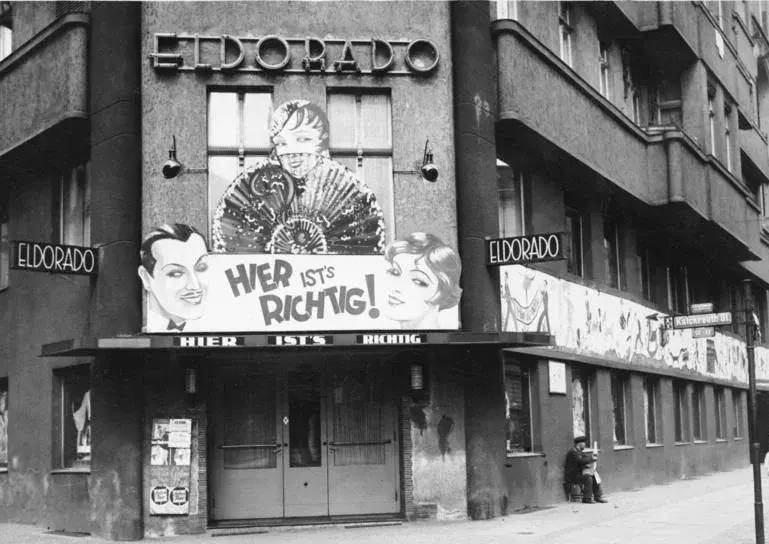
Image: Berlin, "Eldorado" bar, 1932 © Bundesarchiv, Bild 183-1983-0121-500 / CC-BY-SA 3.0

![[Translate to English:] facebook icon](/fileadmin/SocialMediaIcons/iconfinder_06-facebook_white.svg)

![[Translate to English:] instagram icon](/fileadmin/SocialMediaIcons/iconfinder_38-instagram_white.svg)
![[Translate to English:] YouTube icon](/fileadmin/SocialMediaIcons/iconfinder_18-youtube_white.svg)
![[Translate to English:] xing icon](/fileadmin/SocialMediaIcons/iconfinder_xing_white.svg)

University of Erfurt (Campus)
Nordhäuser Str. 63
99089 Erfurt