
God, Human, Machine: Images and Imaginaries of Religion in the Age of AI
(International Conference; 28-30 September 2026)
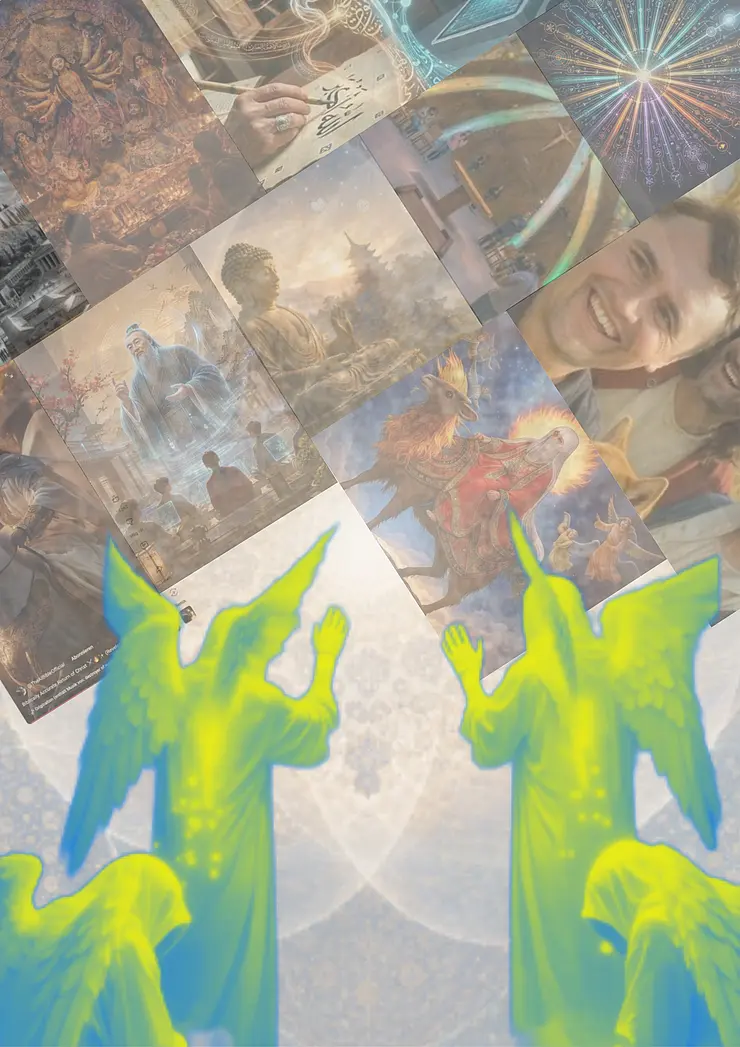
The international conference God, Human, Machine: Images and Imaginaries of Religion in the Age of AI critically examines how AI technologies are reshaping religious images and imaginaries, encompassing the symbolic, affective, and sensory dimensions of religious life and practice across traditions, cultures, and social contexts. Addressing a critical but underexplored dimension of the AI–religion nexus, the conference brings together theoretical and empirical perspectives, connecting scholars and practitioners working at the intersections of Religious Studies, Anthropology, Art History, and Science and Technology Studies. The programme features two keynote lectures, a conversation with religious digital image creators, and seven thematic panels, exploring the relationship between human imagination, religious knowledge, and AI systems. Sessions examine how AI-generated imagery influences religious practices, rituals, and ways of life; analyse creative and critical engagements with AI images and videos in religious contexts; and develop global and comparative perspectives on AI imagery and religion. The conference contributes to emerging scholarship on religion and AI while offering insights relevant to broader debates on technology, culture, and the human imagination.
Programme
Day 1: Monday, 28 September 2026
09:00-09:30 Registration and welcome coffee / snacks
09:30-10:00 Opening Remarks
Fouad Gehad Marei & Christoph Günther
10:00-12:00 Panel 1: Sensory and Spatial Aspects
Tino Grisi (Politecnico di Milano), The "How" of the Rite: AI-Generated Polyhedral Synthesis and the New Imagery of Ecclesial Spaces
Nesrine Mansour (University of Colorado Boulder), What the Machine Cannot See: A Manifesto for Sacred Imagination in the Age of AI
Isobel Dickson (Dublin City University), Envisioning Artificial Intelligence: Mysticism, AI Ethics, and the Religious Imaginary of Starmirror
12:00-13:30 Lunch break
13:30-15:30 Panel 2: Revealing the Hidden and Unimaginable
Wajeeha Naween (Bahria University Karachi Campus), The Ghost in The Pen: AI, Barakah and the Future of Islamic Calligraphy
Barbara Denuelle (University of Kent), Seeing with the Eye of the Heart: Sufi Epistemology, Visual Imagination, and AI-Generated Images
Fitri Murfianti (Leiden University), Seeing the Unseen: AI Images, Digital Miracles, and the Remaking of Religious Imagination in Indonesia
15:30-15:45 Coffee break
15:45-17:30 Traversing Design, Art and Devotion: A Conversation with Religious Digital Image Content Creators (Roundtable)
- Mohammad Danial Atoofi (Delzaar Studios)
- Mohamed Elshaer (Bta3 Anime)
- Sohom Ganguly (ThePuja.App)
17:30-17:45 Coffee break
17:45-19:15 Public Keynote Address - Christiane Gruber (University of Michigan)
Pandora’s Black Box: Techno-Orientalist Images of the Prophet Muhammad in the Age of AI
Abstract:
Flickering on TikTok, a video satirically takes up the challenge to show images of the Prophet Muhammad by parading a series of empty gilt frames with the closing mantra: “AI don’t want no fatwa.” This tongue-in-cheek reel offers scathing commentary on the fears of tech entrepreneurs to tackle the subject, lest physical violence (or loss of revenue) ensue. Frequently relinquished as black box non-outputs due to AI’s self-proclaimed “sensitivity to Muslims,” historical Islamic depictions of the Prophet are thus willfully engineered into digital extinction. However, in other instances, generative AI can and does produce images of the Prophet based on various visual prompts and keywords, including “Islamic” and “historical.” The results, which emerge from a limited image corpus and imperfect training models, yield an uncanny conjunction of digital automation and Orientalist imagery. Such visuals prove highly innovative if somewhat unsettling in their “techno-Orientalist” look and language—crafting, as it were, an aesthetics of visual incommensurability, even gibberish. From reaffirming perceived doctrinal and regulatory norms through image censorship to opening wide open Pandora’s image box, it becomes clear that today’s AI-generated images of the Prophet Muhammad navigate between presence and absence as well as historicity and bias, whose flimsy or even baseless theologies issue a larger epistemic provocation when it comes to presenting and policing faith, along with its key visuals, in an age of boundless mechanization.
19:15 Dinner (on-site)
Day 2: Tuesday, 29 September 2026
09:00-11:00 Panel 3: The Politics of AI-charged Imaginaries
Efstathios Kessareas (University of Erfurt), Reimagining Hellenic Polytheism through AI: Aesthetics, Ideology, and Power
Rasool Akbari (University of Bonn), Ambivalences of AI-Rendered Iranian Cultural Imaginaries: A Case Study of the Sun and the Lion
Kathrin Trattner (University of Zurich), “Well done, my good and faithful servant.” The role of generative AI in the digital martyrdom of Charlie Kirk
11:00-11:15 Coffee break
11:15-12:15 Bias Datasets, Artificial Hate and Racist Intelligence
A Conversation with Ari Temkin, followed by the art installation The Jewish Dataset (2025)
12:15-13:15 Lunch break
13:15-14:15 Guided VR Demonstrations
- ThePuja.App
- VR Hajj
- VR Karbala
14:15-16:15 Panel 4: Interactions with AI-generated Imagery
Jan Philipp Hahn (Evangelische Zentralstelle für Weltanschauungsfragen Berlin), Visualizing Divine Authority: The Persuasive Power of AI-Imagery in Interreligious Online Debates
Feeza Vasudeva / Katja Valaskivi (University of Helsinki), Godbots and Religious Mediation: An Exploratory Study of Religious AI Interaction
Sofia Tsourlaki (SOAS University of London), Reclaiming Revelation: Use AI to Visualise Qur’anic Meanings Beyond the Authority of the ʿUlamāʾ
16:15-16:30 Coffee break
16:30-18:00 Public Keynote Address - Gregory Price Grieve (University of North Carolina Greensboro)
Cave of Dreams: Designing Ethical AI Worlds for the Study of Religion and Human Responsibility
Abstract
Religions once built temples and myths to explore the human condition. Today we are beginning to build interactive worlds where those questions can be explored in real time. Many assume that artificial intelligence will simply generate these environments for us, replacing human imagination with automated systems. That assumption is mistaken. The moral challenge of AI is not technological capability but human responsibility. Humans must not surrender moral imagination to artificial intelligence; instead, we must design the environments in which AI operates so that human values, reflection, and ethical accountability remain at the center. Cave of Dreams is a transdisciplinary research project that develops immersive narrative environments in Unreal Engine where generative AI participates in real-time dialogue and environmental interaction. These environments function as experimental laboratories for studying identity formation, moral reasoning, and human–AI collaboration. By bringing together the humanities, computer science, architecture, music, and simulation science, the project investigates how AI-mediated worlds reshape cultural imagination and the ways humans encounter enduring religious questions.
19:00 Dinner (in town)
Day 3: Wednesday, 30 September 2026
09:00-11:00 Panel 5: Re-Conceptualising AI & Religious Imagination
Thowhidul Islam / Nurul Amin / Iftekharul Islam (International Islamic University Chittagong), Between Khayāl and Code: Artificial Intelligence and the Islamic Philosophy of Imagination
Arulchelvan Sriram (Anna University), From Darshan to Dataset: AI-Generated Divine Images & the Transformation of Seeing in Hindu Practice in Tamil Nadu
Kris Ramlan (Goethe University Frankfurt), Artificial Imagination? Ibn ʿArabi’s Ontology of the Imaginal and AI-Generated Presence
11:00-11:15 Coffee Break
11:15-13:30 Panel 6: AI Images and Imaginaries of Religious Pasts and Futures
Murtala Ibrahim (Free University of Berlin), Machines of the Final Hour: AI as Eschatological Portent in West African Islam
Katharina Yadav / Feeza Vasudeva (Univeristy of Zurich / University of Helsinki), Aesthetics and (Religious) Imagination in Hindu and Christian AI Images
Babak Rahimi (UC San Diego), AI Karbala: Artificial Visuality, Shiʿi Mourning, and Futurity
Christoph Günther (University of Erfurt), “Your first day in jannah” vs. “POV: you wake up in jahannam”: AI Images of Paradise and Hell
13:30-15:00 Lunch Break
15:30-17:30 Panel 7: Ethical entrainment, Moral Cultivation, and Postcolonial Subjectification in the Age of AI
Maria Majorie Purino (University of San Carlos), Hsing Yun’s Humanistic Buddhism: Cultivating AI & Digital Humanities
Myra Abubakar (National University if Singapore), Selective Legacy 2.0: AI-Generated Imagery and the Algorithmic Curation of Postcolonial Islamic Memory
Mohamad Zreik (Sun Yat-Sen University), AI and the Revival of Confucianism: Virtual Teachings and Moral Imagery in Contemporary China
17:30-18:00 Closing remarks
19:00 Concluding Dinner (in town)
Useful information
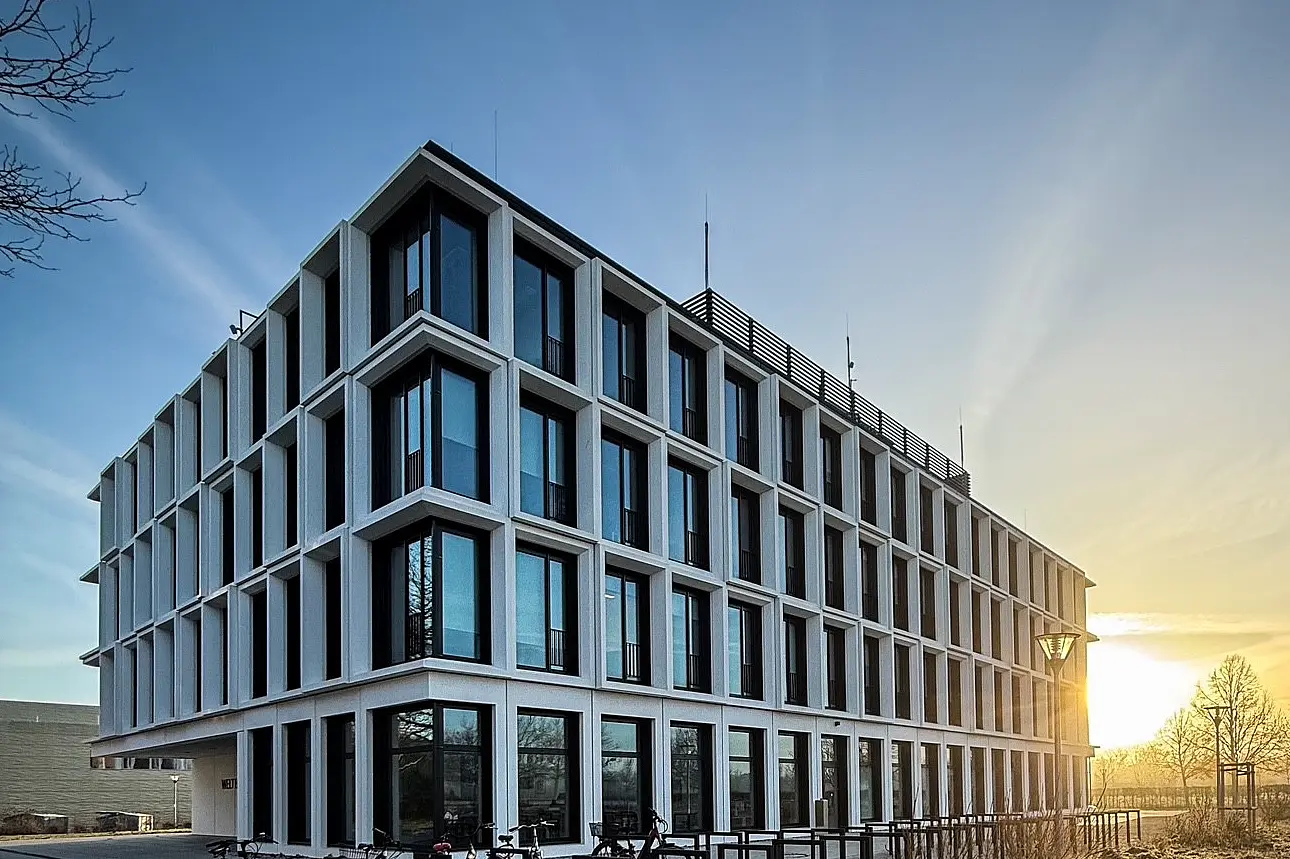
Conference Venue: Research Building Weltbeziehungen, Max-Weber-Allee 3, 99089 Erfurt
Accomodation: Speakers will be provided with accommodation. All other guests are kindly asked to arrange their own accommodation.
Contact Information: aiimagery@uni-erfurt.de
Organizing Committee: Afaf Abdelrazek, Christoph Günther, Fouad Gehad Marei
Funding
Funding for this conference is generously provided by the German Research Foundation's (DFG) Heisenberg Programme (Grant No. 443239708).


![[Translate to English:] facebook icon](/fileadmin/SocialMediaIcons/iconfinder_06-facebook_white.svg)

![[Translate to English:] instagram icon](/fileadmin/SocialMediaIcons/iconfinder_38-instagram_white.svg)
![[Translate to English:] YouTube icon](/fileadmin/SocialMediaIcons/iconfinder_18-youtube_white.svg)
![[Translate to English:] xing icon](/fileadmin/SocialMediaIcons/iconfinder_xing_white.svg)
