
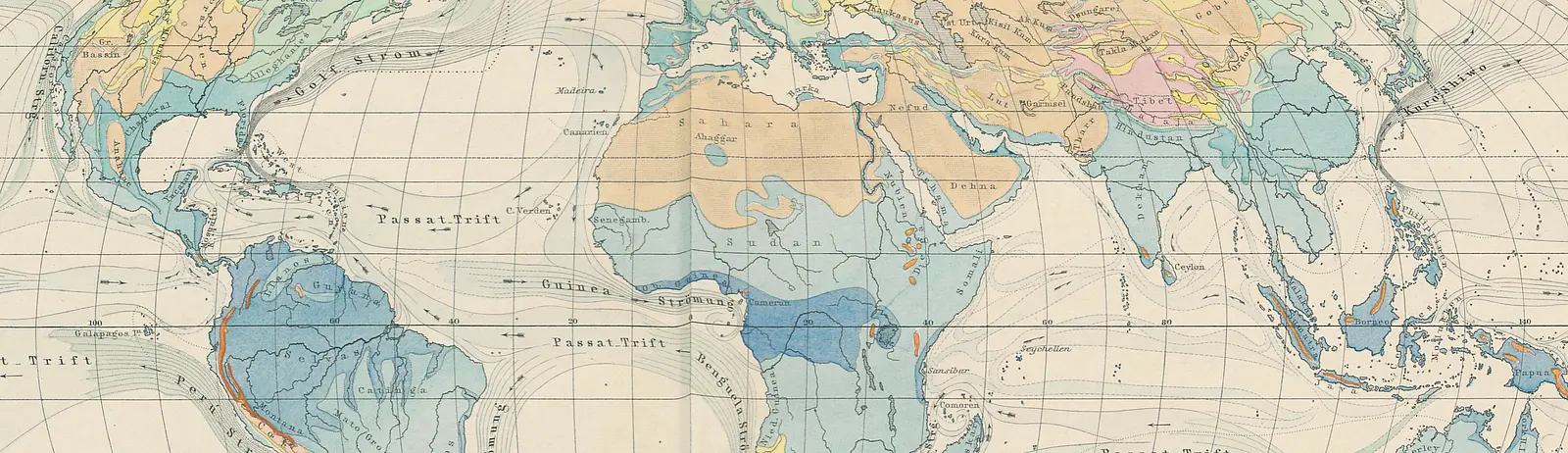
Global history refers to a growing field of research that includes diverse topics as well as methodological debates and theoretical positions. Interest is initially focused on interconnections and transfers between world regions, the history of certain phenomena in their different contexts and global references, as well as processes of globalisation and representations of globality. The various approaches are often united by the attempt to overcome older Eurocentric forms of world historiography and to focus historiographically on the significance of non-European regions – also for the history of Europe – as part of a newly conceived "general history".
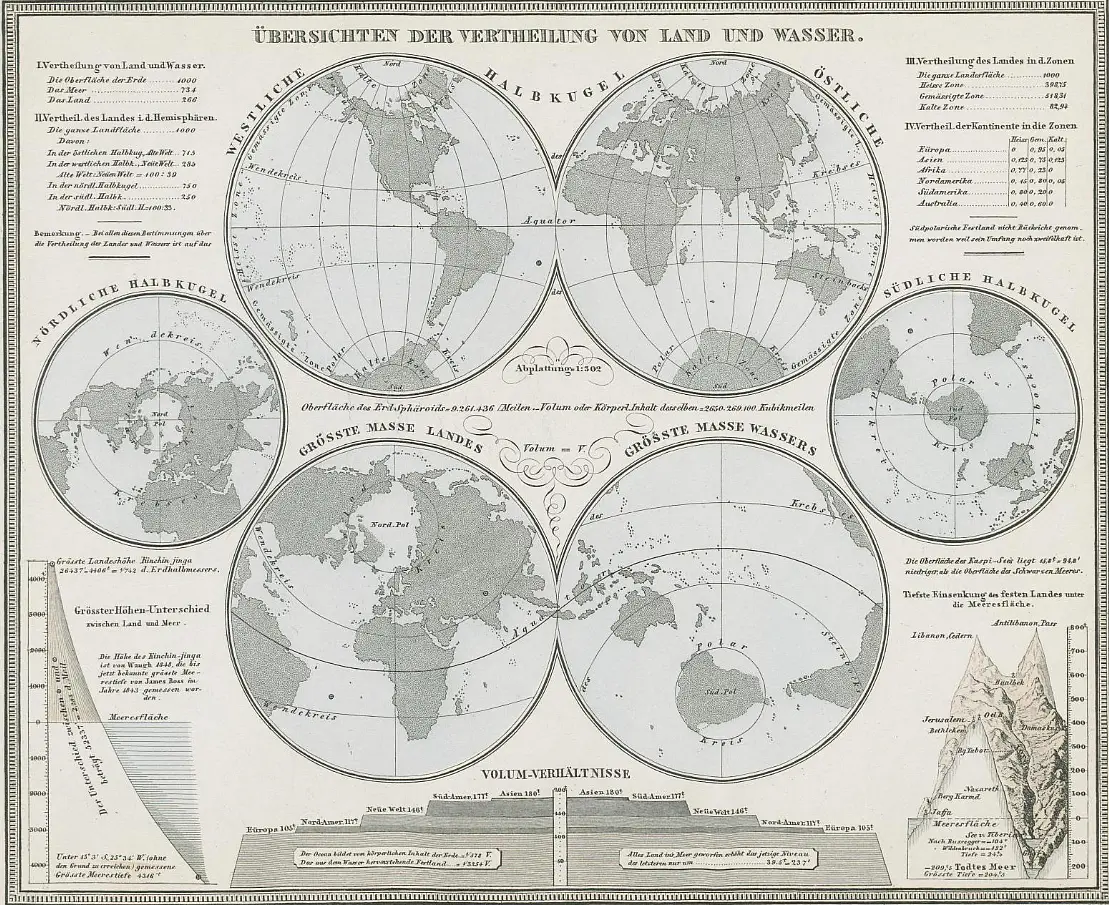
In close co-operation and exchange with representatives of Area Histories, our research focuses on the recent history of science and knowledge, on imperial and colonial history and on international history, which we seek to approach from a global-historical perspective. Methodologically, we are interested in questions of praxeology, the history of space and cartography, visual history and historical scale.
Events and teaching in the winter semester 2026/2027
The Research Centre for Transcultural Studies is starting the winter semester 2026/2027 with its new programme. All interested parties are cordially invited to take part in the Tuesday Talks and the Mappings research seminar. Please register for this at the following e-mail address: fkts.gotha@uni-erfurt.de
Tuesday Talks programme | Mappings programme
The new teaching programme for the winter semester 2026/2027 can be viewed in the course catalogue on E.L.V.I.S.. The individual courses of the Professorship of Global History can also be found there.
Mekelle–Erfurt Research Cooperation Initiative (MERCI)
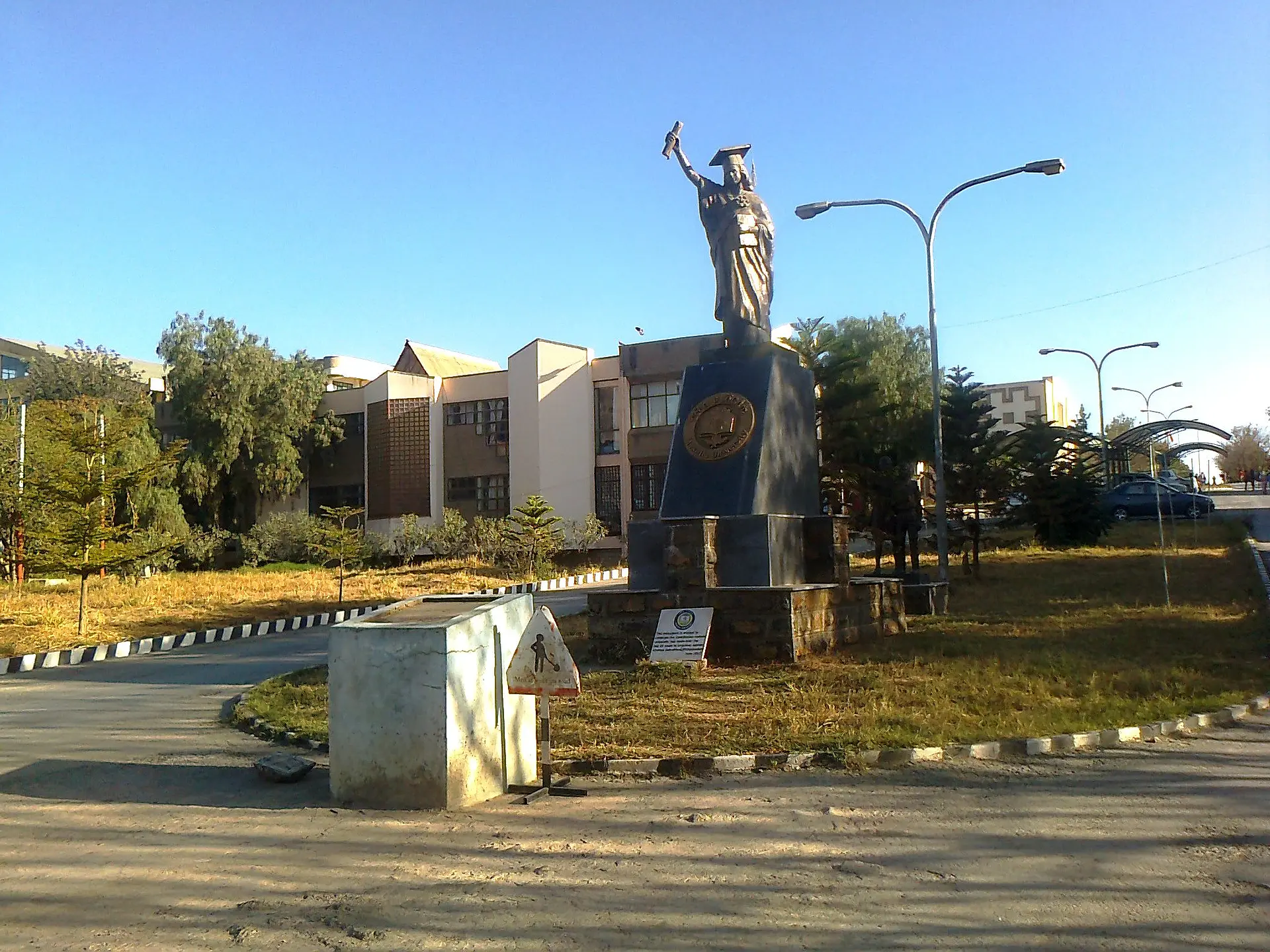
Since January 2026, the Gerda Henkel Stiftung has been funding the two-year MERCI project (Mekelle–Erfurt Research Cooperation Initiative), which aims to resume and expand academic cooperation between the University of Erfurt and Mekelle University – particularly with the Department of History and Cultural Studies – following the war in Tigray (Ethiopia). Building on existing collaborations and the “Rescue Initiative (ReScholarGE)” … more
Image: Statue on the Adi-Haqi Campus of Mekelle University © Peter Nadig

Perthes colonial: Mapping Africa, Latin America und Oceania as a business (1871–1945)
The Gotha Perthes Collection is a key resource for Thuringia’s colonial heritage, enabling historically nuanced research into colonial connections across their global, economic, and cultural dimensions. Using maps, the project conducts basic research on the varying forms of colonialism in Africa, Latin America, and Oceania... more
Image: © Bruno Hassenstein, Specialkarte des Damara-Landes. Nach den neuesten Quellen, 1:1.750.000, 50 x 39 cm, Justus Perthes' Kolonien-Karten No. 2, Gotha 1885, Forschungsbibliothek Gotha, Sammlung Perthes, SPA lg2° 00332 (53).
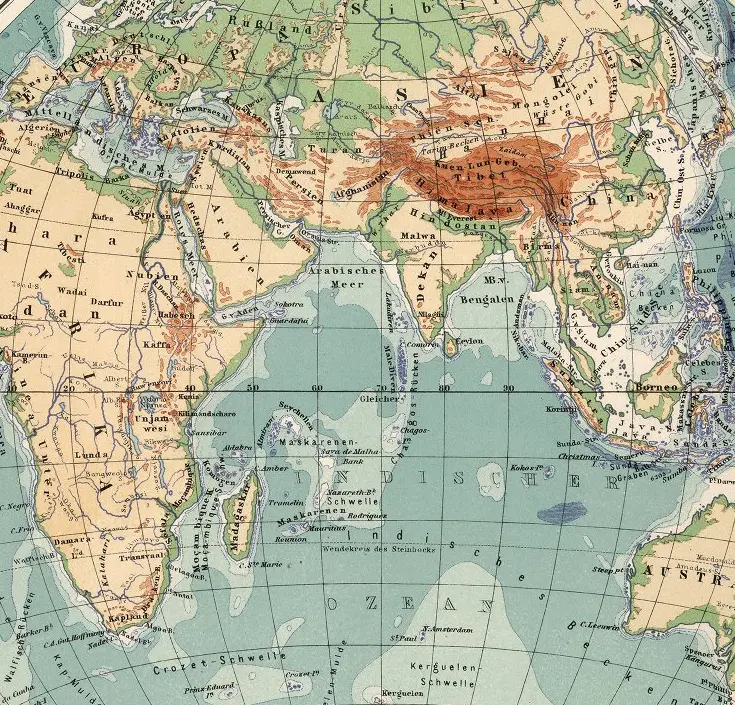
Blog "Mapping Africa and Asia"
To accompany the research and digitisation project "Cartographies of Africa and Asia (KarAfAs)" (2021-2023), a project blog was launched under the direction of Dr Claudia Berger to document outstanding finds and initial results of the digitisation. The project and digitisation were successfully completed at the beginning of 2023. However, research into the Gotha Perthes Collection's maps of Africa and Asia will continue. In order to make this work visible, the blog has been continued since 2024 under the new editorship of Albert Feierabend and Florian Balbiani at the Centre for Transcultural Studies.
To the blog "Mapping Africa and Asia"
Latest contributions:
- Feierabend, Albert, Mapping the Earth’s Surface. Perthes and the Centre for Transcultural Studies at the ICHC 2026, Mapping Africa and Asia, 22.09.2026, https://doi.org/10.58079/16tra.
- Wagemann, Tobias, Imperial Perspectives on Papua New Guinea. Paul Langhans's Map of the Gazelle Peninsula (1893), Mapping Africa and Asia, 27.05.2026, https://doi.org/10.58079/16a6b.
- Prauss, Charlotte, Colonial Borders on School Maps. Sydow-Wagner's Methodical School Atlas, 1878–1928, in: Mapping Africa and Asia, 19.04.2026, https://doi.org/10.58079/163ft.
Ongoing research projects
Voluntariness, Decolonisation, Gender. Women's Movement and Citizenship in (post-)colonial Ghana
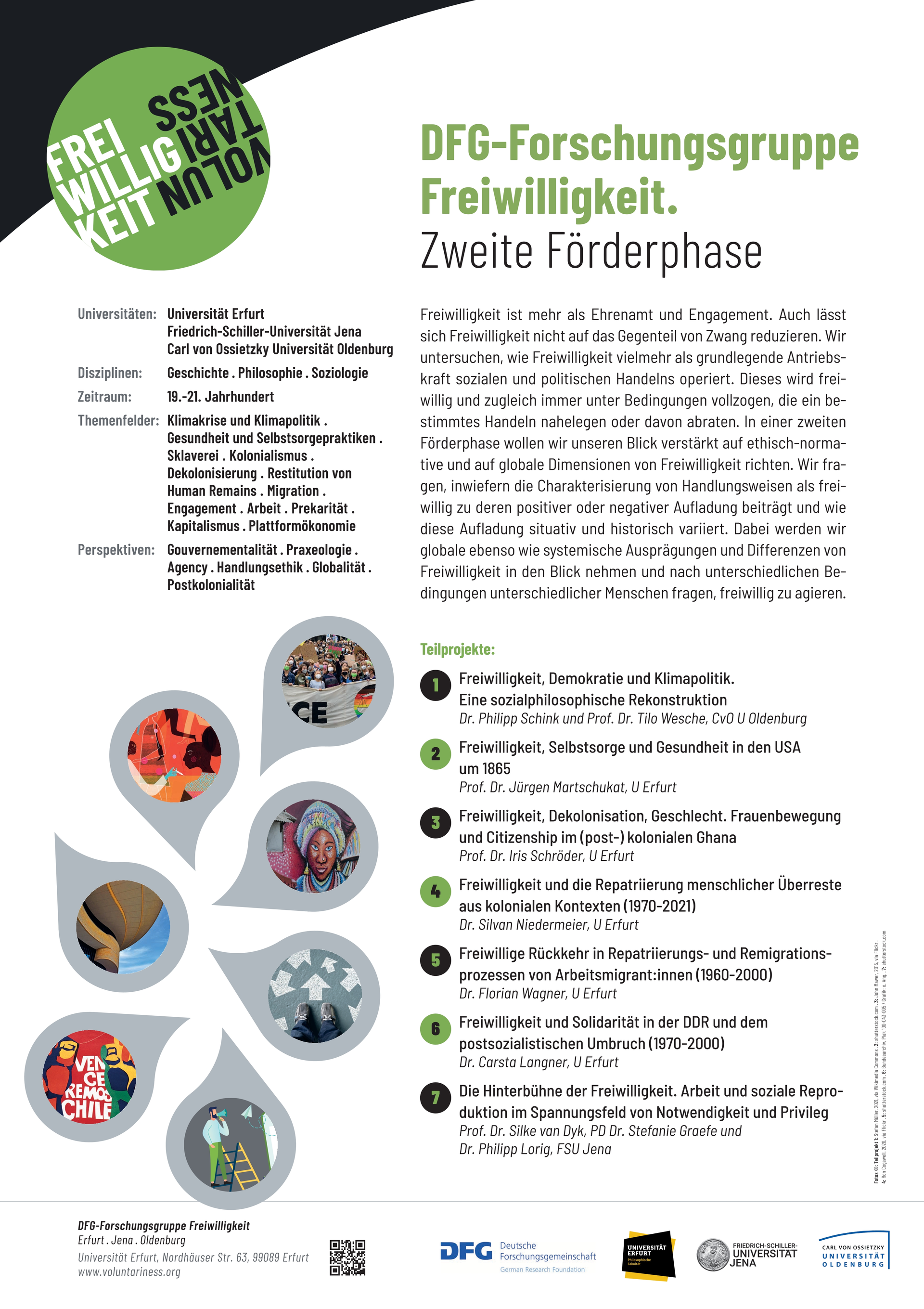
The German Research Foundation (DFG ) will continue to support the Research Unit "Voluntariness" in a second funding phase. Since 2020, the group's researchers have been investigating voluntarism as a political practice in the past and present across spatial and epochal boundaries.
Professor Dr Iris Schröder and the chair for Global History will also be represented in the second funding phase with a new subproject in the field of historical African research: Under the title "Voluntarism, Decolonisation, Gender. Women's Movement and Citizenship in (post-)colonial Ghana" (Freiwilligkeit, Dekolonisation, Geschlecht. Frauenbewegung und Citizenship im (post-)kolonialen Ghana), one of the aims is to shed light on how voluntary action and cooperation were conceptualised in terms of gender during the transition from the late colonial Indirect Rule to the post-colony. The project thus specifically examines the participation and voluntary involvement of women and gendered practices during this period of transformation. It is currently in preparation.
News item: Research group "Voluntariness" enters 2nd funding phase
Geography and Politics between North Africa and Europe. Ego-Documents as an approach to a relational history of knowledge
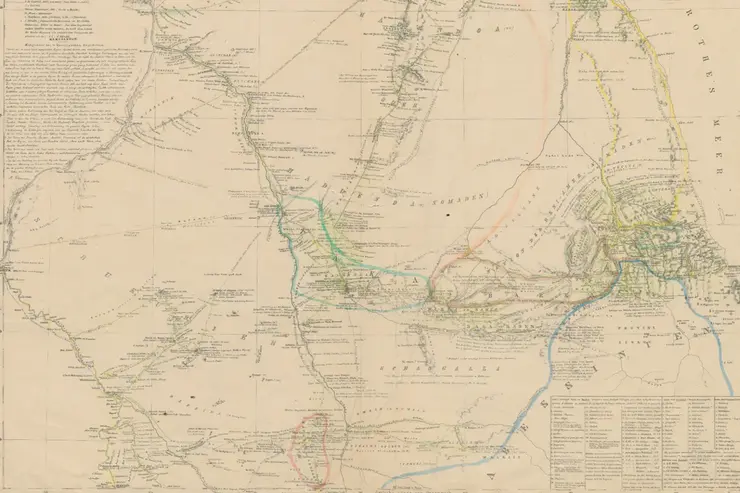
The research project focuses on journeys from Europe to Northeast Africa before colonial land appropriation. It examines natural-scientific-geographical and political spatial knowledge based on selected texts produced during travels and explores different actors, forms, and contents of collaborative knowledge production, thereby investigating the genealogies of social and political spaces on-site. The project relies on notes, diaries, reports, letters, and cartographic works preserved in the Perthes Collection (Research Library Gotha), which originated from the region and made their way to Gotha. It combines globally informed, knowledge-historical approaches with self-testimonial research... more
Image: © August Petermann, Draft of a map. East Africa between Chartúm & the Red Sea to Sauakin & Massua, 1:1,000,000, Gotha 1860/61, SPK 40.19.01 C (01), Gotha Perthes Collection of the Gotha Research Library
Insights into ongoing research
WDR Zeitzeichen "Mit entführter Crew auf See: Kapitän Jürgen Rickmers" – together with PD Dr. Felix Schürmann
Felix Schürmann is interviewed in this episode of "Zeitzeichen".
Finia Zoé Dienst recounts the secrets discovered in 2011 in an old sea chest on Föhr, explains what ‘shanghaiing’ means in sailors’ slang, and describes how brutally this practice of recruiting people to work on ships came to be – and what the sinking of the Titanic has to do with the ban on shanghaiing. Jürgen Rickmers grew up on Föhr, went to sea as a teenager and became a captain at an early age. His voyages took him into a world in upheaval: emigrant ships, gold prospectors, civil war and long-distance trade shaped his everyday life. In the process, he also resorted to shanghaiing. On 4 September 1851, Rickmers survived a typhoon off Hong Kong. From then on, he celebrated this day every year as his ‘little birthday’. Luck remained on his side: at the age of 39, he retired as a wealthy man. He became village mayor on Föhr, pursued genealogical research and looked after the common good. He died in 1907 at the age of 82.
Podcast-Episode(German only)
Film Screening and Workshop – “Unsilenced Voices”
From December 15 to 16, 2025, the workshop "Unsilenced Voices. Women's Voluntary Activism in (Post)Colonial Societies“ took place. It focused on women's voluntary work and activism in Ghana and other (post)colonial contexts. The event was organized by Gifty Nyame Tabiri, a project collaborator in the subproject ”Volunatriness, Decolonization, and Gender."
The workshop explored women’s voluntary political activism in (post)colonial societies. Women, throughout history, have challenged their marginalization by actively forging their own paths of social and political change. How did these endeavors look like? What forms did they take, especially during the transitional (post-)colonial periods? How did voluntariness reinforce or challenge these endeavors? Both the documentary film and our workshop will explore oral history, (un)conventional historical resources and recent research perspectives to discuss these questions, in postcolonial West African history as well as other global contexts.
On Monday, December 15, 2025, from 6:30 p.m. to 9:00 p.m., Kate Skinner, Professor of African History at the University of Bristol, and Akosua Adomako Ampofo, Professor of African and Gender Studies at the University of Ghana, introduced participants to the questions raised in the workshop about the documentary film “When Women Speak”. Both initiated the research project on which the film is based. On Tuesday, December 16, 2025, from 10:00 a.m. to 3:00 p.m., the discussion was deepened with perspectives on further research projects and insightful sources under the theme “Voluntariness, Women's Activism and (Post) Colonial Narratives.”
Workshop & Lecture with Dr Takele Merid Afessa (Addis Ababa University)
From June 22 to 29, 2025, we welcomed Dr Takele Merid Afessa, Director of the Institute of Ethiopian Studies at Addis Ababa University , to the University of Erfurt.
On June 24 2025, a workshop and an evening lecture with Takele Merid Afessa took place at the Centre for Transcultural Studies.The workshop, which took place in cooperation with SCIFA Science Facilitation and the collaborative project "Kulturtechniken des Sammelns", was dedicated to the topic "The Ethiopian Pillow: Towards a New Cultural Mapping of Headrests - An Interventionist Approach".
In his lecture "Rethinking the Ethnological Collection of the Institute of Ethiopian Studies: Questions, Challenges and Suggestions", Takele Merid Afessa addressed the ethnographic collections of the Institute of Ethiopian Studies in Addis Ababa. He discussed not only the historical and cultural dimensions of these collections, but also the challenges associated with their preservation and presentation. In this context, he also raised the question of possible approaches and new ways of dealing with the collections.
The event was organised in cooperation with SCIFA Science Facilitation (Berlin-Gotha), KOLUMBA, the Art Museum of the Archdiocese of Cologne and the cooperation project "Kulturtechniken des Sammelns" (Erfurt-Gotha).
13th Map History Colloquium
The 13th Colloquium on the History of Cartography took place on May 9 and 10 2025 at the Centre for Transcultural Studies in Gotha. The regularly held event offers academics, especially those in the qualification phase, a forum to present projects on cultural-historical cartography from the Middle Ages to contemporary history and to discuss methodological concepts of ongoing work. The two-day, interdisciplinary and transepochal colloquium included discussions and a visit to the Gotha Perthes Collection (Gotha Research Library). The event was organised by Ingrid Baumgärtner (Kassel), Christoph Mauntel (Osnabrück), Ute Schneider (Essen), Martina Stercken (Zurich) and Iris Schröder (Erfurt).
The event was sponsored by the Freundeskreis der Forschungsbibliothek Gotha e.V. and the Research and Graduate Services Department of the University of Erfurt.
Workshop "Unmapping Africa"
From March 5 to 7, 2025, a workshop on "Trust and Distrust in the Un/Mapping of Africa" took place at the Centre for Transcultural Studies. The workshop brought together international scholars to critically scrutinise and reassess the European practice of "unmapping" the African continent. A visit to the Gotha Perthes Collection was also planned, whose valuable holdings of letters, sketches and hand-drawn maps were to be integrated into the discussion. These materials were meant to help to better define historical mapping practices and their connection to "unmapping". Scholars from various disciplines and institutions discussed the role of authentication and credibility practices in the context of the "unmapping" of Africa. The aim of the workshop was to initiate a dialogue between European and African researchers.
The workshop was organised by Iris Schröder (University of Erfurt), Dominic Keyßner (University of Erfurt) and Petter Hellström (University of Uppsala). It was supported by the Riksbankens Jubileumsfond for the promotion of the humanities and social sciences and by Professor Michael Wildt, who promotes academic exchange between African and European researchers, in particular between the University of Erfurt and the University of Mekelle.
New publications
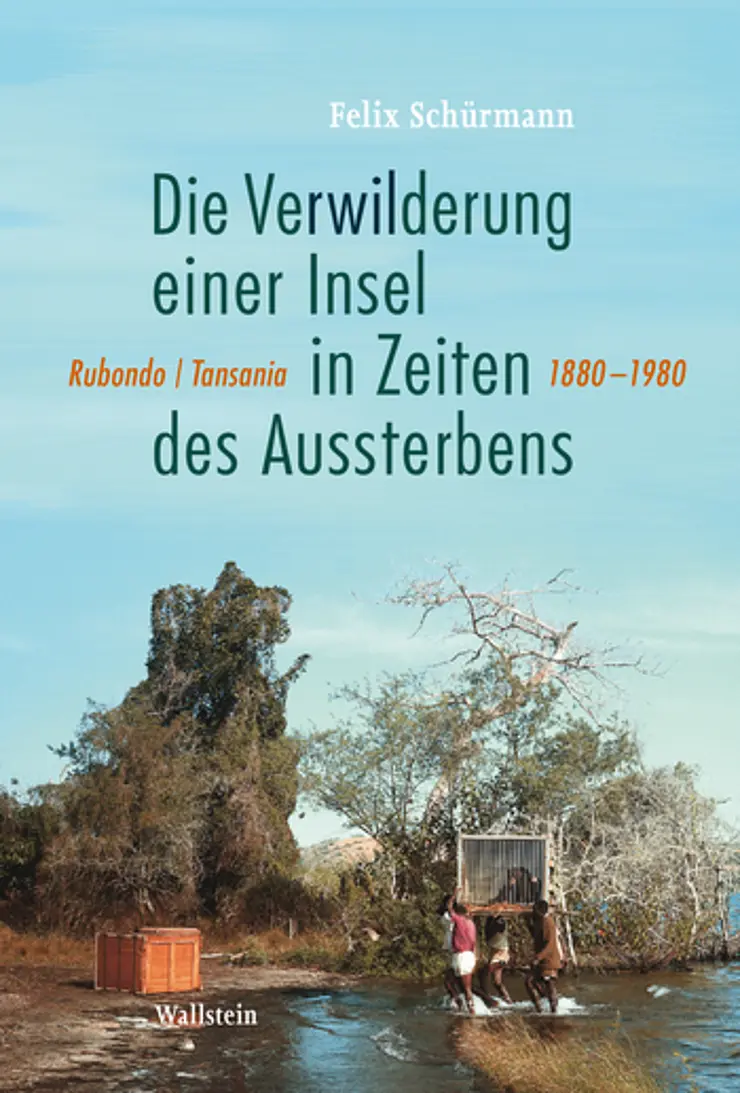
Schürmann, Felix, Die Verwilderung einer Insel in Zeiten des Aussterbens. Rubondo (Tansania), 1880–1980, Göttingen 2026.
An island of supposedly unspoilt nature in the midst of an ecological disaster zone: whilst Lake Victoria is widely regarded as a cautionary tale of the destruction of biodiversity caused by the introduction of invasive species, Rubondo Island is reputed to be one of the last remaining pockets of intact flora and fauna in Africa. Yet even the species composition on this Tanzanian island has been altered by the introduction of previously non-native species. Rhinoceroses and giraffes, chimpanzees and colobus monkeys, elephants and antelopes – during the period of upheaval following decolonisation, conservationists brought around a hundred large mammals to Rubondo from 1963 onwards, with the aim of transforming the island into a modern-day ‘Noah’s Ark’ for the endangered fauna of East Africa. To make way for this planned reintroduction of species into the wild, the people living there – the Nyarubondo – were forced to leave the island. For the first time, Felix Schürmann tells the story of Africa’s oldest and largest nature reserve island and situates these events within the current debates on mass species extinction and the possibility of decolonising nature. He shows how, even during German rule, humans intervened in Rubondo’s biodiversity and, under colonial conditions, altered the living conditions of many species.
This book was published by Wallstein Verlag in August 2026.
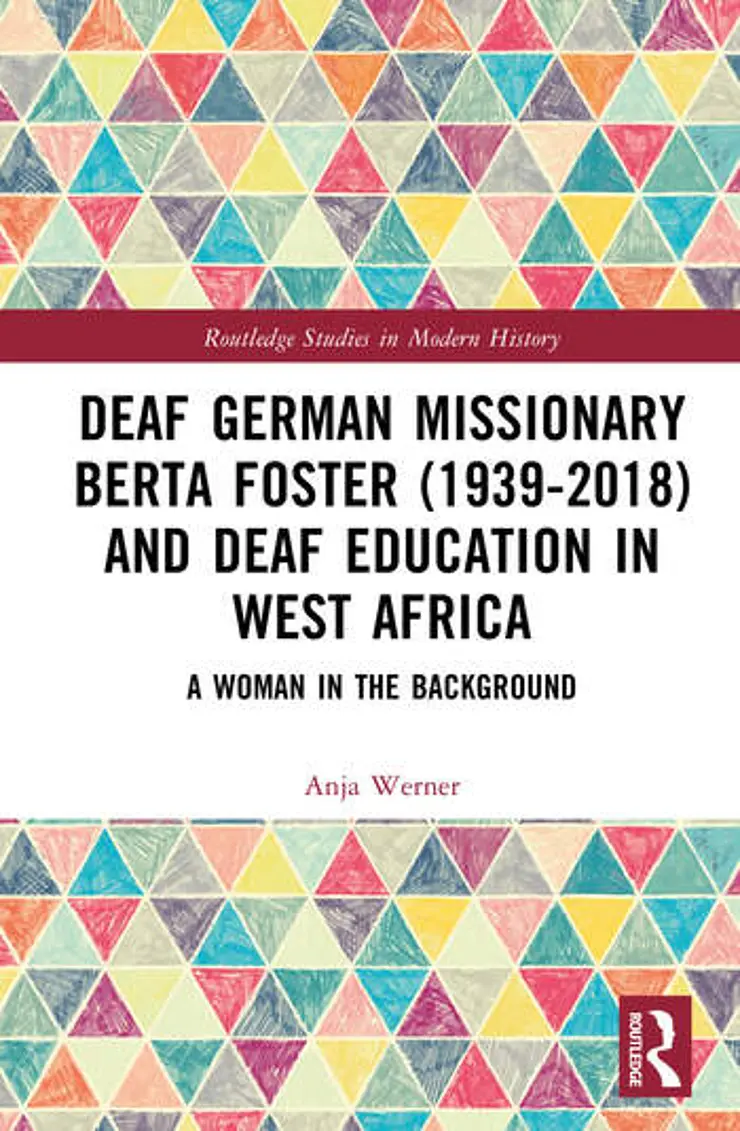
Werner, Anja, Deaf German Missionary Berta Foster (1939–2018) and Deaf Education in West Africa. A Woman in the Background, London 2026.
In 1960, 21-year-old Berta Zuther left her life in West Berlin behind to join African American missionary Andrew Foster in Ghana, thus embarking on a journey that would span three continents and result in the establishment of schools for the deaf across Africa. Berta and Andrew were both deaf themselves. They got married in Nigeria in 1961 and devoted their lives to building educational opportunities for deaf Africans - founding 32 schools, churches, and community centers in 13 African countries between 1957 and 2009.
This volume places Berta Foster at the center of interest, a woman who has remained largely invisible in existing accounts of her husband’s pioneering educational mission. While Andrew Foster has been celebrated as an icon in Black and Deaf American history, Berta's crucial contributions as administrator and driving force not just behind their German support network have been overlooked. Drawing on private family archives, including hundreds of personal letters, and interviews with family members as well as former students and colleagues from deaf communities in Ghana and Nigeria, this book explores how deafness, gender, and race intersected in the lives of a Christian couple working across cultural boundaries during the Cold War era.
“Deaf German Missionary Berta Foster (1939–2018) and Deaf Education in West Africa” was published by Routledge in July 2026.
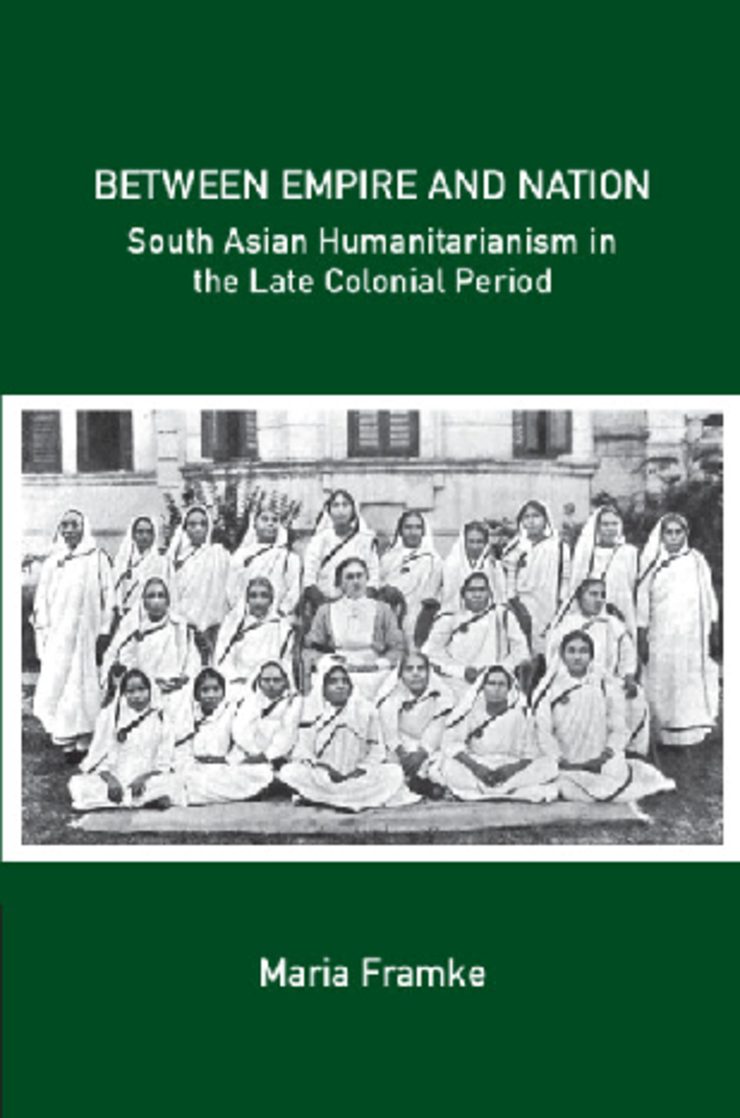
Framke, Maria, Between Empire and Nation: South Asian Humanitarianism in the Late Colonial Period, Cambridge 2025.
Between Empire and Nation is a comprehensive history of South Asian humanitarian aid in the context of armed conflicts in the colonial period. Adopting an international and transnational approach, the book focuses on relief initiatives from the First World War to the Second World War and the early post-war years. Through five case studies, this book offers new insights into the history of volunteer societies and non-state organisations in British India. It enhances readers’ understanding of late colonial public and political activism on the Indian subcontinent. The book makes a significant contribution to the global history of humanitarianism, offering a nuanced understanding of the subject. This is achieved through an in-depth, context-sensitive exploration of relief work in a non-Western setting, focusing on the significance of Indian actors for the development of a transnational civil society.
This book was published by Cambridge University Press in December 2025.

![[Translate to English:] facebook icon](/fileadmin/SocialMediaIcons/iconfinder_06-facebook_white.svg)

![[Translate to English:] instagram icon](/fileadmin/SocialMediaIcons/iconfinder_38-instagram_white.svg)
![[Translate to English:] YouTube icon](/fileadmin/SocialMediaIcons/iconfinder_18-youtube_white.svg)
![[Translate to English:] xing icon](/fileadmin/SocialMediaIcons/iconfinder_xing_white.svg)
