
![[Translate to English:] Statue auf dem Adi-Haqi Campus der Mekelle University, © Peter Nadig](/fileadmin/_processed_/1/3/csm_Aethiopien_Campus_Mekelle_CM_Maerz2018_3e15ec3562.webp "[Translate to English:] Statue auf dem Adi-Haqi Campus der Mekelle University, © Peter Nadig")
Since 2014, the Chair of Global History at the University of Erfurt has been cooperating with the Department of History and Heritage Management at Mekelle University. This cooperation is now supported by many and encompasses research and teaching: In the beginning, this cooperation focussed on 19th century studies related to the collections in Gotha, whereas now the joint efforts have broadened to reach into the field of contemporary history as well as teaching.
We would like to thank the International Office of the University of Erfurt, the Fritz Thyssen Foundation, and the Ernst Abbe Foundation for their generous financial support. After all, the initiative is closely linked to the commitment of former scholarship holders of the Herzog Ernst Scholarship Program, which we have now been continuing since 2021 in close cooperation with Ethiopian scholars at the newly founded Research Center for Transcultural Studies / Perthes Collection. We would also like to thank the Gerda Henkel Foundation, whose generous support since the fall of 2021 has enabled us to continue our close cooperation and joint research even in times of war and in the difficult, still precarious, and sometimes violent post-war period under changed circumstances.
Image: Statue on the Adi-Haqi Campus of Mekelle University © Peter Nadig
2025
In 2025, the situation in Ethiopia continues to be characterised by ongoing political tensions and a precarious humanitarian situation. Despite the official peace agreement in the Tigray conflict (2023), this has not led to lasting peace. Instead, local conflicts and displacement have now spread to other regions within Ethiopia. The University of Mekelle, once a key centre of education, continues to struggle with the consequences: Infrastructure, teaching operations and the return of students and teaching staff are proving difficult – not least due to ongoing insecurity, a lack of resources and bureaucratic hurdles. In view of these ongoing challenges, our special thanks go to the Gerda Henkel Foundation. Their continued support – also in 2025 – enables Ethiopian fellows to continue their important research work at the University of Erfurt and the Gotha campus.
In January 2025, the contemporary historian Dr Aychegrew Hadera Hailu – funded by the Gerda Henkel Foundation – began work on his postdoctoral research project entitled
"A History of Ethio-West German Relations: 1954-1974". During his research stay, he is affiliated with the Research Centre for Transcultural Studies in Gotha.
In February 2025, Zegeye Woldemariam Ambo (Mekelle University/Bonga College of Teachers Education) successfully completed his doctoral project "From Kingdom to Tributary Province: Society, Ecology and Politics - An Ethnohistorical Study of Kafa (Present-Day Southwest Ethiopia), c. 1600-1900" at the University of Erfurt.
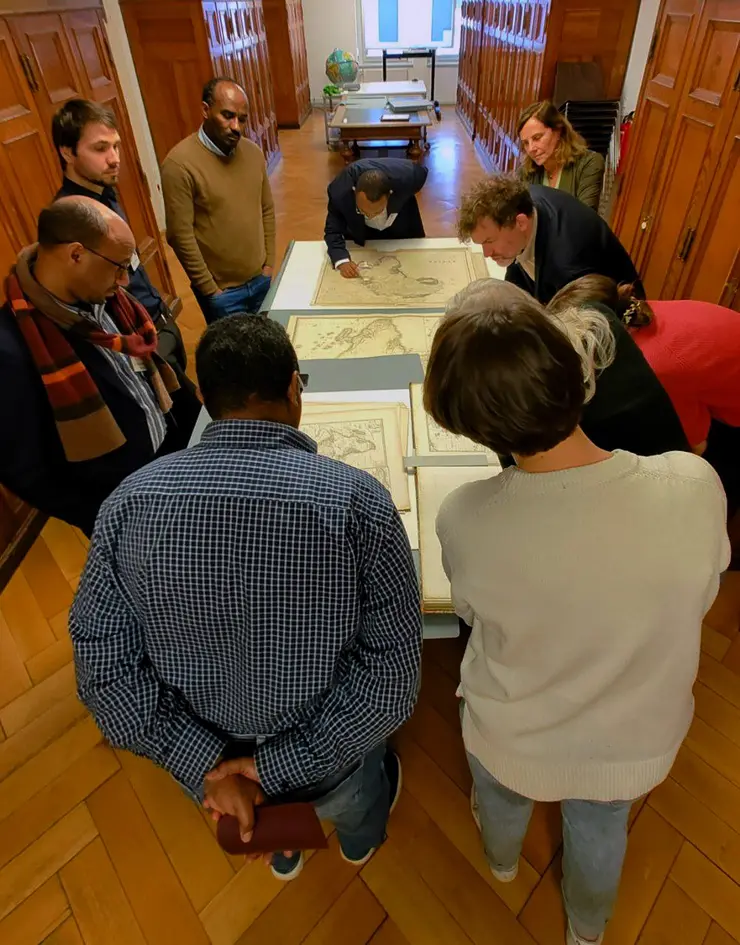
From 5 to 7 March 2025, the Research Centre hosted the workshop "Trust and Distrust in the Un/Mapping of Africa". This brought together international researchers to critically question the European practice of "unmapping" Africa. Contributions were made by Yohannes Gebreselassie Shane, Fesseha Berhe Gebregergis and other fellows such as Samuel Kidane Haile and Mitiku Gabrehiwot Tesfaye (Paris). The workshop was funded by the Riksbankens Jubileumsfond (Promotion of the Humanities and Social Sciences) and supported by Professor Michael Wildt, who promotes academic exchange between African and European researchers, in particular between the University of Erfurt and the University of Mekelle.
In summer 2025, we welcomed another former fellow to Gotha: Teferi Mekonnen Bekele from Addis Ababa University returned to Gotha in April as a Duke Ernst Fellow for a three-month research stay at the Centre for Transcultural Studies. The focus of his stay was the project "A Historical Analysis of Changes in the Northern Ethiopian Environment. Tracing the Evolution of Deforestation and Desertification Using Nineteenth- and Twentieth-Century Historical Maps from Gotha".
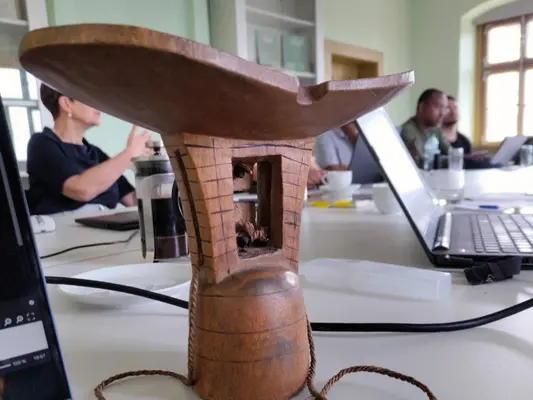
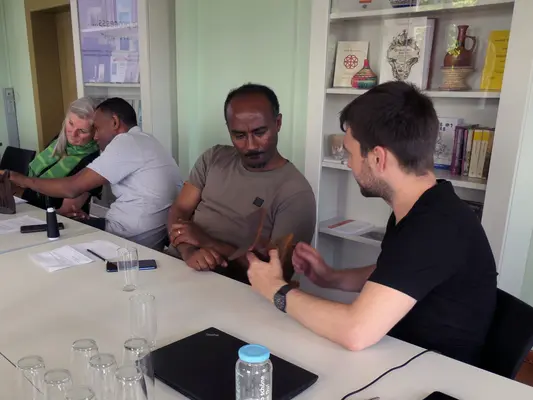
At the end of June 2025, the Centre for Transcultural Studies welcomed Takele Merid Afessa, Director of the Institute of Ethiopian Studies at Addis Ababa University, to Gotha. On 24 June, the Centre for Transcultural Studies, together with SCIFA Science Facilitation and the project "Cultural Techniques of Collecting", organised a workshop on "The Ethiopian Pillow: Towards a New Cultural Mapping of Headrests - An Interventionist Approach" and an evening lecture by Dr Takele on "Rethinking the Ethnological Collection of the Institute of Ethiopian Studies: Questions, Challenges and Suggestions".
Towards the end of the summer, in July, Zemenu Temesgen Ayalew (University of Oldenburg) came to Gotha as a research intern for two months. This was followed in August by a short research stay by Hailay Teklay Weldegebrial (Simon Fraser University, Canada).
Pictures: Workshop "Unmapping Africa" © Dominic Keyßner| Impressions of the workshop "The Ethiopian Pillow: Towards a New Cultural Mapping of Headrests - An Interventionist Approach" © Kerstin Volker-Saad & Dominic Keyßner
2024
Even in 2024, the situation in Ethiopia is still characterised by unrest and political, social and economic challenges. The aftermath of the war in Tigray cannot be overlooked, especially the precarious economic situation, which has serious humanitarian consequences – not to mention the difficult situation at the University of Mekelle. Violent attacks have also spread to other parts of the country and the security situation is very fragile in some regions. We are therefore all the more grateful to the Gerda Henkel Foundation for its ongoing support in 2024, which will allow the Ethiopian fellows to continue working on their doctoral projects.
At the end of March 2024, we were able to welcome the medievalist Yohannes Gebreselassie Shane to the Centre for Transcultural Studies: As a Gerda Henkel Fellow, Yohannes is working on his dissertation on "Kaleb, King of Aksum (6th Century AD): Construction of his Image in Ethiopian Written and Oral Traditions", supervised by Professor Dr Sabine Schmolinsky. In April, we also welcomed Admasu Abebe Haile back to the Centre for Transcultural Studies. He came to Gotha for four months as part of the Herzog Ernst Scholarship Programme to continue working on his postdoctoral research project "Beyond Cartography: Revisiting Antoine d'Abbadie's Studies in Making 'Enset' Culture (1840s-1890s)".
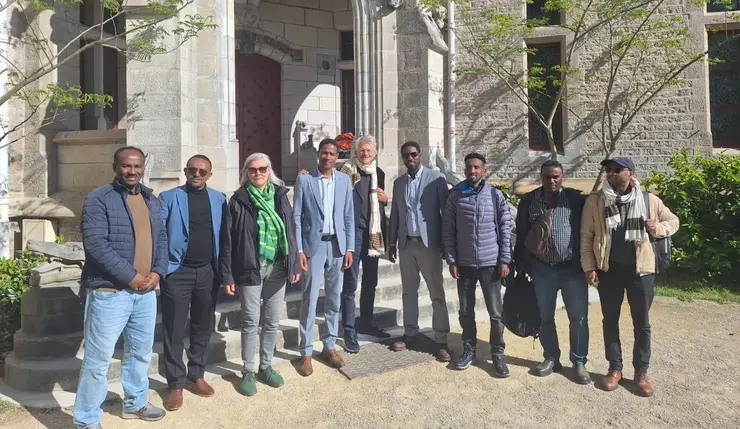
Instead of an annual conference, several decentralised workshops were held this year, once again sponsored by the Gerda Henkel Foundation. The first of these meetings, organised by Wolbert Smidt, was held in Hendaye (France). The works of Antoine d'Abbadie (1810-1897) took centre stage. The special location, the Château d'Abbadia, d'Abbadie's later place of residence, inspired the discussions of the participants, who explored in their contributions the question of how Abbadie's rich tradition can be utilised for a new historiography of Ethiopia.
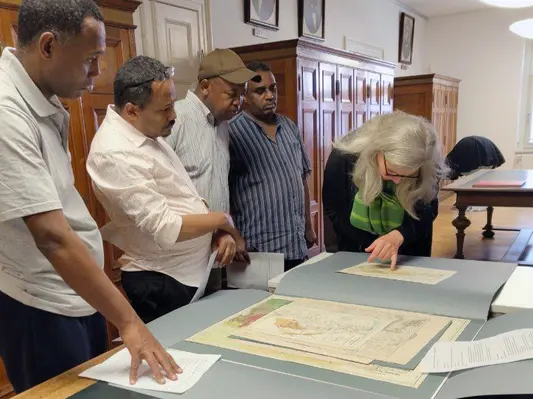
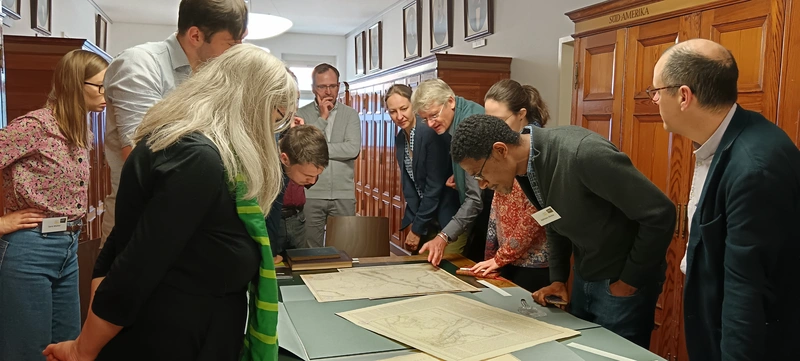
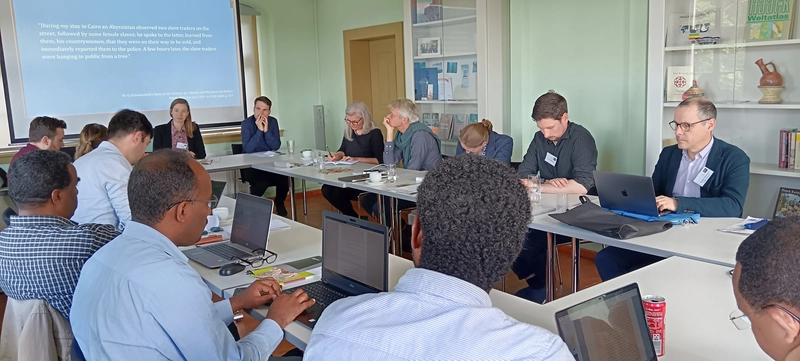
A second workshop followed in May at the Centre for Transcultural Studies. Under the title "Mapping the Red Sea", an international group discussed the historical cartographies of the Red Sea and the associated historical, social and cultural links of the sea as a connecting space in the long 19th century. The focus here was also on the historical change in the course of the Europeans' expansive colonial ambitions, which soon turned the sea into one of the most important "Highways of Empire".
The Ethiopian fellows continue to be closely involved in the work of the research centre: For example, Samuel Kidane Haile and Zegeye Woldemariam Ambo each published their own articles in the research blog "Karafas - Mapping Africa and Asia". In addition, Zegeye Woldemariam Ambo and Admasu Abebe Haile presented their studies on political borders in the research seminar "Karten – Wissen – Grenzen", which took place at the research centre in the summer semester. Last but not least, a working group on the topic of "Self-testimonies between North-East Africa and Europe" has started its work in order to prepare tandem essays to be written together.
In September 2024, Samuel Kidane Haile successfully completed his dissertation entitled "Historical Sources, Oral Traditions, and Interpretations on the Period of Ras Sihul Mikael (1692-1780)" as the first fellow of the German-Ethiopian Scholarship Initiative.
Zegeye Woldemariam Ambo, Fesseha Berhe Gebergegergis and Samuel Kidane Haile also contributed to the 22nd academic conference "Orbis Aethiopicus", which this year took place in collaboration with the Centre for Transcultural Studies, at the end of September 2024. The conference, organised by Dr Prince Asfa-Wossen Asserate and Dr Klaus Bettin, was held in Gotha to mark the 400th anniversary of Hiob Ludolf's birth this year.
In October, Aychegerew Hadera Hailu (Bahir Dar University), a contemporary historian, came to Gotha and to the Department of History at the University of Erfurt. Aychegerew is one of our closest cooperation partners in recent years, as he co-organised the conference series "Africa and the Global Cold War" together with Christian Methfessel. In the coming year, Aychegerew will be researching diplomatic relations between the Federal Republic of Germany and Ethiopia (1954-1974) as a Gerda Henkel Fellow.
Pictures: Workshop in Hendaye, from left to right: Fesseha Berhe Gebregergis, Samuel Kidane Haile, Professor Dr Iris Schröder, Dr Admasu Abebe Haile, Adj. Professor Wolbert Smidt, Zegeye Woldemariam Ambo, Mearg Abay, Yohannes Gebreselassie Shane, Mitiku Gabrehiwot Tesfaye © private | Impressions of the workshop "Mapping the Red Sea" © Bereket Hasen Beddecha
2023
Despite the peace treaty signed in Pretoria in November 2022, the violence on the ground did not cease. News of unrelenting political tensions, incalculable violent attacks and an immensely worsening hunger crisis dominated the news, despite the great hope for peace on the ground. In 2023, we were therefore grateful that Samuel Kidane Haile, Zegeye Woldemariam Ambo, Fesseha Berhe Gebregergis and Bereket Hasen Beddecha were able to continue their doctorates at the Centre for Transcultural Studies as part of the German-Ethiopian Scholarship Initiative of the Gerda Henkel Foundation. We also welcomed Dr Teferi Mekonnen Bekele (Addis Ababa University) to Gotha as a Duke Ernst Scholarship holder, who conducted research on his postdoctoral research project "A Geo-history of the Source Region of the Abbay (Blue Nile) River in the Nineteenth and Twentieth Centuries".
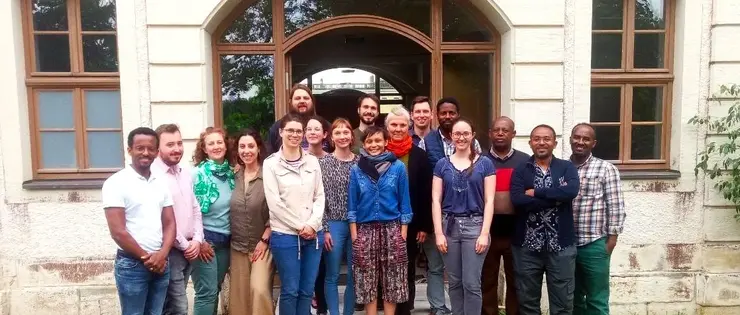
Image: Group photo of the Research School Transcultural Studies in summer 2023 © private.
The now long-standing cooperation with the Department of History and Heritage Management at the University of Mekelle and the research centre gave the University of Erfurt's research blog "WortMelder" an opportunity to find out more. They wanted to know how their Ethiopian colleagues are conducting their research, including with the Gotha Perthes Collection's holdings:
- Interview with Zegeye Woldemariam Ambo
- Interview with Fesseha Berhe Gebregergis
- Interview with Samuel Kidane Haile
On March 21, 2023, the contemporary historian Professor Michael Wildt invited the Ethiopian scholarship holders to a study day at Humboldt University in Berlin. Under the title "Contested Histories", examples from Germany and Ethiopia were used to discuss the politics and discourses of remembrance in both countries. Afterwards, the academics visited the Memorial to the Murdered Jews of Europe and the Topography of Terror memorial site together. A few weeks later, Michael Wildt returned the visit and presented his new monograph "Zerborstene Zeit" in Gotha.
In May 2023, the second annual conference of the German-Ethiopian Scholarship Initiative took place at the Centre for Transcultural Studies in Gotha. Eleven of the Ethiopian Henkel Fellows currently conducting research in Europe came together to discuss their ongoing research. A visit to the Gotha Research Library met with a great response, with the Ethiopian manuscripts from the Orientalia collection presented by Dr Feras Krimsti attracting particular attention. However, the current situation in Tigray and the possibilities of ending the war and violence on the ground were also on the agenda – a topic that moved everyone. Organised as part of the History Department's "Frieden schaffen?" (Making Peace?) lecture series, the former Ambassador of the Federal Republic of Germany to Ethiopia, Brita Wagener, the Erfurt-based international law expert Michael Riegner, the architect and anthropologist Dr Alula Tesfay and the artist Michael Hailu discussed the different experiences of the war, the hopes and expectations for peace on the ground and the often difficult paths and detours of the peacekeeping process that has now begun in a public evening event in the well-attended Gotha Castle Church.
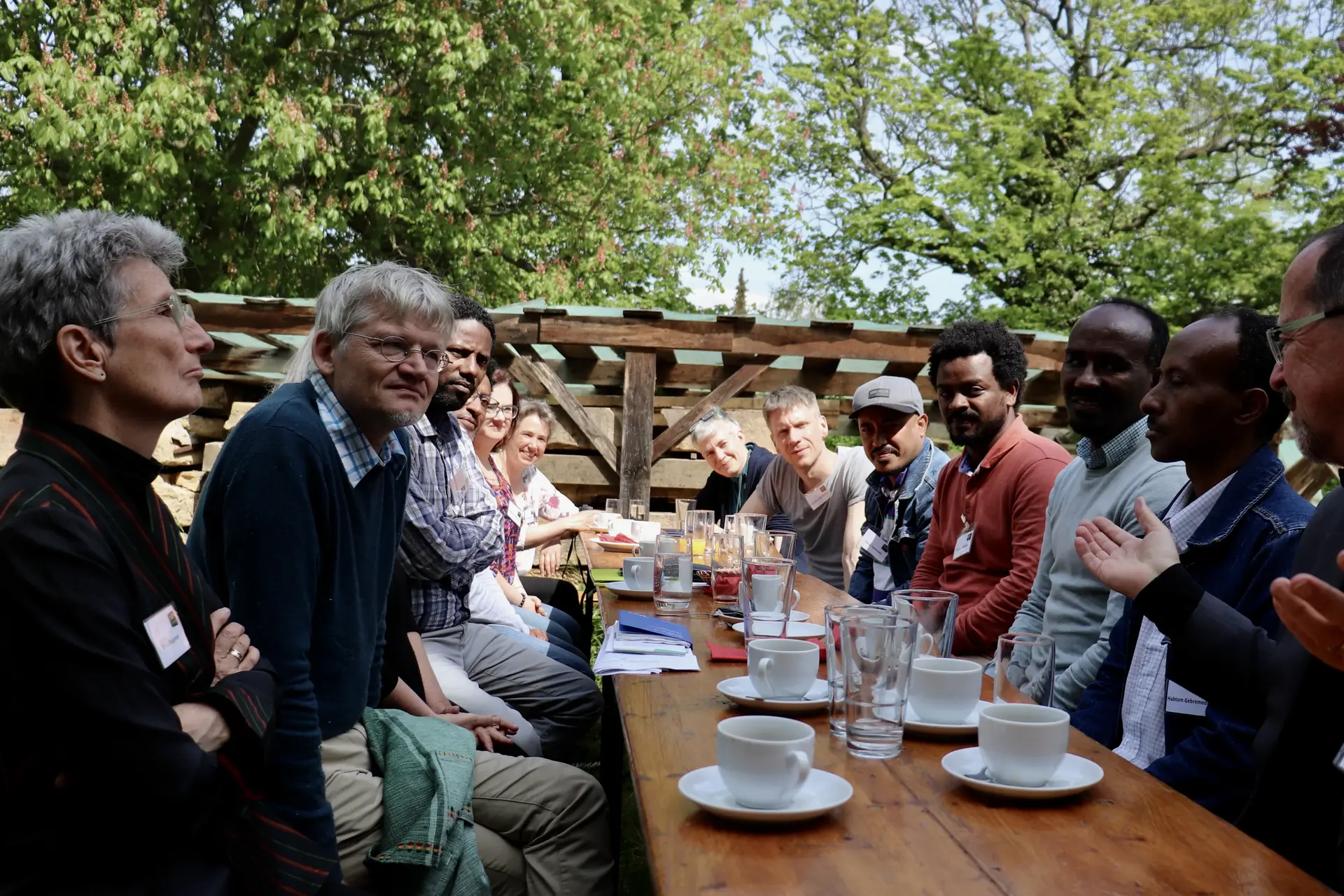

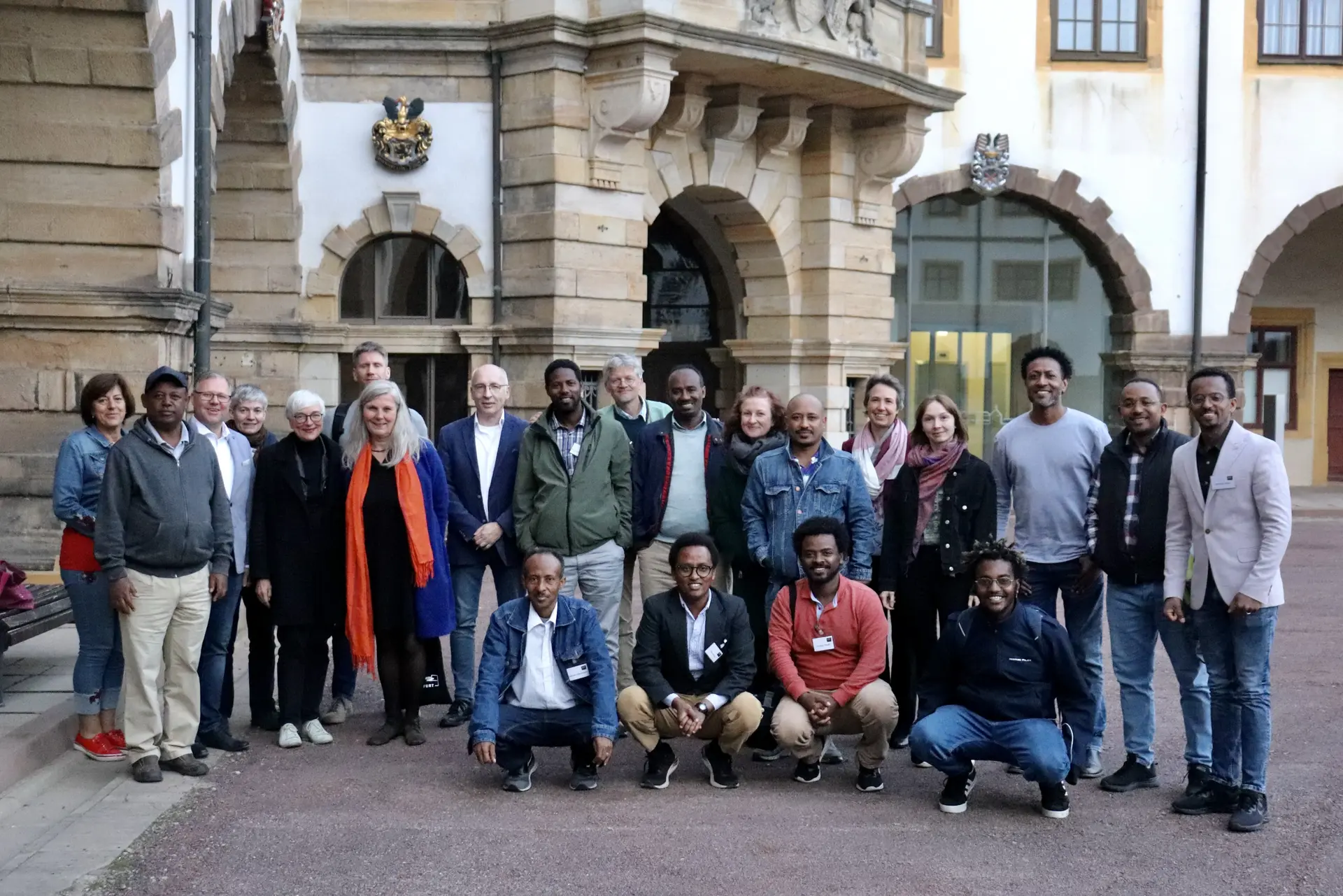
Pictures: Impressions from the second annual conference of the German-Ethiopian Scholarship Initiative.
In October, the Centre for Transcultural Studies started a new research project funded by the Gerda Henkel Foundation on the topic of "Geography and Politics between North-East Africa and Europe. Self-testimonies as access to a relational history of knowledge", which is closely linked to the existing partnership with Ethiopia and the German-Ethiopian Scholarship Initiative. In particular, this project aims to research the letters of German travellers from north-east Africa, which are part of the Gotha Perthes Collection. A working group consisting of German and Ethiopian scholars is also being set up for this purpose.
The year ended with a visit from the Dean of Bonga College of Education (Kafa), Antenneh Ayele, to the research centre in December 2023. The invitation was arranged by the Gotha Henkel scholarship holder Zegeye Woldemariam. Antenneh Ayele visited the Gotha Perthes Collection and consulted relevant maps of Kafa in order to familiarise himself with the connections between Gotha and Kafa. His visit was also aimed at exchanging experiences for the establishment of a Master's degree programme in Bonga. Further opportunities for cooperation and joint research topics were explored at a meeting on the Erfurt campus.
2014 - 2022
2022

2022 was an eventful year for our cooperation, with the ongoing violent conflicts throughout the country and the hunger crisis in Tigray continuing to affect us greatly. We only receive very little reliable news. Nevertheless, we are very concerned about our colleagues, our friends and their families.
In February, we welcomed two Duke Ernst Fellows to the research centre: In his dissertation project on the Dawuro Kingdom before 1889, Admasu Abebe Haile (Madda Walabu University) studied the historical border fortifications, the "Great Dawuro Walls (kati Halala Kella)", using the Gotha cartographic tradition; in addition, Alula Yohannes Tadesse (Addis Ababa University) researched medieval learned Ethiopian chronicles as potential sources for the cartographies of Ethiopia in the 19th century.
Image: Ethiopian coffee ceremony at the 2022 summer festival of the Gotha association GothAdua e.V. © Otto Eismann
Thanks to the generous funding of the German-Ethiopian Scholarship Initiative (ResScholarGE) by the Gerda Henkel Foundation, four Ethiopian doctoral students are also working at the Research Centre for Transcultural Studies: Samuel Kidane Haile (Mekelle University) is conducting research here on his dissertation project "Historical Sources, Oral Traditions and Interpretations on the Period of Ras Sihul Mikael 1692-1780", while Zegeye Woldemariam Ambo (Mekelle University/ Bonga Teacher's College) is continuing work on his dissertation on "The Kingdom of Kafa: An Ecological and Political Ethnohistory from the late 14th to the early 20th centuries". In autumn 2022, Fesseha Berge Gebregergis (Mekelle University) also returned to Gotha to complete his ethnohistorical dissertation on the "Dobᶜa of Ethiopia". All three are former scholarship holders of the Gotha Herzog Ernst Scholarship Programme. With the support of the Gerda Henkel Foundation, Bereket Hasen Beddecha (Mekelle University) is also associated with the Research Training Group as a visiting scholar. His dissertation on "Political Communication Strategy and Diplomacy: The Ethiopian war and the country's communication and diplomatic crisis" is anchored in the Faculty of Philosophy at the University of Erfurt in the field of media and communication studies.

At the end of August, we received the sad news of the sudden death of our colleague Alexander Thumfahrt. Alexander was an important companion for our cooperation from the very beginning, actively helping to shape the Herzog Ernst Scholarship Programme and taking an active part in academic exchange. He was also part of our conference and study trip in 2019, which took us via Addis Ababa to Mekelle and Bahir Dar: as a scholar, as a curious, always critical companion and as a friend. With this in mind, we will cherish the memory of the times we shared with him forever.
Picture: Danakil Desert © Manfred Weber
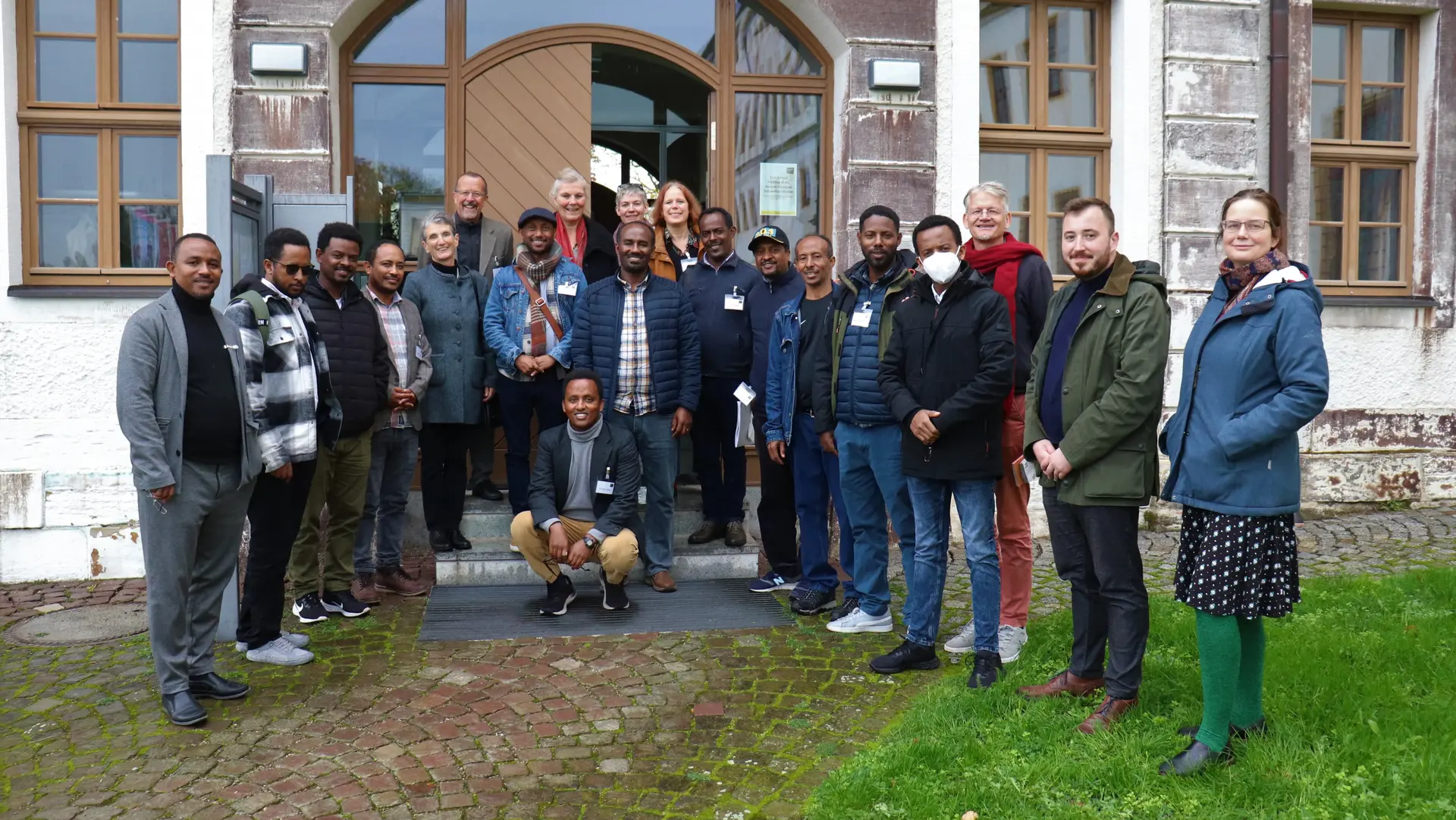
In autumn 2022, we had two conferences on our programme: Firstly, at the end of September, the conference "Africa and the Global Cold War III" took place in Erfurt at the end of September. Research Centre for Transcultural Studies organised the the first annual conference of the German-Ethiopian Scholarship Initiative to which we invited the other fellows already studying and researching in Europe, including those working in Frankfurt, Hamburg, Mainz, Munich, Paris and Würzburg, to a networking meeting in Gotha. The German-Ethiopian Fellowship Initiative is the brainchild of former Duke Ernst Scholarship holder Wolbert Smidt (Friedrich Schiller University Jena/ Mekelle University): the programme aims to support young early-stage researchers and research assistants who are involved in existing German-Ethiopian cooperation projects with their work. Thanks to the generous support of the Gerda Henkel Foundation, thirteen early-stage researchers from the University of Mekelle are currently receiving a scholarship to continue their ongoing academic work at European universities. At the annual conference organised by the Forschungskolleg Transkulturelle Studien, the scholarship holders gave a comprehensive insight into their historical, anthropological, geographical and artistic work.
Pictures: Reception at the Forschungskolleg; Group picture Annual Conference of the German-Ethiopian Scholarship Initiative © Dr Alula Tesfay

2021
Unfortunately, concerns about the armed conflict in Ethiopia also accompanied our cooperative activities with our Ethiopian partners at the beginning of 2021. During this time, it was encouraging that, despite the adverse circumstances, Samuel Kidane Haile, a doctoral candidate from Mekelle University, was able to begin a research stay as a Herzog-Ernst Fellow at the newly founded Centre for Transcultural Studies in June. There, he is conducting research on his project "Bambilo Milash, Alawha Milash and Marab Milash in the Setting of Ethiopian History: A Geohistory of Northern Ethiopia in the 18th and 19th Centuries" as part of a larger doctoral project with holdings from the Gotha Perthes Collection. At the same time, Aychegrew Hadera Hailu arrived in Gotha, who is working as a Herzog-Ernst Fellow on the topic of "A History of the Qemant". Aychegrew Hadera Hailu was Assistant Professor at Mekelle University until 2019 and played a key role in our cooperation activities there. He now works at Bahir Dar University, so his visit will also contribute to the expansion of our recently initiated cooperation with this university.
Images: Welcoming the 2021 Duke Ernst scholarship holders © Claudia Berger
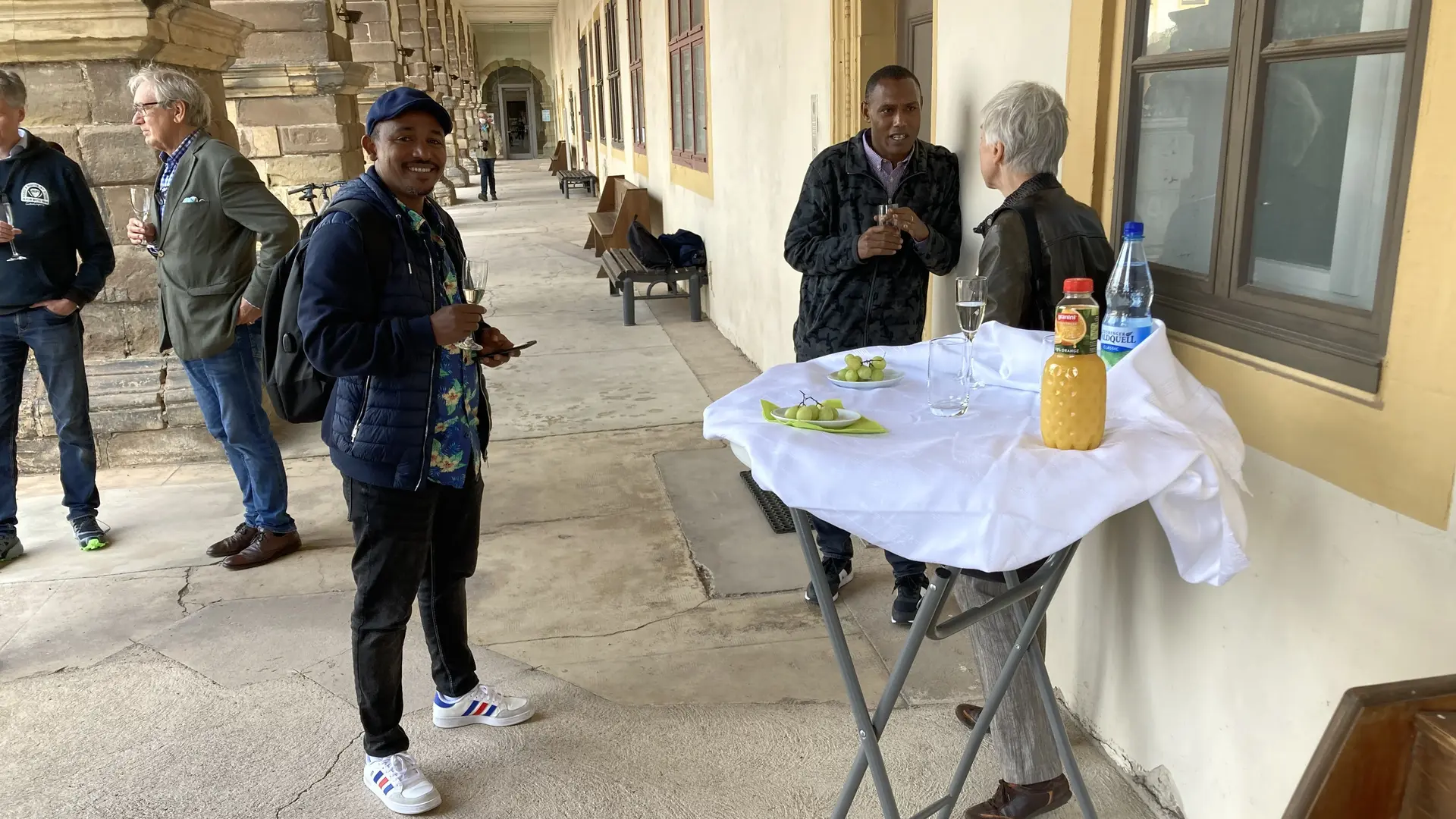

In view of the ongoing difficult situation, we are also grateful for the Gerda Henkel Foundation's commitment in November 2021 to support our collaboration with Mekelle University as part of its Patrimonies focus. This support will enable us to expand our scholarship programme and continue our joint research activities on the Gotha Perthes Collection's holdings. This in turn creates new opportunities for our academic partners, who have suffered greatly from the severe damage to academic infrastructure and the restrictions on academic life in the crisis region over the past year.
2020
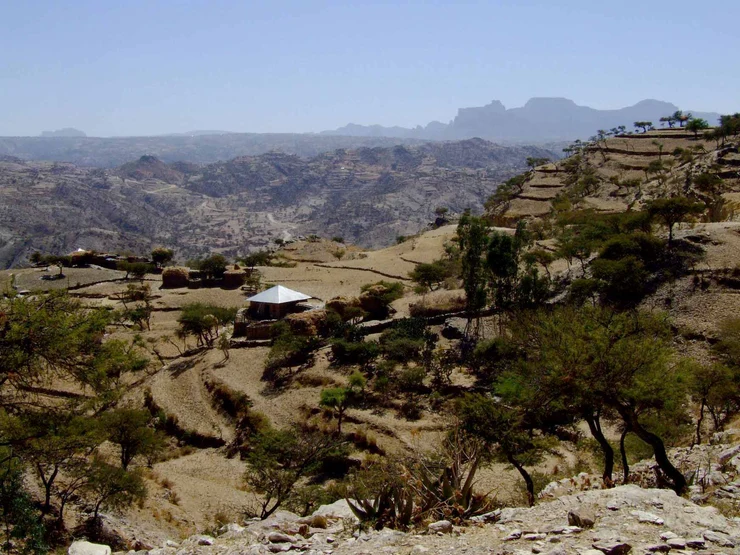
2020 was a difficult year for our cooperation. We had been expecting the arrival of two scholarship holders from Mekelle and Bahir Dar. Both were due to travel to Gotha in the spring on a Herzog-Ernst scholarship to conduct research in the Gotha Perthes Collection; however, neither was able to come due to the Covid-19 pandemic. In May, we received news of a growing food shortage in northern Ethiopia via the GothAdua association; the political dispute between the state government of Tigray and the federal government in Addis then escalated from the end of September. Since the beginning of November, a war is waging in northern Ethiopia, the end of which is currently not in sight.
At the beginning of December, the History Department at the University of Erfurt hosted a discussion event on the conflict. Jalale Getachew Birru (Erfurt), Habtom Kahsay Gedey (Munich) and Wolbert Smidt (Jena/ Mekelle) discussed the extremely difficult to grasp situation on the virtual podium. They thematised and problematised the chosen terms and narratives as well as the conflicting legitimation strategies used to justify the use of violence. The often highly emotionalised and inadequate media coverage was also on the agenda, as was the great concern for relatives and friends. All in all, everyone emphasised that the situation is unclear due to the extensive communicative lockdown in the state of Tigray. Restoring sustainable peace in the region and throughout the country is a long road: the further development of a federal Ethiopia that recognises the broad ethnic diversity in a different way than has been done so far – as was also made clear in the subsequent discussion with the large audience – is nevertheless only one building block. In order to bring long-lasting peace to the country, this must go hand in hand with far-reaching efforts towards democratisation and education.
Further information:
- WortMelder
- Statement by the Association for African Studies in Germany (VAD)
- Appeal to the European Union
Picture: North Tigray © Manfred Weber
2019
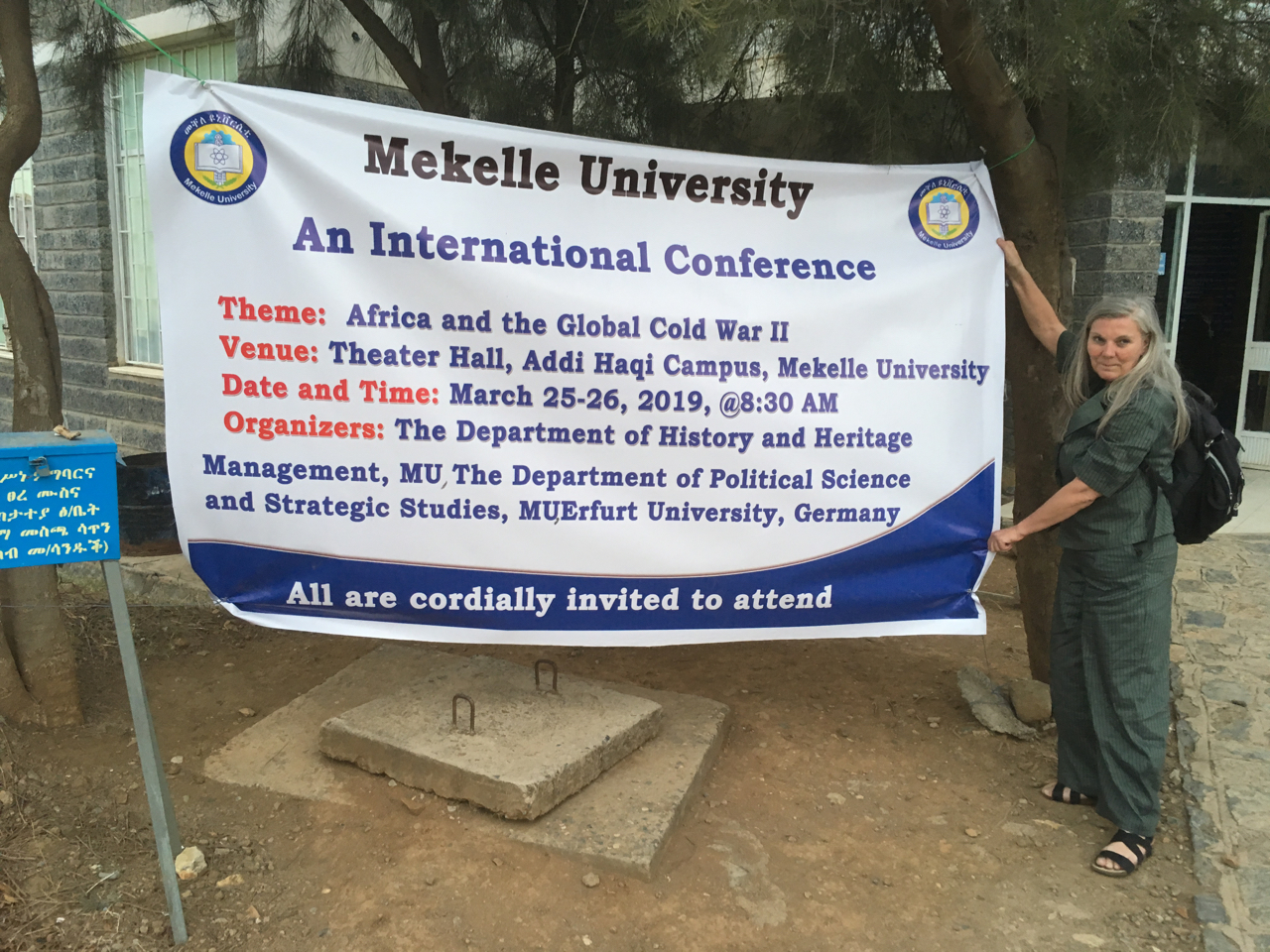
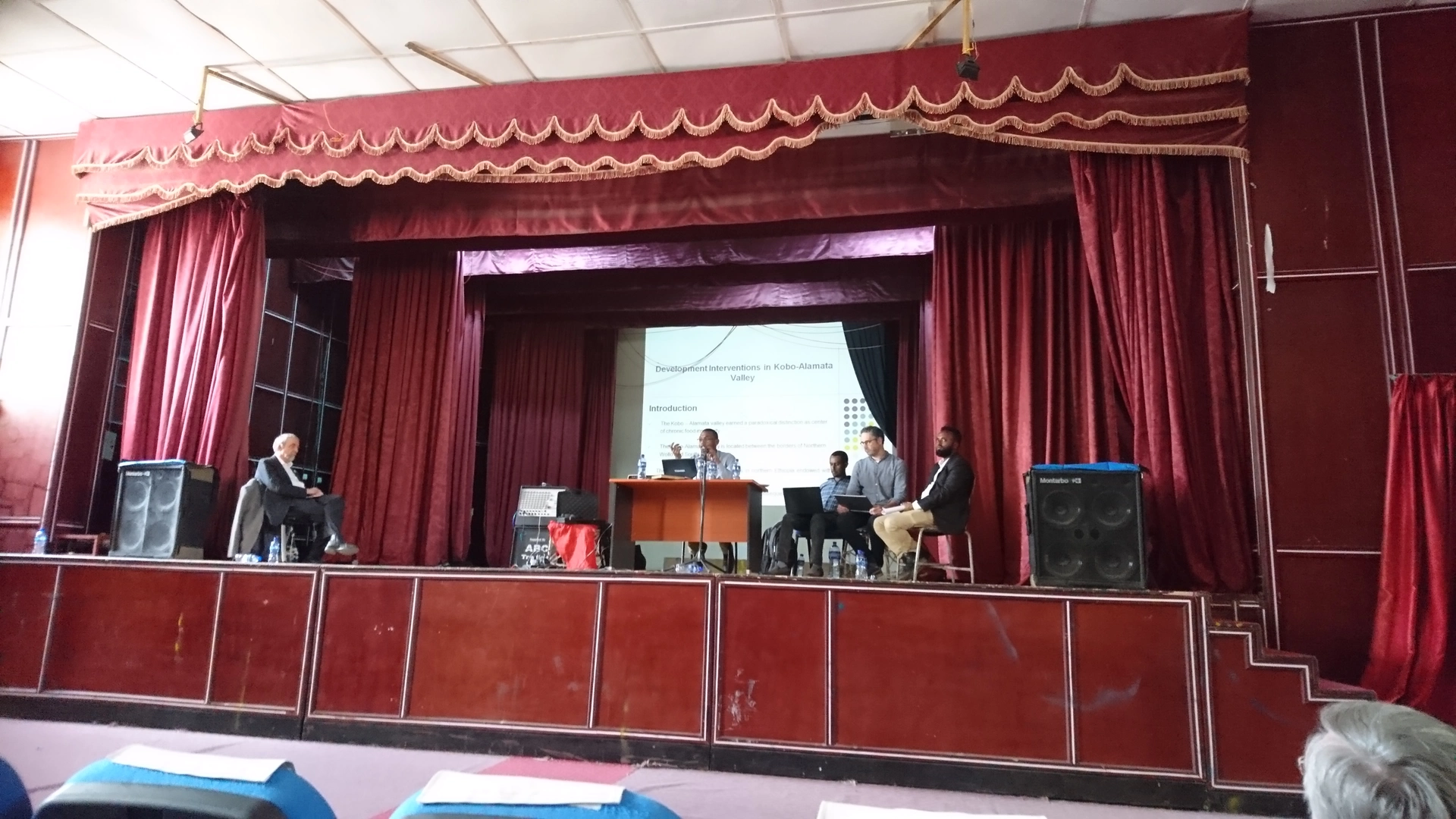
The follow-up conference "Africa and the Global Cold War II" took place in Mekelle in March 2019. In addition to the Department of History and Heritage Management, the Department of Political Science and Strategic Studies at Mekelle University was also involved in the programme for the first time. With the aim of opening up new perspectives for interdisciplinary research on the Cold War in Africa, the thematic focus of this conference was on the changes and continuities in African relations with external actors. Following the conference, future co-operation activities were discussed with members of Mekelle University. In addition, a study trip provided the opportunity to establish contacts with the University of Bahir Dar.
Pictures: Iris Schröder on the Adi-Haqi Campus of Mekelle University © Ned Richardson-Little / Lecture by Solomon Abraha on "Reckoning with the Post-Cold War, the End of Liberal Internationalism, the Era of Strongman and the Horn of Africa: Changes, Continuities and Context", Theatre Hall, Adi-Haqi Campus © Paul Sprute / Adi-Haqi Campus, Mekelle University © Franziska Rantzsch / Aychegrew Hadera speaks at the conference on "Development Interventions in the Kobo-Alamata Valley: 1960s-2017", Theatre Hall, Adi-Haqi Campus © Franziska Rantzsch / Participants of the conference "Africa and the Global Cold War II" in front of the Theatre Hall, Adi-Haqi Campus © Paul Skäbe / Main Campus of Bahir Dar University © Ned Richardson-Little
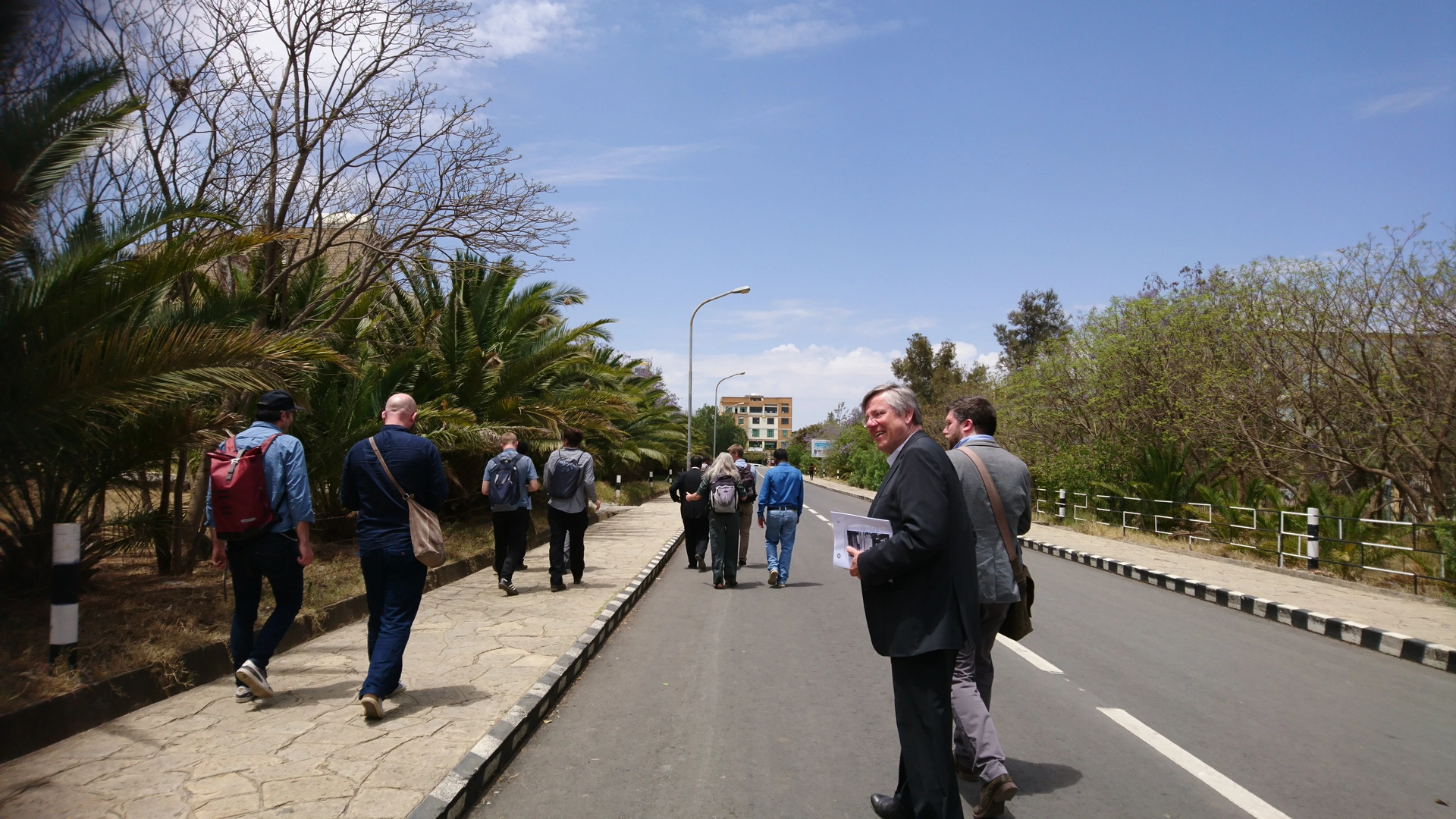
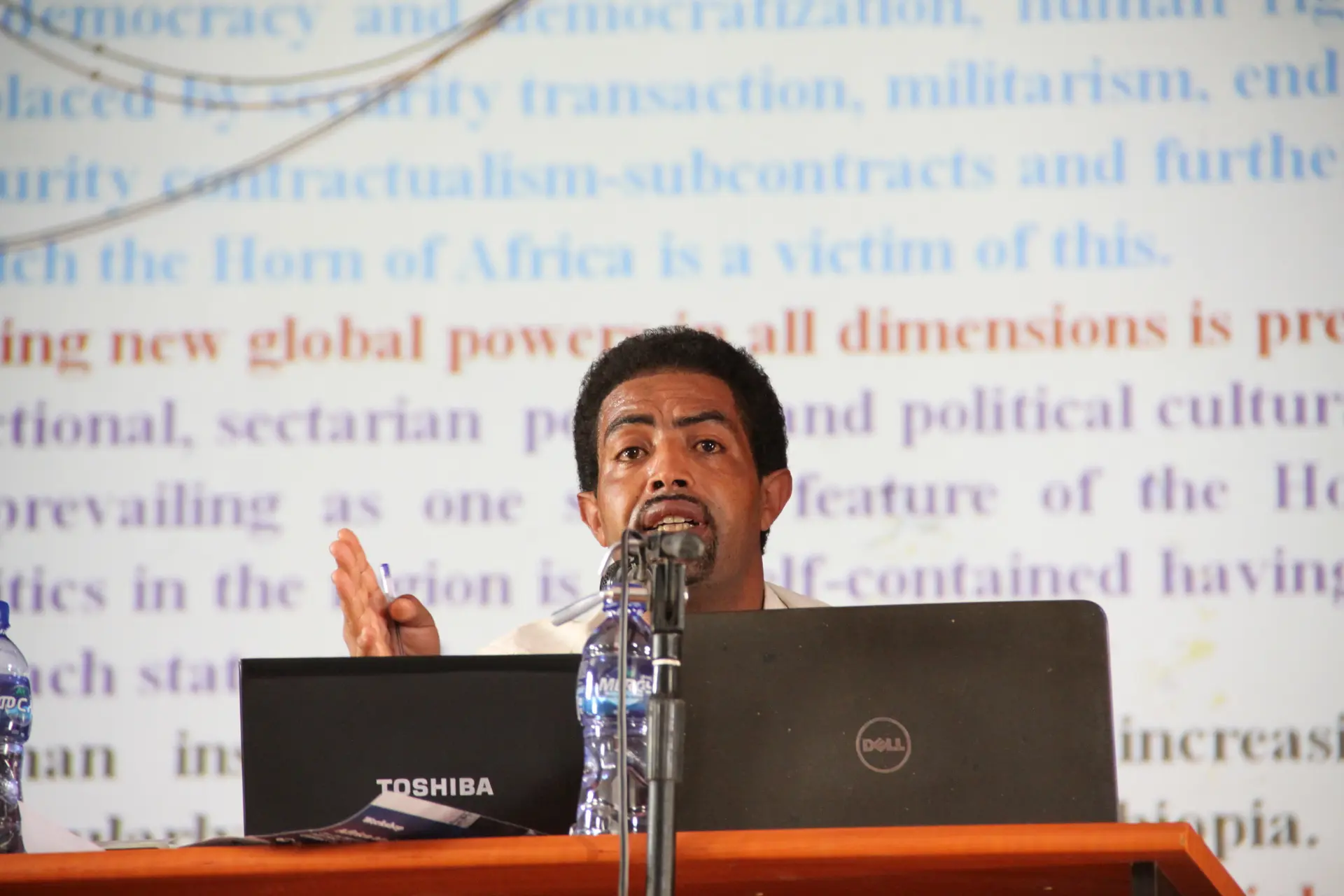
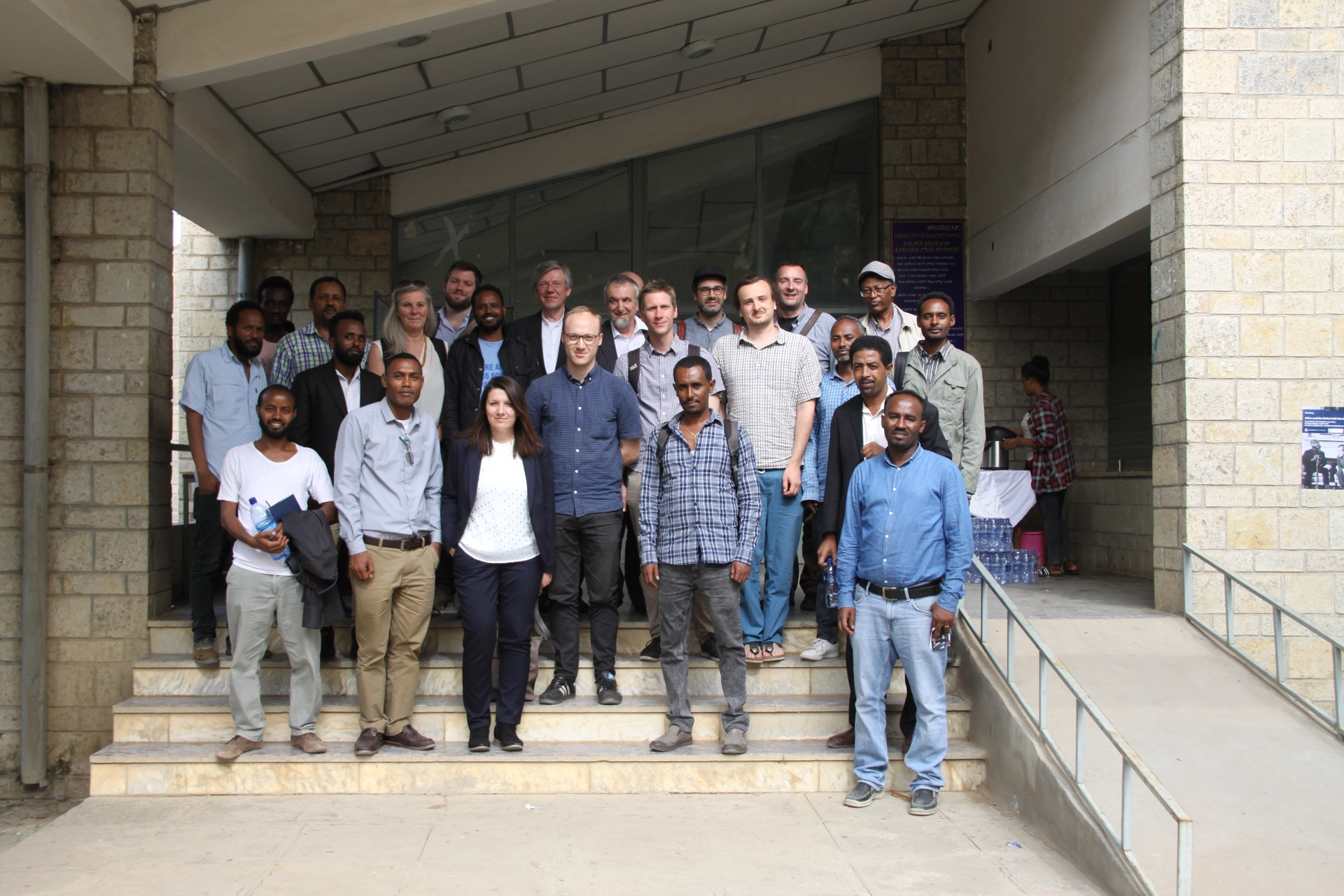
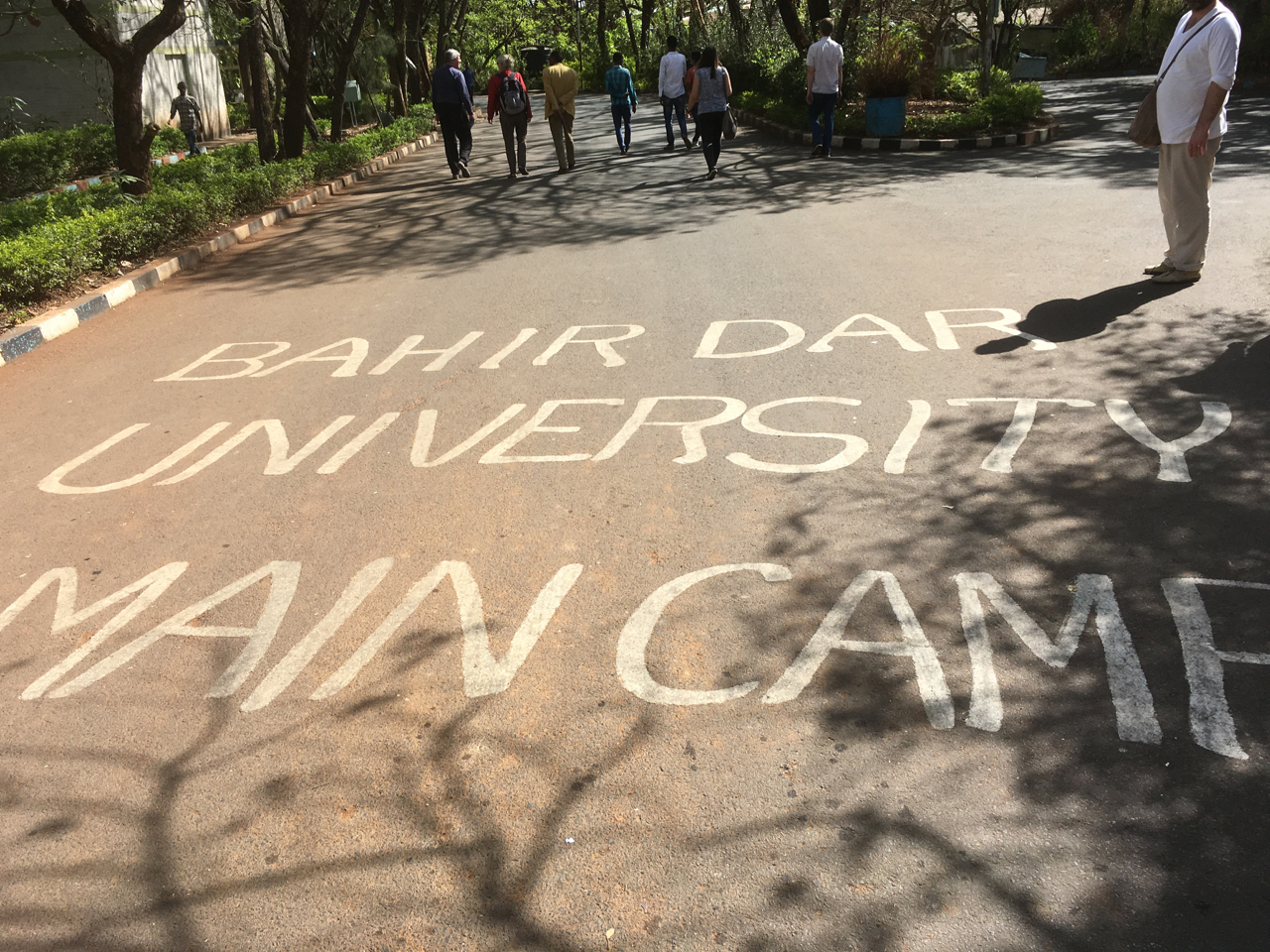
As part of the Herzog Ernst Scholarship Programme, Zegeye Woldemariam Ambo, a doctoral candidate at Mekelle University, was able to work on his project "The Kingdom of Kafa: An Ecological and Political Ethnohistory from the late 14th to the early 20th centuries" with the holdings of the Gotha Perthes Collection from March to July this year.
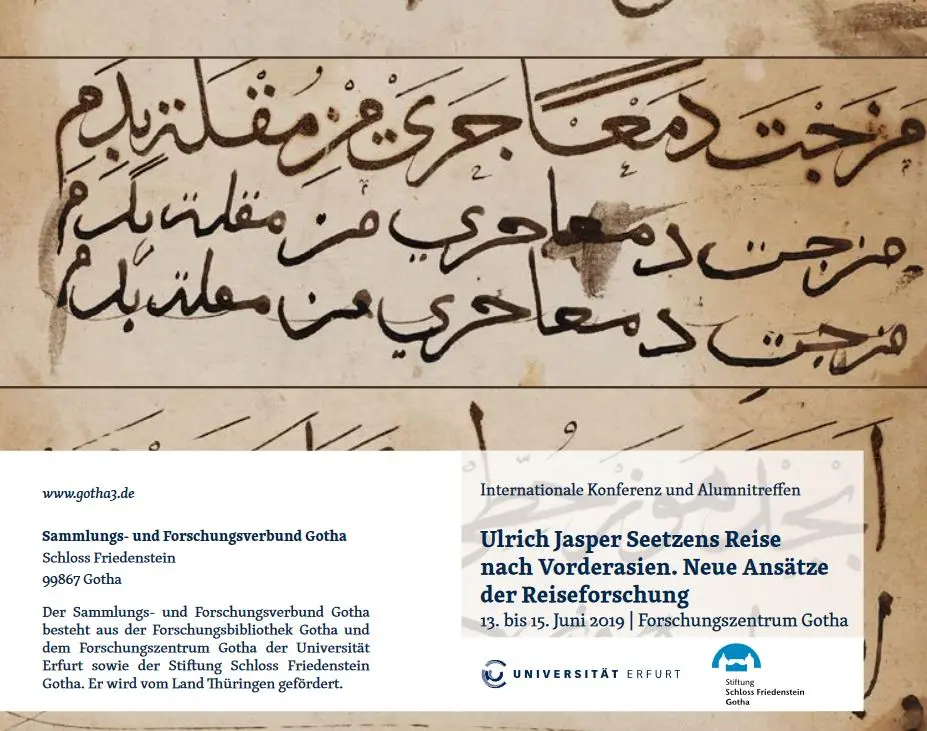
We were also able to welcome our former scholarship holders Fesseha Berhe Gebregergis and Wolbert Smidt back to Gotha. Both actively participated as speakers at the 4th alumni meeting of the Herzog Ernst Scholarship Program, which was also an international conference on the topic of “Ulrich Jasper Seetzens Reise nach Vorderasien. Neue Ansätze der Reiseforschung”.
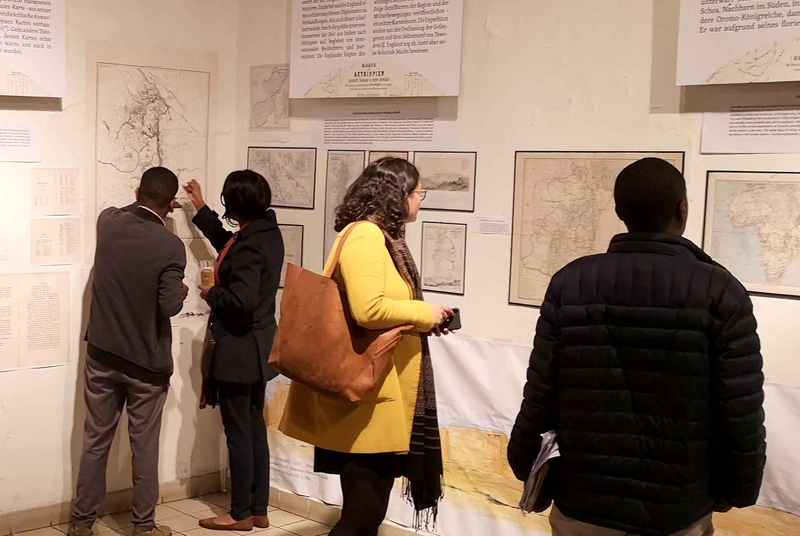
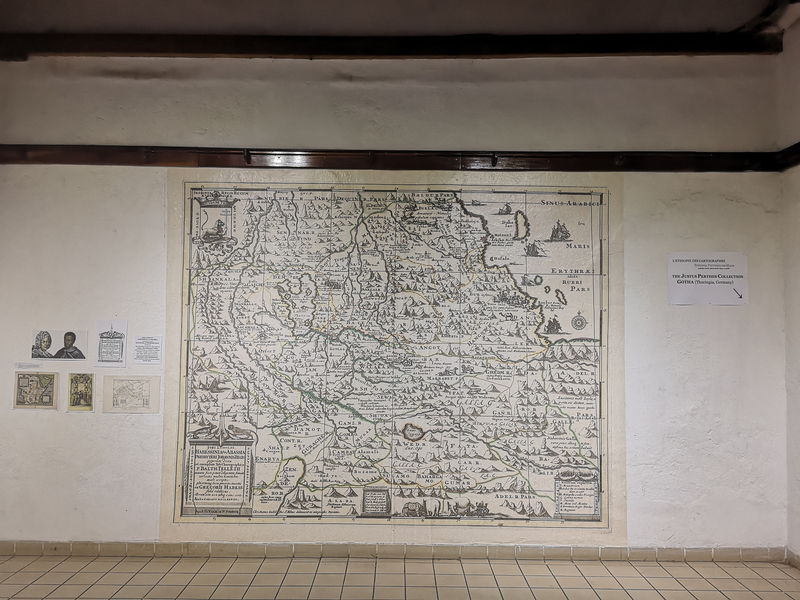
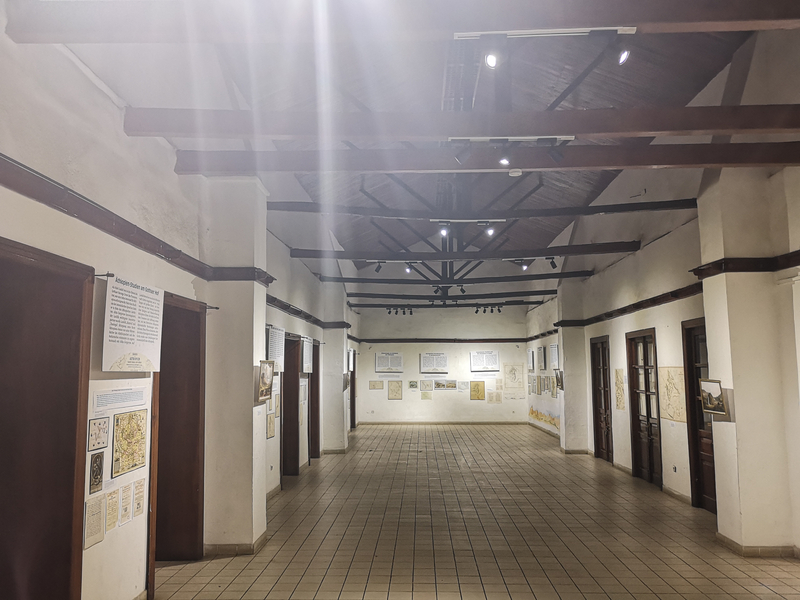
In summer 2019, the international exhibition "The Ethiopia of Mapmakers", organised by Gotha collections and research institutions, was shown in Addis Ababa and met with great interest. The exhibition was organised by the ETHIOMAP research project, which is based at the Gotha Research Centre of the University of Erfurt, the École des Hautes Études en Sciences Sociales (EHESS) in Paris and Mekelle University in Ethiopia, with the support of the Gotha Research Library. The next stops for the exhibition have already been decided: after Addis Ababa, it will be shown at the Alliance éthio-française in the Ethiopian city of Dire Dawa and then at several Ethiopian universities.
Pictures: Map exhibition in Addis Ababa © Wolbert Smidt
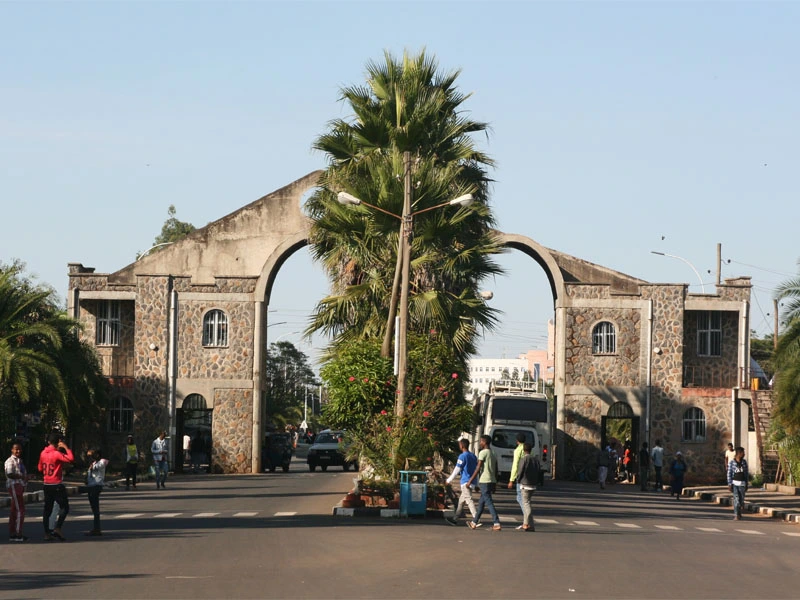
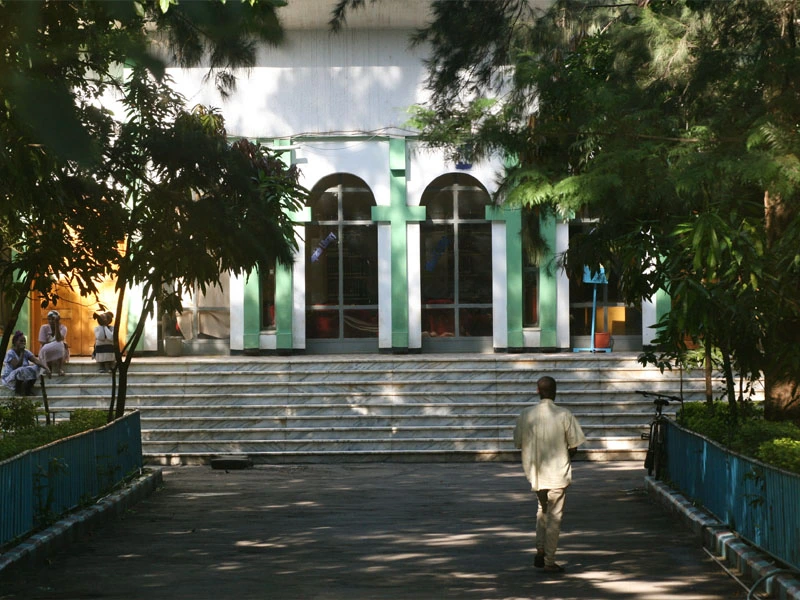
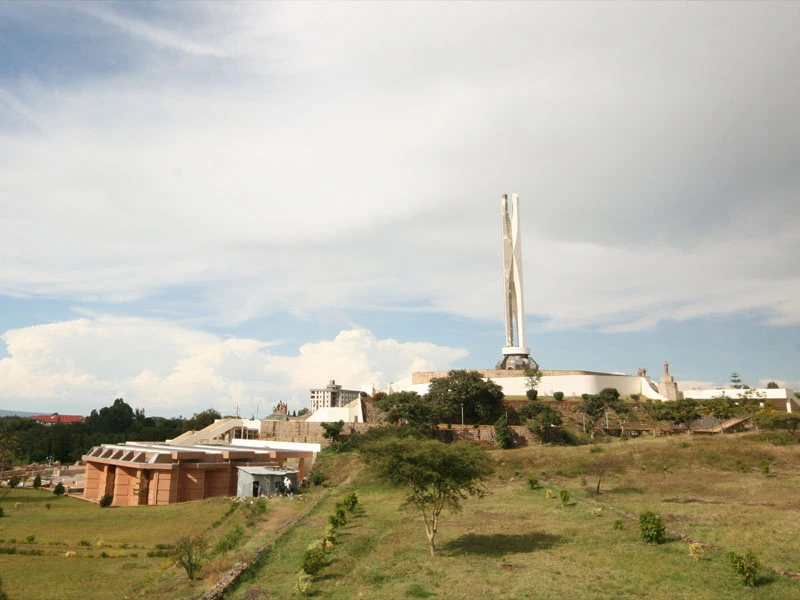
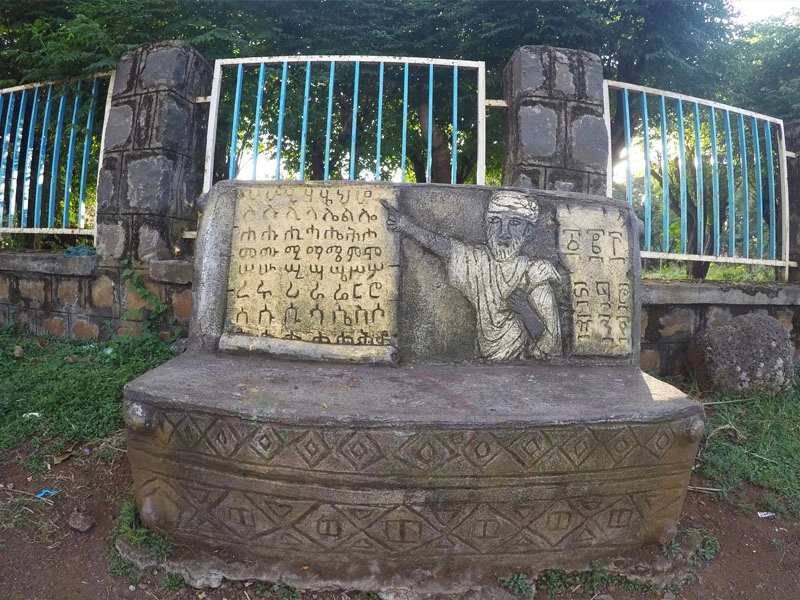
In November/December 2019, Felix Schürmann was a guest lecturer at the University of Bahir Dar at the invitation of the Department of History and Heritage Management. In addition to leading a methodology workshop for doctoral students, he gave a lecture on the significance of natural politics for the history of decolonisation in Africa. Felix Schürmann also visited the Martyrs Memorial Monument Museum Bahir Dar and recorded his impressions for us in a review.
Pictures: Bahir Dar © Felix Schürmann
2018
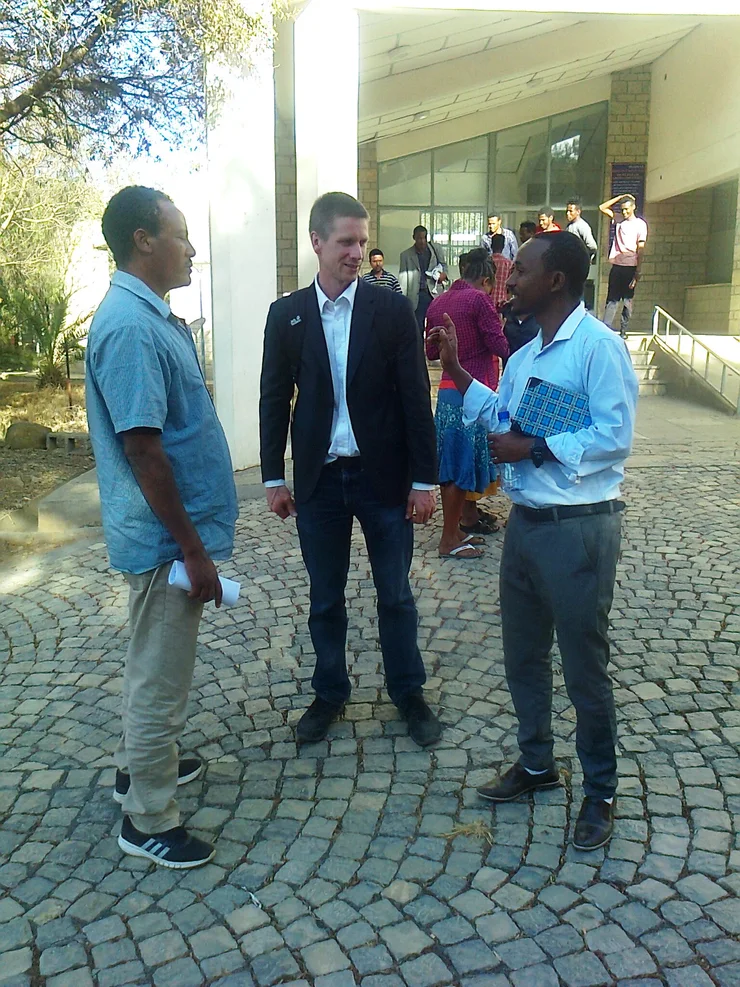
In March 2018, Christian Methfessel travelled to Mekelle at the invitation of the Department of History and Heritage Management to take up a guest lectureship. His public lecture on "Depictions of the Battle of Adwa in the English and German Press" met with a great response – not least because of the annual commemoration of the Battle of Adua on March 2, 1896 in Ethiopia.
In April, Fesseha Berhe Gebregergis returned to the Gotha Research Campus for six months as a research employee to work on the ETHIOMAP project and to continue his research on the Dobᶜa with the Gotha materials. We owe a lot to his support, and after his return he will act as a contact person for further cooperation in Mekelle together with Aychegrew Hadera Hailu.
Picture: Christian Methfessel in conversation with Haile Muluken Akalu in Mekelle © Peter Nadig
In July, the conference "Africa and the Global Cold War" marked the official start of closer cooperation in research into the international history of the Horn of Africa. Aychegrew Hadera Hailu, Assistant Professor at the Department of History and Heritage Management, represented Mekelle University as conference chair. The workshop once again served to identify open research desiderata and develop further questions. In the subsequent working discussions, the participants from the two partner universities agreed on key points for future cooperation in this field.
The agreements also relate to the research project "Annexations and Secessions in the Age of the Global Cold War" by Christian Methfessel, funded by the Fritz Thyssen Foundation and starting in October 2018. The conceptualisation of the project already benefited from the exchange with the Ethiopian colleagues, and there are plans to closely interlink it with the joint activities on Cold War research in Africa in the future.
Pictures: Lecture by Aychegrew Hadera Hailu / Lecture by Iris Schröder / Closing remarks by Achim von Oppen © Philipp Metzler
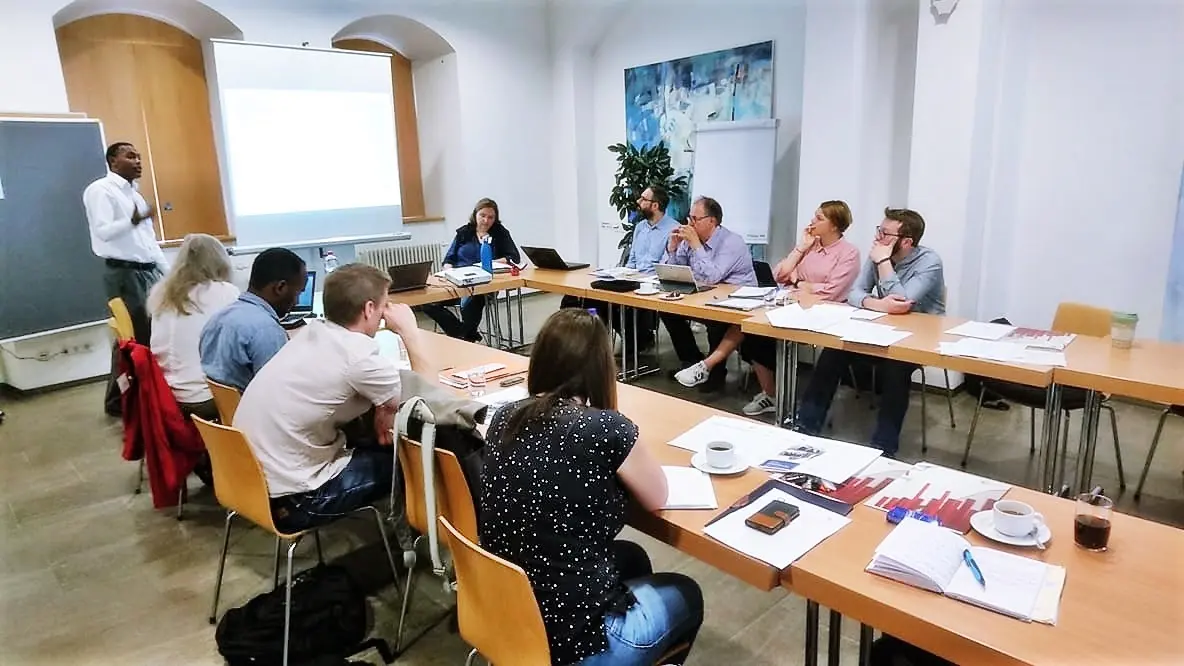
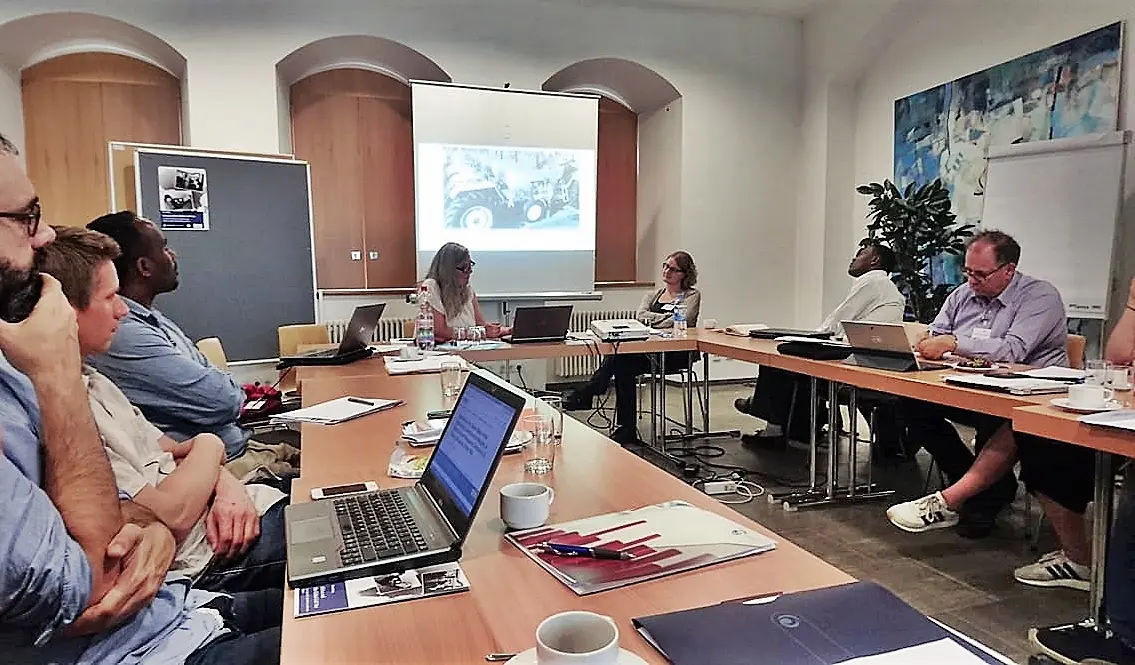
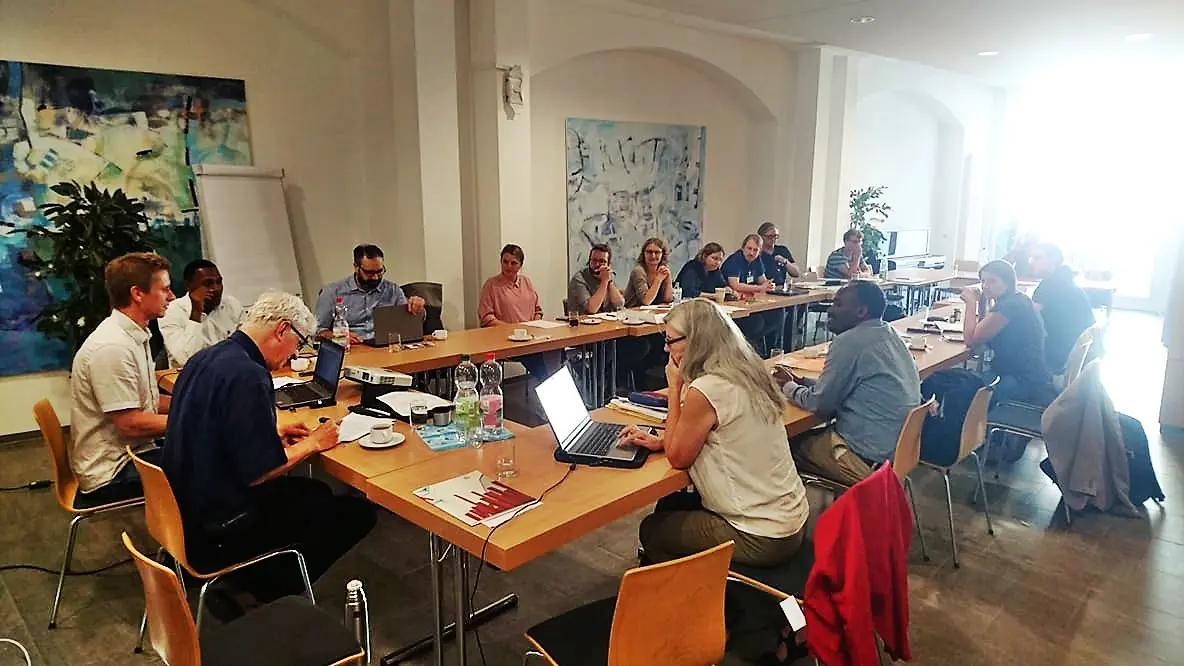
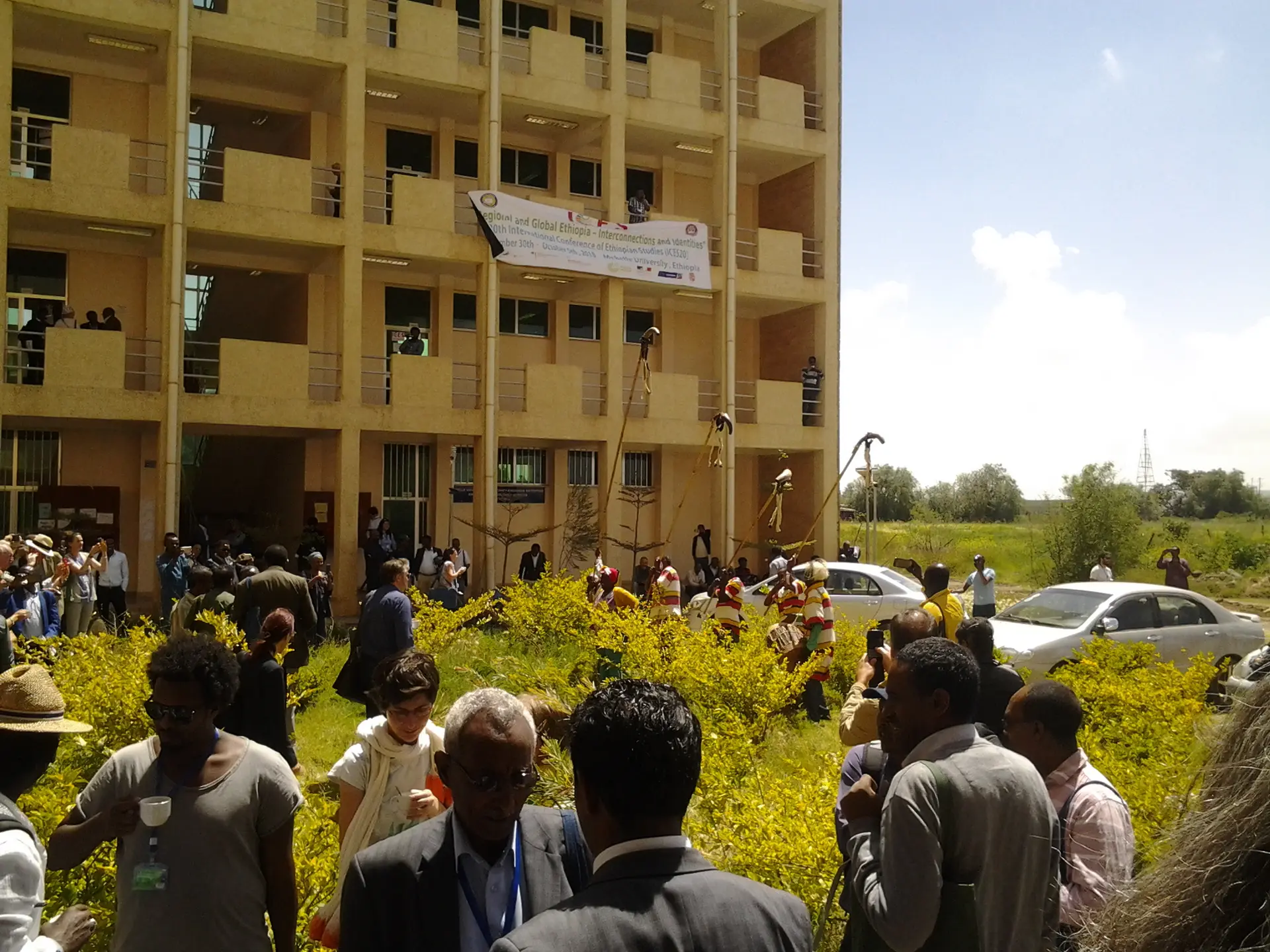
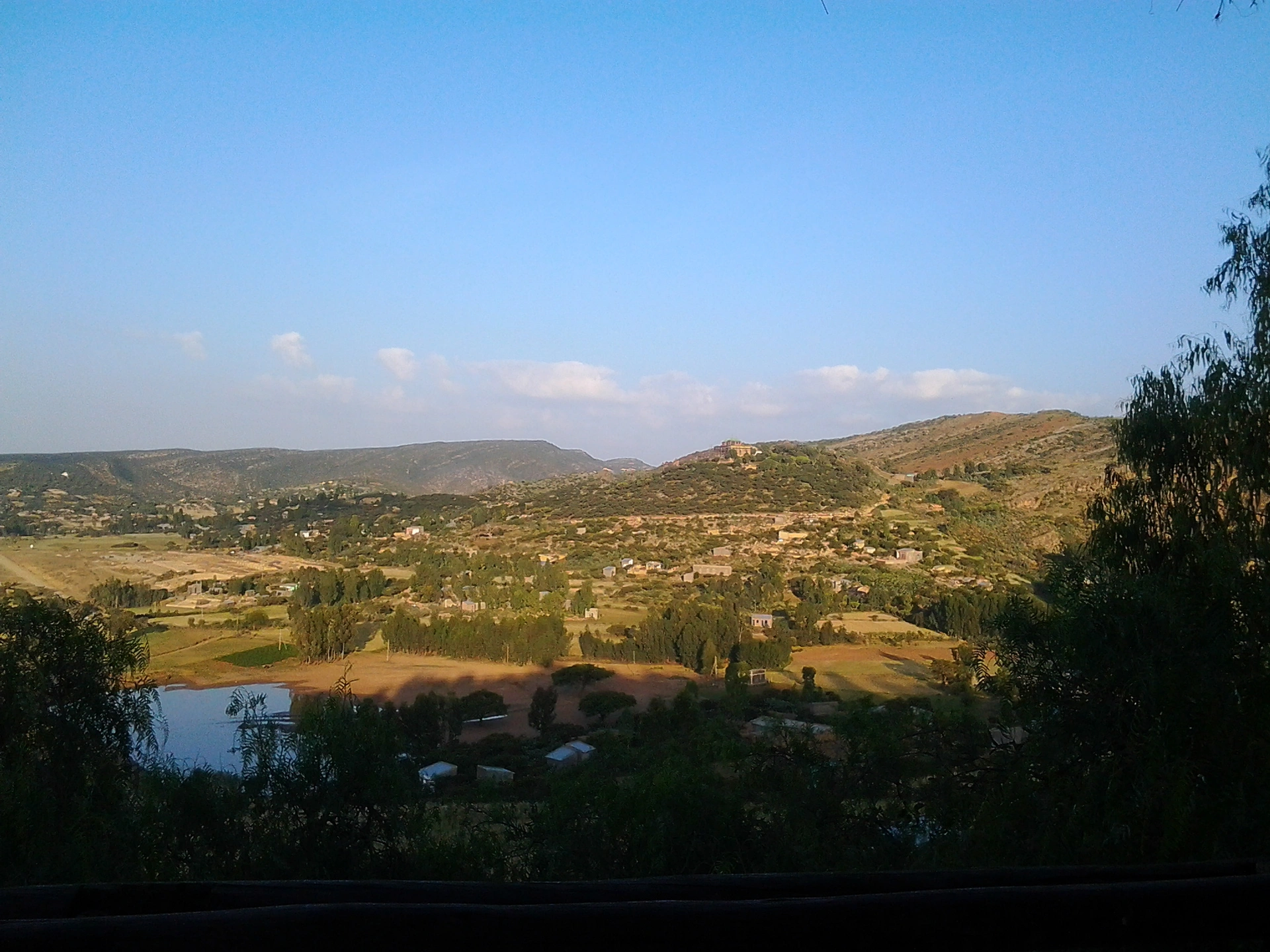
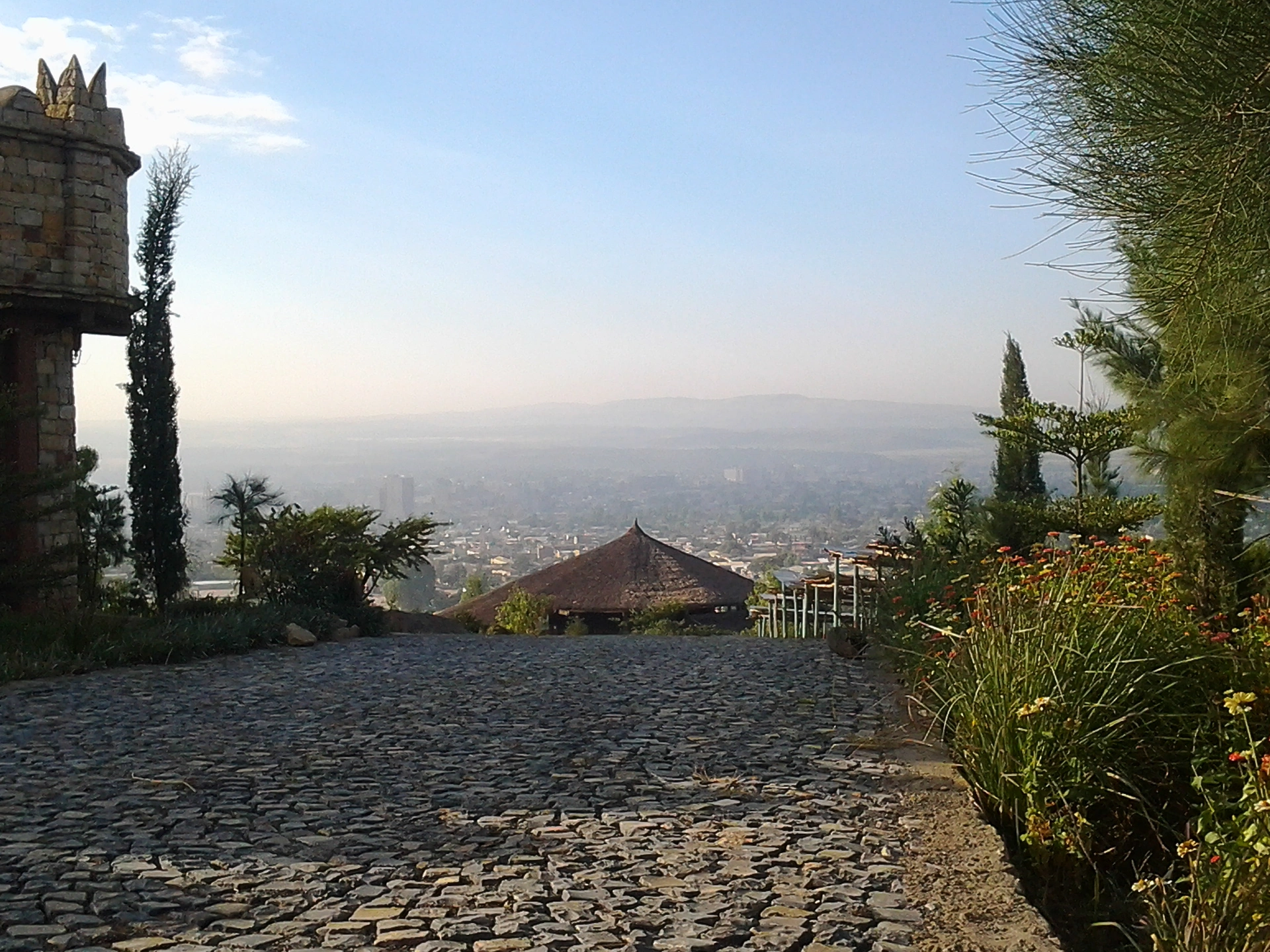
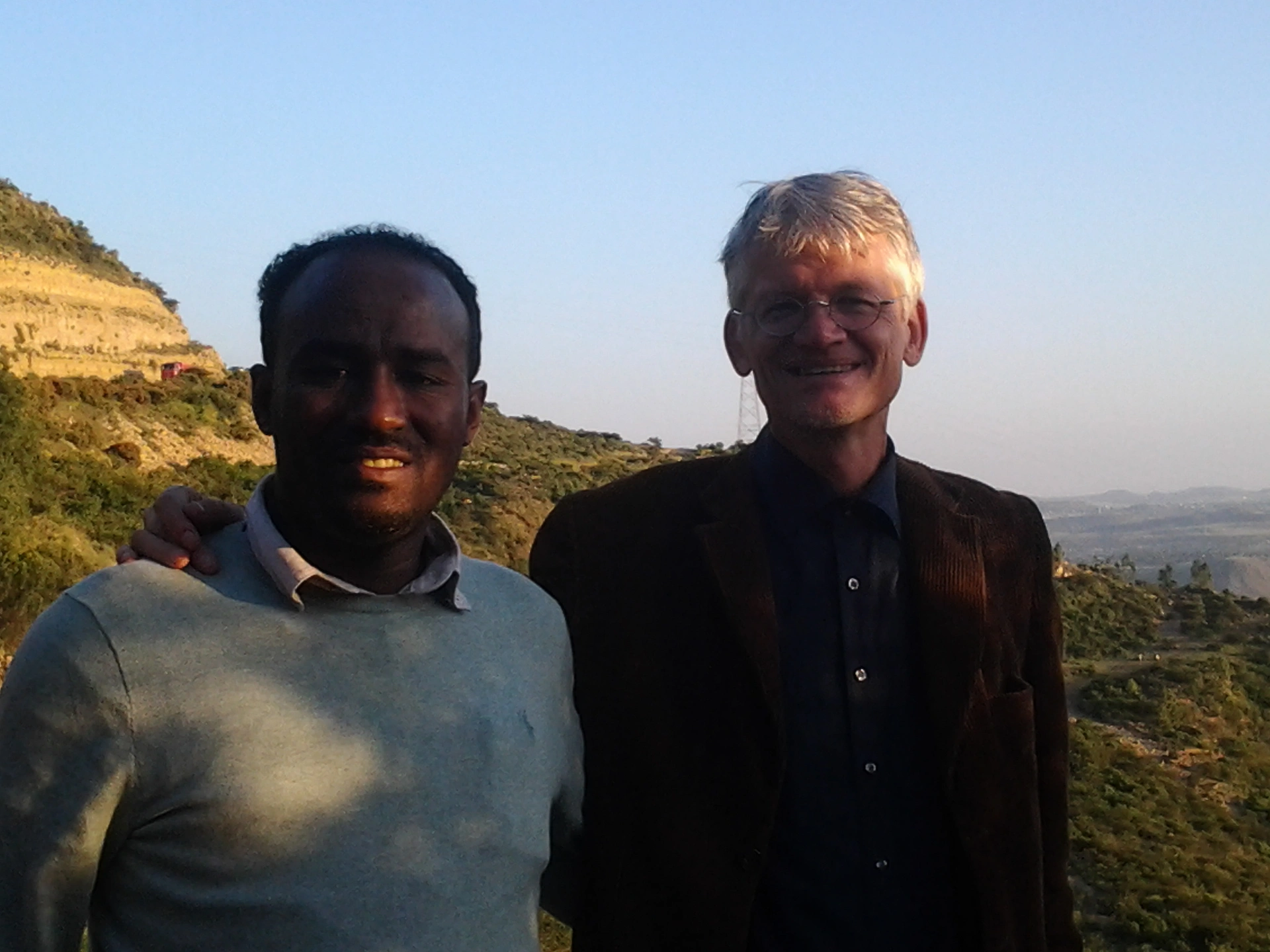
The University of Mekelle hosted the 20th International Conference of Ethiopian Studies at the beginning of October this year. At a panel on "Cartographies and Itineraries" organised by Wolbert Smidt and Eloi Fiquet, Iris Schröder presented research on Gotha cartography. Following the conference, this year's annual workshop of the Ethiomap project took place in Wukro.
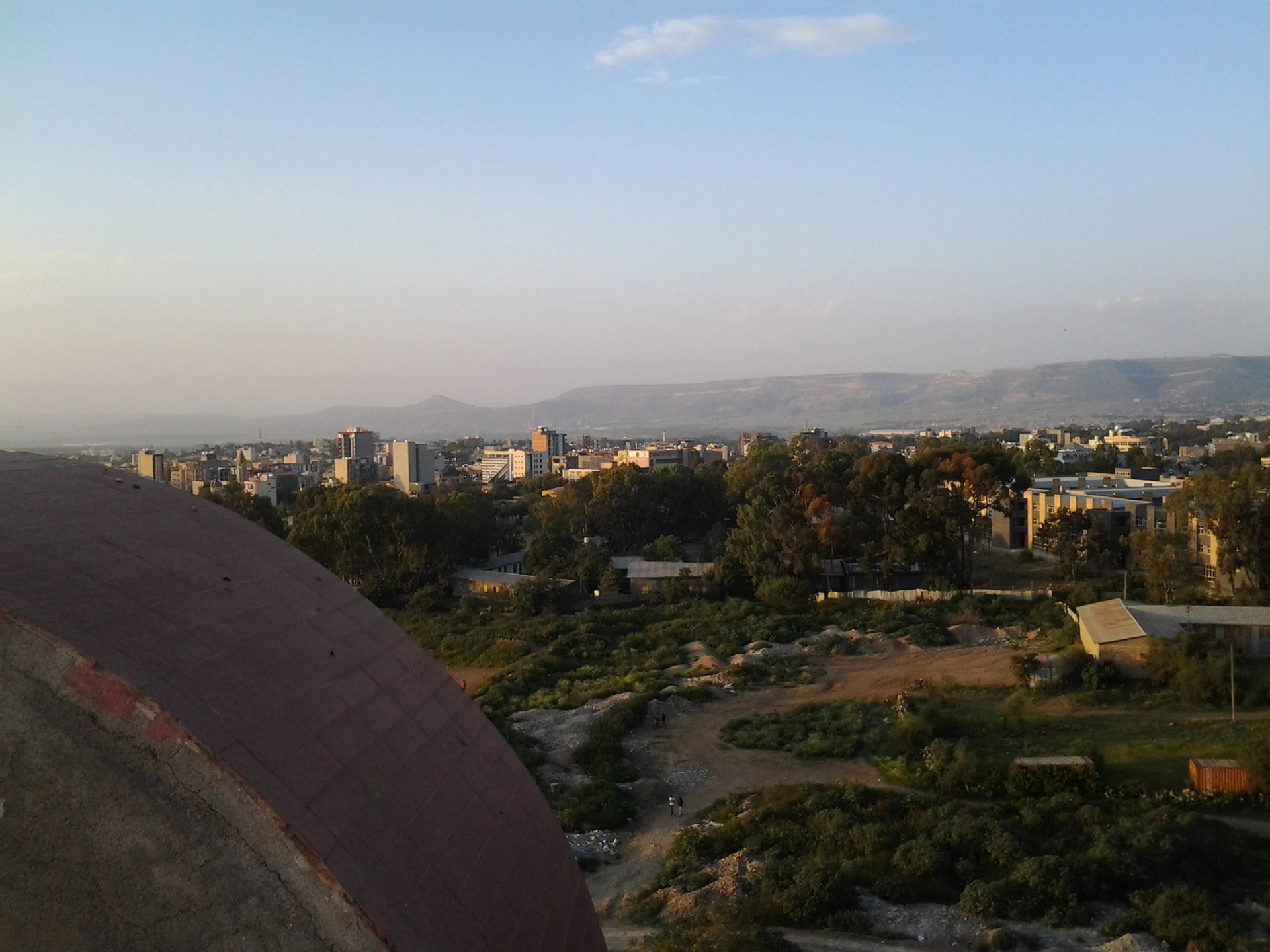
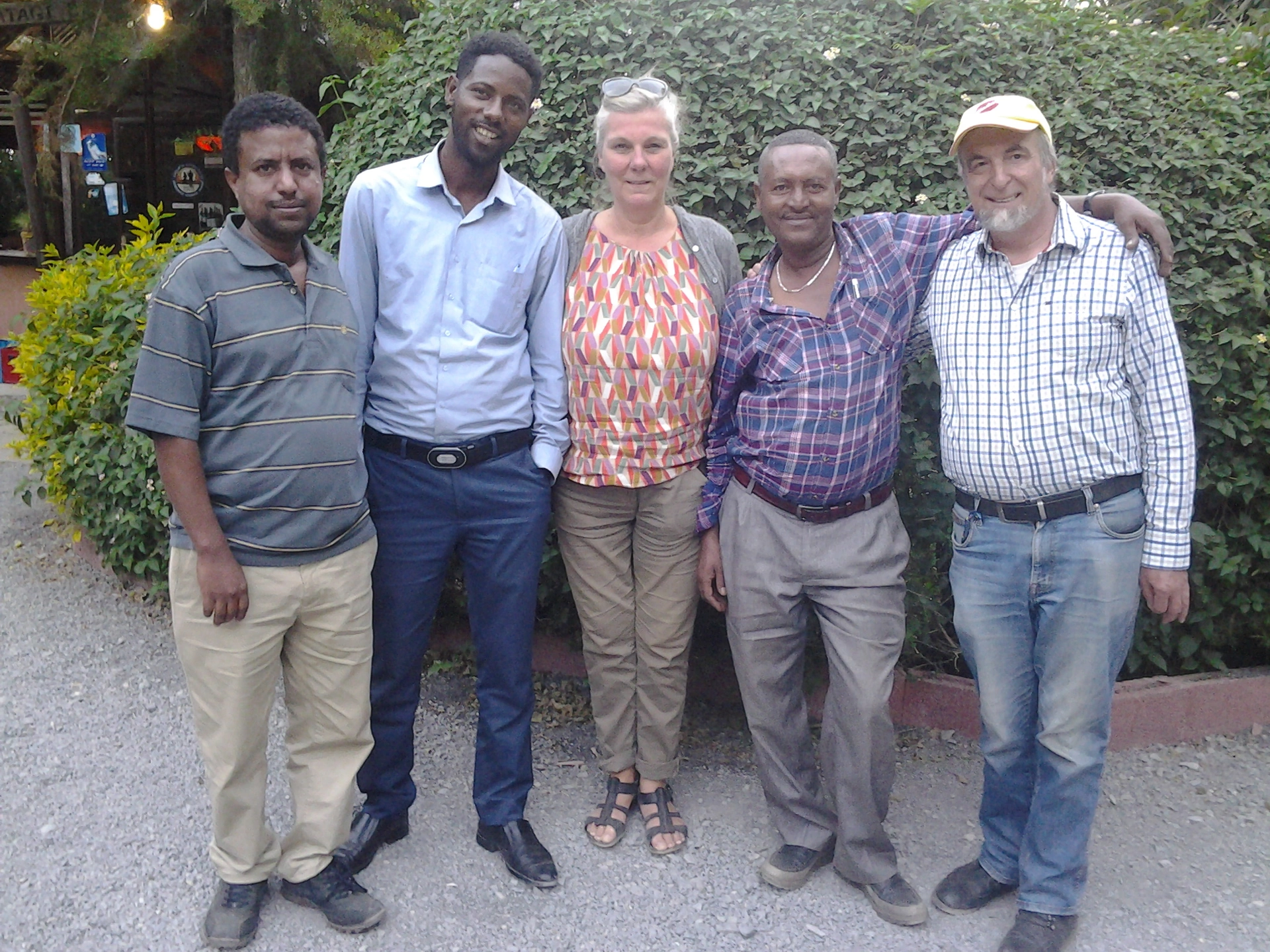
Pictures: 20th International Conference of Ethiopian Studies in Mekelle / Landscape around Wukro / Wukro / Fesseha Berhe Gebregergis and Wolbert Smidt / View from the Axum Hotel in Mekelle / Iris Schröder with employees of Mekelle University © Iris Schröder
2017
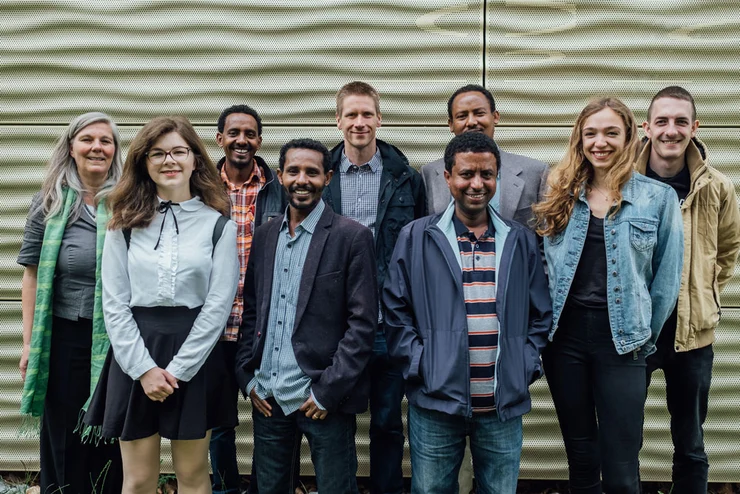
In April 2017, Haile Muluken Akalu, Assistant Professor at the Department of History and Heritage Management at Mekelle University, came to Gotha as a Duke Ernst Scholar. For his postdoctoral research project "Pre-colonial, Colonial and Postcolonial Cartographic Trajectories Underpinning Ethiopia's Boundary Conflicts with Somalia and the Sudan", he is focussing on the dynamics of border disputes in the Horn of Africa, for which he made extensive use of the research library's holdings.
The visit of a delegation from Mekelle University to the University of Erfurt in June 2017, which was largely sponsored by Haile Muluken Akalu, provided an opportunity for an intensive exchange on further joint research interests. The visit by the Ethiopian colleagues concluded with the workshop "Peace and Conflict in the Horn of Africa: National, Regional and Global Factors" organised by Haile Muluken Akalu and Christian Methfessel. During the discussions, the international history of Africa and in particular the Cold War in the Horn of Africa emerged as a promising field for joint activities and projects. Other fields of research in contemporary history were also identified, such as dictatorships, which can be combined in Mekelle with the historical examination of the DERG regime and in Erfurt with work on the two German dictatorships. In view of German-Ethiopian relations and later between socialist Ethiopia and the GDR, the participants agreed to intensify their joint research in this area as well.
Image: Delegation visit from Mekelle University © University of Erfurt
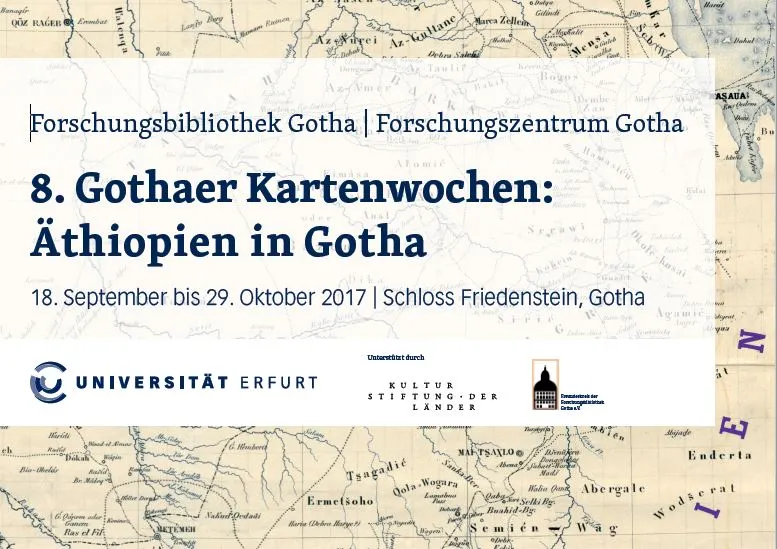
In autumn 2017, the 8th Gotha Map Weeks were dedicated to the astonishingly diverse traces of Ethiopia in the Gotha collections. The unique Gotha collection of Ethiopian cartography was the focus of a cabinet exhibition curated by Wolbert Smidt. This was accompanied by a wide-ranging program of events, including the conference “Ethiopia and Its Neighbors on Maps: Local Knowledge, Territorial Constructions, and International Map Making,” at which the initial findings of the ETHIOMAP project were discussed with an international audience of experts.
2016
Fesseha Berhe Gebregergis, Assistant Professor at the Department of History and Heritage Management, came to Gotha in 2016 as a Duke Ernst Scholarship holder. He used his stay to work intensively with the holdings of the Gotha Perthes Collection for his project "Research on Historical Maps to Examine the Developments of the Lowland-Highland Territorial Concepts in Northern Ethiopia with the Example of the Dobᶜa"; he also supported the joint course by Wolbert Smidt and Iris Schröder on the "Holy Land in Africa", which focussed on the maps of Ethiopia in the Gotha Perthes Collection.
In the same year, Wolbert Smidt and Eloi Fiquet also launched the collaborative project "Cartographic Sources and Territorial Transformations in the Horn of Africa since the Late 18th Century" (ETHIOMAP) at the Gotha Research Campus, which brought together researchers from the École des Hautes Études en Sciences Sociales (EHESS/Paris), Mekelle University and the University of Erfurt. The project was funded by the German Research Foundation (DFG) and the Agence Nationale de la Recherche (ANR).
In continuation of this joint research context, Iris Schröder accepted a visiting professorship for the PhD programme of the Department of History and Heritage Management in Mekelle from December 2016 to January 2017.
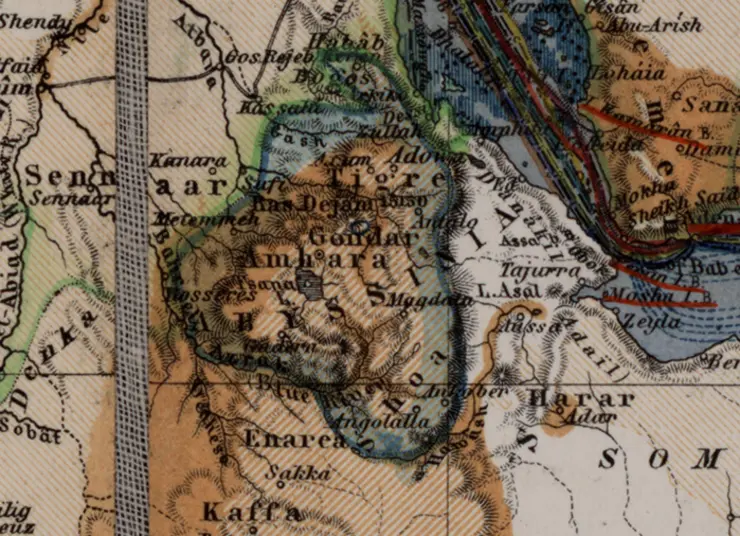
Image: Abyssinia, detail from: Hermann Berghaus, Chart of the World, 6th edition, Gotha: Justus Perthes 1871 © Gotha Research Library
2015
In spring 2015, Iris Schröder travelled to Mekelle to sign a Memorandum of Understanding. This official cooperation agreement, which was concluded between Mekelle University and the University of Erfurt, was intended to provide a framework for further activities. In addition to joint research activities on the history of cartography, the participants also agreed on an exchange of teaching staff.
2014
It all began with the extraordinary holdings on Ethiopian cartography – a hitherto largely unknown part of the Gotha Perthes Collection – which brought Wolbert Smidt, Associate Professor in Mekelle, to Gotha in 2014 as a Duke Ernest Scholarship holder. In collaboration with Wolbert Smidt, the extraordinary potential of the Gotha collections quickly became clear, as the Gotha Perthes Collection offers a wealth of previously little-known sources for research into the history of the Horn of Africa. Accordingly, the idea of a broader research co-operation soon emerged.

![[Translate to English:] facebook icon](/fileadmin/SocialMediaIcons/iconfinder_06-facebook_white.svg)

![[Translate to English:] instagram icon](/fileadmin/SocialMediaIcons/iconfinder_38-instagram_white.svg)
![[Translate to English:] YouTube icon](/fileadmin/SocialMediaIcons/iconfinder_18-youtube_white.svg)
![[Translate to English:] xing icon](/fileadmin/SocialMediaIcons/iconfinder_xing_white.svg)
