
-
Holder of the Professorship for Fundamental Theology and Religious Studies (Faculty of Catholic Theology)
-
Heisenberg Professorship for Religious Studies with a focus on religious media practices (Faculty of Philosophy)
-
Holder of the Professorship for Orthadox Christianity (Faculty of Philosophy)
-
PD Dr. habil. Sebastian Rimestad
 Lehrbeauftragter der Professur für Orthodoxes Christentum (Faculty of Philosophy)
 -
Former holder of the professorship for Medieval History (History Department)
-
Research associate at the professorship for general religious studies (Department of Religious Studies)
-
Inhaberin der Professur für Allgemeine Religionswissenschaft (Faculty of Philosophy)





Dr. Gerdien Jonker
About the person
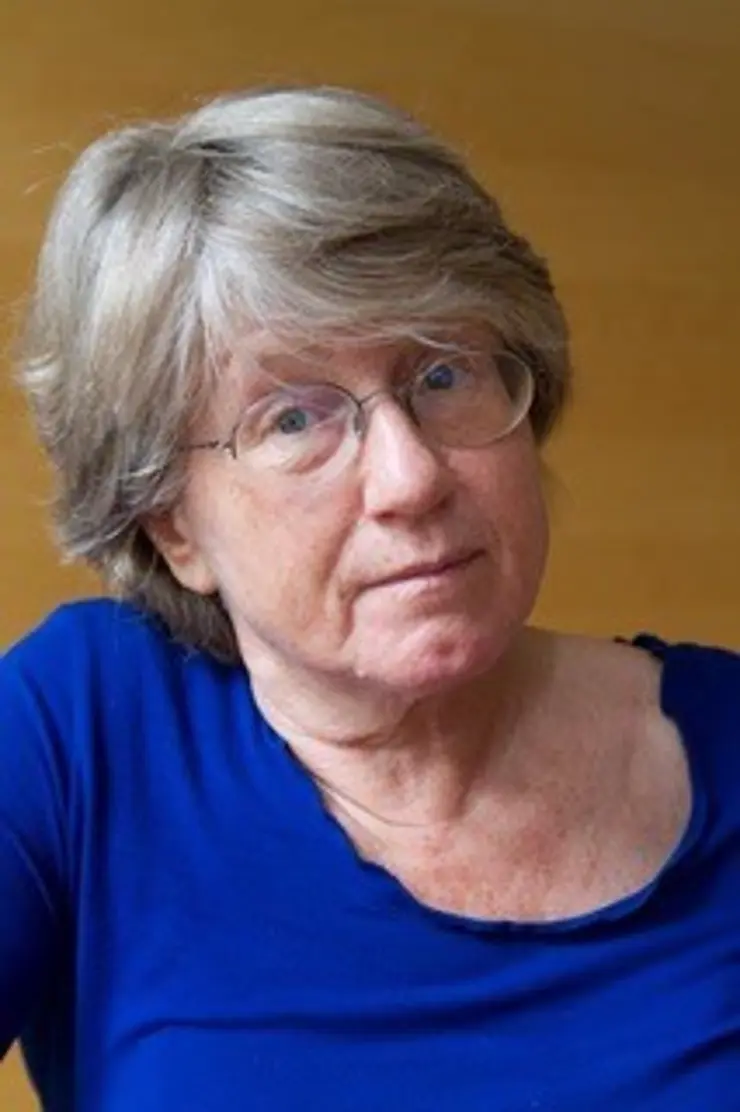
During my studies, I read Cuneiform Languages and the history of religions in the Ancient Middle East. The result was a dissertation, which traced pathways of cultural memory leading to the creation of the Old Testament.
In my research, I target collective memory patterns with a focus on religious minorities in Europe. I published on Islam in Europe, Ahmadiyya mission and Jews and Muslims in Interwar Germany, placing novel religious experiments in the wider field of Life Reform. Research into the Russian-Muslim POW Camp of Weinberge (1914-1918) cleared the beginnings of Muslim engagement in Germany.
- 2011-2023 Research Scholar at Erlangen Research Centre of Islam and Law in Europe (EZIRE), Friedrich-Alexander-University, Erlangen
- 2006-2011 Research Scholar at Georg-Eckert Research Institute, Braunschweig
- 2003-2005 Research Scholar at the Institute of European Ethnography, Viadrina University, Frankfurt/Oder
- 2000-2003 Research Scholar at the Institute of History of Religions, Phillips-University Marburg
- 1996-2000 Research Scholar at the Centre of Oriental Studies (ZMO), Berlin
Research project
The Making of Annemarie Schimmel 1939-1959 / Annemarie Schimmel's Teaching Years 1939-1959
Who is Annemarie Schimmel? Where does she come from? Why is she an icon of the Muslim world but ostracised in Germany? Revisiting the start of her career, this research tries to find some of the answers.
During the Nazi era (1933-1945), German life reformers in support of the regime competed over different conceptions of "belief in God" (belief in God). Drawing on the racist perspective of National Socialism, they expanded the concept of "Aryanism," which implied belonging to a supra-human race (superman). The competition revolved around origins. Did Aryan man descend from the ancient Indians? Did he originate from Northern Europe? Or were the Persians, as they themselves claimed, the first Aryans (original Aryans) who passed on their spirit to the Greeks, who in turn passed it on to the Europeans?
When Annemarie Schimmel (*1922) entered the Oriental Institute of the University of Berlin in October 1939, she became part of a scholarly community that vehemently embraced the Persian narrative. Persian poetry was celebrated as the quintessence of the Aryan spirit. Hans Heinrich Schaeder's weekly seminars, in which Ferdosi, Hafiz, Rumi, and further poets were collectively studied, were hailed. Stressing the Aryan unity of "Orient" and "Occident" (Orient and Occident),Schaeder defended Persia as the Eastern border of Europe, justifying Nazi warfare in the Middle East.
Cross-referencing archival research with the writings of the scholars involved, I firstly reconstruct the Oriental Institute as a site where fundamental knowledge about "who we are" was produced and constantly adapted to the course of the war. I trace the boundaries between an "us" and "them," in which Wahhabi Muslims were equated with National Socialists, and Persian poets served as true Germanic examples. Not least, I follow the students after completing their dissertations and compare the wartime careers they embraced. The reconstruction serves as the historical backdrop in which Annemarie Schimmel became acquainted with the poetry that would accompany her throughout her life.
A young scholar with career ambitions, Schimmel wrote letters to virtually all Orientalists of her time. Thanks to their replies, preserved in the Annemarie Schimmel Archive in Basel, the second focus of this research is on the immediate postwar period. Amongst others, the letters reveal how the Oriental Institute processed the blow of defeat and reinterpreted its Aryan beliefs. They provide a fascinating context for Schimmel's first steps towards Persian poetry as part of "Sufism", "mysticism", and "prayer."
Publications
- The Topography of Remembrance. The Dead, Tradition, and Collective Memory in Mesopotamia. Leiden: EJ Brill 1995.
- One Wavelength to God. The Association of Islamic Cultural Centres in Europe. Bielefeld: transcript 2002. https://library.oapen.org/handle/20.500.12657/23372
- Politics of Visibility. Young Muslims in European Public Spaces(ed. with Valérie Amiraux). Bielefeld: transcript 2006. https://library.oapen.org/handle/20.500.12657/22537
- Narrating Islam. Interpretations of the Muslim World in European Texts(ed. with Shiraz Thobani). London: IB Tauris 2010. https://archive.org/details/narratingislamin0000unse/mode/2up
https://z-lib.io/book/15527008 - In the hall of mirrors. European Perceptions of Muslims, Pagans and Jews (1700-2010). Würzburg: Ergon 2013.
- The Ahmadiyya Quest for Religious Progress. Missionising Europe 1900-1965.Leiden: EJ Brill 2016. https://brill.com/display/title/31638?rskey=9jepfY&result=61
- 'Something the heart must hope for'. A family history of Jews, Christians and Muslims. Göttingen: Wallstein 2018.
- On the Margins: Jews and Muslims in Interwar Berlin. Leiden: EJ Brill 2020. https://brill.com/search?q1=On+the+Margins.+Jews+and+Muslims
- Religious Entanglements between Germans and Indians 1800-1945(ed. with Isabella Schwaderer). New York: Palgrave MacMillan 2023. link.springer.com/book/10.1007/978-3-031-40375-0
- How to spell empire. The 'Tartar Camp' Weinberge 1914-1918 (authored with Markus Schlaffke). Göttingen: Wallstein 2025.
For articles, see gerdientjejonker.de

![[Translate to English:] facebook icon](/fileadmin/SocialMediaIcons/iconfinder_06-facebook_white.svg)

![[Translate to English:] instagram icon](/fileadmin/SocialMediaIcons/iconfinder_38-instagram_white.svg)
![[Translate to English:] YouTube icon](/fileadmin/SocialMediaIcons/iconfinder_18-youtube_white.svg)
![[Translate to English:] xing icon](/fileadmin/SocialMediaIcons/iconfinder_xing_white.svg)
