Herzlich Willkommen!
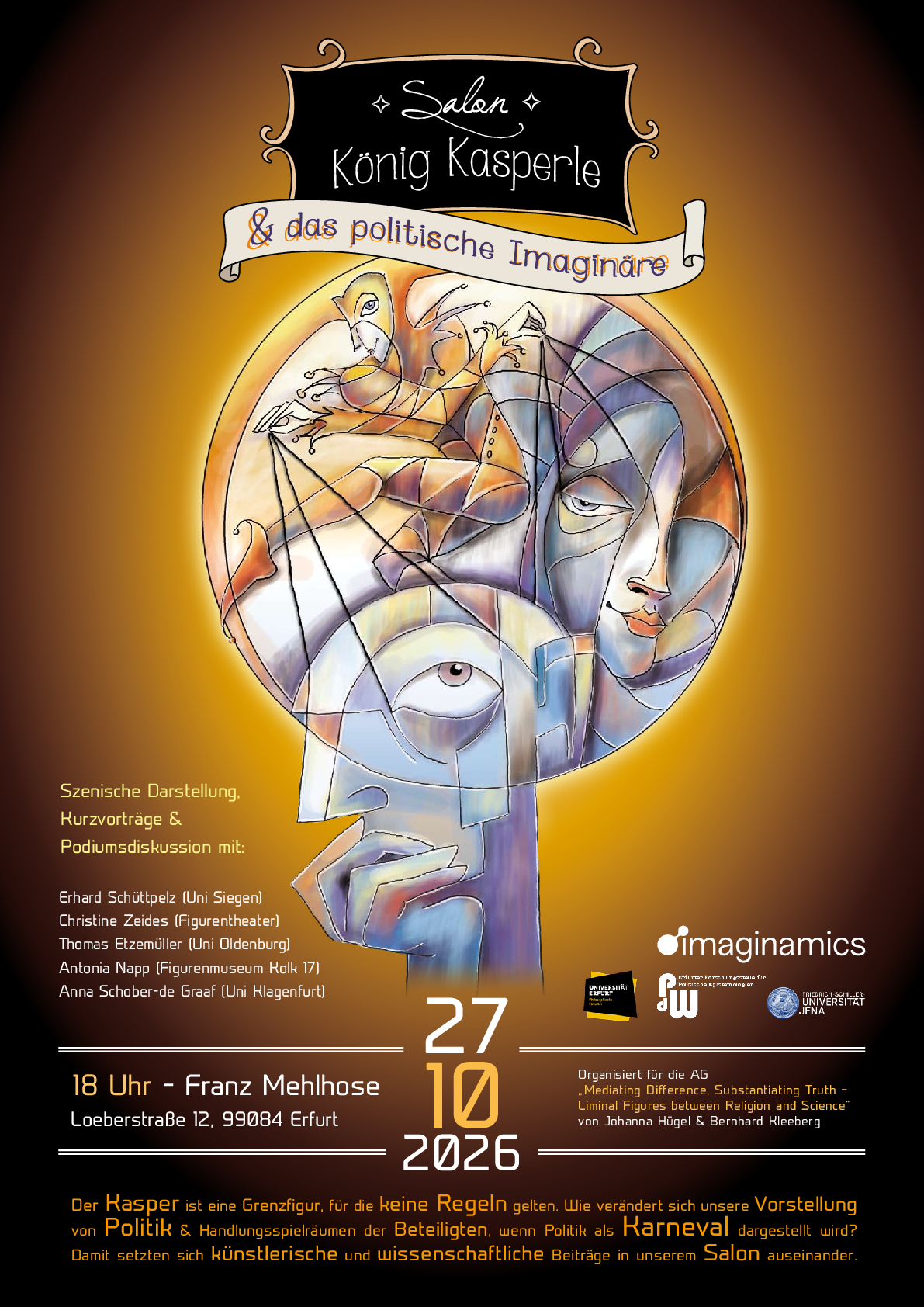
27. Oktober 2026 | ab 18 Uhr | Franz Mehlhose (Loeberstraße 12, 99084 Erfurt)
Der Kasper ist eine Grenzfigur, für die keine Regeln gelten. Wie verändert sich unsere Vorstellung von Politik & Handlungsspielräumen der Beteiligten, wenn Politik als Karneval dargestellt wird? Damit setzten sich künstlerische und wissenschaftliche Beiträge in unserem Salon auseinander.
Als Auftaktveranstaltung der Arbeitsgruppe „Mediating Difference, Substantiating Truth – Liminal Figures between Religion and Science“ des Exzellenzclusters ‚Imaginamics‘ laden Johanna Hügel und Bernhard Kleeberg zum Salon “König Kasperle und das politische Imaginäre” in die Franz Mehlhose ein!
Wir freuen uns auf eine szenische Darstellung von Christine Zeides, Kurzvorträge & Podiumsdiskussion mit: Erhard Schüttpelz (Uni Siegen) Christine Zeides (Figurentheater) Thomas Etzemüller (Uni Oldenburg) Antonia Napp (Figurenmuseum Kolk 17) Anna Schober-de Graaf (Uni Klagenfurt).
Die Veranstaltung wird in Kooperation mit dem Kolk17 Figurentheater und -museum Lübeck durchgeführt.
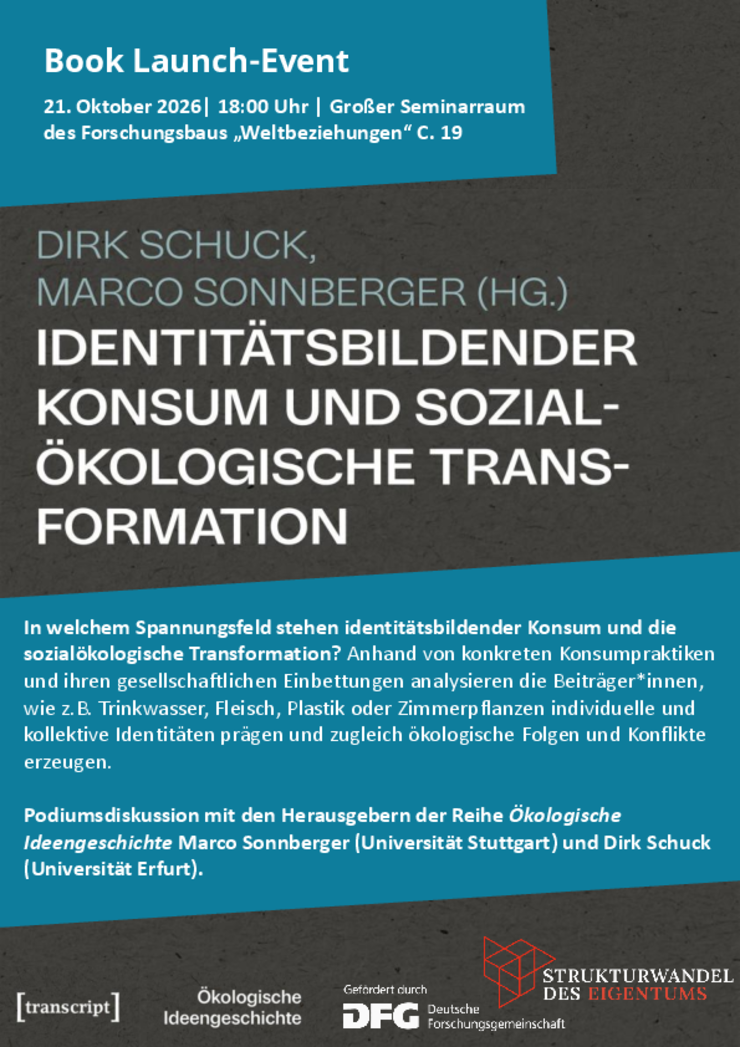
21. Oktober 2026| 18:00 Uhr | Großer Seminarraum des Forschungsbaus „Weltbeziehungen“ C19
In welchem Spannungsfeld stehen identitätsbildender Konsum und die sozialökologische Transformation? Anhand von konkreten Konsumpraktiken und ihren gesellschaftlichen Einbettungen analysieren die Beiträger*innen, wie z.B. Trinkwasser, Fleisch, Plastik oder Zimmerpflanzen individuelle und kollektive Identitäten prägen und zugleich ökologische Folgen und Konflikte erzeugen.
Podiumsdiskussion mit den Herausgebern der Reihe Ökologische Ideengeschichte Marco Sonnberger (Universität Stuttgart) und Dirk Schuck (Universität Erfurt).
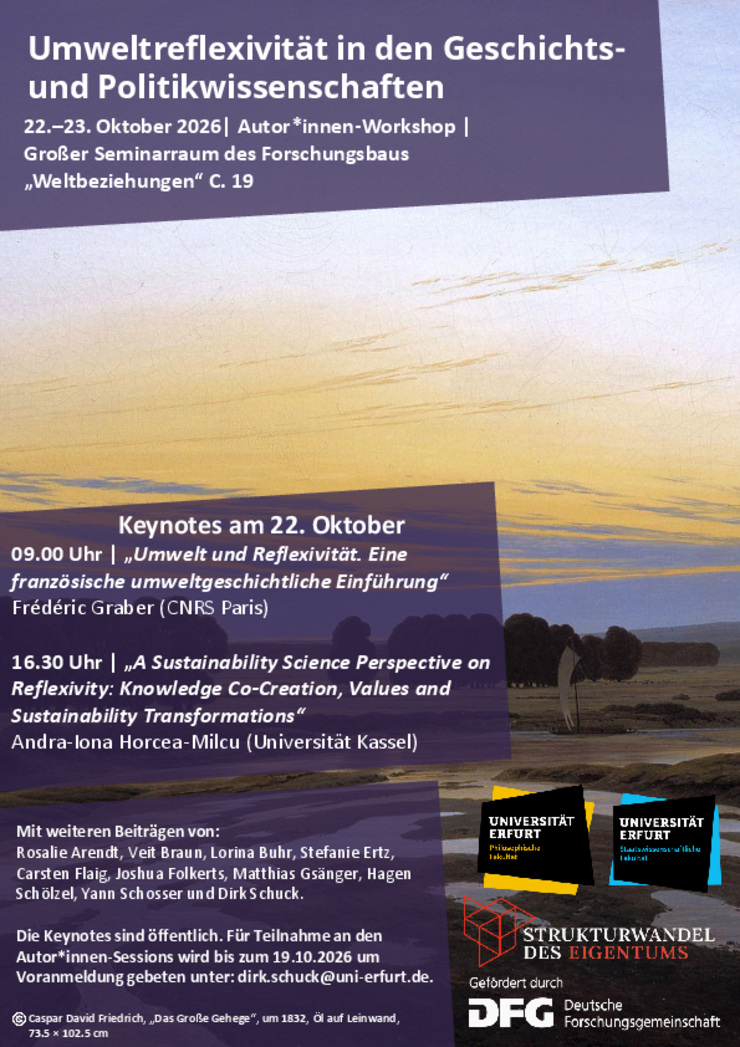
22.–23. Oktober 2026| Autor*innen-Workshop | Großer Seminarraum des Forschungsbaus „Weltbeziehungen“ C19
Keynotes am 22. Oktober
09.00 Uhr | „Umwelt und Reflexivität. Eine französische umweltgeschichtliche Einführung“ - Frédéric Graber (CNRS Paris)
16.30 Uhr | „A Sustainability Science Perspective on Reflexivity: Knowledge Co-Creation, Values and Sustainability Transformations“ - Andra-Iona Horcea-Milcu (Universität Kassel
Mit weiteren Beiträgen von: Rosalie Arendt, Veit Braun, Lorina Buhr, Stefanie Ertz, Carsten Flaig, Joshua Folkerts, Matthias Gsänger, Hagen Schölzel, Yann Schosser und Dirk Schuck.
Die Keynotes sind öffentlich. Für Teilnahme an den Autor:innen-Sessions wird bis zum 19.10.2026 um Voranmeldung gebeten unter: dirk.schuck@uni-erfurt.de.
July 8-9, 2027 | Workshop | University of Erfurt
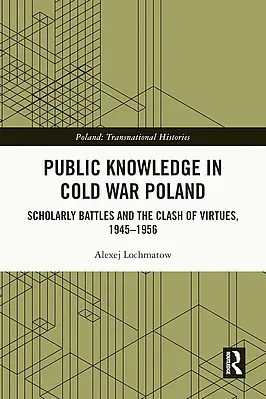
The concept of virtue has become an important analytical tool within the History of Science. Scholars employing this concept have shifted their focus from scientific ideas themselves to the practices involved in cultivating the “epistemic virtues” that made the emergence of these ideas possible. By “virtue,” this scholarship understands cultivated traits required to be considered a “good scholar” or a “good scientist” in different historical periods. Developing this approach further, recent historiography has proposed extending the application of “virtue” as an analytical tool beyond the study of purely epistemic aspects of knowledge production and using it to analyse the influence of large-scale rapid political and social transformations on internal processes within science and scholarship. Building on recent developments in political epistemology, our conference aims to advance this line of inquiry.
We propose to examine how military and, more broadly, combat-mobilisation discourses have been linked to the promotion of visions of science and scholarship shaped by the logic of war. We ask how, in various historical, regional, political, and social contexts, scientists and scholars have been compelled or encouraged to make “defeating the enemy” and “defending sovereignty” central elements of their academic practice, as well as which “virtues” they were expected to cultivate in order to meet these demands. We are especially interested in how “war virtues” transformed both the sciences and the humanities; in what ways these “virtues” reshaped academic institutions; what influence they had on the drawing of boundaries between science and political power; and what forms of resistance to the promotion of “war virtues” emerged in different academic contexts.
We warmly welcome papers addressing various aspects of this topic, as well as those proposing new perspectives on “war virtues” as an analytical tool. The conference will focus primarily on modern contexts, but we also welcome papers dealing with early modern, medieval, and ancient topics. Alongside European and US-American subjects, we encourage contributions addressing non-“Western” contexts.
Please send your abstract (max. 300 words) and a short CV or a link to your online profile by 20 December 2026 to wissenschaftsgeschichte@uni-erfurt.de
The conference is organised by the research centre Political Epistemologies of Central and Eastern Europe (PECEE).
For questions, please contact Dr. Alexej Lochmatow: alexej.lochmatow@uni-erfurt.de
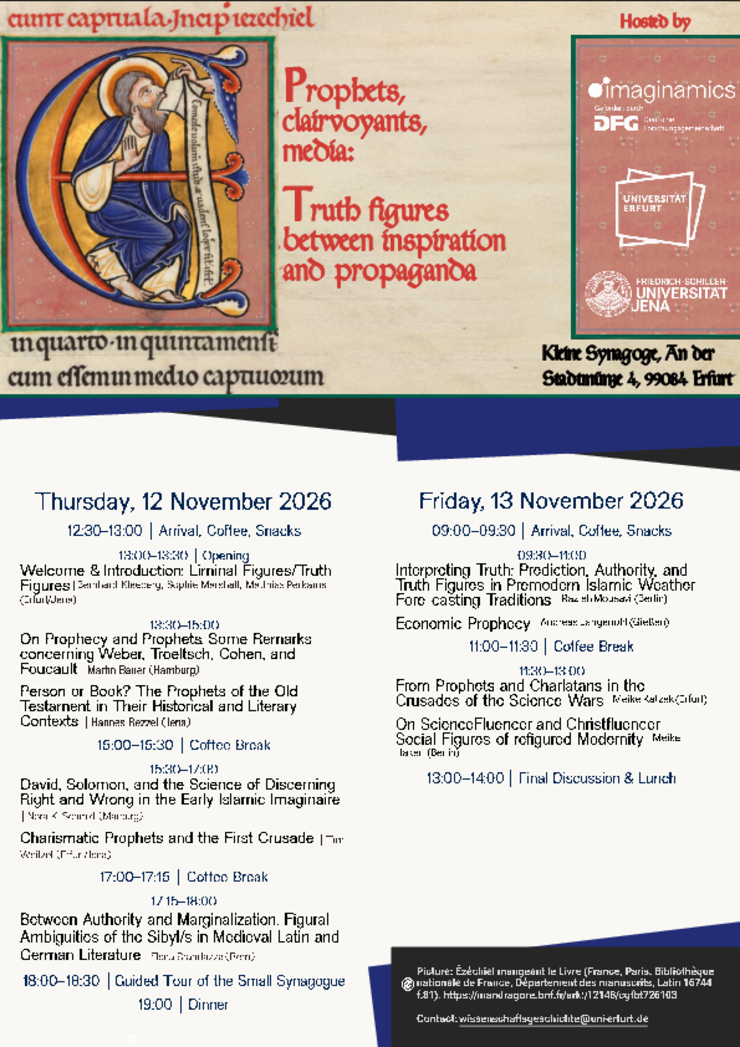
12. & 13. November 2026 | Kleine Synagoge, Erfurt
The prophet and similar figures like the seer, the clairvoyant, or the medium, are assumed to guarantee the truth of a shared belief due to supernatural or even divine inspiration. Playing a constitutive role in the Bible and the Qur’an, in Greek philosophy, and Scandinavian mythology, the figure of the prophet is still being used today – to describe the wise foresight of ‘great men’ in popular history, to thematize the ‘Cassandric’ value of literature, or to disavow political leaders or experts of scientific prognosis as ‘false prophets.’
Our workshop sets out to examine this liminal figure as a product of imagination and as template for practices of imagining. We want to study the construction practices, core narratives, visual portrayals, and other variations of the prophet in different cultural settings, its role in (religious and other) group experiences, the formation of identities, or its function in political polemics.
We are interested in the specific mediality of Old Testament figures bridging the gap between presence and future, as well as in the social function of practitioners of economic prognosis or weather forecasting. To discuss these and similar questions, we aim to bring together early career scholars and established researchers from a range of disciplines from anthropology to religious or science studies.
The workshop is ogranised by the Working Group ‚Liminal Figures‘ of the EXC ‚Imaginamics‘.
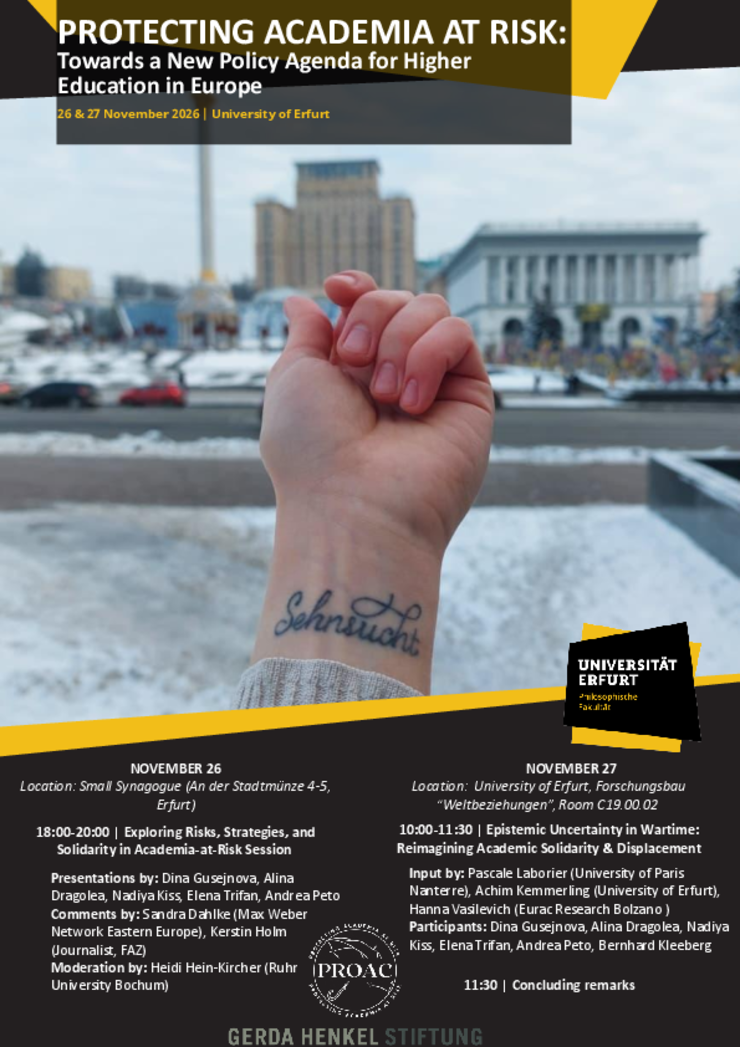
26. & 27. November 2026 | Kleine Synagoge Erfurt & C19.00.02
The event, held over two days, centres on the critical theme of academic freedom and the protection of scholars facing risks and displacement. Organised under the auspices of the PROAC - “Protecting Academia at Risk” project and supported by the Gerda Henkel Foundation, the gathering brings together experts, researchers, and practitioners to discuss the multifaceted challenges confronting academia at risk in Europe.
The opening session introduces the PROAC team’s findings, including the collective volume, the white paper presentation, and a special podcast series created during the project. Additionally, the practical pocket guide for academics under attack, developed by PROAC leader Andrea Peto in collaboration with others, will be presented. The event is enriched by insights from invited experts in higher education policy and academic freedom in Europe. On the second day, a closed roundtable provides an opportunity for deeper engagement with the issues discussed, particularly the publication and white paper content. The event will conclude with closing remarks on collective aspirations for a more inclusive, resilient, and supportive academic environment in Europe.
Throughout the event, the overarching theme remains the defence and advancement of academic freedom, offering both theoretical insights and practical frameworks to support scholars at risk and promote enduring solidarity in the face of adversity.
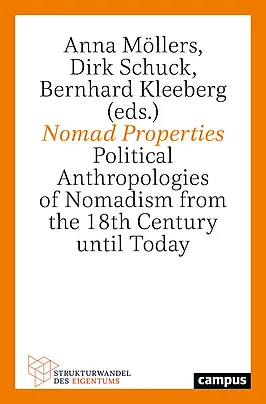
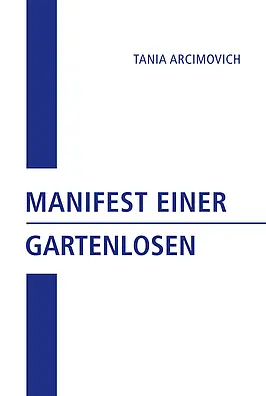
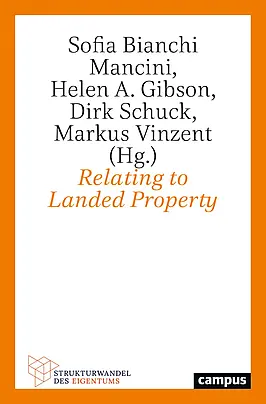

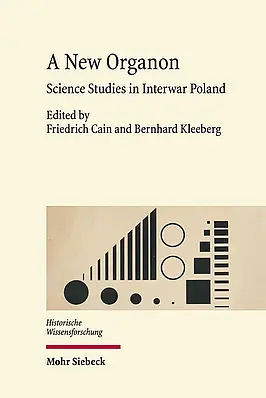
Ab sofort können Sie sich in unsere Mailingliste eintragen. Sie dient der Information über Neuigkeiten und Aktivitäten aus dem Bereich der (Erfurter) Wissenschaftsgeschichte.
Die Anmeldung zu Veranstaltungen im Wintersemester ist jetzt möglich. Wir freuen uns, Sie in unseren Veranstaltungen begrüßen zu dürfen!
Master of Arts
Kleeberg: Forschungskolloquium zur Wissenschaftsgeschichte
Bachelor of Arts
Anna Domdey: Das nationalsozialistische Lagersystem
Kleeberg: Einführung in die Wissenschaftsgeschichte (Vorlesung)
Kleeberg: Propheten, Hellseher, Medien: Zur Geschichte der Wahrheit
Lehrveranstaltungen vergangener Semester finden Sie im Archiv.
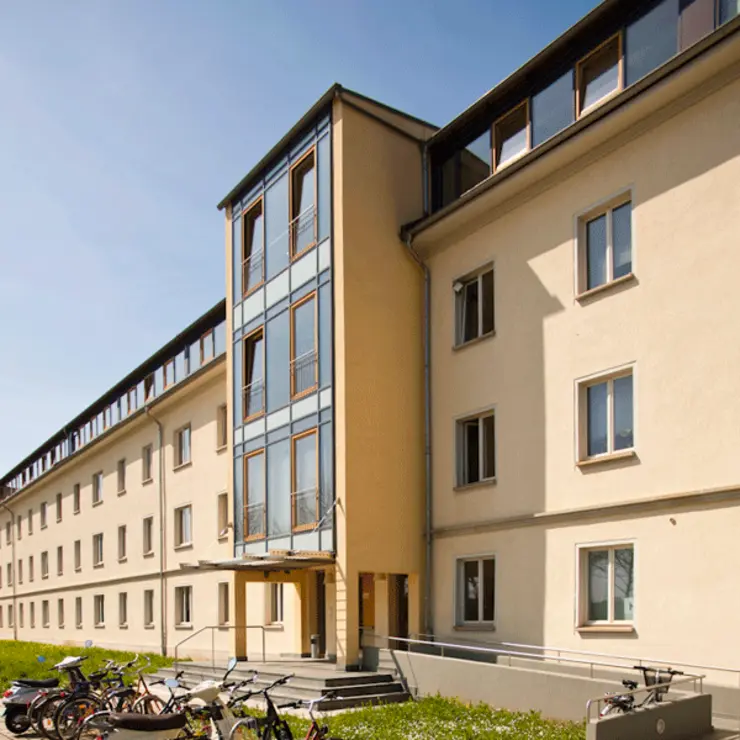
Universität Erfurt
Philosophische Fakultät
Wissenschaftsgeschichte
Postfach 90 02 21
99105 Erfurt



Universität Erfurt (Campus)
Nordhäuser Str. 63
99089 Erfurt