Information from the organisers
Who is actually writing history here? Let’s not talk about each other, but with each other: over coffee and cake, let’s discuss the past and present of people with disabilities. The topics and key areas of our discussion will form the basis for further research projects.
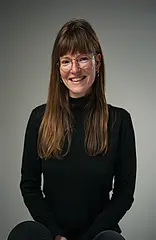
To this end, historian Dr Pia Schmüser will first read from her book *‘Family Rehabilitation? An Everyday History of East German Households with Disabled Children (1945–1990)’* and join us in a discussion. The reading will be streamed online with written interpretation. We will then move from the past to the present: we will speak with a board member of the ‘Thuringian State Association of Women with Disabilities’ (LaFiT): Where are people with disabilities discriminated against and excluded today? How can we break down barriers and promote social inclusion? Finally, as part of a Forum Theatre performance, we’ll explore the question of what we can do in our daily lives to combat ableism. This participatory theatre will present two scenes depicting discrimination and invite the audience to discuss them: What exactly bothered us? How can we resolve the conflict shown? How can we respond appropriately to discrimination and social exclusion?
- Digital broadcast of the reading (link provided upon registration at elena.kiesel@uni-erfurt.de)
- Text-to-speech interpretation for the reading
- Awareness team on site
- Cake whilst stocks last (and drinks from Café Hilge)
Background
Through this event, the City of Erfurt and the University of Erfurt are contributing to the process of coming to terms with violence in the GDR and during the period of transformation. The focus is on examining how social processes, conflict structures and collective forms of remembrance can be effectively analysed and reflected upon by local authorities, civil society actors and affected groups. The aim is to strengthen social cohesion through dialogue-oriented and research-based event formats and to provide new impetus for a spirit of solidarity and inclusive coexistence in the city. The ‘Difference – Transformation – Cohesion’ (DiTZu) project sees itself as a non-partisan initiative aimed at consolidating democratic structures and strengthening civic engagement. It exemplifies the close cooperation between municipal bodies, research institutions and civil society organisations, thereby setting an example for a resilient democracy.
![[Translate to English:] facebook icon](/fileadmin/SocialMediaIcons/iconfinder_06-facebook_white.svg)

![[Translate to English:] instagram icon](/fileadmin/SocialMediaIcons/iconfinder_38-instagram_white.svg)
![[Translate to English:] YouTube icon](/fileadmin/SocialMediaIcons/iconfinder_18-youtube_white.svg)
![[Translate to English:] xing icon](/fileadmin/SocialMediaIcons/iconfinder_xing_white.svg)
