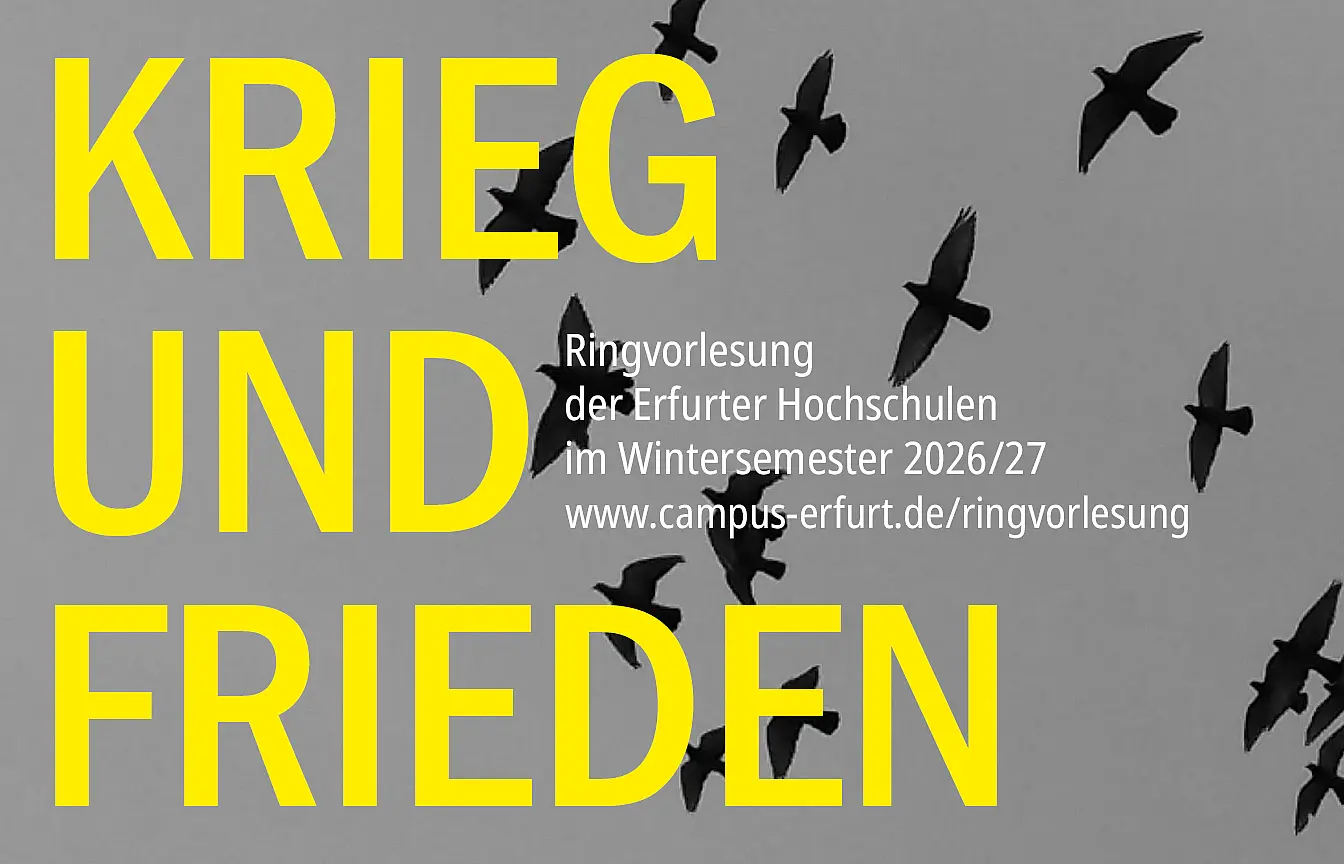
Why do we often associate political violence with the Global South, and peace and democracy with Europe? How does this perspective shape our understanding of current violent conflicts? Drawing on insights and findings from their own research, the lecture by Dr Alejandra Ortiz-Ayala and Dr Siddharth Tripathi examines how violence and exclusion shape everyday life in societies in the North and the South. It asks whose security is being protected, whose experiences are overlooked and rendered invisible, and how violence comes to be accepted and normalised. From a decolonial and postcolonial perspective, the speakers bring experiences from the Global North and South into the discourse, whilst simultaneously challenging the assumption that Europe is unaffected by the political violence experienced elsewhere. Their talk is an invitation to reflect on what European societies can learn from people who have faced political violence and worked for peace – and how these insights can help us to understand and counteract the erosion of democracy in Europe and the world today.
The speakers:
Alejandra Ortiz-Ayala is a political scientist from Colombia. Before completing her doctorate, she worked for several years as a university lecturer, researcher and consultant for national and international organisations in Colombia. Her current academic research interests span four areas, all with the overarching aim of preventing violence. As a Civil War Paths Fellow, she is part of the Centre for the Comparative Study of Civil Wars at the University of Sheffield. She is a member of the “Centre for Global Migration” at the University of Otago, New Zealand, and a research employee in the Political Economy and Transnational Governance (PETGOV) programme at the University of Amsterdam.
Siddharth Tripathi is a postdoctoral researcher in the Department of Foreign and Security Policy at the Konrad Adenauer Foundation in Berlin. His research interests lie in peace and conflict studies, theories of international relations – particularly perspectives from the Global South – and Indian foreign policy. He was a postdoctoral researcher at the Willy Brandt School of Public Policy at the University of Erfurt, where he investigated the legitimacy of peace missions and the link between external actors and informal power networks in post-conflict societies. In his doctorate at the School of International Studies, Jawaharlal Nehru University, New Delhi, he assessed the role of international organisations, particularly the European Union and its civilian crisis management missions, and their role in conflict mitigation. As part of his doctoral and postdoctoral research, he has carried out extensive fieldwork in Afghanistan, Bosnia and Herzegovina, and Kosovo.
Admission to the lectures in this lecture series is free. However, please note that seating in the town hall is limited to 180.