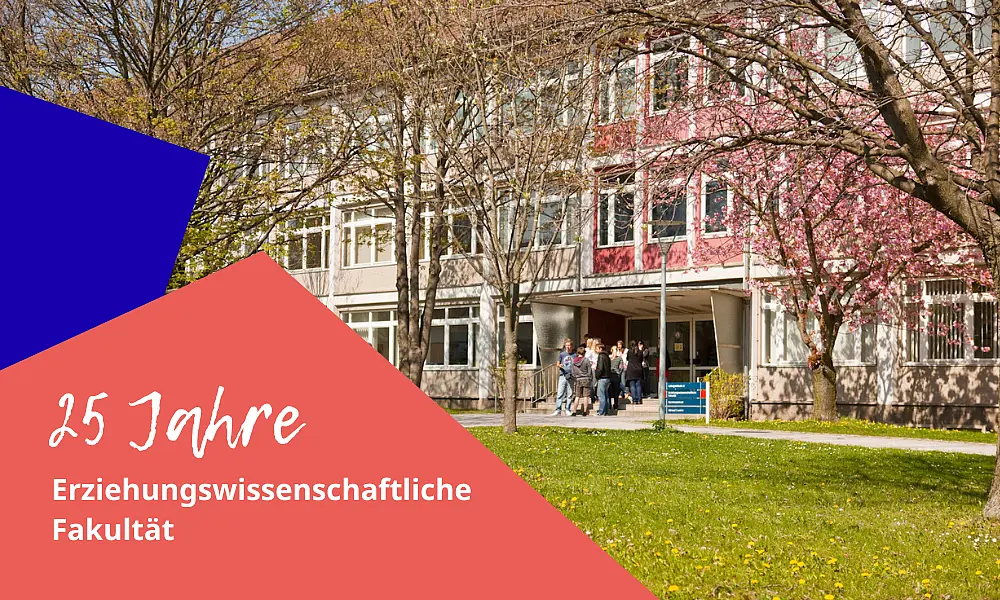
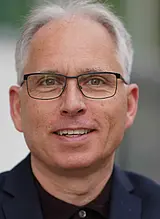
"The dedication to people, seeing it as an appointment to develop individual potential from childhood throughout the entire lifespan – that is the DNA of the Faculty of Education at the University of Erfurt," explains the Dean, Professor Tilmann Betsch. "We are all guided by the conviction that participation in society, practising democracy and dealing with the challenges of our time, such as AI, climate change and conflicts, require a holistically educated person. That limitations, whether mental or physical, should not be an obstacle to participation. And that it is our responsibility to train people who can realise this educational mission professionally and sustainably. Through measures that are scientifically sound."
Two years after the University of Erfurt began offering degree programmes, the Erfurt-Mühlhausen University of Education was incorporated into the university in 2001, establishing the Faculty of Education as the university's third faculty. Since then, it has produced more than 10,000 graduates. Today, they work as teachers in schools, in research as well as in the private sector or in counselling institutions. A lot has also happened in terms of research. The Dean states: "Education is and remains a central task of our society and the education system is one of its key institutions. Our faculty contributes to sustainable education with its research and concrete solutions – both in basic and applied research. If you just take a look at the variety of topics covered by externally funded projects, you will find internationally visible basic research in the areas of learning, cognition, diagnostics, potential development and didactics, as well as fundamental problems in Mathematics, statistics and research methods. On the other hand, we deal with topics of direct social relevance – including research on sustainable vocational training, cultural education in rural areas, music education in multimedia contexts, the communication of scientific findings to society, the development and promotion of decision-making skills and social participation, approaches to improving the inclusion of people with disabilities, training in the acquisition of written language and the promotion of dialogue skills among prospective doctors."
All of this will now be celebrated in June. The detailed programme for the faculty anniversary can be found on the anniversary website (in German only).

![[Translate to English:] facebook icon](/fileadmin/SocialMediaIcons/iconfinder_06-facebook_white.svg)

![[Translate to English:] instagram icon](/fileadmin/SocialMediaIcons/iconfinder_38-instagram_white.svg)
![[Translate to English:] YouTube icon](/fileadmin/SocialMediaIcons/iconfinder_18-youtube_white.svg)
![[Translate to English:] xing icon](/fileadmin/SocialMediaIcons/iconfinder_xing_white.svg)
