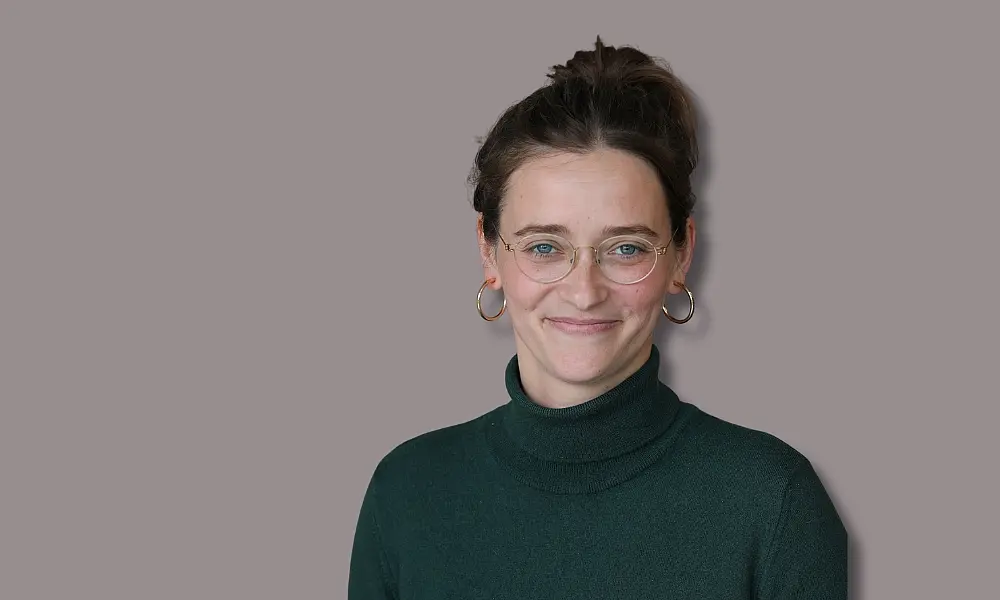
In contemporary research, the core dimensions of diversity play an important role in almost all academic disciplines: for example, when it comes to the socio-cultural conceptions of gender and sexuality in the humanities and social sciences, the consideration of users’ physical requirements in technological development, or the individual needs of different age groups in early medical diagnosis and care. To highlight this diversity of topics at Thuringian universities and to support early-career researchers at these institutions, the Thuringian Competence Network for Gender Equality has now announced the “Diversity Meets Science” award for the eighth time. In a two-stage process, a panel of academic judges has now selected the best papers from the current round of submissions – comprising 25 entries from five Thuringian universities. Alongside the first prize of 1,000 euros awarded to Lena Engel, two further prizes of 500 euros each went to Dr Carmen Gómez Vega from the Bauhaus University Weimar for her doctoral dissertation "Stitches about our lives in times of pandemic: We go through the fabric and pull on the needle to take care of ourselves” and to Nadine Held from Nordhausen University of Applied Sciences for her master's thesis “Inclusive educational measures to support the participation of girls on the autism spectrum during adolescence”.
For her master's thesis in the binational master program Middle Eastern Sociology/Anthropology and History (MESH), Lena Engel traced the stories of North African women who were forced to perform hard labour in 27 of the 141 satellite camps of the Buchenwald concentration camp that have been identified to date. The focus is on Taous Merouane, a Kabyle woman living in the south of France, and Marinette Ahmed, the daughter of an Algerian worker in Lyon. Drawing on their biographies, Lena Engel explored the fates of racialised women under National Socialism and the specific dynamics arising from the intersectionality of race and gender. Who were these women? What are their stories? What role do colonial racism, sexism and their intersectionality play in the life stories of women in colonised North Africa, Vichy France and Nazi Germany? Drawing on extensive archival research in Germany and France, Lena Engel applied the method of “critical fabulation,” coined by literary scholar Saidiya Hartman, to develop historically grounded hypotheses. These hypotheses shed light not only on aspects of the two women’s lives, but also on how race and gender, and their intersection, shaped their experiences during the Nazi era.
Dr Theresia Piszczan, Equal Opportunity Officer at the University of Erfurt: “We are delighted that, following Antonia Dölle, another graduate of the University of Erfurt – Lena Engel – has now been honoured for her master's thesis, and we offer our warmest congratulations on this wonderful achievement.”
![[Translate to English:] facebook icon](/fileadmin/SocialMediaIcons/iconfinder_06-facebook_white.svg)

![[Translate to English:] instagram icon](/fileadmin/SocialMediaIcons/iconfinder_38-instagram_white.svg)
![[Translate to English:] YouTube icon](/fileadmin/SocialMediaIcons/iconfinder_18-youtube_white.svg)
![[Translate to English:] xing icon](/fileadmin/SocialMediaIcons/iconfinder_xing_white.svg)
