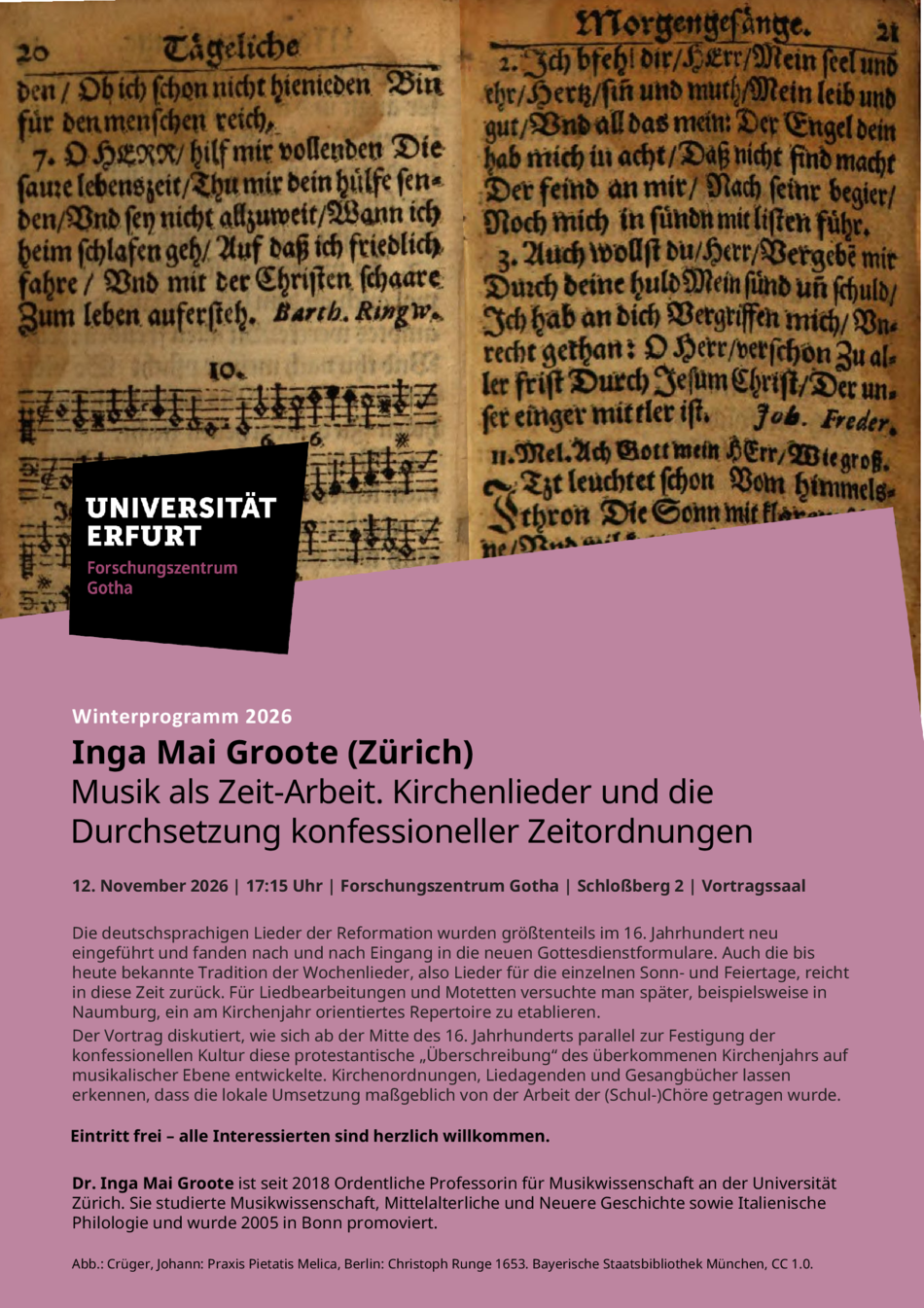
The German-language hymns of the Reformation were largely introduced during the 16th century and gradually found their way into the new liturgical forms. The tradition of ‘weekly hymns’ – that is, hymns for individual Sundays and feast days – which is still familiar today, also dates back to this period. Later on, attempts were made – for example in Naumburg – to establish a repertoire for hymn arrangements and motets based on the church year.
This lecture discusses how, from the mid-16th century onwards, this Protestant ‘overwriting’ of the traditional church year developed on a musical level in parallel with the consolidation of confessional culture. Church regulations, hymn schedules and hymnals reveal that local implementation was largely driven by the work of (school) choirs.
The event will take place on 12 November at 5.15 pm in the lecture theatre of the Gotha Research Centre. Admission is free – all interested parties are warmly welcome.
Dr Inga Mai Groote has been a Full Professor of Musicology at the University of Zurich since 2018. She studied musicology, medieval and modern history, and Italian philology, and was awarded her doctorate in Bonn in 2005.