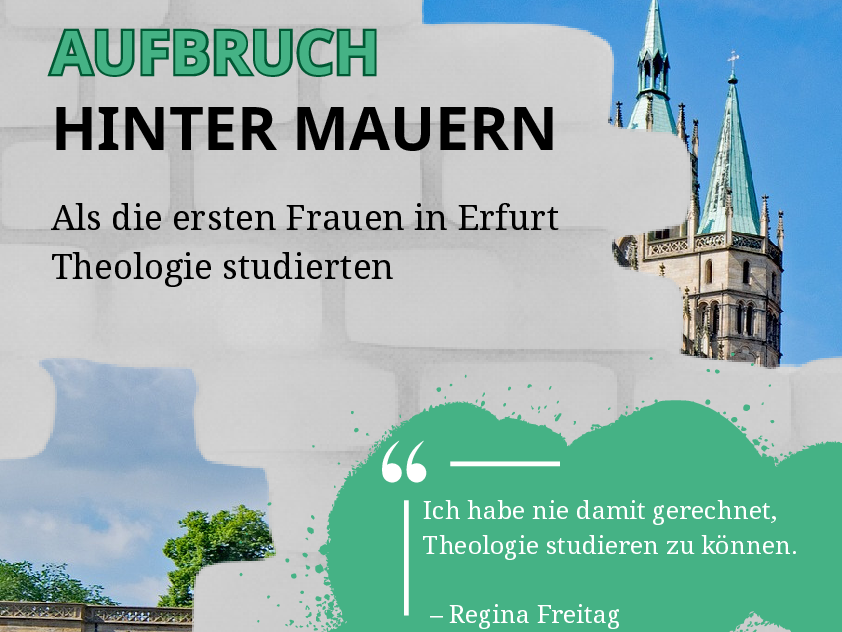
Today, 45% of students at the Faculty of Catholic Theology are women. This was not always the case. When the Philosophical-Theological Studies programme (PTS) was founded in 1952 in the GDR as a training centre for future priests, women were initially denied access. It was not until a decade later that women were admitted for the first time, enrolled as guest students to receive in-depth theological training for their work in parish ministry and kindergartens.
56 women studied Catholic theology in Erfurt between 1962 and 1992 under the conditions of the GDR, most of them in the 1980s.
Theologians Weronika Vogel and Professor Marlen Bunzel - both also former students from Erfurt - interviewed 16 of these women. Their biographical accounts reveal a hitherto untold female perspective on the history of the GDR church in Erfurt.
The discussion evening sheds light on the historical background of "women's studies" in the GDR. Two of the contemporary witnesses interviewed - Dorothea Dubiel and Regina Freitag - look back and talk about their experiences.
What motivated women to study theology back then? What challenges and resistance did they face? How did women perceive their role in the Catholic Church at that time and how did they organise it? And to what extent was studying theology in Erfurt a departure behind walls for these women?

![[Translate to English:] facebook icon](/fileadmin/SocialMediaIcons/iconfinder_06-facebook_white.svg)

![[Translate to English:] instagram icon](/fileadmin/SocialMediaIcons/iconfinder_38-instagram_white.svg)
![[Translate to English:] YouTube icon](/fileadmin/SocialMediaIcons/iconfinder_18-youtube_white.svg)
![[Translate to English:] xing icon](/fileadmin/SocialMediaIcons/iconfinder_xing_white.svg)
