Second Internationalization Strategy (2025/26)
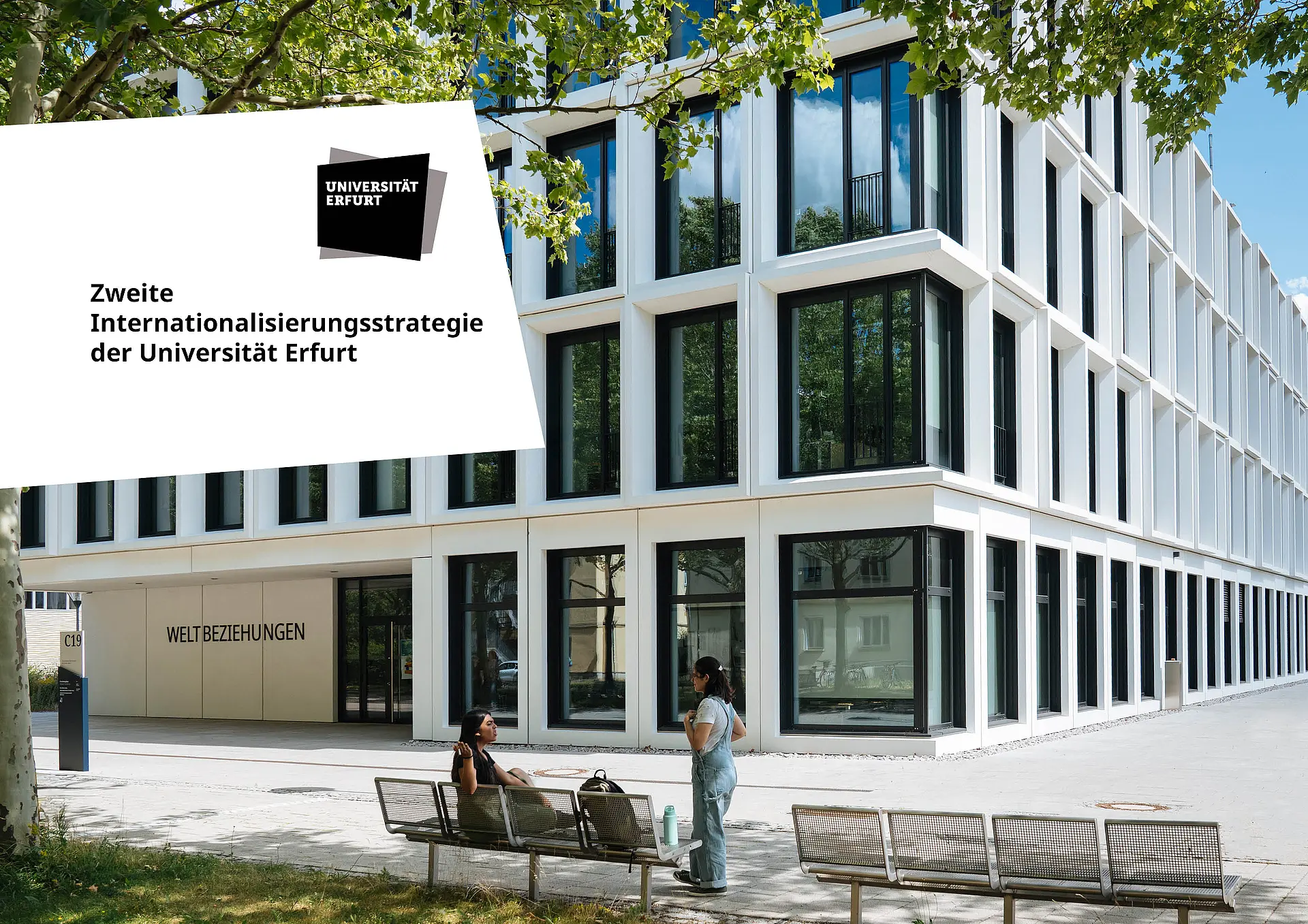
Building on a comprehensive review of the developments of the University of Erfurt over the past decade, its Second Internationalization Strategy establishes direct continuity with the first strategy by reaffirming UE's commitment to openness, internationality, and interculturality in teaching, research, and campus culture. This is combined with innovation and new emphases arising from the university's 'glocal' positioning, both in the global academic competition and in the regional environment. New focal points particularly address the internationality profile of UE in the thematic orientation of research and teaching, as well as the strategic development of the cooperation portfolio and forms and the institutional embedding of internationalization processes as a task cross-cutting traditional compartmentalizations and as an element of quality management in research and teaching.
Signing the "Magna Charta Universitatum"
In the context of its adoption of the Second Internationalization Strategy, the Senate of the University of Erfurt decided in its meeting on February 4th, 2026 to also apply for acceptance as a signatory of the “Magna Charta Universitatum”,thereby following the recommendations of the Senate Committee for International Affairs. The senate also decided to include this support for the Charta in the preamble of the new strategy thus framing its ‘glocal’ constitution.
By doing so, the university joins the now 900 universities worldwide that, by signing the Magna Charta Universitatum, openly stand for fundamental values such as academic freedom, university autonomy, and the regional responsibility of higher-education institutions. On June 17, 2026, the “Observatory Magna Charta Universitatum” informed the president of the UE about the success of this application and the inclusion of the university in the list of signatory institutions. In view of the increasing global and local challenges faced by universities, this decision by the University of Erfurt is an important signal, not just to other universities, both nationally and internationally, but also to its own regional environment.

1st Internationalization Strategy (2018/19)
From the beginning, the University of Erfurt focused its objectives on excellence of research and appealing academic and teaching conditions, to be achieved by a cooperative and international approach based on excellent working conditions for scholars in their early academic career and for academics from abroad as well as options for students to study abroad and make a lifetime experience. To create a successful international campus community, social support and the non-academic integration of international students are of special importance. Some goals of the first strategy were the sustainable perpetuation of our welcoming culture, the development and maintenance of international appealing Bachelor and Master degree courses, the organization of international summer/winter schools, as well as the promotion and development of offerings for the acquisition of intercultural competencies. In addition to the improvement and/or perpetuation of competitiveness of the University of Erfurt on a national and international level, the university attaches special importance to providing a neutral space for academic discourse.

![[Translate to English:] facebook icon](/fileadmin/SocialMediaIcons/iconfinder_06-facebook_white.svg)

![[Translate to English:] instagram icon](/fileadmin/SocialMediaIcons/iconfinder_38-instagram_white.svg)
![[Translate to English:] YouTube icon](/fileadmin/SocialMediaIcons/iconfinder_18-youtube_white.svg)
![[Translate to English:] xing icon](/fileadmin/SocialMediaIcons/iconfinder_xing_white.svg)
