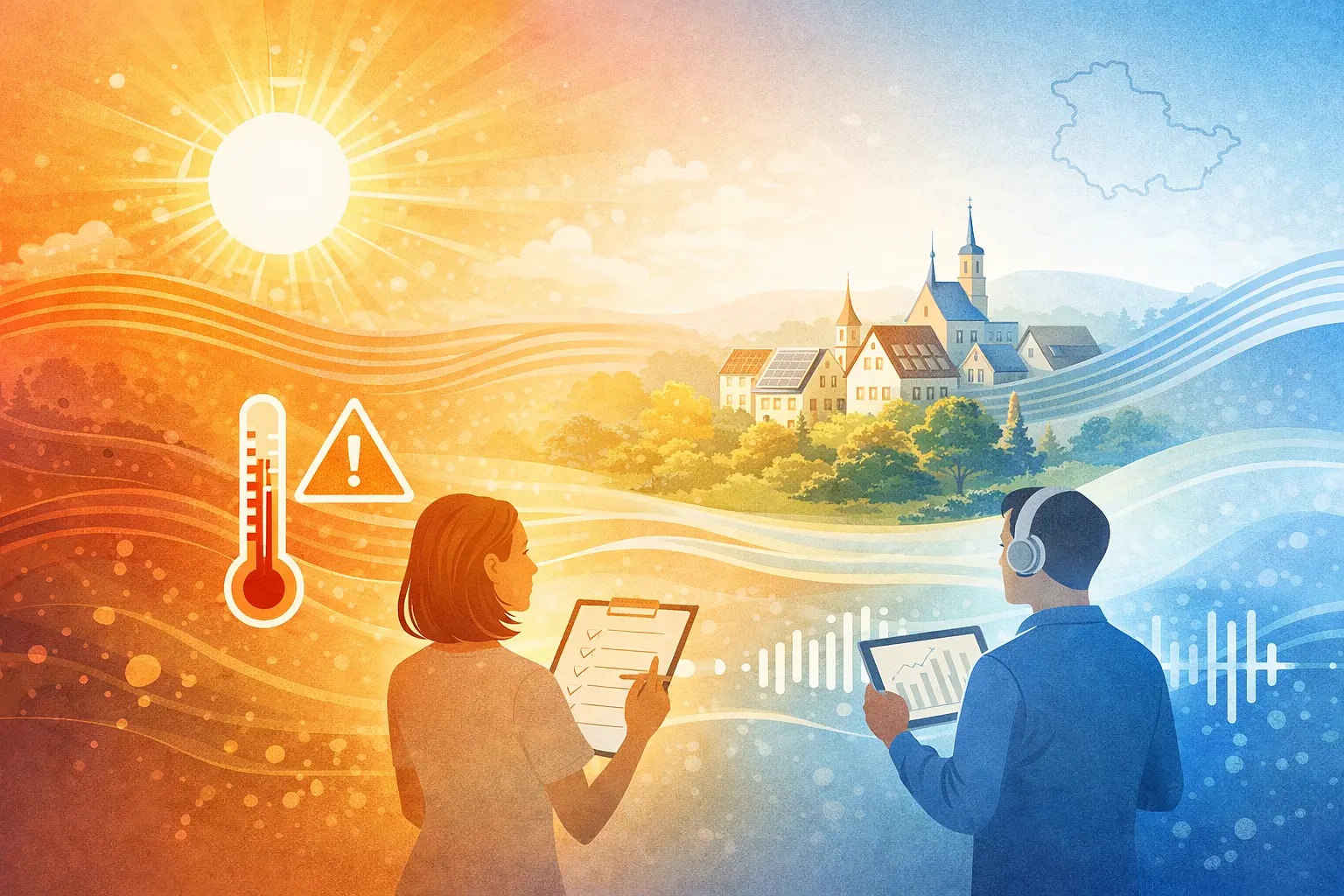
Hot summers are becoming more frequent – even in Thuringia. But how will heat change our everyday lives, our health and the medicine of the future? The HeatFuture Lab, a walk-in future laboratory for thinking, feeling and shaping the future, invites you to explore together how heat is experienced, what health risks are associated with it and how Erfurt could be better prepared for hot summers. It combines research communication, participatory research, AI-supported future scenarios and dialogue between research and society - to be experienced live on the following three weekends:
- 07.08. – 09.08. from 1 to 8pm
- 14.08. - 16.08. from 1 to 8 pm
- 21.08. - 23.08. from 1 to 8 pm
"The idea for the HeatFuture Lab came from the ongoing project HEATCOM project and now offers the opportunity to further deepen scientific findings and disseminate them to the population – in the spirit of participatory research and population-oriented research communication," explains Dr Dominik Daube. He works as a postdoctoral researcher on the HEATCOM project at the University of Erfurt, which focuses on the question of how people in Germany behave in heat situations, which factors influence their protective behaviour and how interventions can contribute to health-promoting adaptation. Together with his colleague Sarah Pelull and student assistants, he has planned the HeatFuture Lab Thuringia.
"We offer an interactive dialogue and experience space in which visitors can think together with young researchers about what a hot summer of the future could look like – and what options there are for dealing better with heat. Using AI-generated images of the future from real city photos and vivid representations of heat stress as well as individual audiovisual elements, visitors will be able to understand how heat can affect well-being, everyday life and health risks. At the centre of all this is the question of how we as a society can better prepare ourselves for hot summers: e.g. through cities that deal better with heat, through comprehensible information and everyday protection options – and through a medicine of the future that supports people in the heat in a preventive, advisory and low-threshold manner. This could include digital warning and counselling services, telemedical consultation hours on hot days or heat-sensitive care structures in GP surgeries and care settings.
The HeatFuture Lab Thuringia is funded by “Wissenschaft im Dialog”.


![[Translate to English:] facebook icon](/fileadmin/SocialMediaIcons/iconfinder_06-facebook_white.svg)

![[Translate to English:] instagram icon](/fileadmin/SocialMediaIcons/iconfinder_38-instagram_white.svg)
![[Translate to English:] YouTube icon](/fileadmin/SocialMediaIcons/iconfinder_18-youtube_white.svg)
![[Translate to English:] xing icon](/fileadmin/SocialMediaIcons/iconfinder_xing_white.svg)
