Mr Panse, why is the university involved?
Quite simply, because this is an important issue. Health is not just a lifestyle choice; it is essential for our society and for a good quality of life. And, of course, the University of Erfurt is keen to ensure that its students and employees stay healthy. To this end, we have built up a robust university health management system over the past few years, for which we were, incidentally, awarded the “Thuringian Seal for Healthy Work” in 2025.
Why do men need their own health day – surely the topic of health affects everyone?
Whilst that is true, we know that men are less likely to visit the doctor, tend to ignore the body’s warning signs for longer, and are more likely to die from illnesses that could be cured with timely treatment. And men are significantly less likely than women to undergo regular check-ups.
Why?
I don’t think it’s because men don’t consider their health important. It probably has more to do with the way we’re brought up and with traditional ways of thinking, such as the idea that men are athletic and strong, and that you don’t talk about fears, pain or exhaustion at the regulars’ table or at a club evening. So symptoms are ignored, pain is endured, and mental strain is played down. Unfortunately, this often has serious consequences…
And what exactly is the university offering on Men’s Health Day?
Together with the “Healthy Universities in Thuringia” exchange forum, we’re planning a talk entitled ‘Health and Well-being – (not) a topic for “real” men?’. There’ll also be a taster yoga session and – very importantly – we naturally want to use this day to start a conversation with one another about a topic that isn’t usually discussed openly.
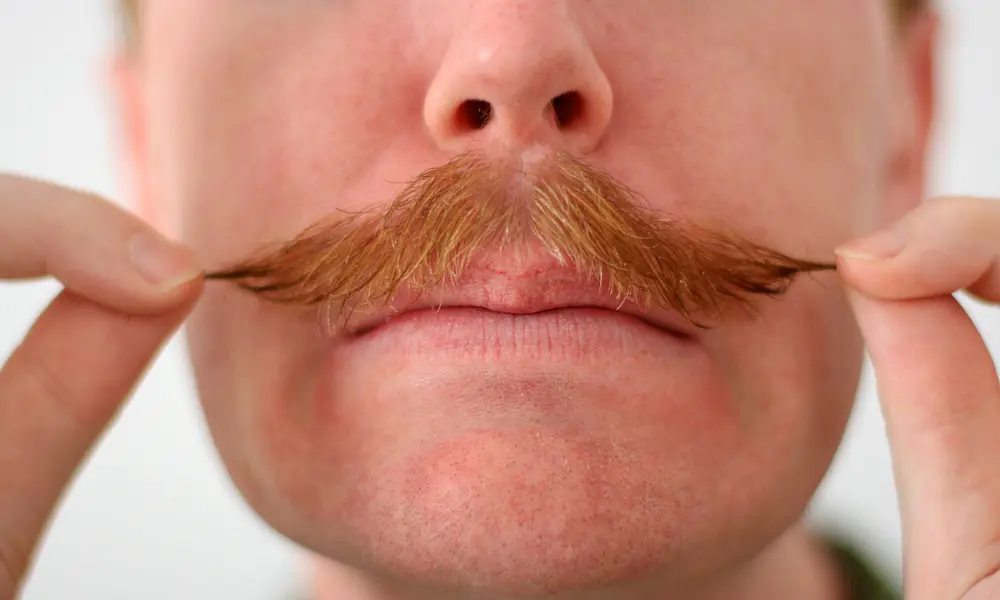
Postcards advertising the events are on display all over the campus. On the front is a man’s face with a moustache. What’s the story behind this?
The card is intended not only to draw attention to our events, but also to raise awareness of what’s known as ‘Movember’. The term is a combination of ‘moustache’ and ‘November’ and has, in recent years, become the symbol of a global movement designed to raise awareness of men’s health issues during the month of November. So, during ‘Movember’, men grow moustaches to draw attention to issues that men far too rarely talk about, such as prostate and testicular cancer, as well as mental health and suicide prevention.
As the person in charge of University Health Management, will we be seeing you sporting a moustache this ‘Movember’ too?
Yes, of course! Much to my wife’s chagrin. But she’ll just have to put up with it – it’s for a good cause, after all…
What else is on offer in terms of health initiatives this winter term – what’s planned at the University of Erfurt?
Alongside regular activities such as the ‘Active Break’, university sports courses, the mobile massage service, yoga and mindfulness classes, as well as various counselling services, there will be another blood donation drive on campus on 21 October, and on 28 October we’re organising a health screening day with the opportunity to get a flu jab. We’ve also planned a talk on organ donation. And from 3 to 5 November, we’ll once again be taking part in the Mental Health Days, which will feature information and activities centred on mental health. Incidentally, the exact dates and details of the events can be found on the University Health Management website.
That’s quite a lot, and given tight budgets, it’s certainly not something that can be taken for granted...
Not at all, but fortunately we have a dedicated healthcare partner on board in AOK PLUS. The health insurance provider not only supports University Health Management financially, but also advises us on all matters relating to health and prevention. Together, we have been able to achieve a great deal in recent years, steadily expanding the University Health Management programme and, incidentally, having only recently extended our cooperation agreement by two years. During this period, we aim above all to strengthen our networks with the local authority, the state and within the university consortium, to consolidate existing services and – based on the findings of this year’s health survey – to create new ones. So we’re really on the right track here…
![[Translate to English:] facebook icon](/fileadmin/SocialMediaIcons/iconfinder_06-facebook_white.svg)

![[Translate to English:] instagram icon](/fileadmin/SocialMediaIcons/iconfinder_38-instagram_white.svg)
![[Translate to English:] YouTube icon](/fileadmin/SocialMediaIcons/iconfinder_18-youtube_white.svg)
![[Translate to English:] xing icon](/fileadmin/SocialMediaIcons/iconfinder_xing_white.svg)
